Encountered near the Front Hills shrine in the Forest of Wolves area.
Description
Being the gatekeeper of the mountain was a thankless task indeed. For more than a century, Bullguard stood watch, never once climbing the ranks. Yet he voiced no grievances, for his devotion to the king was his sole concern, and the king’s pills, his only desire. He treasured those pills within a lacquered box of pear wood, lined with silk. Each time he partook of them, he performed a ritual: a process of cleansing, rinsing, and offering incense to the universe, thanking it for its gifts. Many a lesser guai had tasted the king’s rewards, but none with such reverence as Bullguard.
One day, a curious guai inquired, “How do you maintain such vigor despite the toils of this job?” With earnest simplicity, Bullguard replied, “It is the king’s pill that fuels me. Take more, and you shall be as I am.” The guai confessed, “We’ve partaken in our share, yet felt nothing. Mayhaps the king’s gifts to you are finer?” Bullguard was aghast, “From the same hand we are served, how could there be a ‘mine’ and ‘yours’?” The guai still skeptical, insisted on an exchange of pills. Soon after, the guai felt no change, while Bullguard remained as robust as ever.
Some say, “A fool’s luck”, but perhaps it isn’t a lack of wit that’s compensated, but the power drawn from blind devotion.
Poetry
Majestic of height, he looms with might, In heavy armor, ready to fight. His eyes-a fearsome, vacant lot, A sage or fool, we know not.
Years ago, Yellowbrow crossed the Bitter Lake on a towered ferry. Upon disembarking, he discovered some strange fish clinging to the ship’s hull. These fish, known as He Luo, had a single head but ten bodies, making them bizarre and fearsome.
When the fish saw Yellowbrow approaching, they wondrously bowed and made noises, indicating their desire to follow him and escape the Bitter Lake. Yellowbrow laughed and said, “With your strange forms, others would surely reject you. But I find it interesting to take in what ordinary people would not.” With that, he accepted these strange fish as his disciples, clothed them, and taught them how to read and transform into human forms. He even allowed them to practice freely within the realm of the New West.
One of the fish guais was particularly robust and had a fierce temperament. After mastering some techniques, it would ambush at various spots in the temple, waiting for opportunities to attack Yellowbrow when he went out, striking without mercy. Yellowbrow, however, enjoyed these encounters and would seriously engage in combat with the fish guai. Most of the time, he would simply sweep it out of the hall with a swing of his Spikeshaft Cudgel.
Despite repeated defeats, the fish guai realized that close combat was futile. It independently devised a technique involving throwing snowballs with its limbs, hitting targets with uncanny accuracy. Once, in the Forest of Felicity, even Yellowbrow was hit several times by snowballs, nearly freezing into an ice block.
Instead of getting angry, Yellowbrow was delighted and unprecedentedly bestowed a new title upon the He Luo fish guai—“Monk from the Sea.” He then assigned it the task of cleaning the inner courtyard, which conveniently allowed it to ambush anyone it wished to, especially Yellowbrow himself.
Ah, though they followed the same master, the disciples’ experiences and purposes in their practice varied greatly, leading to vastly different treatments.
Poetry
Bitter Lake’s expanse, no end in sight, The ferry of enlightenment, he sought day and night. Low means may tempt, but yield no gain, True greatness takes flight, in honor’s domain.
Encountered near the Outside the Forest shrine in the Forest of Wolves area. Follow the path to the left, proceed through several archways, and you’ll eventually reach a clearing where the boss awaits.
Description
In his youth, Guangzhi was not a monk but a little wolf guai who yearned to be human.
He often took human shape to play in town, but the people always saw through him and chased him away. When he asked the other yaoguais why, they explained, “You may look like them, but you don’t act like them. That’s why they know. If you want to learn to be human, go live among them. Spend time with them to learn their ways and manners.” He took this advice to heart and begged his master to grant this wish. His master, old Lingxuzi, who was close to the Black Bear Guai in the mountain, agreed. The Black Bear Guai transformed the pup into a little monk and sent him to study under Elder Jinchi, an old friend.
At first, the fellow monks disliked him. They played tricks on him, and he always fell for it, slow and gullible as he was. Jinchi named him Guangzhi, “the Great Wisdom”, hoping he would grow clever and sharp, so his fellow monks couldn’t bully him. With Jinchi’s care and teaching, Guangzhi learned to read, write, and abide by the monastic rules. Gradually, he assimilated into their ranks.
One day, two monks arrived at the temple. One had a fair, devout countenance, while the other had a face covered in fur. They possessed a wondrous treasure: the Kasaya of Eversparks. Jinchi had never seen anything like it before and longed for it desperately. Hoping to repay Jinchi’s teachings and nurturing, Guangzhi devised a plan to acquire it for him.
Guangzhi never imagined his mistake would ignite red tides of flames that engulfed the temple he called home. Afterward, Jinchi took his own life, and Lingxuzi fell to the Jingubang. Even the Black Bear Guai surrendered and was taken by Guanyin. Guangzhi saw how many had suffered for his sake, and knew he had failed utterly at being human. He shed his monk robes and retreated to the mountains, repenting with Jinchi’s teachings.
In his years of practice in the mountains, he forged a new weapon inspired by the raging flames he saw that night. He named it “the Red Tides”. Even to this day, after numerous years, he continues to hear a persistent call echoing through the mountains: “Guangzhi, Guangzhi!” Who could it be that keeps calling him?
Poetry
To prove his worth, he gave sinister advice, Yet reaped the bitter fruits of his own vice. Though justice remains silent, it never sleeps, And when it strikes, no one escapes its reach.
Guangmou, “the Great Tactician”, was not like his senior fellow pupil Guangzhi. From a young age, His heart yearned to be a legendary yaoguai master, remembered for ages.
But fate had other plans. When old Lingxuzi sent his beloved disciple to Guanyin Temple to be a monk, old White Snake Guai grew worried. The snake feared it was old Lingxuzi’s ploy to win favor with the Black Bear Guai, and commanded Guangmou to join the monkhood as well.
Before he left, the snake warned him: never fall behind, least of all behind Guangzhi. But no matter how hard Guangmou tried, Elder Jinchi never seemed to favor him as much as Guangzhi, even when he learned faster and trained harder. Guangmou consoled himself, believing this stemmed not from his own failings, but from the snake’s ham-fisted meddling, which had turned the Elder against him. He found solace in the notion of returning to the mountains one day, when he could embrace his yaoguai nature, unshackled by such trivial concerns.
Guangmou can still recall Jinchi’s teachings: “You can be too extreme, too uncompromising. Always leave some room and some things unfinished.” But the day Jinchi saw the Kasaya of Eversparks, he desired it so intensely that he forgot his own words and wept long into the night. Guangmou saw the thought taking root in the old monk’s heart: to kill for this prize. Everyone shied away from the idea, but Guangzhi boldly spoke the truth.
Guangmou seethed with inexplicable rage. In his mind, a scheme within a scheme began to take shape. As Elder Jinchi drank tea with the two monks, Guangmou glimpsed an untamed malice in the monkey’s eyes—a hunger for vengeance. Building on Guangzhi’s gambit, Guangmou goaded and prodded, weaving a merciless plot that left no room for escape. The old monk was delighted, and for the first time, he acknowledged Guangmou’s wit.
With his plan set, Guangmou knew that doom would strike that night. Summoning a gust of wind, he hid in the bamboo grove behind the mountain. As anticipated, a great fire broke out that night. But it failed to kill the two journeying monks as intended. Instead, it burned the entire temple to the ground.
Alas, the world harbors such petty souls, capable of ensnaring the lofty and vanquishing them with cunning plots. Perhaps this is what is meant by “slaying with a borrowed blade.”
Poetry
With a monk’s facade but a serpent’s heart, He wields deceit, playing many parts. His desires shift, insatiably pursued, Faithless to his master, all teachings he eschewed.
At the end of the river a short walk from the Snake Trail shrine in the Bamboo Grove area.
Description
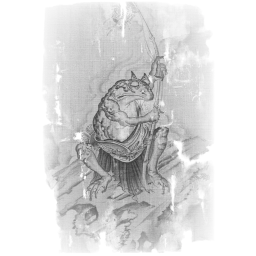
In the lands west of Black Wind Mountain, within a kingdom named Hhami, stood a small town. Every day before dawn, a humble market would gather just outside the town gate. It was a place where peddlers exchanged goods while waiting for the gate to open, but due to the prices, even the townsfolk began to participate. Thus, this market gradually gained its reputation.
A few months ago, an odd oil peddler arrived at the market. Garbed in robes of a pearly turquoise color and with eyes that gleamed like copper bells. He had a voice that rang out with a boom, and his breath was foul and pungent. Yet, he happened to be a keen talker and naturally was disliked by everyone. The oil he produces, on the other hand, was sought after by everyone. Who would not prefer the oil clear and smooth, and not to mention its price: one could exchange but a pinch of fragrant powder for a large gourd of such oil.
One day, a wandering Daoist passed through the town and decided to visit the market. He enjoyed his experience until he sensed an eerie green mist emanating from that old peddler-a guai, no doubt. The monk chanted, and before the peddler could manage a decent struggle, it revealed its true form-a green-skinned giant frog.
The bystanders were startled and grabbed whatever they could use to attack. The frog kicked the ground with both legs, leaped higher than a tree, and swiftly fled toward the mountains. In pursuit, the folks arrived at the marshes, where they witnessed countless small frogs scraping mucus from each other’s bodies, collecting it in a large barrel. They then applied fragrant powder to themselves, hugging and sniffing each other in sheer delight.
Silently, the people approached and peered into the barrel. The mucus inside gleamed with clarity, just like the oil they had favored. At the sight, they were occupied by bouts of nausea and began to vomit. None had the strength to pursue and kill guais. All the frogs noticed this and hastily fled, leaving the marshes filled with a rather unique scene.
Poetry
Wrinkles on his skin so snug, A whiff of air, a fishy hug. Legs that spring to heights above, From the dirt and muck they love.
Found near the Village Entrance shrine in the Sandgate Village area. To find it, follow the steps below.
When facing the shrine, go left and drop down into the small ravine.
Follow the path to the end of the cave, then jump down into the water to find the boss there. You’ll need to defeat it as part of Xu Dog’s questline.
Description
Here we must speak once more of that wandering Daoist. He passed through the Kingdom of Hhami, and ever since his encounter with the frog guai, he had made it his mission to hunt such guais. Far and wide, he sought their traces.
On a day he came unto a valley where croaks echoed, crackling with eerie flashes. Joy rose in his heart, and he hastened to the riverbank. There, he set up a makeshift altar to subdue the yaoguai in the river. Incense and candles were lit for the offerings; then, with his cap removed and hair unloosed, the Daoist traced the three seals of power with vermeil cinnabar and drew the banishing sword. He mumbled and muttered the spells he knew.
Then his roar shook the air: “Thus be Lord Lao’s decree!” With a flash of his sword, he snatched up a seal and flung it skyward. A plume of flame flared and vanished. The frog guai in the valley, startled by this commotion, sprang from the water - a great yellow frog clad in hues between green and blue, different from the last.
The Daoist, seeing the yaoguai spring forth, swiftly lifted a second seal. It flared up in a trice, and a raging wind followed. As the third seal caught light, pealing thunder cracked from the lowering clouds. Both the Daoist and the yaoguai were startled, hands flying to their heads. As silence fell, they looked up to see trees blasted and split, while the storm above broke and scattered.
The Daoist froze, then scrambled to ready his brush for three more seals. The frog guai, unhurried, drummed its belly. The sky stood unchanged, but with each stroke, a dozen shafts of golden light lanced down, each striking close around the Daoist.
Tumbling and rolling, the Daoist could scarcely evade the beams of light. Then the frog guai gaped its maw and spat out a swarm of electrifying tadpoles. No matter how the Daoist dodged, they pursued him relentlessly until he fled in utter rout.
Alas, in matters of renown, it is common to judge power by the intricacy and grandeur of one’s methods. There might be some wisdom in that.
Poetry
With swollen belly, strange skills arise, A frog’s croaks can summon thunder’s cries, No loong needed to call the breeze, In shallow waters, frogs’ songs please.
Near the Village Entrance shrine in the Sandgate Village area. You’ll find it in an open area in the middle of the nearby village.
Description
There was once a general’s son who served as a drill master in the barracks. Cruel and ruthless he was, and the soldiers trembled at his commands. Yet, out of respect for the general, they bore their resentment in silence.
The drill master, who had a passion for hunting, kept a Chinese Xigou, a slender hound. One day, he went hunting with several instructors but returned empty-handed, much to his shame. He blamed the innocent hound for their failure and had it beaten to death.
The soldiers, who had been ordered to kill the hound, were much troubled in spirit. They buried the hound in a field behind the barracks, where many lingzhi mushrooms grew, and gathered at night to chant sutras for the repose of its soul.
One night, the drill master heard a dog barking outside the barracks. He sent men to seek out the source of the noise, but the barking ceased each time they approached, only to resume once they had returned to sleep. After a few times, the drill master lost his temper and went to investigate himself. As he stood in the yard, he felt the sound came from beneath the ground and ordered his men to dig up the earth.
As the soil was cleared away, the hound leaped from the earth, appearing as it had in life but now adorned with thin tentacles, like the roots of some peculiar plant. The drill master, thrilled by this rare find, called to the hound. It recognized its master and bounded joyfully towards him. However, two hard, antler-like mushrooms had grown upon its head. As the hound leaped into the drill master’s arms, these mushrooms pierced his chest, and he died then and there.
The soldiers rushed to call the healers, shouting in panic and confusion. Amid the turmoil, no one thought to catch the hound. Later, no matter how they searched, they never found a trace of it.
Poetry
On moonless nights with winds that cry, The time for debts and vengeance nigh, In kind yaoguais, place your trust, But wicked souls, defy you must.
Encountered near the Village Entrance Shrine; start by heading to a small pathway on the village’s right side, then hug the right wall until you reach across some double doors.
Defeating the King first is recommended for extra rewards, as defeating the Prince first will end the fight early.
Description
The Kingdom of Flowing Sands had three princes of the royal line.
The eldest prince, favored by the king, was a renowned warrior for his valor in the battles against the Fuban. He was granted the title of Valiant General. But later, a shadow darkened his mind, clouding his reason and erasing his memories of his kin. Thus, he was hidden away.
The king was heartbroken. Luckily, two of his sons yet remained.
The third prince, the youngest and the king’s most trusted, was well-versed in poetry and deeply fond of Buddhist teachings. He possessed both wisdom and strength. However, when the king issued the Rodent Reverence Edict and executed those ministers who opposed it, the third prince left in protest. Wrath consumed the king, but one of his sons still remained.
The second prince, though a man of great strength, was simple of mind. He was neither as skilled a warrior as his elder brother nor as clever as his younger sibling. Of the three sons, he was the least favored by the king. Nevertheless, he remained by the king’s side the longest.
When the Yellow Wind King retrieved a mighty vessel and returned, the King of Flowing Sands rallied to his banner with what remained of his people, hoping to reclaim his lost kingdom. The Yellow Wind King, short on men, saw the fierce spirit in the second prince and welcomed him and his followers into his ranks.
But the Yellow Wind King had a Tiger Vanguard, whose hunger for rat flesh required a fresh feast each day. When the Yellow Wind King retreated into his meditating seclusion, the tiger grew even bolder. Only the savage might of the second prince’s hammer could give him pause from time to time.
Much did the second prince sacrifice for his father the king, yet through all the perils and hardships they endured, the King of Flowing Sands never failed to bring the eldest prince with him and continuously sent minions to seek out the youngest. What thoughts dwelled in the heart of the second son, none could say.
Poetry
A foolish son, a clever father, One plans ahead, the other rather. On the battlefield, no room for kin, The cunning father flees, leaving his son within.
Encountered in a cave near the Valley of Despair shrine.
Description
The yellow-furred rat had quelled the calamity caused by Fuban, earning the king’s deep respect and being appointed as the Royal Sage. No matter the state affairs or the minutiae of daily life, the king would first seek his counsel.
At the sage’s suggestion, the king issued the “Rodent Reverence Edict,” prompting rodent guais from all around to migrate into the city.
The First Prince, having distinguished himself in battle, was conferred the title of Brave General and was basking in his success. However, he was deeply displeased that a guai sage had stolen his shine. Using the pretext of the rodent guais causing trouble, he rallied court officials to petition for the Royal Sage’s removal.
Several upheavals ensued in the court, resulting in the deaths of many loyal to the prince, and even the Third Prince left in anger. Yet, the king’s trust in the sage remained unshaken.
On the sage’s birthday, the entire kingdom worshiped his statue, and even the king paid a visit to the Temple of Royal Sage himself to offer incense and prayers. Unable to contain his fury, the First Prince overturned the incense table in public.
Such an affront to royal authority could not be tolerated. Enraged, the king imprisoned the prince. The sage, however, was not angered and even spoke many good words for the Brave General. Learning of the sage’s intercession, the prince became even more convinced that he was a deeply scheming evil guai, cursing him incessantly in his cell. The king, upon hearing this, grew more antagonized by his unruly son. Hence, he decreed that the prince needed strict discipline, ordering that his meals be delivered to the cell door thrice daily, with no visitors allowed.
Initially, the prince was very stubborn, but over time, he softened and began to plead for mercy. Yet, he remained defiant in his heart, constantly plotting to kill the rodents and avenge himself once he was free.
One day, his meal was late, and he was growing anxious. Then he heard the sound of a key turning, and the cell door unexpectedly opened.
After waiting for a while and seeing no one enter, he walked out himself. To his astonishment, the guards and officials bustling about outside were no longer human. They all became rats dressed in robes.
The prince thought it was that the sage had led the rodent guais to usurp the throne, and in his panic, he charged into his father’s golden hall—
A short, stout rat, speaking in his father’s voice, called out to him. This must be an imposter! The prince grabbed a guard’s sword and struck at the king.
Chaos erupted in the hall, only the Royal Sage brought forth a bronze mirror for the prince to see himself. In the reflection, there was no trace of the Brave General, only an enormously fat rat.
Poetry
Though hairless, strength prevails, Sturdy and bold, never frail. Madness hides in mountain, where winds sing, In dark gutters, reigns as king.
Encountered near the Rockrest Flat Shrine by backtracking into the cave, then taking the slope up to the right.
Description
Long ago in the Yellow Wind Ridge there lived two mountain deities. By the grace of a wise one, they came into possession of a great yaoguai’s inner pill.
They split and consumed it, gaining great powers from within. Thenceforth, they bore the shape and heart of humans. In gratitude, they bent their newfound strength to make the mountain’s wilds thrive for the wise one.
The Keeper of the mountain, however, received no share of this boon. Envy wormed its way into his heart upon learning that the deities could conjure rock guais at will. He schemed to wrest this power for himself.
Little did he know, their conjurations drained deeply from their own Will. The mountain deities poured out their own power to birth rock guais, who shaped crag and stone, and nurtured green and bloom.
Day by day, the Keeper of the mountain sought to pilfer their practice and cultivation through low deceits. Then came a day when a great rock guai emerged, and the lesser guais bowed to him as their Vanguard. Still, the Keeper, heedless of his peril, provoked strife as he had done before. Blow after blow, the Stone Vanguard rained upon him until he lay pummeled in the dirt. Even then, he did not cease hurling curses.
Alas, those who are bent on wickedness find few obstacles in their path, while those who pursue virtue encounter many hardships, often set by those with ill intentions.
Poetry
As fate aligns, chance plays its part, Yet misfortune leaves an empty heart. Judge not a hero by skill alone, But by the fortune that they have shown.
Standing on a very long bridge near the Windrest Hamlet shrine in the Yellow Wind Formation area.
Description
There was once a swordsman, wild and free, who roamed the lands far and wide. For the love of a woman, he forsook his wandering ways, married, and had a child.
But their happiness proved fleeting. From the mountains beyond the city walls, there arose a wind, fierce and full of malice. It whipped the yellow dust into a frenzy, and the city was choked with it, day after day. Soon, his wife succumbed to a wasting sickness, and their child, too, became ill.
The man was devastated. He spent all his silver in a vain attempt to heal his child. Then he heard of a bodhisattva on New Mount Sumeru who could cure the wind-sickness. With haste, he gathered what he still had and set forth with his child.
When he reached New Mount Sumeru, the disciples told him that the bodhisattva had departed for Yellow Wind Ridge long ago and had not returned. The man had no choice but to take his child and set out once more.
When they arrived at the ridge, they learned that this place was right next to the fierce wind. The child’s frail condition worsened with each passing hour. They took shelter in the village of Windrest, where the child rested and the man went to find the bodhisattva. One day, while passing a dry well outside the village, the man heard a tiger’s roar. He climbed down into the well and found a hidden cavern, where a great tiger lay, wounded and weak, deep in meditation.
The tiger told the man he was a deity in the mountain, revered by the village priests. In the valley, they had even raised a temple in his honor. He said he’d been ambushed by the yaoguai that stirred up the fierce wind and took over his temple. That’s why he was in this pitiful state.
The man was doubtful, but as he asked around in the village, he found that the tale was true in every detail, from the reverence of the priests to the temple in the valley. He hastened back to the well, his ailing child in his arms, to beg the tiger for healing.
The tiger brought out a strangely shaped gourd, filled it with water, and gave it to the child. Wonder of wonders, after drinking from the gourd, the child was able to run and play as he had before the wind sickness struck.
The tiger told the man that the wind had harmed his essence. With the flesh of the living, he could regain his former might, and then he could tame the raging wind and heal the child completely.
The man was reluctant, but as he watched his son grow stronger day by day, playing in the village with the other children, a terrible resolve hardened in his heart. He began to lead the unsuspecting villagers into the well, hoping to restore the tiger to its former strength.
As time passed, most naturally, the villagers found out what he had done. By the time the man returned to the village, he found his son slain by their angry hands.
The man was consumed by regret and drew the sword he had sealed away for years. He fell upon the villagers, and one by one, he cut them down, until the streets ran red with blood. Then, alone, he set out into the shifting sandstorm, lost in the ever-howling wind.
Poetry
Where has the swordsman gone, with tears in his eyes? The wild wind sweeps the northern sands, lonely and desolate skies. Grass visits the empty village huts, dust welcomes the evil guais. Who knows the bitterness of the lotus heart, or the sourness within the pear’s guise?
Inside a cave near the Windseal Gate shrine. Start by moving towards the tree, then enter the nearby cave to find it.
Description
A strange visitor once came to the Temple of Yellow Flowers.
He proclaimed himself trained in the mystic arts upon the Mount Lingtai. “Submit now and yield to me the thing” he told the master of the temple, “and you will be spared.” Beetle Commander was sent to subdue him, and the man was sealed in a cocoon sack in the cave. Yet days later, a lesser guai brought word to the master that the sack lay sundered, and the captive had escaped. At this, the master gave nothing but a smile.
Since his escape from the cocoon sack, a fleshy mess studded with many eyes had sprouted from the man’s back. He paid no mind to this horrific sight and continued his wandering practice.
He passed through a desolate mountain where bandits ran rampant and the nearby villagers lived in squalor. Here he chose to settle and summoned rainfall. By his arts, the blasted peaks grew green with elms and willows, and the slopes cloaked themselves in pines and firs.
After his efforts, the once-barren mountain saw years of clement weather, and the people of the lowlands flourished in number. Yet the bandits cared nothing for an honest life. They saw the greenwood only as fresh plunder and the growing number as ripe for the hunt. The man then took on the guise of an enlightened monk and went among the bandits’ hideout to spread the wisdom of the Buddha. In the end, even the bandits forsook evil and came down the mountain to live in peace.
Years passed. Then came a day when the man entered the village and raised a ritual staff at the entrance. From its crown poured a blood-red light. Every person it touched fell into a frenzy, tearing at each other as if under the thrall of some evil force.
In mere moments, the lowlands became a pit of slaughter, and the ground overflowed with the blood of the slain.
On the man’s back, the hump gaped wide with countless eyes unveiled. Slowly, they supped the spilled blood and sundered spirits. In no time, the lump had swollen even larger, until it could absorb no more. Only then did the eyes slowly close.
The man came back to himself and removed the staff. He then set out for the next place to settle.
Poetry
A strange man with a lump on his back, And a staff of blood-red hue, He leaps and bounds with eerie might, A hundred eyes glowing in the night.
At the bottom of a well that you’ll be directed to jump down after using the Old Rattle-Drum three times. Exact locations and a boss fight strategy are detailed in our guide here.
Description
One day, the brother of Tiger Vanguard was practicing his roaring technique at the bottom of a well when he saw someone climbing down the vines. Seeing that the intruder had some courage, he refrained from attacking and instead inquired about his purpose.
The man explained that he was seeking a Bodhisattva to cure his son’s wind illness, but he failed, and now his son was on the brink of death. Hearing this, Tiger Brother devised a plan. He attributed his elder brother’s deeds to himself and convinced the man to bring his son, claiming he could treat the boy.
When they first met, the boy’s face was pale. Too weak to climb down the well by himself, the boy was carried by his father by tying him with a hemp rope to lower him safely into the well. Tiger Brother examined the boy and confirmed that his spirit had been disturbed by the Samadhi Wind. Without stopping the wind and sand, no one could cure him.
Tiger Brother remembered that his brother had given him a magical gourd. Drinking from it could strengthen one’s vitality, and he thought it might keep the boy alive.
After the boy drank the water Tiger Brother gave him, he indeed regained some energy and could speak. Despite his long illness, the boy was very polite. He thanked Tiger Brother for his help, praising him endlessly. In the boy’s admiring gaze, Tiger Brother found a long-lost sense of satisfaction. He instructed the father and son to come daily to take a sip from the gourd, or the boy would relapse.
After several visits, the boy’s condition improved significantly. He could walk around and even play in the village, making many friends. Each time he came to drink from the gourd, he would call Tiger Brother “Tiger God” and share his new food, toys, and experiences.
Despite his initial wariness of the father and son, Tiger Brother gave the boy his gourd when he observed that the man was sincere and honest. He instructed the boy to keep the gourd close. Heeding his words, the boy’s health improved even more.
Yet, abruptly, the father and son stopped visiting. Tiger Brother waited for several days, thinking they might have run off with the gourd. Determined to find out what happened, he went to the village.
Upon entering the village, he saw blood everywhere; the villagers had been slaughtered. At the village entrance, there was a thin coffin, and inside lay the boy’s body. He still wore the gourd Tiger Brother had given him around his neck. Judging by the wounds, it seemed he had been beaten to death with sticks.
Tiger Brother carried the coffin back to the bottom of the well. He decided to wait until he was strong enough. One day, he would stop that cursed wind and sand…
Poetry
Yellow wind invades the land, brothers turn to strife, Father’s vengeance left unclaimed, in the well of life. Roaring through the mountain pass, a heart that feigns to care, Actions always half-complete, dreams and life laid bare.
Encountered soon after entering the Secret Kingdom of Sahali area. A guide to help you access it can be found here.
Description
The Tang Monk and his two disciples pressed on. Before half a day had passed, they came upon a towering peak, dire to behold. As they gazed upon it, there arose a tumult of wind, and from the mountainside leaped a tiger, dappled and fierce, its tail lashing in the wind. “I am no common beast!” it roared. “I am the Vanguard of the Yellow Wind King. By order of my liege, I patrol this range and seek out mortals to serve as side dishes for his brews.”
The yaoguai closed in with a flurry of claws aimed at Bajie’s face. Wukong whipped out his staff with a shout, “Take him!”
Bajie rallied his courage, and the yaoguai fell back in disarray. Panicked, it sloughed off its skin and draped it over a tiger-shaped rock. Loosed from its flesh, it transformed into a screaming gale and raced back to the mountain road. And there, it found the Tang Monk chanting his sutra. In a trice, the tiger seized the monk and bore him away on the wind. The tiger brought the monk to the mouth of a cave and, stilling the wind, spoke to the guard, “Tell this to our master; the Tiger Vanguard has captured a monk and awaits the king’s decision at the gate.”
The guard rushed in to report. Out came two tiger cubs who hailed the vanguard as their father and made their courtesies. The older cub asked, “Where did you find this pale-faced monk?” The vanguard laughed. “A stroke of luck! I was patrolling the mountain and chanced upon him.” The younger cub, overjoyed, said: “Well done, Father! Teach me how you did it someday.”
Even as they spoke, the master of the cave sent word: “Bring him in.” Along with his sons, the Tiger Vanguard presented the Tang Monk before his master. “My king,” the vanguard began, “I was honored with your command to patrol the mountain. By chance, I came across a monk, none other than the Tang emperor’s sworn brother Tang Monk, bound for a journey to the West to seek the scriptures. I seized him and now offer him to grace your table.” The master, surprised, demanded the full tale. The vanguard knelt to one side and recounted the fight.
“Hold,” said the cave master. “We do not eat him just yet.” The vanguard protested: “My king! It is against our nature to refuse the food before us.” But his master replied: “You do not understand. Eating him would be no great matter, but I fear the two disciples of his will come clamoring at our gate. It is safest to bind him to the windrest post in our rear garden. Wait three days, or five; if his disciples do not come to our gate, we will boil, steam, fry, or roast him at our leisure. There is no rush.” The vanguard rejoiced. “Wise beyond measure, my king! Wise indeed.”
The two young tigers followed their father out. The elder muttered, “Master has always devoured mortals without a second thought. There should be something he left unsaid.” The younger added: “He seems almost… afraid of that mortal.” Their father snapped: “You know nothing of the powers of our master! Long seasons have I served him. How could he shrink before any other?” The brothers exchanged glances but said no more.
Scarcely half a day had passed when the master sent for them again. It was Sun Wukong challenging upon their gate. The Tiger Vanguard requested to face him, but the master demurred, “I fear you cannot prevail against him. You may well be wounded, and you must not then impute blame unto me.” The vanguard’s sons urged him to reconsider, but he paid them no heed. “Rest assured, you! Wait only until I return!”
Poetry
Gathering strength with a mighty roar, Transforming stones, launching surprise once more. A loyal general with a heart so bold, A noble fighter, lost in the age of old.
Fought in Chapter 3, near the Mani Wheel shrine in the Pagoda Realm.
Description
For pride and arrogance, your golden form is shattered. From the rift shines Buddha’s light, majestic and boundless. With the glaring rays, flashing, startling, breaking, You forget the teachings and fall into the false.
You are alone, isolated, crippled, Dancing, prancing, like a deity or ghost, no less. Here the wise go mad, the brave turn bad, the kind face duress. Tainted by worldly dust, your practice is in a mess.
May your body enlighten the world and Quell your proud and overbearing, merging light and darkness.
Poetry
All things are by nature void… There is no wax or wane.
Encountered several times in Chapter 3, but is only added to the journal after defeating Yellowbrow and completing the chapter.
Description
With arrogance ablaze, his limbs torn, You boasted of truth, a thousand hands adorned. Yet the void illusion deceived and beguiled, Mourned and lamented, your spirit defiled. With bonds severed, in nirvana you were exiled.
In silence, in solitude, in tranquillity, How painful it was to face death in clarity. Detached from bitterness and pain, Blessed, your flesh and blood through resentment shall remain.
May you cease the debate of falsehood and truth, As the tide rises, cleansing with its mighty soothe.
Poetry
Contemplating the myriad forms, returning to the essence of nature.
Encountered near the Longevity Road shrine in the Valley of Ecstasy area. Follow the path near the shrine and you’ll end up outside a big temple where the boss awaits.
Description
Thought yourself mighty, yet ended up headless. From your blood and pus, lotus flowers bloom restless. Coaxed, enticed, and stabbed, by the words of auspiciousness, Your link to Buddha’s wisdom severed, your mind lost in the incense dust, breathless.
The truest of the truth, the kindest in kindness, and the fairest in fairness, you sought and lost, Principles shattered, head twisted, and body crossed. Tenderness forsaken you, your uprights exhaust, Eyes clouded, stars dimmed in frost.
May your body bring prosperity and The red lotus thrives in hostility.
Poetry
Within a flick of the finger, lotus flowers bloom and wither.
Found by following the coastline north-east of the North Shrine of the Bitter Lake. May disappear if not confronted before defeating Yellowbrow and completing Chapter 3.
Description
Years ago, in mountains remote, there was a small temple built by the local villagers. The temple was unattended, housing only a black statue, with dried lamps and an empty censer.
One day, a wandering swordsman passed by and decided to spend the night in the temple before continuing his journey. As he was drifting off to sleep, he suddenly heard the sound of wind behind him. Opening his eyes slightly, he saw the statue on the altar sprout wings and take flight. The creature had scythe-like claws on its feet. Terrified, the swordsman quickly rolled over, drew his sword, and engaged in a fierce battle with the statue, eventually slaying it.
The next morning, the villagers gathered outside the temple, bringing flowers and wine to thank the swordsman for ridding them of the yaoguai. They explained that many such temples in the mountains were inhabited by these yaoguai disguised as statues and asked the swordsman to eliminate them all. Seeing the villagers had brought a great deal of silver, greed overtook him, and he agreed, asking them to lead the way.
Surrounded by the villagers, who praised and urged him on, the swordsman was led deep into the forest to a larger ancient temple. As soon as he entered the hall, he saw incense burning high and candles glowing brightly. On the altar sat a larger statue, similar in appearance to the one he had killed before, but coated in gold, with a particularly majestic and imposing presence. Sensing danger, the swordsman tried to flee, but the statue took flight, flapping its wings to unleash a frosty wind that froze him in place.
Watching the golden statue used its hooked claws to pierce the swordsman’s shoulders and drag him into the back of the temple, the villagers all knelt and made their wishes. The next day, everything they had wished for appeared at their doorsteps.
Poetry
Dwelling in a Buddha’s form, With wings to ride the wind’s storm. An iron heart, through toil it sings, A golden shell, in splendor it springs.
Near the Forest of Felicity shrine in the Valley of Ecstasy. Cut through a cave near the shrine to find the boss on an icy lake.
Description
Picking up from where we left off, that Daoist who had fled in disgrace spent several years in secluded meditation in the mountains, mastering the Five Thunder Technique until he could wield it with perfect ease. Confident in his abilities, he set out once more.
During his journey, he captured a small electric tadpole and confined it within his gourd. As he passed through the snowy mountains, the tadpole began to stir restlessly inside the gourd, signaling the presence of a frog guai nearby. Following the signs, he arrived at a deep, icy pool in a valley and indeed found a giant frog, covered in frost and lying dormant by the shore.
Without hesitation, the Daoist unleashed a thunderbolt at the frog, expecting it to be struck down instantly. To his surprise, the frog leaped high into the air and dodged the attack. Unperturbed, the Daoist cast another thunderbolt, but the frog evaded it again, hopping closer with each leap. Learnt from the past, the Daoist retreated several steps, thinking himself clever. However, to his surprise, the frog stood on its hind legs, puffed out its chest, lunged forward, and knocked the Daoist off balance with its large belly. As he prepared to strike back, the frog opened its mouth and blew a gust of icy wind, freezing him in place.
Just as the frog was about to devour him, a group of monks appeared from the other side of the pool. Seeing the Daoist frozen there, they drove the frog guai away, narrowly saving his life.
Poetry
Unafraid of the northern chill, With skin like jade, it loves the thrill. Mist turns to frost and snow, In icy play, its spirit grows.
Found near the Towers of Karma shrine in the Valley of Ecstasy by following these steps:
Follow the path to the right as it curves past the temple and towards a patch of dirt
Interact with the red flower in the middle of the dirt to summon the boss
Description
This story was told by a pharmacist in the city, and it concerns a secret about his cousin’s family.
The cousin’s ancestors were originally ginseng gatherers in the mountains. For some unknown reason, they abandoned their old craft and became woodcutters.
Although the family was not wealthy, everyone lived long lives.
From a young age, the cousin often saw a shabby, unkempt old man visiting their home. Whenever he came, the family would prepare a lavish meal and fine wine for him to enjoy alone. At the time, the cousin despised the old man, thinking he was a freeloading drunkard who seldom spoke and often caused trouble when drunk.
One day, the old man visited again for a drink while the cousin’s great-grandmother fell gravely ill with typhoid fever, seemingly on the brink of death. Upon hearing about her critical condition, the old man went into the courtyard, reached into the ground with both hands, and out crawled numerous vines. Among the vines grew a small seedling that quickly matured, blossomed, and bore fruit. The old man pulled it out, revealing a Millennium Ginseng. After the great-grandmother drank the ginseng soup, she miraculously recovered and remains healthy to this day.
It was on that day that the cousin seemed to come to a realization and began to treat the old man with great respect, as if he were a member of the family.
The cousin once invited the pharmacist to move to the mountains and live with him, but the pharmacist flatly refused.
The pharmacist explained, “Although your family enjoys longevity, they live on bland meals every day, and life in deep mountains are too lonely. I still prefer to live in the city. Hence, I cannot go with you.”
Just take the story as a fun anecdote.
Poetry
Scatters o’er the mountain’s crest, Rich soil births, dews of the best. Seven ounces common, eight ounces rare, A slight difference, fortunes lay bare.
Near the Mindfulness Cliff shrine in the Valley of Ecstasy area.
Description
In the Village of Tuoluo, there was a small opera troupe of about a dozen members. Watching their performances was considered the most luxurious entertainment within miles.
Among the troupe was an actor who specialized in playing the jester. He always painted his face white, and the villagers would snicker whenever they saw him. The jester was deeply frustrated. Since childhood, he had dreamed of playing a heroic role on stage. To join the troupe, he had worked as an unpaid servant for the troupe leader for a year. He trained tirelessly, regardless of the weather or his health. Yet, he ended up being the subject of ridicule.
The jester suggested a role switch. However, everyone said he lacked the righteous aura needed for such a heroic role.
Disbelieving their words, the jester took on the role of the hero without notifying the cast during the performance, and beat up the hero on stage. The audience was furious; they destroyed the stage and left without paying.
The jester was condemned by the troupe, while the beaten hero was comforted. In a fit of rage, the troupe leader expelled the jester from the group. Despite much reflection, the jester couldn’t understand why he suffered such reprimand. Eventually, he concluded that it was his appearance that was the problem. Thus, with two poisoned daggers, he waited in an alley and killed the hero actor. He peeled the man’s face and wore it, hoping to take over his life.
The next day, when it was time for the hero to appear on stage, the jester, wearing the actor’s face, stepped forward and sang passionately.
Initially, the audience was deceived, but later they were horrified. Believing the jester had gone mad, they tied him up and sent him to a temple a thousand miles away for seclusion. Upon seeing him, the abbot of the temple was overjoyed. He named the jester “Non-White” and even created a unique practicing technique combining poison and frost for him.
The abbot told him that a Destined One would come and help him master the technique, and he could become a true hero if he could wear the face of the Destined One.
From the day on, no one dared to walk the mountain path guarded by Non-White, fearing they might encounter him wearing someone else’s face.
Poetry
A jester’s face with powder white, A cunning form, both sly and slight. Boldly plays the leading role, Yet remains an actor, lost in the whole.
Near the Mahavira Hall shrine in the New Thunderclap Temple area.
Description
In the vast sky, snowflakes drifted down, covering the exquisite palaces and towers, and blanketing the mountain ridge year after year without ceasing for a moment. In stark contrast to this relentless snow, Non-Pure was someone who constantly sought to shirk his duties and laze around.
One day, while Non-Pure was on guard in the side hall, ready to respond to his master’s call at any moment, he heard the sounds of a fight outside. Thunder Rhino Master came running to report that some unknown yaoguai from the mountains was trying to force his way in to see their master.
Non-Pure nonchalantly replied, “You go out and deal with him first. I’ll grab my spade and join you shortly.” After Thunder Rhino Master left the side hall, Non-Pure sat back down on his meditation cushion, reclining lazily. Outside, the yaoguai loudly demanded to see the Buddha of the Future and to become his disciple, while the sounds of the fight grew more intense.
Thunder Rhino Master returned to ask for help again. Non-Pure stood up and said, “You and the two overlords hold him off. Don’t let him in. My spade’s blade is a bit dull; I’ll come once I’ve sharpened it.” After a while, the noise outside quieted down. Thunder Rhino Master came back to report that the yaoguai seeking guidance had been accidentally killed by the overlords.
Non-Pure praised, “You did well. Throw the body into the dry well so it doesn’t dirty this place.” Hearing this, Thunder Rhino Master sighed inwardly, lamenting the yaoguai’s ill fate. If another brother had been on guard, perhaps the yaoguai might have actually met their master.
Unexpectedly, when discarding the body, Thunder Rhino Master discovered that the yaoguai had talismans for summoning fire and lightning stuck to his body, indicating he had come seeking revenge against their master. At this news, Thunder Rhino Master was both shocked and secretly relieved.
Poetry
A wide heart, a plump form, a belly so grand, A fierce look, drooping lips, a visage unplanned. Steadfast as a mountain, he stays still, From toils, he hides, guarding the temple’s hill.
Near the Forest of Felicity shrine in the Valley of Ecstasy area.
Description
Non-Able was unmatched in his martial arts skills, with no one in the temple able to rival him.
One day, Yellowbrow summoned him and offered to teach him some skills. However, Non-Able replied, “Master, I believe my martial arts are sufficient to overcome any foe. There is no need for other skills.”
Yellowbrow laughed and said, “Your straightforward approach shows a lack of adaptability. How can you progress further if you bind yourself in such a way?”
Non-Able responded, “Master, if I use methods I do not believe in to achieve victory, even if I win in the end, I will still feel like I did not win the fight and unable.”
Yellowbrow asked, “Do you not agree with your master’s path?”
Non-Able replied, “Master, you have always taken the clever route, which is why it is difficult for you to attain Buddhahood. It seems you can do everything, but in reality, you can do nothing.”
Non-Able chuckled softly at this and ordered Non-Able hands to be tied behind his back, instructing him to reflect on his actions in front of the stone wall outside the temple. He thought that after a few days of kneeling, Non-Able would let go of his stubbornness. However, Non-Able remained resolute and, to this day, refuses to bow his head.
Poetry
Amidst the snow, a monk so strange, Before the wall, in northern winds’ range. With martial arts, he seeks true Zen, Bind his hands, but not his spirit then.
Can be fought by transforming into a fox through the use of the Snow Fox Brush and entering the Thunderclap Temple.
Description
Few disciples know when Non-Void took his vows and became a monk. They only know that he was among the earliest to follow their master, making him the most senior, and entrusted to many of the temple’s affairs.
He rarely left the hall, seemingly always engrossed in endless sutra recitations. He was also highly skilled in poetry and painting, having depicted various Buddhas in the west and the myriad aspects of worldly life. Yet, he never cherished his creations, often discarding them carelessly after finishing. When asked why, he would say, “I see no true self; Non-void is but void. It’s all an illusion, so why hold on to it?”
Though Non-Void seldom left the hall, he enjoyed engaging others in debates about Buddhist doctrines.
One day, Non-Able approached him and asked, “Brother, is killing a sin?”
Non-Void replied, “Killing is a sin. But if it is for the sake of the greater good, then it is not a sin.”
Non-Able countered, “And what is the greater good?”
Non-Void answered, “It is the realization of void, the fulfillment of virtue, ascending to the land of bliss.”
Non-Able questioned further, “Killing not only fails to resolve karma but also creates more entanglements and obstacles. How can one ascend to bliss then?”
Non-Void responded, “If I do not enter hell, who will? If not killing leaves harm for others, isn’t that a greater lack of virtue?”
Non-Able laughed, “Brother, you yourself said you would enter hell, which shows that killing is wrong no matter what. Good ones naturally receive blessings; there’s no need for you to make things complicated.”
Non-Void hastily explained, “Entering hell is just a metaphor. The essence is to suffer for others…”
Non-Able interrupted, “Nonsense! Killing is killing, no need for all these convoluted justifications. Brother, the pretence behind justifying killing is the real sin.”
Hearing this, Non-Void was momentarily speechless, as if reminded of something from the past.
From that day on, the two never debated again.
Poetry
Neither dead nor truly alive, a dreamer left behind, One step missed, cost half a lifetime.
Encountered several times in Chapter 3, but is only added to the journal after defeating Yellowbrow and ending the chapter.
Description
The Macaque Chief knelt with his back hunched, folding his dark wings before the golden Buddha statue at the feet of Yellowbrow.
Yellowbrow raised his hand, pinching the feathers, and said, “Such crude methods… The one who dared to use them on you monkeys was truly ignorant of the ways of the world.” With that, he waved his Spineshaft Cudgel, and specks of Will poured over the Macaque Chief, shining like the galaxy. The black wings trembled and retracted back into the monkey’s body. The Macaque Chief was stunned, and reached to touch his back, overjoyed.
Yellowbrow laughed heartily, “You were a chief under Sun Wukong. Now that he is dead, you need not wander anymore. I am rebuilding the New Thunderclap Temple to save all from suffering. Why not stay here?”
Seeing the Macaque Chief hesitate, Yellowbrow continued, “I know you have endured much hardship. To rank among the high, one must first toil among the low. You have already been low and toiled. Now, join me, and my teachings will elevate you among the highest.”
The Macaque Chief scratched his head, seeming tempted. Yellowbrow added, “In this world, the weak are often oppressed, while the strong act with impunity. The suffering you endured was ultimately due to a lack of power. Think about it, if you had the abilities of that monkey who wreaked such havoc in the Celestial Palace, it would have been others who would have suffered.”
Recalling the bitterness and hardships of the past years, the Macaque Chief couldn’t help but shed tears. He quickly prostrated himself at the feet of the fat monk, kowtowing repeatedly.
Yellowbrow laughed heartily, unfastened the sack at his waist, and placed the Macaque Chief inside. “Very well. I will teach you now,” he said.
Poetry
Once chief among the ranks, his countenance dark, In crimson silk pants, a striking mark. With icy blows, he mocks their plight, A jesting whiff, his foes left in a fright.
In the Webbed Hollow, there were no children of the same age as the Sixth Sister. She usually spent her time with her elder sisters, who were all very nice to her. Only the fourth sister would strictly supervise her training. Sometimes, when she trained diligently, the fourth sister would take her to the mountain top to gaze at the scenery outside and tell her stories about the world beyond the mountains.
Although she enjoyed following her fourth sister, the fourth sister often went into the mountains to investigate secrets unknown to her. Claiming it was dangerous, she refused to take her along, which left the Sixth Sister feeling bored.
One day, a flower-viewing banquet was held in the mountains, and the lesser yaoguais from Mount Wushan came to deliver gifts. As usual, after completing their tasks, they were invited to stay and drink.
The elder sisters were busy entertaining guests and taking care of their mother, so the Sixth Sister wandered off on her own. The steward guai, unable to refuse her, had to accompany her around the cave for a while.
Two drunken pig guais saw the Sixth Sister and pointed at her, saying, “Is that the one?” The other pig guai replied, “Yes, that’s the one.”
Feeling annoyed by their comments, the Sixth Sister retorted, “Why are you pig guais pointing at me? Where are your manners? And what did you mean for ‘this’ and ‘that’?”
The steward guai tried to signal the pig guais to shut up, but they continued, “Little girl, let us tell you a secret that everyone knows but you.”
The steward guai quickly tried to intervene, but the Sixth Sister earnestly said, “Go ahead.”
The two pig guais laughed and said, “Your father is a pig, just like us. You are a relative of our old pig family.”
Contrary to their expectations, the little girl didn’t burst in anger or throw a tantrum. Instead, she pouted and spoke with a dismissive tone, saying, “You must be attempting to establish a connection with me because you lack skill in your craft and seek to exploit me. The one my mother chose would never be someone as despicable as you.”
Hearing this, the pig guais felt embarrassed and never dared to joke at her again.
Poetry
In hidden groves, a home appears, Laughter fills the path with flowers near. Girl chases the butterflies in flight, As rumors fade like shooting stars in the night.
The fifth daughter of the Zhu family, in the prime of her youth, was renowned for her stunning beauty.
One night, dark clouds obscured the moon, and a chilly wind swept over the ridge, signaling an impending storm. The fifth sister was accompanying her second sister in the village, overseeing the work of the lesser yaoguais, when she spotted a traveling scholar seeking shelter from the rain. Feeling mischievous, she decided to play a trick on him.
The scholar, being somewhat naive, was worried about his bookcase getting soaked and rushed into the deserted village without noticing the yaoguais. He barely made it inside, bolted the door, and lit an oil lamp just as the rain began to pour heavily outside.
Gazing at the rain through the window, the scholar was inspired to recite poetry: “Xu’s land in turmoil, the court in disarray, Like thunderclaps in clear skies, they sway….”
A clap of thunder roared. The scholar thought he saw the window shake but paid it no mind until he finished reciting, feeling refreshed. It was then he realized someone was knocking at his door.
As he finished the line, he noticed the window lattice move again. Assuming it was the wind and rain, he hurriedly shut the window. After finishing his poem, feeling refreshed, he suddenly realized someone was knocking at the door.
He caught a glimpse of a graceful silhouette on the door’s paper screen, and a sense of alarm washed over him as he entertained the thought that it could be a yaoguai. However, considering his own wretched and unremarkable existence, he somehow found solace in the idea of becoming a victim of beauty.
As the scholar hurriedly got up and flung the door open, expecting to see the stunning yaoguai, he was instead met with a horrifying sight—a ghost with disheveled hair and pus-filled eyes. Overwhelmed with terror, he let out a scream and instinctively pushed past her, desperate to escape the haunted house.
Outside the door, the fifth daughter, playing with her delicate fingers, leaned gracefully against the wall, only to be knocked off balance. Angrily, she walked into the house, cursing the scholar for his rudeness, and happened to see an old bronze mirror on the desk. Picking it up, she found out that the storm had washed away her makeup, leaving her face a patchwork of colors, and with her wet hair covering it, she looked truly frightening. Even she couldn’t help but laugh.
Poetry
Orioles are charming, swallows love to play, Sisters close in bond, let them not be swayed by worldly fray.
In the old days, the Scorpionlord brought his four sons to the Temple of Yellow Flowers, seeking refuge. The Hundred-Eyed Daoist Master, coveting the power of his venom, promised to arrange marriages between the young spider yaoguais and the scorpion princes. Hence, he called forth Violet Spider and four of her daughters to meet them.
Once everyone was seated, the Daoist Master asked the princes to introduce themselves one by one.
The eldest prince stood up, thumping his chest, and declared, “My skills were personally taught by my father. Among my brothers, I am the best bachelor. If all the sisters wish to marry me, don’t let it cause any discord.”
Seeing the sisters frown, the second prince quickly stood up and interjected, “Sisters, please forgive my brother’s recklessness. Strong as he is, which I admit, I am no less capable. If you choose me as your husband, I will expand our domain and make it prosperous.”
The Daoist Master was displeased by the second prince’s ambition, and the sisters too remained non-committal, turning their gaze to the third scorpion son. Feeling the pressure of their stares, he reluctantly said, “My brothers are all skilled, and my younger brother is also exceptional. Sisters, please consider carefully before making a choice.”
The fourth prince, disdainful of his third brother’s lack of confidence, said, “My third brother is a bit awkward in temperament. I hope you don’t mind. Although I am younger, my future is promising. Choosing me is choosing the future.”
After hearing their self-introductions, the Daoist master asked the four daughters of the Zhu family to express their opinions one by one. The eldest sister spoke gently, “With many sisters to look after, and our mother’s illness, I cannot lay down this burden and let my sisters suffer. My marriage can wait a few more years.”
The scorpions shook their heads, expressing regret. The second sister laughed coquettishly and said, “I am busy managing the family business alone, with many financial gaps to fill. If any of you are willing to help bridge these gaps, I might consider marriage.”
The Scorpionlord’s mountain had long since fallen into ruin, with no wealth to speak of, so the second sister’s words effectively ended the conversation. The third sister, holding a fan, said, “I wish to marry someone with whom I can live in harmony. I love the poetry of Luo Yin. Have any of you read his works?”
It’s likely that the four princes didn’t even know what poetry was, let alone who Luo Yin was. Consequently, everyone pinned their hopes on the fourth sister.
Sitting at the end, the fourth sister hummed softly out of boredom before speaking. “My sisters, you were too polite, speaking so tactfully that they probably didn’t even understand. This so-called meeting is just a scheme against us. We would end up with no gain, while they take our dowries and positions in our cave. How dare they consider us as the ones to be taken advantage of? They call themselves princes, yet none of them are noble. If they truly had any skills, why not earn their own fortunes instead of showing off and making fools of themselves here?”
After the fourth sister’s outburst, the conversation at the table shifted to criticizing her. Though apologies were exchanged, the topic of marriage was never brought up again.
Poetry
Sword raised to the azure sky, Enemy blood stains the black robe high. Fortunate to be a maiden fair, Outshining heroes with grace and flair.
The third daughter of the Zhu family, graceful in demeanor and gentle in nature, loved reading and writing. Observing that her younger sisters were still naive, and her two elder sisters were extremely busy, she focused on needlework and became the best weaver in the family.
The fabric shop run by the second sister outside used weaving patterns designed by the third sister. The weavers in the cave were also trained by her. Due to her gentle and kind-hearted nature, she often found it difficult to command the yaoguais. Thus, the fifth sister became her best assistant. While the third sister taught with the weaving patterns in hand, the fifth sister followed with a punishing ruler. If any weaver was particularly unruly, the straightforward fifth sister would report them to the second sister, who would then seal the offender in a cocoon to be used as food.
Because the eldest and second sisters were often preoccupied with various affairs, the fifth sister had been following the third sister since childhood. The third sister was very quiet, so the fifth sister became her lively counterpart. The two sisters bickered and quarreled, but it made the days pass more easily.
Among the books the third sister often read were those strange mortal anecdote. She always found them fascinating and longed to experience those romantic scenes depicted. However, she was too wise to fall for any romantic scholar, knowing that most yaoguais in those stories met tragic ends.
Poetry
In seclusion for a hundred springs, Truth and falsehood, the mountain brings. Rosy face turns into grey hair, Love stories seldom end fair.
This unavoidable boss is encountered near the Estate of the Zhu shrine in the Village of Lanxi area.
Description
The second daughter of the Zhu family was raised as a boy from a young age. She managed the finances and trade for the cave. Due to her straightforward and generous nature, she had the most interactions with the stewards outside the mountain and the lesser yaoguais in the Village of Lanxi.
Because she was busy with numerous affairs, the lesser yaoguais had fixed times to report and offer tributes to her. Most of these yaoguais, who were on good terms with her, both respected and feared her. They believed that their capable and strong-willed lady might one day become the lady of the cave. If that happened, anyone fortunate enough to marry into the family could become a lord by association. This caused much distress for the four scorpion princes residing in the cave, who were often the subject of idle gossip.
The second sister paid no mind to such rumors. Among the four sons of the Scorpionlord, she favored only those who were the most helpful to her.
A few days ago, she had acquired a celestial vine seed from somewhere and planted it in her private courtyard within the cave, assigning the eldest scorpion prince to guard it.
The eldest scorpion prince, delighted, assumed this meant the second sister had feelings for him. One day, he approached the Hundred-Eyed Daoist Master, asking for help in matchmaking. The master laughed and shook his head, saying that a woman with such a strong will would only look down on him more if he sought someone else’s help in proposing. He advised the prince to come up with a plan on his own.
After returning to the cave, the eldest scorpion prince circled the celestial vine repeatedly, but he still hadn’t figured out a way to win her heart.
Poetry
With powdered face and hair in a twist, A slender waist adorned with jade amidst. As charming as a maiden from the skies, Yet most formidable when she vies.
The eldest sister of the Zhu family was gentle and serene, caring for her younger sisters like a mother. She meticulously managed every aspect of their daily lives. Even the straightforward second sister and the independent fourth sister behaved obediently and showed a touch of girlish charm in her presence. Each day, she oversaw the cave’s catering, everyone’s clothing, and was the go-to for disputes, illnesses, joys, and sorrows, keeping her busy from dawn till dusk.
There was always a steady stream of courier lesser yaoguais coming to her with messages: “My lady, the second and fourth ladies are arguing.” “My lady, the fifth lady scolded a weaver, and now they need an extra hand. Can someone be sent?” “My lady, the sixth lady injured herself while practicing and asks for you to come and have a look.”
One day, the lady of the house, her mother, called her to her side. As soon as she stepped into the hut, the tranquil scene of her mother admiring the flowers under a tree caught her eyes. Her mother waved her over, saying, “The flowers in our abode are more beautiful than those in the upper realm.” Meanwhile, outside the hut, the lesser yaoguai in charge of catering was waiting for her to decide the menu, and the steward overseeing the cocoons was waiting to report matters…
The eldest sister asked, “Mother, is there something you wish to instruct me on?”
Her mother gently took her hand and said, “I just want you to accompany me in admiring these flowers.” She smiled warmly, adding, “I worry they will wear you out.” The eldest sister looked at her mother and was suddenly transported back to many years ago, when her mother had held her hand in the same way as they admired the peach blossoms together. The flowers were beautiful then, and so was her mother.
Poetry
The path home is covered in green moss, Peach blossoms begin to bloom across. How tender and gentle, her caring affection, Among sisters, a loving connection.
Found near The Verdure Bridge shrine in the Webbed Hollow. Stay left until you find five golden chests, then search the surrounding area to find the boss in a clearing.
Description
In ancient times, someone cast two celestial eggs from Mount Kunlun into a blessed land on Earth. However, the Will of the mortal realm was not as abundant as that of the celestial realm. As a result, the celestial eggs failed to fully nurture and lost many of their wondrous abilities, taking on vastly different forms. One of these celestial eggs was used to redeem the guilty, while the other was hidden away by someone with ulterior motives. From this hidden egg, various creatures emerged, and it came to be known as the Elder Amourworm.
Every few days, the Elder Amourworm would produce insect eggs that resembled blood sacs. If these eggs were ingested by a living being, the larvae would devour their internal organs. Depending on the innate differences of the larvae, the host would undergo a transformation, turning into one of many types of insects.
If the eggs of the Elder Amourworm were not ingested, they would naturally hatch into an ordinary Amourworm. These ordinary Amourworm would spin silk to create cocoons, which they used to trap their prey. The cocoons contained potent toxins that caused the trapped creatures to experience a sensation of flying in the wind, as if floating on clouds, instead of feeling suffocated. However, prolonged exposure to these toxins led to abnormal changes in their bodies over time. Some practitioners attempted to use this method to temper their bodies and enhance their powers. However, it was ultimately considered a deviant practice that easily led to a loss of sanity.
Since the celestial egg entered the mortal world, many have fallen victim to its poison. The Amourworm, despite its terrifying appearance, is not adept at combat. Aside from spewing filth from its mouth, it possesses no remarkable abilities. However, its continued existence and proliferation in the world suggest that it must provide some unknown benefits to certain individuals.
Poetry
In the celestial garden, rare seeds grow, By the Purifying Spring, with an immortal glow. Transformed in the lower realm, forms unique, Such path to Dao, refined and sleek.
In a clearing near the Bonevault shrine in the Webbed Hollow area.
Description
In bygone days, a young man embarked on a journey to the Webbed Hollow seeking vengeance. However, his quest took a dark turn when he was captured by yaoguais and thrown into the Bonevault. Falling into a deep pit, he landed in a lair of large insects. Despite suffering a broken leg, he managed to survive. As he looked around, all he could see were skeletons and remains, filling him with despair.
In the midst of his despair, he felt a sharp pain in his leg. A massive centipede, as long as a person, had bitten him and torn off a piece of his flesh to devour. Filled with terror, the young man instinctively grabbed a stone and viciously crushed the centipede until it burst apart. Only then did he realize that the stone he used was a human skull, which he quickly discarded.
To his surprise, he noticed that the pain in his injured leg had subsided. Curious, he applied some of the centipede’s pus to a scraped arm, and the pain diminished, likely due to the numbing effect of the venom. This revelation sparked an idea in his mind. He tore strong silk threads from the cocoons surrounding the pit and found two leg bones to serve as support for his broken leg.
Exhausted from the ordeal, he rested, but soon heard rustling sounds around him. He searched for the source of the noise, but it abruptly ceased. Suddenly, a giant white ball descended from above, bouncing several times before unfurling into a massive centipede, hundreds of times larger than the first one. Swiftly, the young man curled himself into a ball, mimicking the centipede’s movements to confuse the colossal creature.
At that moment, more objects fell into the pit—empty skins and remains. From them emerged a swarm of smaller centipedes, feasting on the discarded scraps. They passed by the young man, mistaking him for one of their own. Realizing this, he began to imitate their behavior, observing their habits and assimilating into their society. After ten days, he finally managed to escape the Webbed Hollow.
Basking in the daylight, he came to understand that dwelling on the past would not allow him to live a fulfilling life. Returning to his hometown, he sought to lead a peaceful existence. However, the weavers, aware of his visit to Zhu’s Estate, gathered at his doorstep, demanding that he retrieve treasures from the estate. Forced to hide from them, he found no respite from the turmoil that surrounded him.
Poetry
Twisted in form, it charges like a gale, With feet unfurled, it strikes a deadly trail. Beware its breath, the venomous embrace, In narrow bounds, seek a wider space.
Found near the Cliff of Oblivion shrine in the Webbed Hollow. Explore a nearby ravine to find the hand, and interact with it to begin the fight.
Description
In the olden days, a Daoist brought a pair of enormous arms into the Webbed Hollow. The lesser yaoguais had no idea where they came from, but judging by their form, they must have belonged to a great master. The Hundred-Eyed Daoist Master personally visited and placed two egg-like objects within the arms, instructing the yaoguais to guard them diligently.
At first, the arms exuded a thick, foul-smelling fluid. After some time, the fluid dried up, forming a thick blood membrane that encased the arms.
Years passed, and from a distance, one could see something writhing within the blood membrane, as if something was growing inside, eager to break free. Exactly ten years later, two insects emerged from the eggs. Their bodies resembled bees, their tails like hands, and their venomous spit could kill any bird or beast and wither any plant it touched.
The Hundred-Eyed Daoist Master rejoiced at the news and organized a grand feast to celebrate. Amidst the banquet, he turned to the Violet Spider and shared a tale. “You may not be aware, but I once attempted a similar endeavor on Purple Cloud Mountain. Alas, the celestial eggs failed to hatch as intended, and I faced severe reprimand from our master. However, this time, I have come to realize that the celestial eggs bestowed upon us were not meant for lofty destinies to ascend. Creating yaoguais, on the other hand, is an ideal outcome.”
One of the insects had a left hand for a tail, and the other had a right hand. They loved to hang upside down from the cave ceiling, dangling their tails to lure prey. When the prey approached, they would clap their hands together, crushing the prey into a pulp before lowering their heads to swallow it whole.
Later, the left-handed insect went into the mountains to practice, while the right-handed one, unable to clap anymore, preferred to guard narrow paths. There, it could take full advantage of the terrain to capture and devour any intruders.
Poetry
The hand that plucked lotus from waters pristine, Of the same species, yet not from the same egg, it seems. Who can discern right from left, in life’s uncertain scheme? In this tangled web, truth and illusion gleam.
Near the Lower Hollow shrine in the Webbed Hollow. From the shrine, enter the tunnel to the left, then squeeze through a crack in the left wall there to find a Meditation Spot. From that room, proceed through the left corridor to find the boss.
Description
Continuing from the previous story, the Daoist was rescued from the cold pond by monks who carried him into the mountains. He initially expected them to take him to a temple for healing, but to his surprise, they threw him into a dungeon.
In the dungeon, he endured beguiling chants, suffered from red eyes, and narrowly escaped death multiple times. Despite the hardships, his martial skills improved significantly, which he considered a fortunate turn of events. When he finally returned to the original spot, the frog was nowhere to be found. He left the New West and continued his journey.
One sunny day, the Daoist arrived at a ridge covered in lush greenery, with a few thatched huts indicating habitation. Seeking a place to rest, he stepped into a large courtyard but accidentally fell into a hole.
Inside, he found layers of spider webs and insect guais everywhere. Fortunately, he was no longer as helpless as before and managed to navigate deeper into the cave. The tadpoles he had been nurturing in his gourd suddenly became lively.
He squeezed through a stone crevice and saw a large crimson-skinned frog occupying a natural spring, with insect guais keeping their distance. Drawing his sword, he attacked the frog. They fought fiercely in the water, one emitting crackling electricity, the other thrashing its limbs powerfully. As they reached a stalemate, the frog opened its mouth and extended a left hand from within, striking the Daoist’s face and sending him aback. The frog then tilted its head back, and the Daoist, having learned his lesson, dared not approach. The frog spewed poisonous water, which spread and contaminated the entire pond.
The Daoist hadn’t anticipated this ability and, lacking any antidote, hurriedly retreated through the stone crevice. As he did, he heard a female voice behind him, “Daoist, why aren’t you practicing your swordsmanship at the temple? Are you here to seek death?”
Poisoned and unable to respond, he collapsed into the muddy pond. In his hazy state, he heard the woman call for help, “Quick, carry him back to the temple. We can’t let him die here; it would be hard to explain.”
Poetry
By rocks, a living spring does flow, Glistening clear, glitters with glow. In its charm, a froglord does dwell, Frogs’ venom, both sweet and foul.
Found near the Forest of Ferocity in the Temple of Yellow Flowers area. Follow these steps to reach him:
When facing the shrine, turn right and run towards the building at the edge of the woods
When you reach it, turn right again and follow the walkway up some stairs.
Here, you’ll find Commander Beetle, protected by his many students.
Description
A young man from the Village of Shaded Heights served at the county yamen, running errands for the local government. The magistrate despised him and hindered his advances at every turn. One day, the magistrate learned of a yaoguai haunting the Village of Lanxi. He sent the young man to investigate alone and hoped he’d never return. Aware of the magistrate’s ill intent, the young man accepted the task without hesitation; he chose not to beg for his life in this. As he entered the desolate, eerie village, he was overcome with regret. But as night fell and without knowledge of the mountain paths, he had no choice but to stay.
He found a less dilapidated house with intact eaves, barred all doors and windows, and lit a lamp to steel himself for a long night, planning to depart at first light. Fear gripped him at midnight, so he practiced his swordplay to calm his nerves. After a while, a deep voice arose from the darkness above the rafters: “I am a yaoguai of this ridge. I meant to kill you, but with your fine swordsmanship and the official blade, you must be a yamen runner, yes?”
The young man was startled but needed to voice his woes. He shared his ordeal with the yaoguai and drew sighs of empathy. The yaoguai said, “I, too, was once an imperial guard, but a treacherous court official cursed me into a beetle to scrape by in these hills. I long for death, but I still wish to pass on my sword skills to someone worthy. Now, if you’re willing to learn my skills, I offer to teach you.”
The young man dared not to refuse. As he agreed, a beetle, over three meters tall, descended from the shadows. Its neck bore a thick carapace like a general’s helm. The beetle wielded twin blades with a steadfast and forceful style that suited the young man’s disposition. Overjoyed, the young man practiced with the beetle by the fading lamplight till dawn. As they parted ways, the beetle said kindly, “The world these days is full of those lacking talent and virtue and ascending through flattery. Why tangle with them and sully yourself? Aim higher-a man should carve his own path.” With a hearty laugh, the beetle left.
This encounter changed the young man. He resigned from his position at the yamen and enlisted in the border armies. His superb swordsmanship elevated him to the rank of general. Leading the troops against foreign foes, he won victory after victory and became a famed commander.
Poetry
When faced with traps, one must pass the test, When fortune smiles, do know when to rest. If a man of great will must vent his zest, Trade deeds for fame and rank with the best.
Encountered in the Purple Cloud Mountain secret area near the Petalfall Hamlet. Bring him a Violet Hail to begin the fight.
Note that killing The Duskveil (the main boss of the Purple Cloud Mountain area) before fighting Daoist Mi may cause him to disappear.
Description
Long ago, a young man ventured alone to Webbed Ridge seeking vengeance. However, he was captured by yaoguais and endured many hardships in their lair before narrowly escaping. Upon his return to the Kingdom of Zhuzi, numerous weavers approached him, hoping he would lead them to the Estate of Zhu on the ridge to find the legendary jade shuttle.
The young man, overwhelmed, shut his doors to visitors, but his mother couldn’t understand his reluctance and pressured him to lead the weavers to the ridge to slay the yaoguais and rescue his father. Yet, human nature is unpredictable, and the weavers, each with their own agendas, failed to unite in the face of danger. They quarreled incessantly and were ultimately wiped out by a giant green spider in the Estate. The young man, cowering in fear, was shocked to see the spider transform into the green-clad maiden he had once encountered in the cave. Disillusioned with humanity, he tearfully begged the fairy to let him stay on the ridge and cultivate. The green-clad maiden scolded him harshly and expelled him from the Estate.
The young man wandered to an abandoned village on the ridge. The insect guais, having heard of his plight, took pity on him. A dragonfly guai introduced him to her master, the Hundred-Eyed Daoist Master, at the Temple of Yellow Flowers.
At the temple, all the Daoists wore stone masks. The Daoist Master told the young man that to achieve the Dao, he must sever all worldly ties and don a stone mask to cut off his mortal connections. The young man hesitated and wandered around the temple. Unexpectedly, an elderly woman in red arrived with a group of beautiful maidens, including the green-clad maiden and the girl in yellow.
Later, the temple hosted a banquet for the maidens. The young man, spying from the side, saw the table laden with dishes: human oil stir-fried, fresh human meat cooked and roasted, tofu blocks made from human brains, and meat buns filled with human flesh. The stench was nauseating, and he could only watch as the yaoguais feasted on humans. The Daoist Master, noticing his shock, remarked indifferently, “It is in a yaoguai’s nature to eat humans. Mortal lives are short; even if we consume them, it only shortens their lifespan by a few decades, a mere blink of an eye.”
That night, the young man felt an overwhelming sense of loneliness. Under the moonlight, he played a tune from his homeland, feeling utterly lost. He realized that if he didn’t become a yaoguai, he might be eaten by his fellow disciples. Reflecting deeply, he questioned how he had ended up in such a predicament. After a long night of tears, he resolved to become a disciple and pursue the Dao. Since he couldn’t change his fate, he decided go with it. Determined, he asked his master for the quickest path to becoming a yaoguai. The master told him, “In the Purple Cloud Mountain, there is a rare insect called the Amourworm. Consuming its eggs will allow you to ascend and become a yaoguai…”
Poetry
In empty mountains, falling blossoms sound, A flute’s soft notes reveal homes around. Wearing masks that obscures false and true, They borrow forms to seek cinnabars’ hue.
Focus of the elemental carts quest in chapter 5. A full breakdown of it, including the carts’ locations, can be found here.
Description
At Flaming Mountains, Red Boy was about to celebrate his hundredth birthday. He was in high spirits and asked the Keeper, “My birthday is coming soon. Can I go out and play for a while?”
The Keeper replied, “As your father instructed when he ordered me to watch over you, I must ensure you focus on your practice. You cannot go out at will.”
Red Boy argued, “I have already mastered the Samadhi Fire. Can’t I take a break for a few days?” As he spoke, he punched his nose, releasing a burst of flames.
The Keeper shook his head, “You were taught the Samadhi Fire so that you could use it to refine your inner core. Spitting fire carelessly such as that dissipates your qi and is nothing more than a trivial trick.”
He continued, “The liver corresponds to wood, which generates fire; the heart corresponds to fire, which generates earth; the spleen corresponds to earth, which generates metal; the lungs correspond to metal, which generates water; the kidneys correspond to water, which generates wood. The five elements generate each other in a continuous cycle. With the Samadhi Fire, you should use it to refine the energy of your five organs.”
Growing impatient, Red Boy said, “Enough, I understand. I’ll go back to my practice.”
On his birthday, the Bull King hosted a grand banquet in the mountains, inviting many friends to celebrate. Red Boy ordered some minions to bring out five small carts. The minions arranged the carts according to the five elements: gold, wood, water, fire, and earth. Red Boy approached them, recited an incantation, and spat out fire from his mouth while thick smoke erupted from his nose. Flames burst forth from his eyes, and fire surged from the five carts. After several bursts, the red flames blazed into the sky.
The Keeper was displeased, feeling that Red Boy was too playful and overly interested in trivial tricks. He feared that the boy might waste his potential in the days to come.
However, the Bull King was very pleased. To him, although Red Boy was not engaged in deep practice, he already understood how to employ his skills to create useful tools, which showed great ingenuity. He immediately ordered the creation of five larger war carts for his son.
From then on, the Five Element Carts became Red Boy’s companions in his practice. Within a hundred years, these carts, imbued with his Samadhi Fire, gained sentience and became formidable guais in the Flaming Mountains.
Poetry
Five carts align with elements five, From their fusion, fiery life does thrive. Beast heads roar as they swiftly race, Fire wheels east and west, the path they trace.
Near the Height of Ember shrine in the Woods of Ember area.
Description
One day, a tattered-clothed girl stumbled into the valley of Yellow Wind Ridge. Covered in wounds, she sought refuge in a cave belonging to a rock guai after noticing some living goods inside.
When the Father of Stones discovered her presence, his initial intention was to expel her. However, upon witnessing her pitiable condition, he relented and granted her permission to rest for a while. To his surprise, the girl ingeniously utilized the wild fruits and game found in the cave to prepare a delectable meal. The tantalizing aroma tempted the Father of Stones, leading him to reconsider his decision and allow her to stay and continue cooking. From that point forward, the stone deity would regularly procure ingredients, while the girl skillfully transformed them into delicious dishes. Thus, the guai and the girl coexisted harmoniously for a span of two years.
During a routine day of washing clothes by the river, the girl unexpectedly encountered a woodcutter from her village. Overwhelmed with emotions upon seeing a familiar face, she couldn’t contain her tears upon returning to the cave. Through her sobs, she revealed the harrowing truth that she had fled from her abusive parents, who planned to force her into a marriage with a foolish suitor in exchange for a dowry. The girl now lived in constant fear of being captured and forcibly taken back to her oppressive home.
As expected, the following day at noon, a group of villagers arrived at the valley. The girl’s parents, afraid of the yaoguai, desperately pleaded at the entrance of the cave. Despite their pleas, the determined girl refused to comply with their demands. Frustrated and enraged, her parents resorted to cursing her. However, their vitriol subsided momentarily when the Father of Stones emerged from the cave and bellowed a commanding shout, causing the villagers to retreat in fear. Yet, as soon as the stone deity returned inside, the villagers resumed their insults, persistently tormenting the girl.
The Father of Stones decided to guard the entrance, but the girl’s parents threatened to bring a Daoist to subdue the stone guais if their daughter was not returned.
Fearing that her presence would bring further trouble to the stone guais, the girl made the difficult decision to quietly leave the cave during the night. Tragically, she fell off a cliff and lost her life. The following day, the stone guais discovered her lifeless body, already cold and devoid of any signs of life.
Upon hearing about Lady Rakshasi of Flaming Mountains and her reputed power and compassionate nature, the stone deity made a difficult journey, carrying the girl’s lifeless body to seek her help.
However, Lady Rakshasi, with her deep understanding of life and death, examined the girl’s body and came to a somber conclusion. She expressed that attempting to revive her would be futile. Even if she were forcibly brought back to life, she would be nothing more than a soulless shell, devoid of the essence that made her who she was.
Unwilling to give up, the stone deity waited on the mountain path of Flaming Mountains every day with the girl’s body, hoping to gain Rakshasi’s sympathy. Even as the girl’s flesh turned to bones, he did not abandon his hope.
Poetry
In mountains, a deity grand, Envy not, but anger does stand. Within his grasp, a skeleton light, A romance lost in the distant land.
This unavoidable boss is encountered near the Height of Ember shrine in the Woods of Ember area.
Description
In bygone days, there were two ruffians wandering the city, always spending their nights beneath the same section of the city wall, thus forming a close bond.
With no attachments or concerns, they acted recklessly and without restraint. One time, during their robbery of a wealthy young master, they accidentally killed him, leading to their joint sentencing to death by beheading, their execution scheduled in the autumn.
While imprisoned, one ruffian said to the other, “We’ve had a carefree life, and if we must die, so be it. It’s a pity we won’t be able to enjoy ourselves together anymore.”
The other ruffian replied, “If you wish to continue our fun together, it’s not impossible. I am a descendant of the ‘Falling Head Clan’ and possess some tricks.” He then whispered a set of skills into his companion’s ear.
Come autumn, the two were beheaded in the public square. As the executioner sprayed wine and swung his blade, their heads fell to the ground but suddenly flew up into the air, much to the astonishment and cheers of the onlookers.
Afterwards, the two heads flew into the mountains and became yaoguais, one named “Quick as Fire” and the other “Fast as Wind”.
Poetry
Fiery spirit, life he stakes, Madness flaunts the wind he makes. Nostrils flare with smoky breath, Mouth exclaims with flames of death. Smoke ascends, the wind does chase, Fire spreads with wind’s embrace. Loyalty worth a thousand gold, Together strong, their bond unfolds.
This pair of bosses are encountered on the critical path near the Valley Entrance shrine in the Furnace Valley area.
Description
Once upon a time, there were three ghosts who shared a single body. They aspired to earn the title of mountain deity and thus, with their bribe paid, they targeted at a blind mountain deity of Mount Hao to take his place.
Although the mountain god was blind, his hearing was exceptionally sharp. He was highly skilled in the art of smoke and fire, able to release smoke to conceal his movements. Whenever the three ghosts came to provoke him, he would immediately vanish into hiding.
One time, the three ghosts combined their powers to emit a sweeping flash of lightning, forcing the mountain deity out of hiding. The mountain deity cried out, waving his incense sticks wildly. The three ghosts, being clumsy, couldn’t dodge and got hit. Seeing their clothes catch fire, the three ghosts forgot about the mountain deity and started blaming each other.
As they quarreled, a burst of laughter echoed from the cliff. A young boy with red skin and white hair sat there, watching them as if enjoying a show.
Embarrassed and angry, the three ghosts and the mountain deity temporarily set aside their differences and attacked the young boy. The boy, finding it amusing, wielded a sharp spear and sparred with them.
Unexpectedly, the mountain deity’s smoke perfectly concealed the clumsy bodies of the three ghosts, while the ghosts’ lightning provided opportunities for the mountain deity to attack. Together, they managed to fight the young boy for several rounds. It wasn’t until the boy used his Samadhi True Fire that they fell to the ground, begging for mercy.
Then, Red Boy told them, “From now on, these six hundred miles of mountains are mine. You will follow me and become my captains.”
From then on, the three ghosts were given a new name, “Cloudy Mist”, and the blind mountain deity was named “Misty Cloud”. They continued to serve Red Boy as a team, but their deep-seated animosity remained unresolved, leading to frequent quarrels that persisted to this day.
Poetry
Let the strange be strange, the odd be odd, Follow the boy master, let mountains fall in chaos. Flaunt neither strength nor take pride, When disputes come near, cast them aside.
Years ago, Xu, dissatisfied with his wife’s strict adherence to propriety and her lack of warmth in the chamber, took a fiery and beautiful concubine.
This concubine had a terrible temper, often bossing Xu around and showing no respect for the lady of the house. If anyone tried to talk her into adhering to manners and propriety, she would laugh and curse them until they left in disgrace. Yet, Xu found this amusing and indulged her in every way, spoiling her with affection.
One day, Xu was returning to the capital to report on his duties. Fearing that their carriage might be attacked by bandits, he hired a large boat to transport his family, servants, and belongings back to the capital. That night, the sound of fighting suddenly erupted on the boat. It turned out that a yaoguai had sneaked aboard under the cover of darkness. Soon, a terrifying figure with horns and jagged teeth appeared. He wore a tattered cloth around his waist, held a pot-shaped shield in his left hand, and wielded an iron whip in his right, glaring menacingly at everyone.
Xu and his wife trembled in fear, but the concubine stood tall and unafraid, loudly scolding the yaoguai for his rudeness. The yaoguai was taken aback for a moment, then sighed and said, “Even in human form, you are so arrogant. Truly, you are one of us, a Yaksha.”
The concubine burst into laughter and said, “Nonsense! I intended to play for a while longer, but now you’ve ruined everything. Fine, let’s kill them all and leave together.” With that, she transformed into a creature identical to the yaoguai.
Xu finally realized that he had brought a yaoguai into his home.
Just as the two yaoguais were about to kill Xu and his family, a female voice rang out, “Even though the your kingdom has fallen and you were forced to seek shelter in the east, you should not behave so rudely. Why not follow me into the mountains for your practice?” Just when the two yaoguais were ready to resist, a woman descended onto the bow of the boat, holding a precious fan. With a powerful wave of the fan, she immobilized them in the wind.
After this terrifying experience, Xu never dared to take another concubine.
Poetry
A beauty weds a beast so vile, With horns and fangs, a facade’s sweet guile. In love’s embrace, they form a pair, Rolling in the haze, many lives they ensnare.
In a pool of magma near the Valley Entrance shrine in the Furnace Valley region.
Description
When it comes to who spoiled Red Boy the most in Flaming Mountains, it has to be the Keeper. However, Red Boy didn’t always appreciate it, much like his parents, the Bull King and Lady Rakshasi, who took the Keeper’s efforts for granted. After all, he was not one of the family, and regardless of how much effort he put in, to others, he was still an outsider.
One day, Red Boy demanded to have a Flint Vanguard, modeled after the Stone Vanguard of Yellow Wind Ridge. The Bull King and Lady Rakshasi did not favor the plan, but the Keeper immediately agreed. Fearing that just a Stone Vanguard wouldn’t be enough to entertain Red Boy, he went ahead and created more rock guais. Among them was a giant rock guai with arms and legs strong enough to support its massive body.
This giant rock guai was more formidable than the others, usually lying dormant in the river of fire. It would only emerge when summoned by its master or when a powerful enemy intruded. Red Boy didn’t like these rock guais that the Keeper had created without his permission and mostly visited only the Flint Vanguard.
Since Red Boy lived with Lady Rakshasi in the Emerald Hall, the Keeper stationed these rock guais in Furnace Valley. Later, when Red Boy besieged Flaming Mountains, these rock guais from the river of fire proved to be quite helpful, inevitably leading to some speculation over the Keeper himself.
Poetry
Divine fire crafts a wondrous device, In the depths of the flame pool, it hides from eyes. Foes arise with swift, fierce might, In the clash, its grandeur shines bright.
Near the Fallen Furnace Crater in the Field of Fire area.
Description
Bodhisattva Guanyin was set to visit New Mount Sumeru to discuss important Buddhist matters with Bodhisattva Lingji. As Red Boy was always eager to serve Guanyin, he accompanied her on the journey.
Upon arriving at New Mount Sumeru, they learned that Bodhisattva Lingji was still away on a trip to Yellow Wind Ridge. Thus, Guanyin turned towards Yellow Wind Ridge. Given the urgency of the matter, she instructed Red Boy to wait for her by the river valley.
As Red Boy wandered alone by the river, he noticed a massive rock guai standing majestically by the water’s edge like a giant guard hound. The rock guai diligently moved stones and piled dirt into foothills. Intrigued, Red Boy approached to get a closer look and, after careful contemplation, committed the sight to memory.
Several years later, due to the Bull King’s return to Flaming Mountains, Guanyin suddenly summoned Red Boy and instructed him to fulfill his duties to his family, allowing him to return to his homeland.
As time passed, travelers passing by the base of Flaming Mountains saw a large flint rock guai, as big as a house, standing prominently by the fiery river. It tirelessly moved stones and dirt, its diligent demeanor resembling that of a giant guard hound, leaving people in awe and wonder.
Poetry
Odd rocks with fiery streaks, from a fiery river they rise, Forged in the blazing inferno, under the scorching skies. With loyalty, they shape rivers and move mountains high, Unmoved by the world’s chaos, they stand firm and nigh.
Can be summoned using 4x Flame Ore in the area filled by Flamlings in the Field of Fire. Look for a large glowing spot to begin the fight, but note that you’ll need to use more Flame Ore every time you retry.
Description
There once was a medicine gatherer named Cheng Ming, who gained fame for selling Flame Ores. One day, a burly man dressed as an immortalist visited Chengming’s herb shop. The immortalist produced a palm-sized piece of cinnabar in the color of gold.
Intrigued, Cheng Ming inquired, “What is this?” The immortalist replied, “This is Gold Flame Ore, a treasure from inside the Mother of Flamlings. I’ve heard of your fame as a medicine gatherer, and I can offer a partnership.”
Cheng Ming asked, “What is this Mother of Flamlings?” and the immortalist answered, “It is ten times larger than a typical Flamling, and could fetch a fortune in gold.” The catch is the need for a substantial amount of Flame Ores as bait.
Initially, Cheng Ming declined because it cost him his precious Flame Ores, but the immortalist returned with a load of the ores, and beseeched him, “I have an urgent need for Gold Flame Ore. Find the Mother of Flamlings with these baits I’ve given you, and if you catch it, you shall receive the gold I promised.”
Cheng Ming accepted such a lucrative offer in an instant, and the two set off on the following day.
During their journey, the immortalist realized Cheng Ming lacked any power and used mere street tricks to deceive the Flame guais. However, as a true man who did not fuss over minor quibbles, he accepted Cheng Ming’s methods, and together, they located the Flamlings’ lair.
There, the immortalist lured out the enormous Mother of Flamlings using copious amounts of Flame Ores. Confronted by the Mother, they were bombarded with fireballs and overwhelmed. Cheng Ming had no power to resist and was nearly burned to death. Yet, faced with no escape, in a desperate act to save Cheng Ming from the woe he led him into, the immortalist mounted his sword and flew directly at the Mother. He slew her at the price of his own life.
As the Mother of Flamlings lay dead, all the Flamlings fell lifeless. Cheng Ming harvested the Gold Flame Ore from the Mother, and the Flame Ores from the Flamlings, alongside the bait brought by the immortalist. He returned with a fortune and wrote books like “Mountain Chronicles” and “Observations of Fire”, boasting of his solo conquest of the Mother of Flamlings.
If you wonder why Cheng Ming turned to writing instead of continuing his life gathering Flame Ores, a line in his book hints at the answer: “With the Mother’s demise, her children scattered, and no Flamlings will appear here for five hundred years.”
Poetry
Springs birth rivers, trees root in the ground, Gold’s elusive source is seldom found. Wealth like clouds, can vanish in a day, Yet honor stands like mountains, will always stay
Encountered in chapter 5 after completing the elemental carts quest. Before entering Bishui Cave, search the edges of the large round room leading to it and you’ll find the boss nearby.
Description
Here we must speak once more of the frog-seeking Daoist. Being carried back to the Temple of Yellow Flowers, the Daoist was treated for his injuries. Without asking him a word, everyone assumed he had come to join them, as a disciple, so they took extra care of him.
While at the temple, the Daoist observed the others practicing. Through self-studying, he managed to learn a few techniques, such as “Meteor-smash” and “Stallion-spring”. Hundred-Eyed Daoist Master, hearing the Daoist’s tales of his travels, recognized his quick wit and boldness and decided to take him as a disciple. Overwhelmed by the honor, the Daoist immediately knelt and acknowledged his master. That night, however, he quietly packed his belongings and left the temple, resuming his quest to find the world’s rarest frogs.
The next day, when the Master was informed of his departure, he laughed and said, “He has small ambitions and is unrestrained by conventions. One of a kind indeed.”
The Daoist continued his journey and arrived at the Flaming Mountains. At the foot of Cooling Slope, he encountered a large, fiery-red frog. They were about to engage in battle when a purple-skinned lion-dog emerged from a cave behind the slope.
This purple-skinned beast was extremely aggressive. Seeing the two of them lingering near its cave, it charged straight at them. The Daoist was initially intimidated by its presence, but the large frog kicked the beast away, saving his life.
Angered by the frog’s interference, the purple-skinned beast turned to attack it. The frog opened its mouth, and with a gulp, spewed a stream of fire, forcing the beast to retreat several steps.
Seizing the chance, the Daoist used all the techniques he had recently learned, “Meteor-smash” and “Stallion-spring”, against the beast. Seeing them join forces, the beast fled back into the cave.
The Daoist pursued it into the cave, only to find the interior remarkably cool, a stark contrast to the scorching heat of Flaming Mountains.
Before long, the frog also hopped into the cave and hid in a shady corner. The Daoist realized that although the frog could breathe fire, its nature made it fear the mountain’s heat, and the cave was the cool place it sought to rest.
Even this yaoguai had a desire to live. With this surprising understanding, the Daoist felt a surge of compassion and abandoned any thoughts of killing it. He sheathed his sword and left the cave.
Poetry
Radiant hues of crimson bright, Majestic with its towering might. Seeking a place of cool repose, Releasing fire, a neat trick shows.
Sitting above the lake a fair trek away from the Verdant Path shrine in the Foothills. Use the Somersault Cloud to reach him and begin the fight.
Description
According to celestial laws, mountain deities are forbidden from leaving their designated mountains without just cause. Should they be found wandering without reason, they would be dismissed and subjected to interrogation.
Before the Son of Stones had come of age and was unable to assume the role of mountain deity, the Mother of Stones was bound to remain at Yellow Wind Ridge. She had no choice but to send him alone to search for his father. Fearing for her son’s safety on his journey, the Mother of Stones transferred a considerable portion of her Stone Essence to him before allowing him to depart.
Unfortunately, as soon as the Son of Stones set out, he went in the opposite direction of his father. His father headed west, while he went east, eventually arriving at Mount Huaguo.
At first, he diligently searched every mountain he came upon for signs of his father. Should he find none, he would proceed to the next. Yet, the charm and fascination of Mount Huaguo enticed him to stay.
If queried about his greatest delight, it would certainly be the cricket known as Feng-Tail General. Daily, he would sit upon the mountain, watching the cricket’s soaring leaps and thudding landings, applauding with great pleasure. Gradually, he forgot entirely about his quest to find his father.
Poetry
A young stone dwelling by mountainside, From deep within, where wonders hide. With hidden gifts that brightly gleam, Pure nature’s charm within its dreams.
Several can be found near the Verdant Path shrine in the Foothills. Use the Somersault Cloud to find most of them in clearings on raised sections around the lake.
Description
From the peak of Mount Huaguo, struck by a celestial axe, many rocks and trees tumbled down. Among them was a cliff rock that had absorbed the essence of the universe for countless years. The axe’s blow liberated it from its burdens, granting it the potential to turn into something sentient.
Alongside this rock fell a crooked tree, severed in half with broken roots and branches, appearing on the brink of death.
The tree implored the cliff rock, “We once occupied the same place. Now, I am nearing death. Please, help me.” The rock, perplexed, responded, “I am but a mere rock. How could I offer you aid?” The tree explained, “You possess spiritual potential. If you would allow me to anchor my roots in your body for a few days, I might yet survive.”
The rock, mindful of its reputation, reluctantly consented. The tree entwined its ancient roots around the rock, securing itself firmly. When the rock expressed discomfort, the tree replied, “I am heavy and must bind tightly to prevent my fall.”
Months passed, and the tree’s vines and roots had deeply embedded themselves into various parts of the rock. The rock, enduring great pain, attempted to dislodge the tree with all its strength, but it felt as though it was being torn apart. The roots had merged with the rock, making separation impossible. Consumed by anger, the rock cursed the tree daily, and both harbored mutual resentment.
Eventually, the crooked tree, now infused with the rock’s spiritual essence, began to emit toxins and prey upon living creatures. This newfound power brought a strange harmony between them. Alas, how unexpected it is to witness a relationship once fraught with conflict transform into one of mutual benefit.
Poetry
Together we roam the world’s far end, In shared hardships, our spirits blend. With harmony, our bond grows tight, Though rootless, we thrive in the light.
Encountered in a large lake near the Verdant Path shrine in the Foothills area.
Description
Long ago, there stood a camphor tree that had grown for a thousand years, its branches lush and verdant. One day, a natural disaster uprooted it, casting it into a river.
Due to its immense size and weight, the narrow river could not bear the camphor tree, leaving it stranded. A few days later, the villagers planned to drag it away for lumber. Unexpectedly, the camphor tree began to stir, transforming into a colossal four-legged wooden beast that lurked in the water.
From that time on, any craftsman with ill intentions who approached would be hurled into the water by the beast, striking fear into their hearts. However, when children came to play in the river, it never frightened them. Instead, it would occasionally use its wooden branches to rescue those in danger of drowning. Over time, the villagers grew accustomed to its presence and named it the “Water-Wood Beast.”
One year, a wandering Daoist passed through the area and heard about the Water-Wood Beast. He called out from the riverbank, “Are you not weary of being confined here? There are many of your kind elsewhere. You should consider leaving.”
The Water-Wood Beast remained unmoved, and two more years passed. Then, during a season of relentless heavy rain, the river’s water level rose ever higher. The Water-Wood Beast repeatedly battered against the riverbank, causing the villagers to flee to a neighboring village in fear. That night, the upstream riverbank gave way, flooding the downstream village. When the floodwaters finally receded, the villagers returned to find that the Water-Wood Beast had vanished from the riverbend.
Poetry
Fortune or misfortune, hard to foresee, Blaming heaven and earth, yet still bound to be. Better to find joy in simple ways, Ride the waves, and await brighter days.
Encountered in a pool of water a short flight from the Verdant Path shrine in the Foothills area.
Description
Ancient texts record that the jiao is a divine creature of the waters, capable of commanding fish to fly. When in water, it retains its divine nature; when out of water, it loses its divinity.
In Village of Chen, there was a fisherman who, upon hearing Sun Wukong’s tale of dismantling the Linggan Temple, learned of a jiao that could command the fish in the river. Inspired, the fisherman wished to acquire the jiao’s skills, hoping to make the fish leap into his nets, thus saving everyone much labor.
One day, while out fishing, dark clouds gathered in the sky. Soon a fierce storm erupted, unleashing torrential rain and violent waves. His fishing boat was overturned by the waves, disappearing without a trace in the blink of an eye.
By a stroke of fate, as he sank to the riverbed, he encountered the jiao deity patrolling the river and was saved. The fisherman pleaded earnestly for the deity to teach him some skills. Moved by his compassion, the jiao deity taught him some practices of water beings.
Several days passed without the fisherman’s return; everyone assumed he had drowned in the storm. They prepared a simple coffin and planned to erect a cenotaph in his memory.
On the day of the funeral, a downpour ensued, and a large jiao emerged from the river. It swept its long tail, bringing many fish ashore. The villagers rushed to the riverbank and saw the jiao transform into the fisherman, walking out of the river. They were both astonished and overjoyed.
However, after returning home, the fisherman soon felt his spirit weary and only regained his vitality when he returned to the water. It was then that everyone realized he could no longer live on land.
Indeed, a few days later, the fisherman leaped into the waves and disappeared into the water, never to be seen again.
Poetry
Green claws like steel, a crimson maw, Breath turns rain and wind with awe. Leaping waves, white crests arise, In the tides, life’s fate lies.
At the edge of the lake near the Verdant Path shrine in the Foothills.
Description
Long ago, there was a Daoist who dedicated his life to capturing yaoguais. During one encounter with a frog guai, he traveled far and wide, seeking their traces. Along the way, he gained many opportunities and became a highly skilled Daoist. He also came to understand that all beings had their own ways of survival and were no longer obsessed over capturing yaoguais. Instead, he grew curious about their lives.
One day, as he passed by Mount Huaguo, he was captivated by the beautiful scenery and decided to release the tadpole that had accompanied him on his journey back into the mountain stream. Unexpectedly, as soon as he let the little frog guai go, several bolts of lightning struck down, revealing a group of armored celestial soldiers.
The Daoist thought he had caused some trouble and was about to apologize when the celestial soldiers attacked him without a word. He quickly drew his sword to defend himself but was gradually overwhelmed by their numbers. Just as he was about to be seriously injured, a large stone frog leaped from the riverbank. Unafraid of the flashing blades, and even the lightning summoned by the soldiers, the stone frog helped the Daoist fend off his opponents.
The Daoist approached the riverbank and realized that the little frog guai he had released had brought the stone frog to rescue him. He was deeply grateful. From that day on, the Daoist no longer aspired to become immortal. Instead, he frequently visited the frog guais, asking them for tadpoles to release into various beautiful mountains and rivers. People began to call him the Frog Immortal.
Poetry
In fairy mountains, fate decides my stay, By nature’s flow, I turn to stone each day. Seeking truth with purpose, unaware of the length, With steadfast heart, I carve my path, my strength.
Encountered in a stormy clearing near the Verdant Path shrine in the Foothills area. After flying out of the ravine near the shrine, steer to the right to find it.
Description
It was well known that Sun Wukong, after being tempered in Lord Lao’s Furnace, acquired a heart of gold, lungs of silver, a head of copper, and an iron body. Yet, what many might not realize is that even his seemingly invulnerable body still could feel pain when injured.
He was pinned beneath the mountain for five hundred years, with no visits from his underlings, sustained only by the mountain deities and keepers who provided him with iron pellets and molten copper. He suffered injuries from the Samadhi Wind at Yellow Wind Ridge, was trapped in the transforming gourd of the Gold and Silver Horn brothers at Flat Top Mountain, scorched unconscious by the Samadhi Fire at Withered Pine Stream, beheaded in the Kingdom of Chechi, stung on the head by the Scorpion Guai in Pipa Cave, imprisoned within the golden cymbal in the New West, captured in the golden light trap at the Temple of Yellow Flowers, had his heart gouged out in the Kingdom of Bhikku, and endured the tightening headband curse numerous times, each instance squeezing his head until it almost resembled a gourd.
Through bodily harm and mental torment, only he could guide the rest of the journeyers to the foot of Mount Lingshan. If the Golden Armored Rhino was truly transformed from the Great Sage’s golden armor as they say, it indeed mirrored the Great Sage’s indomitable spirit, never yielding to defeat. Even if its horn was shattered, it never lost the resolve to charge into battle, standing resolute and ready to fight anew.
Poetry
With thunderous horns and armor of gold so bright, One can charge forth, the ground quaking with might. A form of strength, no evil dares draw near, An unyielding heart, forever held dear.
Encountered in a stormy clearing near the Deer Sight Forest shrine in the Foothills area.
Description
When Sun Wukong was learning the arts at Mount Lingtai, Patriarch Bodhi not only taught him the seventy-two transformations but also imparted the “Somersault Cloud” technique. From then on, Wukong’s body became invulnerable, and his movements agile. However, when he showed off his skills in front of others, the Patriarch foresaw that his lack of patience would lead to trouble.
Immortals often say that Sun Wukong was at his most mischievous and ruthless when he was the Monkey King. Yet, during that time, aside from his battles with the Celestial Court, he rarely harmed other beings. It was only after he became a disciple, following his master and gaining direction, that he developed many thunderous methods. Stealing, robbing, kidnapping, killing, arson, and destroying mountains and caves—all became second nature to him.
This Cloudtreading Deer is said to be transformed from Sun Wukong’s Lotus Silk Cloudtreaders. It reflects his free-spirited and agile nature but also harbors his inherent ferocity. Once he falls behind, his true nature is revealed, and he can no longer maintain his carefree facade.
Poetry
The wind uplifts the noble high, While low clouds mark the flesh to die. Halt steps in azure skies, Or roam where earth’s filth lies.
This enormous grasshopper in the middle of the Mantis-Catching Swamp is hard to miss.
To kill it, you’ll need enough stamina to stay on its back while pressing and holding the buttons displayed in phase 1, and enough fire resistance to hold its antenna for several seconds without letting go in phase 2. For the second phase, the Fireproof Mantle is recommended.
Description
The Sage Stone Monkey, with his inherent wisdom, learned the ways of human manners and speech during his travels across various realms and later achieved mastery of the Dao at Mount Lingtai. Setting aside his natural endowments, let us now examine his later pursuits in enlightenment.
When he left in a huff at Yingchou Stream, the Old Loong King reasoned with him, and he returned to admit his mistakes. He abandoned arbitrary actions and always heeded sound advice.
He forged brotherly bonds with yaoguais, engaged in jest with immortals, and exchanged banter with Bodhisattvas. His amiable nature endeared him to all, who were ever willing to offer their assistance. He had a sense of decorum and propriety.
He had the ability to summon wind and rain and could seek out loongs. He could transform into guais for scouting or borrow vessels when needed. In times of trouble, he sought the aid of higher beings, seldom relying on brute force.
This Feng-Tail General, with multiple eyes on his head, had a keen understanding of both himself and his enemies. He was adept at leaping and dodging, avoiding powerful foes whenever possible, and displayed a touch of the monkey’s cleverness. It’s no wonder that the crown on the monkey’s head grasped his nimble thoughts so well.
Poetry
Fiery tails upon its forehead, Preying by the mountainside. The skilled one shuns the wars it dreads, The unskilled roars with reckless pride.
Tang Monk often advocated for kindness, while Sun Kong was known for his punishment of evil.
At Kui-Mu Wolf’s abode, upon learning of the princess’s suffering and her reluctance to leave due to her feelings for the yaoguai and children bore for him, Sun Wukong ordered Bajie to throw the yaoguai’s children from the height, reducing them to two lumps of flesh.
At Old Yang’s house, after learning of the unfilial deeds of the old couple’s son and seeing how they indulged him for the sake of incense offerings, he proceeded to behead the son despite Old Yang’s pleas.
Sun Wukong’s nature was to show no mercy to villains and evildoers; he delighted in eradicating evils and yaoguais. The numerous blood debts on the journey to the West, though each had its reasons, were mostly attributed to the monkey.
The world knew of the other three pieces of armor, but they were unaware that the mantis was actually transformed from the Great Sage’s gauntlet. It seems the gauntlet inherited the Great Sage’s ruthlessness, for it played tricks on Zhu Bajie with the same cunning.
Poetry
With ruby eyes and jade adorned, Wielding its blades, fierce and scorned. When justice falters to show, An iron fist will strike the blow.

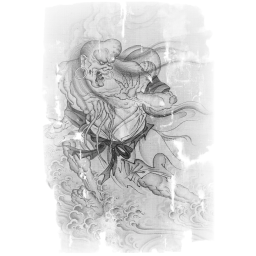


 Guangmou
Spirits
Guangmou
Spirits 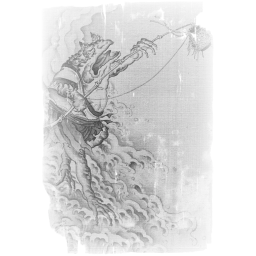
 Baw-Li-Guhh-Lang
Spirits
Baw-Li-Guhh-Lang
Spirits 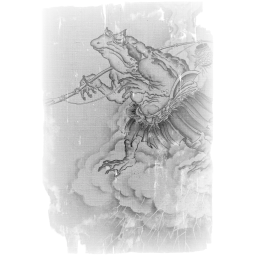
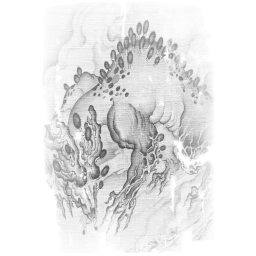
 Earth Wolf
Spirits
Earth Wolf
Spirits 
 Second Rat Prince
Spirits
Second Rat Prince
Spirits 
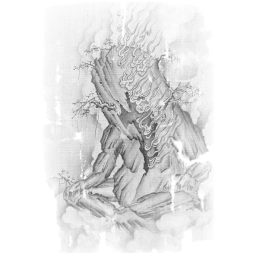

 Tiger's Acolyte
Spirits
Tiger's Acolyte
Spirits 
 Gore-Eye Daoist
Spirits
Gore-Eye Daoist
Spirits 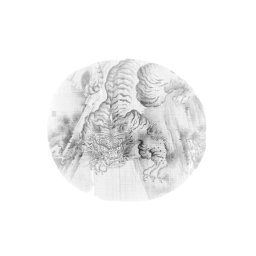
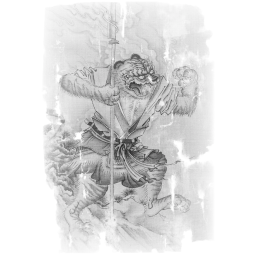
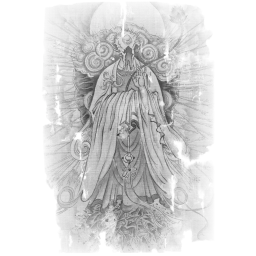
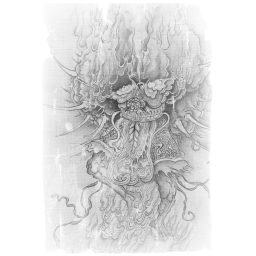
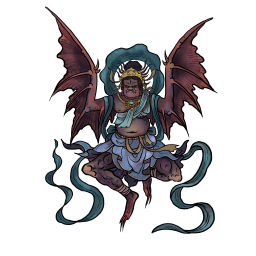
 Apramāṇa Bat
Spirits
Apramāṇa Bat
Spirits 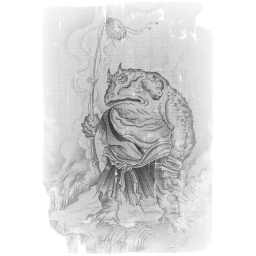
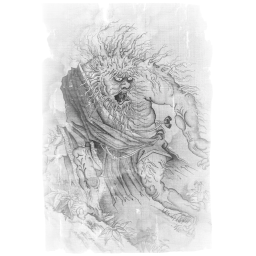
 Old Ginseng Guai
Spirits
Old Ginseng Guai
Spirits 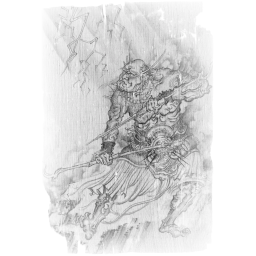
 Non-White
Spirits
Non-White
Spirits 
 Non-Pure
Spirits
Non-Pure
Spirits 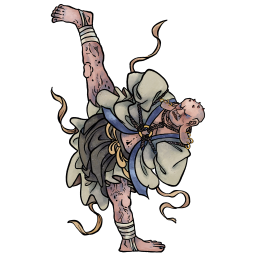
 Non-Able
Spirits
Non-Able
Spirits 
 Non-Void
Spirits
Non-Void
Spirits 
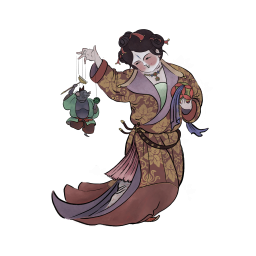
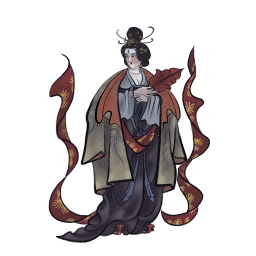
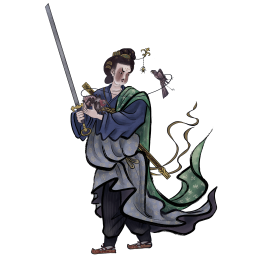

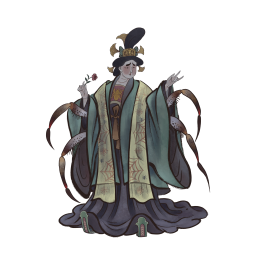
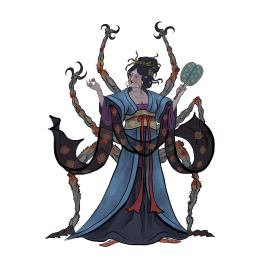
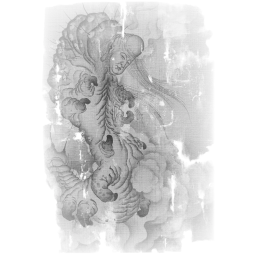
 Elder Amourworm
Spirits
Elder Amourworm
Spirits 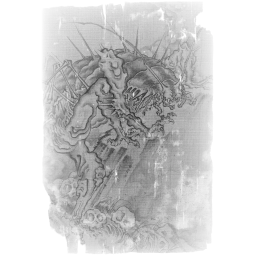
 Centipede Guai
Spirits
Centipede Guai
Spirits 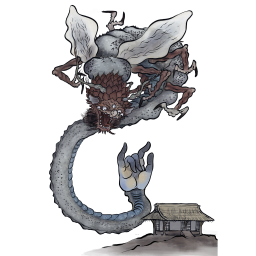
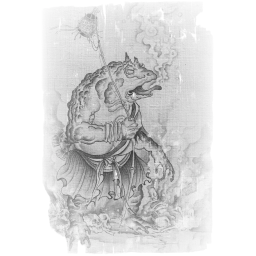
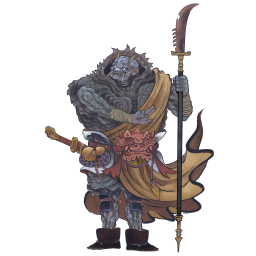
 Commander Beetle
Spirits
Commander Beetle
Spirits 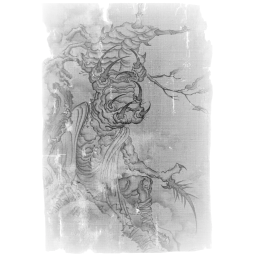


 Father of Stones
Spirits
Father of Stones
Spirits 

 Misty Cloud, Cloudy Mist
Spirits
Misty Cloud, Cloudy Mist
Spirits 

 Flint Chief
Spirits
Flint Chief
Spirits 
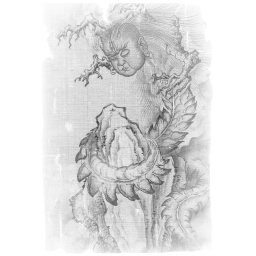
 Mother of Flamlings
Spirits
Mother of Flamlings
Spirits 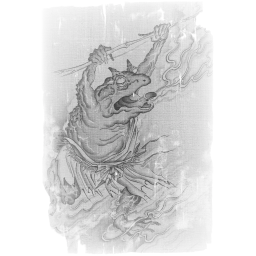



 Top Takes Bottom, Bottom Takes Top