
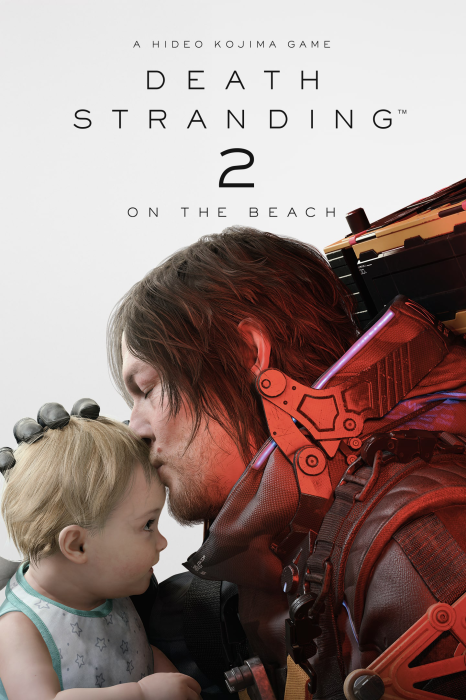
Death Stranding 2: On The Beach Review


Pros
- + Stunning visuals and graphics
- + Haunting and somber soundtrack
- + Meaningful quality-of-life gameplay improvements
- + Smart combat and design changes to smoothen rough edges
- + Riveting and reflective narrative
- + Excellent performances and acting across the board
Cons
- - A middle section that can drag
- - Odd creative choices surrounding Tomorrow and her character
Kojima just knows how to hit the nail on the head at the right time. Death Stranding 2: On The Beach is a much tighter and well put-together game thanks to its nature as a sequel. It actively responds to feedback and criticisms from the first game, providing a wealth of impressive and meaningful quality-of-life improvements and telling a story that feels more focused and true to its characters, but feels grounded in the reality of our modern day with commentary on the state of, well, everything.
There really aren’t many areas where it stumbles, and just like how Death Stranding was a game shaped by the world events that came after, Death Stranding 2: On The Beach feels poised for the same fate.
A Return to A Life Few Know
Set eleven months after the events at the end of Death Stranding, Sam has left Bridges and the UCA behind with Lou (BB-28). He is living with Lou at a shelter in Mexico, raising his daughter and escaping the politics and bureaucracy of the United Cities of America, and the automation of deliveries across America.
However, he is pulled back into the Porter life by Fragile, who ambushes him in his shelter and offers him a chance to help her and reunite with an old friend by linking up Mexico on the Chiral Network. In the meantime, she will take care of Lou. But not all goes to plan, and after linking up Mexico, Fragile and Lou are attacked by a mysterious cult.

The intro here feels far more fleshed out and the driving force behind Sam’s journey is much stronger this time around.
Directionless and with no purpose after the events of Mexico, Sam agrees to travel with Fragile and her crew to Australia and help her new delivery company, Drawbridge, link up the country at the wishes of a mysterious corporation called APAS and its leader, The President (played by Alistair Duncan). After all, being a Porter is all Sam has ever known since the events of the Death Stranding.

Sam ventures into Australia from Mexico via the Plate Gate that appeared after he connected America to the Chiral Network.
What plays out is a riveting and grand journey across Australia that sees Sam, Fragile, and newcomers Tarman and Dollman link up the country and learn more about the continent, who was behind the attack in Mexico, and the mysterious cult that is spreading across the regions. The scale here is far bigger than what we saw in the first game, whether it is the sheer size of Australia’s map (which is one huge open world) or the variety of dangerous terrain and natural disasters you will come across as Chiralium warps the country of Australia and the terrain.
Death Stranding 2 is simply operating on a scale that the first game could never achieve on PS4 and doing so while looking visually jaw-dropping. The opening of this game is unbelievably beautiful, and it’s hard to believe it isn’t video footage of a real-life landscape at times.

Photo Mode allows you to take some screenshots that show off the true beauty of the Decima engine and the game.
The biome variety is amped up, there is a day and night cycle, and the effects of these on the game are substantial and allow you to feel like you are in these situations in a way the first game desperately lacked with its static maps and landscapes.
The world here feels truly alive and ever-changing.
Whiteouts high in the mountains completely smother your screen in snow, giving you almost no visibility. Gatequakes (earthquakes) can cause you to stumble as you navigate cliffs, knocking you off balance or causing you and your cargo to take a tumble. Bushfires can break out in forests after a meteor shower, plastering the landscape in flames and limiting your traversal options as the burning bark and grass spread like a real fire would. Floods can destroy structures along rivers, forcing you to rebuild them.

Weather events and natural disasters throw in a substantial sprinkle of unpredictability to the game’s deliveries and postgame as you further explore Australia.
The world here feels truly alive and ever-changing. One of my main criticisms, alongside many other people, with Death Stranding was that the maps and world felt very one-note. Besides Timefall and Timefall Snow, very little changed over the course of the game, and it feels like that was heard loud and clear by Kojima. He also does a really impressive job of connecting this gameplay variety to the world and lore, as Earth is growing more unstable following the Chiral Network being established in America.
Tools of the Trade
To deal with that unpredictable world, Kojima Productions has made a lot of really impressive gameplay tweaks and changes to delivery management and cargo organization that have a dramatic effect on gameplay by making everything less burdensome, while still staying true to the life of a porter.
The biggest of these changes is the ability to manage practically all of your cargo via a weapon-wheel bound to the d-pad. Hitting this button allows you to quickly choose between offloading your cargo, taking off your backpack completely, auto-arranging your cargo, offloading used items on your back, and even entering the dedicated cargo management screen. All of this can be done right from this quick menu instead of having to fight through the pause menu and map screen that was in the first game.

The ability to quickly manage and organize cargo completely transforms the game’s flow for the better.
It’s a huge improvement and makes the whole delivery process, as you are traversing Australia and Mexico, much more enjoyable because you aren’t having to fight menus and clunky UI, which has been smoothed over here too.
There is a greater variety of human enemies and BT types, too, in Death Stranding 2, stopping the game from falling into the repetitive trap that the original did when combat started to feel monotonous. Fighting human enemies is actually fun, and most weapons in the game incapacitate and don’t kill humans, allowing you to enjoy the game’s robust third-person shooting and melee action without having to worry about leaving behind a trail of dead bodies and voidouts. Combat as a whole is an enjoyable experience this time around.

There is a renewed focus on stealth here, with improved mechanics, more flexibility, and better AI, too.
If you do kill someone, a voidout also happens in-world now, and the game continues. It doesn’t just cause an instant fail, which was hugely frustrating in the first game. Plus, seeing the effects and the aftermath of a voidout with your own eyes is one of the moments where the Decima engine, Death Stranding 2 is built off of, gets to show what it can do.
Additionally, to deal with the increased threats and dangers in the world, Death Stranding 2’s map has been overhauled with a much more detailed 3D design that allows you to see terrain differences and environments clearly before you head out on a delivery. You can also plan routes better, as terrain elevation and a list of threats like BTs, humans, and flooding rivers are showcased on a summary that can be used to gauge your route and the delivery ahead of time or in the middle of your journey.

The improved route planner and danger indicators are a fantastic improvement here.
I realize this is just a list of small tweaks or gameplay changes, but when combined together, they coalesce incredibly well and make the entire gameplay experience smoother and more enjoyable than it was in the original Death Stranding. They even managed to make Neil Vana’s sections of the game, which parallel Mads Mikkelson’s from the original, more enjoyable and less of a laborious cat and mouse chase.
While I can’t talk about them in detail, the addition of several new vehicles, modes of transport (like monorails, which allow you to ship containers of cargo and items across the country), and equipment allows for more creativity, and turns the game into a sandbox with a litany of toys you can play and tinker with to aid you.
Death Stranding 2: On The Beach is a drastically improved game over the original.

Like with the first game, player-created structures, roads, and infrastructure transform the game.
I’m Putting Together A Team
The core third chunk of Death Stranding 2’s excellence and why it exceeds the first game comes down to the way Kojima handles the story and narrative this time around. It feels like Kojima was able to focus more on the individual characters and the core driving force and motivations pushing them forward in this game, now that the world was already established in the first game.
It feels less like he is on a string being pulled around by the people around him as he goes off to Australia. And, with the return of Higgs, both he and Sam are shown as two sides of the same coin, as the narrative takes a turn to focus on masculinity and the role fathers play in a way I wasn’t expecting.

Sam is at the center of this story. Everything revolves around him and where he is at in a way that the first game never tried to do.
Hidden underneath the Kojima wackiness and spectacle, Death Stranding 2 is an incredibly sad game about the state of masculinity and how men don’t get in touch with their emotions or simply gloss over how they feel and run on a metaphorical treadmill to give themselves a purpose. Whether that be sinking into a growing depressive pit, the dejection that comes from working while your job slowly gets replaced by automation or turning to an extreme ideology to find someone to connect with.
Norman Reedus’ performance really captures the mental state of Sam so well. He barely talks throughout the game, but so much is shown on his face and in his body language that made me connect and see myself in him, something the first game never did. As someone who spent a lot of time in my life feeling weighed down by the expectations of masculinity and the role of men in society, the game’s latter half hit me and brought up thoughts and feelings I haven’t felt in years that culminated in a cathartic 45 minute cry as Higgs and Sam’s journeys came together towards the end of the game.
It is all backed up by an incredible original soundtrack and a collection of songs and tracks pulled from the likes of Woodkid, who perfectly reflects the game’s more somber tone, and the return of Low Roar, alongside new tunes from Caroline Polachek and others.

The combination of sound with visuals, effects, and gameplay coalesces in a way that goes beyond anything in the first game.
As much as this game focuses on Sam, it also focuses on the people around him. Fragile and Sam build up a crew of fantastic outcasts and misfits that join you onboard the DHV Magellan ship, bringing together the game’s many sprawling plotlines to focus on what can be done when you bring people into your group and pull people in from outside your tribe. It’s also fascinating to see how this intersects with Sam’s emotional state and his distant personality, which means he fails to connect with everyone in the same way they do with each other. In fact, the only person Sam ever really feels in touch with is Dollman, an anthropomorphic doll with the soul of a man inside it that rides on his hip and he chats with on his journeys.
The one weird factor in all of this is that despite excellent performances from the cast all-around, the role of Tomorrow (Elle Fanning) for much of the story is a backwards one. While I enjoyed where she ends up as a character and the idea behind her introduction to the crew, she is infantilized a bit too much in a way that can feel uncomfortable at points, especially when the camera’s perspective is often on her feet or she is wearing nothing but a pure-white heavenly dress. The best comparison is Quiet from MGSV, where she was uncomfortably clothesless for a reason manufactured by the game’s story and Kojima’s writing. It’s just weird all-around, especially considering the context of it all when you reach the end.

A lot of creative choices made with Tomorrow are extremely strange and uncomfortable in the context of the full plot, even if the endpoint is a satisfying one for the character.
Despite this, Death Stranding 2: On The Beach is a drastically improved game over the original. It does what a sequel should and tightens almost every aspect of the experience, while managing to deliver a narrative that feels grander and more intimate than its predecessor. Despite dragging a bit in the middle and some uncomfortable framing of Elle Fanning’s character, it is another feather in Kojima’s cap with a story that will stand the test of time and continue to reflect our changing world.
A tighter sequel in every way
Death Stranding 2: On The Beach is a sequel that fulfils all the promises of the first game and smooths out the many rough edges the first entry suffered from.
Gameplay:
Sound:
Graphics:
Story:
Value Rating:

No Comments