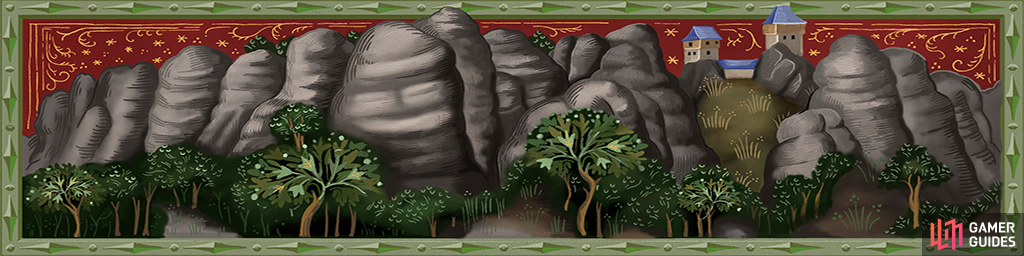
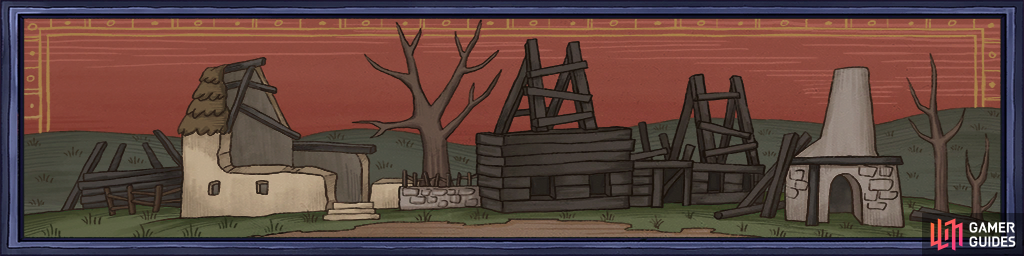
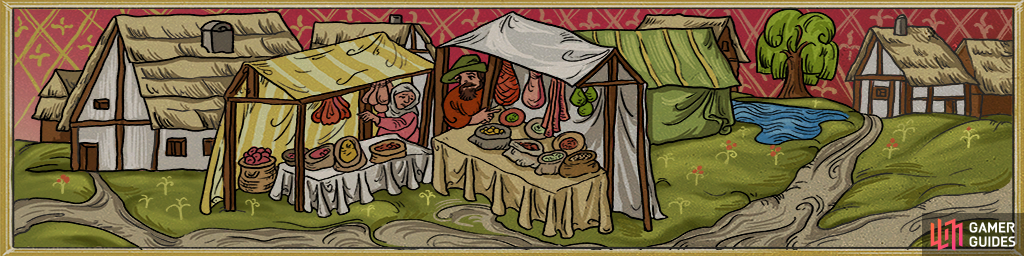
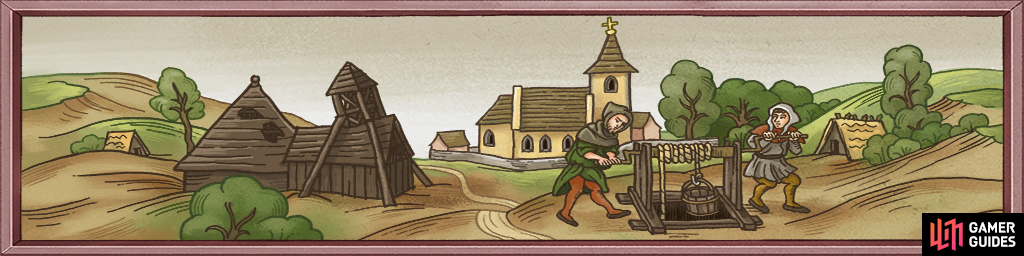
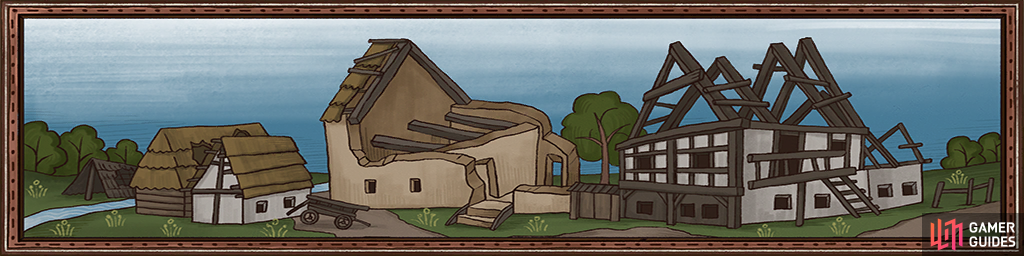
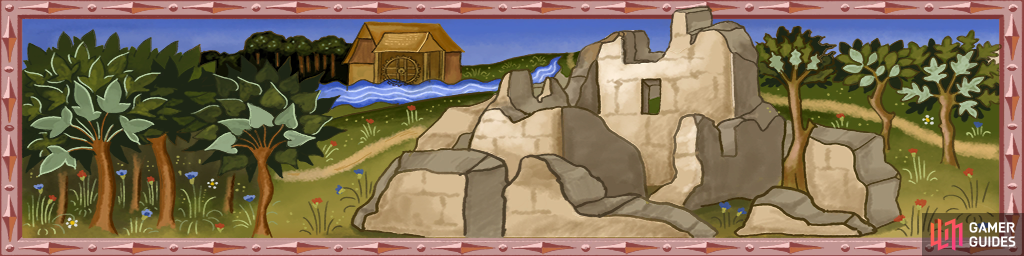
A local legend says that Apollonia was the daughter of a wealthy landowner who fell in love with a poor boy. Her father was against it, so he arranged for her beloved to be conscripted into the army for seven years, where he lost his life. When Apollonia learned of this, she went mad with grief and left for parts unknown. Her mother later found her, sick and emaciated in a cave in a rock town, which the girl now called home. The girl refused to come home and died in her arms. This is not a ‘town’ in the true sense of the word, but a complex system of sandstone rock formations near the Trosky castle and the village of Troskowitz.Many paths wind through the rocks with caves underneath them that historically provided refuge for outcasts and exiles, as well as villagers seeking shelter from approaching armies. Due to severe erosion of the weathered sandstone, public access has been completely restricted and the site has become a protected nature reserve. Visitors can, however, visit other very similar rock towns that are peppered throughout the so called Bohemian Paradise.
A settlement 1.5 km southwest of Kuttenberg built along Bylanka creek. According to archaeological findings, the history of the local settlement dates back to the New Stone Age (about 4,000 BC). The first written mention of the village is from 1143, when Miroslav of Zimburg donated it to the Sedletz Monastery. The village later passed from the monastery into private hands and often changed owners. Near the village is the Spring of St Adalbert (pramen sv. Vojtěcha), which supplied the whole of Kuttenberg through wooden pipes, starting in the Middle Ages. To this day, massive slag heaps lie in the village along the Bylanka creek. These are remnants of medieval mining, when surplus and waste material from nearby mines was deposited here.
The Danemark Mill was built above the Vrchlitz river during the economic growth of Kuttenberg, possibly even earlier than the 15th century. It deserves to be remembered and immortalized in the game, mainly because it is the last surviving Middle Age building among many similar ones in the area. It can be viewed today having undergone an 18th century reconstruction and no longer serves as a mill. Who knows, perhaps the longevity of this building was due not only to its owners, but also to the spirits of the first settlers in the area. Traces of prehistoric settlement, dating back to the early Eneolithic period (4,400 and 2,000 BC), have been found on the rock above the mill.
The Duchy of Brabant was a geopolitical county, located in the historic Netherlands, on the territory between the rivers Zenne and Dender. Its founding was decided in 1183, by Frederick I Barbarossa, the Holy Roman Emperor at the time. He elevated Count Henry I of Brabant, to the position of Duke of the Brabant Landgraviate. This political decision was intended to resolve the administrative confusion with the imperial fiefdom, that had arisen after the death of the previous Count of Brabant, Hermann II. In 1430, Philip III the Good, inherited the duchy, which became part of the Burgundian Netherlands, along with Limburg and Lower Lotharingia, and then from 1482, part of the Habsburg Netherlands. At the end of the 16th century, the Dutch Revolt brought about the division of the territory of the Duchy of Brabant between the Netherlands and Belgium.
The village was founded by miners sometime in the mid-13th century, when silver ore began to be mined in the area. In the 1270s, according to records, 300 miners and their families were already permanently settled on the nearby Kuklík hill. Legends say that when King Přemysl Otakar II of Bohemia went to battle and needed horses for his army, he took 500 of them from Kuklík alone, which interrupted mining for a while and the miners had to leave. Under Wenceslas II, new silver veins were discovered, which attracted new miners. The village began to expand and the German name for it became ‘Grunt in Mariae’ (Valley or Mine of the Virgin Mary, abbreviated to Grunta in Czech). In addition to residential houses, infrastructure for processing the extracted ore also began to appear, as well as facilities for sorting, crushing or smelting. The waste from mining was enormous, so the remaining tailings and slag began to be exported around the area and new landforms were created. In the village there is also the Church of the Visitation of the Virgin Mary. Already in records from 1305 it is written that it was delapidated, so it is not surprising that in 1367 a new church was built by local miners and townspeople of Kuttenberg. The mining and smelting premises operated here intermittently until the 15th century, when silver reserves were almost exhausted (it is estimated that 80% of the ore was mined here in less than three centuries).
The settlement on the border of the Kolin and Kuttenberg regions was likely inhabited since ancient times. In the 1970s, a borehole discovered a prehistoric granary with remains of pottery of the so-called Knovíz culture (8th-6th century BC). Regarding preserved records, Horschan is mentioned in 1299, when Wenceslas II handed it over to the Sedletz monastery and Markvart Šik of Kuttenberg. In 1437, Sigismund of Luxembourg (by then already Emperor) pledged the village to the ‘Hussite King’, George of Podiebrad.
Originally, it was a fortified castle from the 13th century overseeing the safety of miners and the storage of mined material. However, over time the character of the building changed and instead of a fortress, it began to perform a more lavish and representative function, although it was still the best guarded place in Kuttenberg. Massive reconstruction began under Wenceslas II, who centralised the production of coins, until now scattered throughout the kingdom, and started the minting of the Prague groschen, which was initially helped by the famous mint masters from Florence (the north of Italy was called ‘Vlachy’, hence the ‘Vlašský Dvůr’). The court thus became the equivalent of a central bank. Under Wenceslas IV, the mint underwent massive palace-style rebuilding and a chapel was added, but its purpose and exclusivity in terms of producing ‘hard currency’ remained. From the very beginning, high-quality coins of up to 94% pure silver content were minted here and quickly became a European stable currency. Today, ‘Vlašský dvůr’ is registered as a National Cultural Monument of the Czech Republic and houses a museum. The rich wall paintings of the court no longer exist, nor are there any preserved originals. This detail is rather, artistic license on our part.
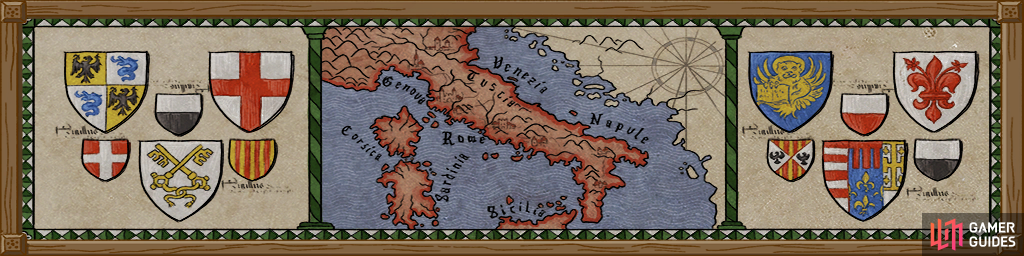
In our historical epoch, Italy as we know it today did not yet exist. Instead, there were a number of independent states and kingdoms with their own rulers and policies, which were not unified until the 19th century. Among the most important of these are Lombardy, Tuscany, the Duchy of Venice and the Papal State based in Rome. City states or maritime republics often engaged in disputes and wars. The common bond at the time being mainly language and the legacy of ancient Rome, upon whose cultural foundation much of contemporary Europe was built. Due to its strategically important location in the heart of the Mediterranean, the territory of the Italian states was mainly focused on trade. Goods from Africa and the Arab world flowed through the region, and the local navy dominated the entire Mediterranean, serving as an indispensable transport force during, for instance, the Crusades. It is no exaggeration to say that a large portion of the exotic export goods available in the Czech lands had to pass through an Italian port. Beyond trade, however, the Italian kingdoms and principalities of the time also played a significant cultural role. It was here, in our epoch, that the long-dominant discourse and, philosophical and artistic movement called the Renaissance emergred. It must be added, however, that it took a few more decades for Renaissance ideas to spread to the heart of Europe.
At the time of our game, Jews were not allowed to settle permanently in the vicinity of the silver mines, but still, there was a community in the town. It was said to be located on the site of the present-day Ursuline convent, north of the town centre. Otherwise, the Jews tended to concentrate around the town outskirts, and the separate district as we show in the game never existed. The Kuttenberg synagogue was not built until 1881.
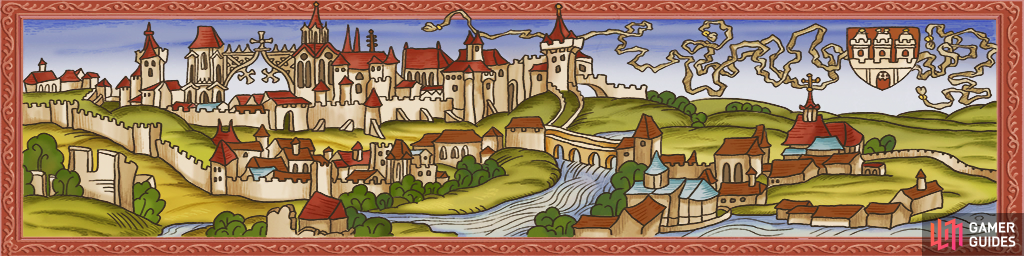
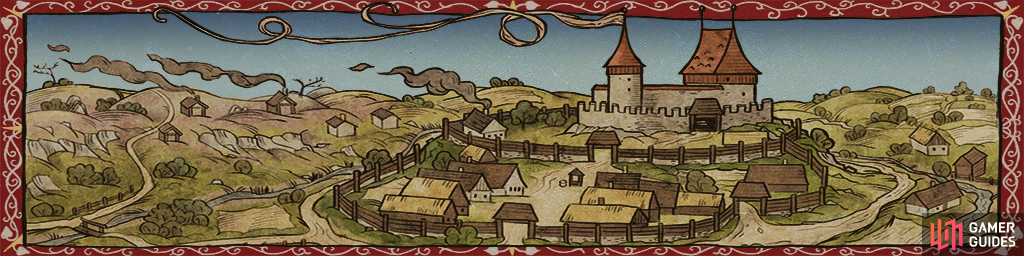
Kuttenberg (Kutná Hora) is located 70 km east of Prague. The founding of Kuttenberg (as it was called in the Middle Ages) was determined by the discovery of silver ore deposits in the area and its location near the Sedletz Cistercian Monastery, which was the trade and economic center of the region. Kuttenberg obtained municipal rights as early as 1318, and from that time on, its economic activities were overseen by the so-called Urbarer, a royal official. The safe operation of the mines and mints and the maintenance of their high standards were ensured by a set of legal regulations, the mining code (Ius Regale Montanorum). The city quickly became wealthy and had comparable privileges to Prague’s Old Town. The wealthiest residents of Kuttenberg were Germans, while the lower classes were made up of people employed in mines, smelters, mints, or services, and craftsmen. Nearly every resident of the city was involved in silver mining, coin minting, or trade. Kuttenberg’s silver treasures supported the development of other Czech towns and the construction of new buildings in Prague. The architecture of Kuttenberg was significantly influenced by Wenceslas IV, during whose reign houses were rebuilt as brick or timber-framed structures, churches were built, and the Royal Mint and other public buildings were constructed. Thanks to this, we can still admire Gothic architecture here today. The city in the game is based on the real geography of modern Kuttenberg, although we had to adjust the layout of the city. Some districts were moved, reduced, or omitted, and for optimization purposes, walls and gates were added in places where they likely never existed. Even so, we hope we managed to preserve the medieval character of the city.
Whether Loretz was already standing at the time of our game is not clear, as the first written mention of it dates back to 1418. It’s unlikely that vineyards surrounded the fortress, as they were still a hot novelty in the Lands of the Bohemian Crown at that time, but beer was brewed there. From sources dating back to 1544, we learn that Zdislav Zvířetický of Wartenberg bought the local hop farm with malt house and brewery. In 1593, the production of beer called Kumperské was documented, in 1680 Konvent beer, from 1899 it was Dačický lager and the ‘health beer’ Mincmistr. Loretz Municipal Brewery in Kuttenberg has changed owners several times during its history, but beer has been brewed here, with minor interruptions, to this day.
The name of the village is derived from the legend of a wealthy Kuttenberg burgher named Malesh (Maleš), who founded a woodcutter colony here to supply the nearby silver mountains with charcoal. The first mention of the village dates back to 1303. The fortress is first mentioned in 1359, when Purkard of Maidberk sold his village to the Sedletz Monastery which subsequently passed the village onto the Ruthards, a patrician family from Kuttenberg, in 1364. When the family was enobled in the early 15th century, they began to call themselves the Ruthards of Maleshov. They did not enjoy the fortress for long, however, because in 1411 it was given to the king’s supporter, Martin Kladný of Těchlovice. The area around Maleshov is steeped in history. For example, in 1421, Martin Kladný defended the fortress against an army of Praguers, that wanted to install its own mint master in Kuttenberg. Maleshov became an important fortress especially during the Hussite Wars in 1424. Today, the remains of the fortress include a five-story tower with Gothic windows and remnants of late Gothic fortifications making it a favourite destination for the Warhorse team.
A village 5 km southwest of Kuttenberg. The first written mention of the village is from 1384, and then another from 1445, when the village was sold to the Sasau Monastery. Otherwise, all we know about the village is that in 1932, there were 192 inhabitants and the village had two inns and two blacksmiths, while in the earlier times, we have mentions of only 45 inhabitants.
The first mention of the village can be found in 1309, when it belonged to Nechval and Peškov of Miskowitz. In 1358, part of the village was taken over by the Skalitz monastery. Until 1805, Miskowitz was enclosed by three gates, but it is not known for sure whether there was a wall between them. The fortress in the village stood since time immemorial and the first written mention dates back to 1419, when it belonged to a Kuttenberg burgher Vaněk Píšek. The area surrounding the village is rich in water and the spring of St. Adalbert, which supplied Kuttenberg in the Middle Ages, can be found here.
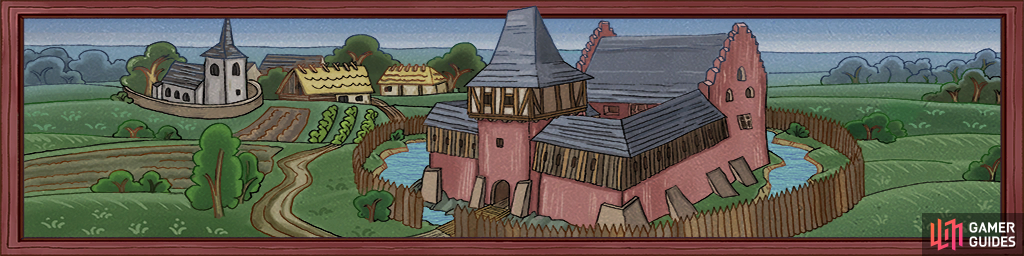
The castle was likely built at the end of the 13th century on a promontory overlooking Nebak pond, surrounded on all sides by steep cliffs and water. To construct the fortress, the rock beneath it had to be manually hewn away and levelled, which was a relatively complex process for its time, given it was a small noble castle of little significance. According to archaeological research, it had a three-part layout with a courtyard and a fortified keep, connected to other parts of the complex by a bridge spanning a rocky moat. The first mention of the castle in historical sources only appears in 1455. The castle burned down at the end of the 15th century and from 1538, it has been described as abandoned and in ruins. From the fortifications, only the ramparts, moats and notches in the rock have been preserved to this day. We endeavoured to reconstruct the castle in the game, so that its appearance aligns as much as possible with archaeological findings.
Old Kutna was a mining settlement and likely one of the original settlements associated with silver mining even before the establishment of the town of Kuttenberg in the late 13th century. It was located on the north-western edge of today’s town, as evidenced by records dating back to 1369, and subsequent archaeological surveys, that uncovered the foundations of several buildings. In addition, the Church of All Saints still stands here, originally a Romanesque chapel rebuilt in Gothic style and later rebuilt many more times, so that the only remaining element of the original buliding is a relief of an angel bearing the town’s coat of arms.
As the name suggests, the village probably owes its foundation to the abbots (opati) of the nearby Sedletz Monastery, who from the 13th century tried to colonise this inhospitable and sparsely populated region. The first written mention of the village dates back to the latter half of the 14th century, when it belonged to the Kuttenberg burgher Jan Glenc. The farmstead of Opatowitz was founded sometime during the 14th century by the monastery, which subsequently supported it until it was sold to another wealthy Kuttenberg burgher, Wenceslas Bartosch (Václav Bartoš), in 1379.
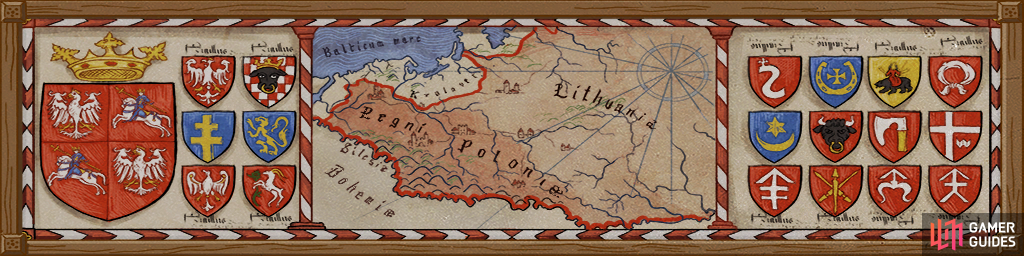
In Poland at the turn of the 14th and 15th centuries, similar to the Czech lands, wars over governance, territory, and faith were occurring. The country’s prosperity and its cultural and economic growth were particularly hampered by the relentless attacks of the Teutonic Knights from the so-called Crusader states on northern Polish territories, justified by the need for Christianization and the suppression of the still dominant paganism in the Baltic region. Unfortunately, Poland was not unified for long, because after the death of Casimir III the Great, the Piast dynasty, which had long unified and ruled the country, ended in the male line. The crown was taken by Casimir’s cousin, Ludwig I of Anjou, the King of Hungary, but he struggled to gain the obedience of the Polish nobility, and his rule and ability to unite a larger coalition against the Crusader invasion were thus very limited. The most suitable solution eventually was the marriage of Ludwig’s daughter Hedwig to Jagell, the Grand Duke of Lithuania. He took the name Vladislav, was accepted as the King of Poland, and, along with the rest of Lithuania, was baptized. This created the Polish-Lithuanian coalition, which significantly weakened the Teutonic Order. However, the Crusaders did not want to give up so easily, and the war continued for many more years. A turning point in this conflict was the Battle of Grunwald in 1410, in which the Teutonic forces were decisively defeated by the Polish-Lithuanian army. Many Czech fighters fought on the side of the Poles at that time, including Jan Zizka and Jan Sokol of Lamberg.
Today, there is a system of several ponds around the Trosky Castle. Although they were built in the 16th century, we decided to leave them in place because of the amazing views that their surroundings offer. The largest of the ponds is the Rocktower Pond, which covers an area of 9 hectares, the others are Vidlák, Rokytňák, Kerchak, Hrudka and Lower Pond. In the Middle Ages, Nebakov Fortress stood near Nebakov Pond. The area is now a nature reserve, called Podtrosecká Valley. It is the largest complex of wetland habitats in the Bohemian Paradise region and is home to many species of strictly protected organisms. If you ever decide to visit Trosky Castle, we recommend you stop by this nearby locality as well.
Capital of the Kingdom of Bohemia. For many centuries it was rather a close neighbourhood of several different towns on both banks of the Vltava River. Its greatest prosperity was brought about by Charles IV, who united these towns into a single unit and made it the residence of his imperial court. He began building strong fortifications, contributed to significant changes in the city’s architecture, started the construction of the first Czech cathedral and founded the first European university north of the Alps, Charles University, thus elevating the city to a European metropolis. At the turn of the 14th and 15th centuries, according to surviving records, there were 4,000 houses in Prague with a permanent population ranging from 40-50,000. Additionally there were students and the royal court. Although Prague could not compare to the size of Florence or Paris, it was still the largest city in Central Europe. With its convenient location at the crossroads of trade routes, Prague was an important trading location and, thanks to the University, a cosmopolitan centre with a large foreign population.
The first written mention of the village Pschitoky dates back to 1141, according to which it was in possession of the Olomouc archdiocese. In 1249, Pschitoky was briefly held by Havel of Löwenberk, and a year later the Olomouc bishop Bruno of Schauenberk ceded the village to the Sedletz Monastery. In the 14th century, the farmstead and part of the village belonged to various patrician families from Kuttenberg, such as Ondřej Puša, under whom a Gothic fortress was added. In 1397, Wenceslas Bartosch (Václav Bartoš) became the owner, and pledged to pay a permanent fee to the Kuttenberg almshouse from the farmstead. After the Hussite Wars, Hanush Ferydan held Pschitoky, burdening the farmstead and fortress with many debts which he refused to pay, so in 1443 the chief mint master decided that Hanush and his descendants ‘from now and for all time’ had to pay 50 dozen groschen to the Kuttenberg almshouse every year. The last burgher to own Pschitoky was Voršila Cihelníková, who sold the estate to Václav Materna of Květnice in 1501. The Maternas rebuilt the Gothic fortress in the Renaissance style. To this day, only the Gothic vaulted cellar remains, though in a very poor condition.
The first written mention of Raborsch appears in 1362. At that time, the adjacent village belonged to Mikuláš Velkuš, a townsman from Kuttenberg, who sold it to Mikuláš Wonderbute between 1386-1389. The rapid change of owners is characteristic of the fortress, even to this day: after his death it passed to King Wenceslas IV, from whom it was acquired by another Kuttenberg burgher, Martin Oderin. In 1402, the fortress and the village were burnt down by King Sigismund of Hungary during the siege of Kuttenberg. The remains of the fortress continued to change hands during the 15th century until they came under the administration of King George of Podiebrad and from there to the captain of Kolin, Jan Hrabaň, at Přerubnice. The list of subsequent owners is extensive. Today the fortress (rebuilt into a castle) is privately owned. Only part of the masonry of the south-east corner and one room with a ribbed vaulting have been preserved from the original Gothic building.
Rabstein Castle (from German: ‘Rabe’ - raven, and ‘Stein’ - stone, therefore sometimes also known as Krkavec Castle, Raven’s Stone or Crow Stone) was built in the 14th century by Nicolaus Rabenstein, a wealthy burgher from Kuttenberg. The settlement likely stood on a promontory above the Vejvanovský stream which flows into the Vrchlitz (Bach) river. A mill called Rabštejnka was later built near the castle. Sources mention the castle until its demise in 1455. Local floods often occurred in the vicinity of Vrchlitz river, so today most of the ruins are submerged. We know that after Rabenstein’s death, the property belonged to other rich families from Kuttenberg: the Rotlevs, after 1416 the Piseks, and then the Lems. For the purposes of our game, however, we have decided to present the site in the form of a romantic ruin.
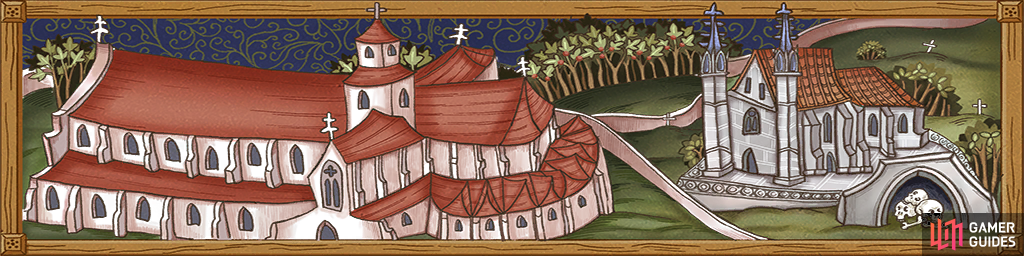
The Sedletz Monastery used to be the oldest Cistercian abbey in the Czech Kingdom. Founded by the Bavarian Abbot Gerlach in 1142 , it was later abandoned and reoccupied many times in its history, either due to wars or poor financial situations. In 1421, it was burnt down by the Hussites, only the Church of the Assumption of the Blessed Virgin Mary and St. John the Baptist survived. After the end of the war, only a few monks returned and it remained in this dismal state until the 17th century. In 1783, the monastery was completely abolished by an imperial decree. The cemetery church of All Saints with the adjacent burial ground was originally part of the monastery, but later it began to serve as the municipal cemetery for Kuttenberg, because as records showed, burials were taking place there long before the arrival of the monks. The cemetery was at its busiest during wars and plague epidemics. In 1318 alone, 30,000 dead were buried there, and another 10,000 during the Hussite wars. The site is shrouded in many legends. The most famous one states that the abbot of the Heidenreich Monastery brought a handful of dirt from Jerusalem on his pilgrimage to the Holy Land, which he then scattered around the cemetery and the ossuary. Thus, the cemetery ground became sacred and highly sought after, not only by the people of Kuttenberg, but also by pilgrims and those wishing to be buried there from all over Bohemia and neighbouring regions. Who wouldn’t want to rest in the ground where Jesus Christ himself once walked? Today, a cigarette factory is located on the site of the former monastery.
The ossuary is an underground chapel of the All Saints cemetery church, built in the second half of the 14th century, which originally belonged to the Cistercian abbey in Sedletz. It bears an uncanny resemblance to the underground chapels of Jerusalem where pilgrims were buried. During the Hussite wars, the monastery was burnt down and abandoned together with the ossuary. It was not rebuilt until the second half of the 15th century. In 1511, the bones from the cemetery were exhumed and moved to the ossuary’s underground , where a half-blind monk put them together into famous pyramids and bone structures. In our game, however, we decided to attribute their creation to Henry. In its later history, the Sedletz ossuary underwent Baroque modifications and today it is one of the most popular tourist sites in the Czech Republic. The bone structures, made from the remains of more than 60,000 people, have undergone extensive renovation and, as a memento mori, are still a reminder that: dust thou art, and unto dust shalt thou return…
The village is first documented in sources from the year 1339, when it was held by Heřman of Semine. Settlement in the vicinity of the village, however, is known as early as the mid-1st millennium BC, as evidenced by the findings of old burial sites and the remains of ramparts from an old Celtic oppidum. In 1379, Mikuláš Tatka of Semine ruled over the Semine fortress, and became the patron of the local church. Other owners included Jan Sirotek of Semine together with Anna of Slatinek, and later her son, Jan of Slatinek. After the Hussite Wars, the Hanykéř family became the owners of the fortress, though it is quite possible that by that time, the fortress had already been plundered and was empty, as a result of the wars. Today there are only a few houses of a farmstead on the site, along with a newly built replica of the fortress, serving as an exhibition hall and gallery. To this day, there are still remnants of massive ramparts in the area. The Lower Semine mill, built in the first half of the 16th century, has also been preserved.
The area where Skalitz (Skalice), the birthplace of our hero Henry, is situated today, was probably settled in the 13th century. The development of the town was prompted by silver mining in the area as well as the existence of the nearby parish of Rovná. The owners of the castle included Ješek of Skalitz (from 1384) and Bohdal of Drahonice (1402-1403). In 1403, Wenceslas IV took possession of it and placed it under the governance of the knight Sir Radzig Kobyla. However, in the same year, he had to leave the castle in order to save the inhabitants of Skalitz from Sigismund’s army, who torched the castle and the adjoining village; the estate was never rebuilt. In December of 1403, Wenceslas IV granted the remains of the village to Jan Sokol of Lamberg. The ruins of the medieval castle and its fortifications was scavenged for building material for the Church of St. John of Nepomuk. Today, only a small part of the masonry of the gate, the bailey and the walls remain.
Construction of the church dedicated to St. Barbara began in 1388, when local wealthy miners, townspeople and patrician families decided that the town needed a representative sanctuary. Intermittent construction and alterations continued until the beginning of the 20th century, fortunately always with sensitivity and respect for the original Gothic style. The Cathedral of St. Barbara is one of the four cathedrals in Bohemia, and the fact that the building was funded by the townspeople and not by the church was later reflected in its unique decoration. The original Gothic paintings depict miners and craftsmen from the smelters in addition to classical church motifs. Later additions such as stained glass windows (added since the early 20th century, with the latest from 2014) depict not only saints, but also figures performing various modern professions. In the game you can find many references to the cathedral from townspeople and guild members, for whom the construction of the cathedral was a matter of prestige. The wealthy competed to immortalise themselves in the decoration through generous sponsorship, including securing specific altars. Space and the number of altars were limited, so only the most generous could leave their mark in history.
The Gothic fortress probably originated in the 13th century, commissioned by one of the Kuttenberg patricians. It had a square layout with the corners facing the cardinal points and was surrounded by walls, a moat and a rampart. From the northeast, the entrance to the fortress was secured by a bridge and a double gate protected by the main tower. Inside the fortress, a single-story palace ran adjacent to the wall, with a smaller tower and a single-story outbuilding. Today, a castle stands on this site, which retains only parts of the perimeter masonry, part of the gate portal and the stone seats on the ground floor of the former tower, as a reminder of the fortress.
The Devil’s Den is still today one of the smallest settlements in the Kuttenberg region. Unfortunately, no records of its appearance in 1403 have survived, but in the 16th century, the infamous Devil’s tavern stood on its site, where the lowlifes of Kuttenberg often gathered, and which served as a model for our Devil’s Den. The name of the settlement and the tavern comes from a legend, according to which, devils were said to come out of the local mines and fly over Kuttenberg at midnight. They were only driven from their dens by water, which later flooded the mines. We also learn about the dark character of the former inn from the memoirs of Mikuláš Dačický: ‘Michal’, a messenger of the mining authority, killed the innkeeper Št’astný with a spear in the Devil’s tavern near Kuttenberg, where there was a den of rogues and whores. They were fighting over some gloves.’
Trosky Castle was built around 1380 by Čeněk of Vartenberk between two basalt rock formations of a long-extinct volcano. The castle derived its name from the shape of the rock, which resembled the ruins of a collapsed castle. After Čeněk’s death, the castle passed to King Wenceslas IV, from whom it was acquired by Otto III von Bergow, who is listed as the owner since 1399. Structurally, the castle consists of two landmarks still standing today: the Crone tower, and the Maiden tower. Between them lies an elongated castle core with two palaces, transitioning into a fortified outer bailey on the northern side. The entire castle is rugged and complex, traversing it requires covering a long distance with elevation changes. Neither of the entrance gates were protected by a moat - it was not necessary, given the other defenses. The gate leads to the eastern part, where the three-story residential palace once stood. On the western side there was a second palace primarily built of wood. On its ground floor was a forge, which was in use until the 17th century. Today the castle is accessible from spring to autumn and is one of the most visited ruins in Bohemia. The ramparts and the gate have been restored and the lower tower has a viewing platform open to the public with a far-reaching view of the entire Bohemian Paradise region.
An area, also known as Bohemian Paradise, about 90 km north-east of Prague with a great number of natural and cultural monuments. The main landmarks of the region are Kozákov Mountain and Trosky Castle, while other important sites include, for example, the Prachov and Klokoči rock formations, the castles Kost, Waldstein and Sychrov, and a number of ponds. Its picturesque landscape is mainly underscored by the ubiquitous sandstone rocks, characterised by their steep and rugged reliefs and towers. It is an important protected landscape area and a popular destination for climbers. Nowadays the area is crisscrossed with a dense network of tourist trails, making it a haven for nature lovers and enthusiasts of historical landmarks. In the medieval period the region was quite bustling, particularly due to the numerous castles, fortresses and fortifications, which are located almost literally on every hilltop.
Troskowitz The first mention is found in 1388 in connection with the nearby castle, but the village probably existed long before that. The village got its name from the rock on which the castle was later built, as the rock resembled the ruins of a castle from a distance.Tachov A small village 1.5 km north of Troskowitz, first mentioned in sources in 1388. A nameless stream flows through it, emptying into the Krčák pond, forming cascades along the way and a waterfall about 10 metres high. Today, the village is part of a protected area and the ‘Golden Trail of the Bohemian Paradise’ passes through it. Zhelejov There are only a few mentions of Zhelejov. Notably, in 1558, the three sons of Lord Semine sold the fortress and the village to the ‘Skalské panství’. The fortress was abandoned during the wars with the Swedes.
It is the hill where in 1142, a memorable battle took place between King Vladislav II and Prince Conrad of Znojmo, supported by rebellious nobility. The king suffered a great loss due to the treachery of his own people. In the 13th century, an early Gothic church dedicated to the Visitation of the Virgin Mary was built on the hill, which has survived almost unchanged to the present day. Today, at the summit, at an elevation of 471m above sea level, stands a lookout tower with a beautiful view of the surrounding area.
Settlement in the area dates back to the late Stone Age (about 3000 BC). Today, however, only traces of an early medieval fortified settlement remain in the form of remnants of moats and visible ramparts. Some historians (as well as folk legends) claim that Zimburg (Cimburk) Castle, owned by the Lords of Zimburg, once stood here and was even perhaps their ancestral home. Later, the descendants of the family built two more castles with the same name: Cimburk in Trnávka and Nový Cimburk in Koryčany. Unfortunately nothing remains from the original castle. Hence why some historians claim that such a castle never stood here and the settlement rather got its name from the nearby mine that belonged to the Zimburg family. Nevertheless, we decided to depict it in the game.