
Mafia: The Old Country Review


Pros
- + Short, focused main story
- + Competent stealth, racing and gunplay
- + Interesting, if generic side characters
- + Interesting setting
Cons
- - Poor value, given its duration
- - Disjointed semi-open world design
- - Technical issues, including frame drops and stalling cutscenes
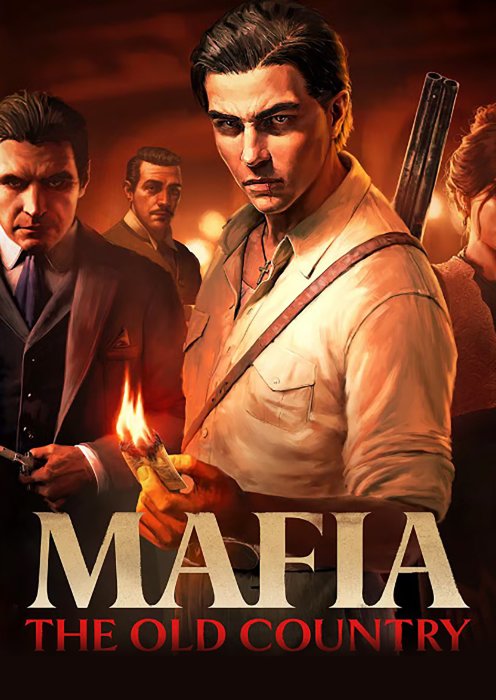
In an industry defined by increasingly bombastic plots spanning scores of hours, a tight, focused narrative that doesn’t overstay its welcome can be a breath of fresh air, and that’s exactly what Mafia: The Old Country delivers. Set at the turn of the 20th century in rural Sicily, the latest Mafia game follows the rise of Enzo, a young man working in the sulfur mines run by the Spadaro family. After a tragedy at the mine, Enzo ends up at odds with his Spadaro overseers, escaping only due to the timely intervention of Don Torrisi, a rival to the Spadaros.

Enzo doesn’t have much in the way of personality, and his primary ambition in life is flirting with Isabella.
Empty Enzo
Under the protection of Don Torrisi, Enzo’s journey to becoming a made man begins, with the story moving at a fairly brisk pace, introducing new characters and gameplay elements as part of Enzo’s ascent. The game’s many cutscenes (when they worked correctly…) are well produced and animated, which is a good thing as roughly half the game’s 10-12 hour main story is walking and talking, riding and talking, driving and talking, carrying objects and talking, or outright cutscenes. If you’re familiar with the genre, you won’t be surprised by any of the plot points or characters here - the vengeful bully from the rival gang, the calm older gangster who mentors the protagonist, the nepotic hothead who eventually becomes the protagonist’s best friend, the forbidden love interest - but while they’re not novel, they are good examples of their archetypes.
As for our leading man, Enzo doesn’t have much in the way of defining characteristics, trending towards a generic self-insert. If Enzo has one defining trait, it’s gumption; He has the audacity to step up in big moments for Don Torrisi, usually to stick it to the hated Spadaros or rescue Isabella (Don Torrisi’s daughter), and the plot’s swift pace demands unlikely excellence out of Enzo every time, whether it’s winning a horse race (or car race) without much prior experience or going from a miner-turned-farmhand fleeing for his life to a Sicilian Rambo gunning down an entire bandit gang. Despite Enzo’s omnicompetence, he’s not terribly ambitious - aside from fancying Isabella and a smoldering dislike for the Spadaros, Enzo doesn’t seem to have any aspirations save sustenance and security - fame and (relative) fortune come to him via his associates and the heroics Enzo casually indulges in on their behalf. Some may choose to view this as bland storytelling, but the relative grounded nature of the characters in Mafia: The Old Country is a double-edged sword, giving the veneer of authenticity at the cost of interest, and that goes double for Enzo.
the relative grounded nature of the characters in Mafia: The Old Country is a double-edged sword, giving the veneer of authenticity at the cost of interest, and that goes double for Enzo.

Both stealth and gun combat sections make use of attachable cover mechanics,

and both are serviceable enough gameplay elements. Despite their simplicity, the game’s short duration ensures they don’t wear out their welcome.
Stealth and Shooting in Sicily
The actual gameplay itself is largely split up into several components: stealth, knife duels, racing (horse and car), and third-person shooting. Like the story, these gameplay elements are all competent, but there are no innovations to be found here. You’ve got a few instances where you’re given a target and allowed to choose to be stealthy or go in guns blazing, but generally the two mechanics will alternate - sneak into a guardia station, then shoot your way out. Both systems rely heavily on snapping to cover, which is simple, effective, and intuitive. Stealth has very few embellishments; Sneak up behind an enemy and mash a button to put them down, walk up to pairs of foes and listen to them so they’ll inevitably split up, throw bottles and coins to distract them - you’ve done this all before.
When aiming it’ll take Enzo a moment to fully gain accuracy, as indicated by a shrinking target reticle, and even then, Enzo’s got a bit of aim sway which makes shooting feel a bit clumsy, but your foes are hardly sharpshooters, either, and squishy enough that you don’t need to be an ace sniper to mow them down. Enzo can carry a knife (which doubles as a lockpick, complete with a durability system of questionable utility), long rifle, and sidearm at the same time, with your arsenal consisting of pistols, shotguns, and rifles with stats indicating their damage, range, and rate of fire. Mafia: The Old Country doesn’t swing for the fences with its stealth or combat but shows a mature understanding of what works and what doesn’t based on the successes and failures of others and delivers competent enough gameplay as a result. If we have any complaints here, it’s that enemy grenades are a bit overpowered, but they’re not thrown often enough to be a major concern.
Stealth and shooting make up a significant portion of the gameplay in Mafia: The Old Country, but when it’s time for a serious encounter - a “boss fight”, if you will - the only sensible solution is clearly to knife-fight. Who knew there was this much knife fighting in early 20th-century Sicily? These one-on-one knife duels are fairly common, with mafiosos, guardia, bandits, and even striking miners all willing to engage. During these duels, you’ll have to watch the enemy’s movements and respond with a dodge or parry depending on what attack they use, and counterattack with thrusts, slashes, or guard breaks. None of these were terribly challenging, although enemies did get sneakier as we progressed through the game, and their new attack patterns and dirty tricks kept us invested, but it would have been nice to have more options for dealing with prominent enemies than always defaulting to a knife duel.
…When it’s time for a serious encounter - a “boss fight”, if you will - the only sensible solution is clearly to knife-fight. Who knew there was this much knife fighting in early 20th-century Sicily?

Knife duels serve as the game’s solution for boss battles, a surprisingly common gimmick that breaks up the tedium between races, stealth and gun combat.
All in all, there’s not a whole lot of variety in the gameplay of Mafia: The Old Country, but everything that’s here is competent, and there’s not enough of it to really wear out its welcome. The optional stealth/combat sections are the highlights, and more of that - including a broader arsenal of weapons, less restrictive map, and more varied ways to deal with objectives would have been welcome, although this is a problem alleviated somewhat by the game’s brevity. Even if you’re not good at certain types of gameplay (we suck at racing), the game’s generous checkpoints prevent these segments from becoming a nuisance.
An Aborted Open World?
Don Torrisi’s demesne isn’t massive when compared to some open-world games, but the Sicilian countryside you’ll frequently ride and drive through en route to plot objectives is surprisingly expansive considering that Mafia: The Old Country is not, in fact, a fully open-world game. There are plenty of well-crafted setpieces you’ll visit as part of the story, villas, farms, ruins, the odd town, you’ll ride or drive through and around them as part of various quests, but during the story you’ve very little room to roam, failing your quest if you stray too far from the objective area.

While riding and driving between objectives you’ll get a glimpse of the game’s true scope.

You won’t have the freedom to roam about during the main campaign - a feature reserved for the ancillary “Explore” mode unlocked via Chapter Select.
There is an “Explore” mode you can peruse via chapter select which lets you roam around freely in the hunt for collectibles (dinari, trinacria, fox statues, journal entries, and charms, the latter of which gives Enzo passive bonuses when equipped), but it’s an oddly disjointed experience. We appreciate the focus of the main questline, even if it means sacrificing freedom, but the inability to access the game’s shop during quests or circle around a building or estate you’re tasked with infiltrating just comes off as limiting and bizarre sometimes, and the game at times feels like it was intended to be fully open world before having its scope trimmed down.
Technical Issues: Frame Drops and Stalled Cutscenes
Thus far Mafia: The Old Country has largely been trending towards “good, not great” with a short run-time that’s a blessing as much as it is a liability, but there’s one aspect of the game that’s unequivocally poor: its performance. We played the PC version (Steam), and while the game looks handsome enough most of the time (aside from some wonky physics and oddly ugly hair textures), its framerate dips constantly, especially as you progress at speed through the game world. On foot, this is rarely an issue, becoming more annoying as you ride a horse or drive a car.

While transitioning into and out of cutscenes the game commonly becomes a slide show, with the odd garbled image rendering every few seconds while the cutscene dialog plays out normally.
The greatest technical sin, however, occurs when the game transitions into and out of cutscenes, whereupon the game will stall, dropping to under one frame per second for an extended period of time. GPU activity halts, but you can still hear the cutscene play out; you’re just seeing one garbled image every handful of seconds. Searching online revealed we’re not the only ones experiencing this issue, and with a 4080 Super, we doubt it’s a hardware deficiency on our end. We should be clear, cutscenes happen frequently during this game, and while the issue isn’t always present, when it’s bad, it’s nearly game-breaking - staring at gaming’s slowest sideshow, sometimes lasting minutes, at regular intervals, is frankly unacceptable. Despite posts about disabling frame generations, which were more hopeful than helpful, the only solution we landed upon was simply quitting the game after every chapter and restarting. It’s a shame, because the story in Mafia: The Old Country is one of its stronger aspects, and this technical issue unfortunately blemishes it.
…While [cutscene stalling] isn’t always present, when it’s bad, it’s nearly game-breaking - staring at gaming’s slowest sideshow, sometimes lasting minutes, at regular intervals, is frankly unacceptable.
Short, Safe, and Buggy
Mafia: The Old Country tells a fine, albeit generic story that doesn’t overstay its welcome with competent gameplay that’s just varied enough for the game’s length. Its $49.99 MSRP might be a bit high for a 10~ hour main story (maybe 20~ hours total playtime if you’re a completionist), but aside from some technical issues that presently mar the experience, a short, solid game like this might be a breath of fresh air before more traditional fare appears on store fronts late in 2025. On the plus side, both the game’s price and technical issues are problems that will get better with time, if you’re on the fence.
Competent, generic, and short.
A game with competent, generic gameplay and storytelling that doesn’t overstay its welcome, marred by the odd design choice and technical issues.
Gameplay:
Sound:
Graphics:
Story:
Value Rating:

No Comments