
A great RPG with some of the same series flaws


Pros
- + More mature story and characters
- + Gorgeous graphics and stunning cutscenes
- + Focus on Wilds’ monsters and more varied environments and interactions with the world
- + Flexible combat with a lot of different options
Cons
- - Randomized attacks in combat
- - Can be too easy
Monster Hunter Stories has always felt like a franchise limited by the hardware it was made for. The original was initially released on the 3DS, before the sequel arrived on the Switch in 2021. While the games eventually came to other platforms, they felt rather constrained by how much the 3DS and Switch could do technically.
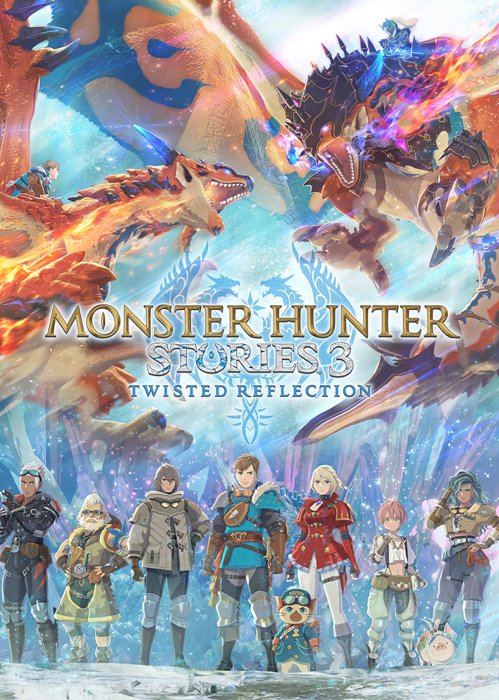
Well, with Monster Hunter Stories 3: Twisted Reflection, Capcom has given the game a huge graphical and technical boost, making it the most impressive game in the series. However, it hasn’t completely shed all of the issues I have had with the Stories sub-series, with a reliance on randomness and some rather simple, basic gameplay.
The RE Engine Shines
Monster Hunter Stories 3 is a fairly traditional turn-based RPG when it comes to setup. You play as the heir to Azuria. Early in your life, you brought home an egg that was born from two Rathalos’ which were previously extinct. One of which has been your companion throughout your life.
As you have grown older, the Crystal Encroachment has plagued the lands of Azuria and Vermeil, which are on the brink of war. This Crystal Encroachment has birthed previously extinct monsters and new forms of existing monsters, and it is your job, alongside your party, to find out the truth behind the environmental crisis and deal with the ongoing conflict between the two regions.

The narrative is far more mature than the previous games in the series.
The big change with this entry is that the narrative, characters, and themes are far more mature than those of the previous titles, which is a huge improvement. Both Monster Hunter Stories and Stories 2 felt very tame and simple when it came to their stories, and that can’t be said for Twisted Reflection, which benefits from the more serious premise.
To go alongside that, the production values here are much higher than the previous two games, thanks to modern hardware and not being limited to a handheld. Your character and the rest of the cast are now fully voiced in main quests, when exploring the world, and during cutscenes. Those cutscenes specifically are gorgeous. Twisted Reflection is built on the RE Engine, instead of MT Framework, which was used for the previous games.
This gives Twisted Reflection an impressive sheen and glossiness that can be found throughout other Capcom games like Resident Evil and Devil May Cry 5. Everything here just pops and stands out, whether it is the clean, shiny icicles that dot the world or the beautiful lighting during the game’s cutscenes.
“Everything here just pops and stands out.”
It’s a massive step up and makes Twisted Reflection feel far more like a core RPG in the Monster Hunter series than the “spinoff” vibe I got from the previous two games. Twisted Reflection is also another example of how the RE Engine can really be used for any game in any genre and have it look light years better than the majority of other games on the market today.

Twisted Reflection frequently looks stunning thanks to the RE Engine and some excellent lighting.
While the game’s story really shines because of the technical enhancements in this entry, it didn’t leave much of an impact on me. The more mature take definitely makes it the best narrative in the series, but it’s still a rather rudimentary RPG story with your usual cast of NPC companions and teammates that aren’t as memorable as you’d like them to be. As such, it doesn’t completely let itself loose of the childish aura that the series has always had, even if it is the most muted it has ever been here.
Trademark gameplay for better and for worse
Functionally, the gameplay is similar to the previous two games, with three types of attacks you can rotate between in order to deal extra damage to monsters. However, land the wrong attack and the monster will be resistant to it.
This operates in a rock, paper, scissors format with Power attacks beating Technical attacks, Technical attacks beating Speed attacks, and Speed attacks beating Power ones. Monster Hunter Stories operated on a randomized system, which meant that monsters would throw in random attack types instead of predictable attack patterns and moves. Stories 2 did away with this, but it has now returned with Monster Hunter Stories 3, and it’s a big step back that I just didn’t find enjoyable.
The monster’s attack type is meant to be communicated through their visual behavior, certain buffs they apply to themselves, or enhancing their body with the Crystal Encroachment. While there are cases where this is obvious, there are also a lot of times where it just felt like RNG in terms of what attack type the monster was using at the moment, even though a monster’s main attack type is shown in the monstiepedia. This led to me either getting lucky and using the right attack or doing barely any damage with the resistant attack type.
It’s just not enjoyable to have most of the combat encounters feel like complete RNG, and it’s exacerbated by the fact that you can often be left feeling useless in fights if you pick the wrong attack types and your computer-controlled partners and monsters do most of the damage. It creates a dull cycle, and the reasoning behind reverting to this feels like an attempt to make the combat deeper, which is actually better done by some of the other systems in Twisted Reflection.

While combat has its issues, exploring and moving around the world feels effortless.
“… each weapon and skill set feels like it plays into a particular strength better than the standalone skills and options you had in previous games.”
This is mostly done through the variety of weapon choices, skills, and Monstie abilities you have at your disposal. Like the previous games, you can equip several different weapon types at once. However, there is a greater variety of skills and combat options at your disposal here, and each weapon and skill set feels like it plays into a particular strength better than the standalone skills and options you had in previous games.
Additionally, there are a lot of flashy attacks, finishers, and combo moves on offer if you target the right weak point with the right weapon, use the right attack type, or have two Monsties ready to attack with stronger moves at the same time. This all flows and works a lot better than the previous games, but it’s still a relatively simple combat loop, and the game never really feels like a challenge.
While the depth here is solid, I wish there was a bit more innovation in these mechanics or something new, instead of re-coated traditional turn-based RPG systems.
Wilds Plays a Big Influence
One huge boon to Twisted Reflection is that it feels far more current than the previous games, which always felt quite antiquated because of their graphics, gameplay, and mostly the monster choices. Twisted Reflection, however, heavily leans on Wilds’ new monster additions, which help make the gameplay far more exciting.

Wilds and its array of monsters play a huge role here, which is an excellent choice as it feels connected to the mainline series and where it is currently at.
It’s neat to fight these monsters in different ways in a turn-based RPG, and they look gorgeous in Twisted Reflection’s art style. This also allows for a far more varied selection of monsters and environments you can breed by harvesting eggs or find in the open world, which is much larger and more varied than the previous games. There are tons of side quests, rare monster dens to find, and the variety on offer in the open world and with the monsters allows Twisted Reflection to feel like the richest entry in the Stories franchise.
In the end, Monster Hunter Stories 3: Twisted Reflection is the best entry in the series. The more mature story is still rather simple, but the RE engine makes all of the key moments and cutscenes shine and gloss in a way the series has never been able to achieve. It feels like you are watching a fully-fledged Monster Hunter anime at times.
Combat remains relatively unchanged from previous games, and the ease of mixing and matching different attack types and combo moves makes it feel less cumbersome. But the return of randomized attacks is frequently frustrating, and the ease of combat remains, with little in the way of challenge.
Either way, if you are looking for a solid RPG and more Monster Hunter, Monster Stories 3: Twisted Reflection is a great place to spend your time. You just need to accept it still has some hallmarks of a game for a younger audience in places.
The best entry in the series
Despite not shaking off all of the series’ gameplay issues, Monster Hunter Stories 3: Twisted Reflection benefits from a huge graphical boost and a more mature story.
Gameplay:
Sound:
Graphics:
Story:
Value Rating:
Best offers compared for Monster Hunter Stories 3: Twisted Reflection
| Retailer | Product | Price | Action |
|---|---|---|---|

|
 PC
Steam Standard Edition
PC
Steam Standard Edition
|
Best price $57.39 $69.99 Save $12.60 18% | Buy at Fanatical |
|
|
 PC
Steam Deluxe
PC
Steam Deluxe
|
$73.79 $89.99 Save $16.20 18% | Buy at Fanatical |

Prices come from our retail partners. We may earn a commission when you buy through these links, which never changes the price you pay or the order offers appear in. How this works
How offers are ranked
Offers are ranked by price, not by the commission Gamer Guides receives.
Cheapest confirmed price first. Offers we can confirm are in stock come before offers whose availability is uncertain, and any offer without a current price sits at the bottom.
Prices exclude delivery unless a retailer states otherwise, so the cheapest listed price is not always the cheapest delivered price. Prices and availability change, and a price we cannot re-verify is hidden rather than shown as though it were current.
Retailers checked: Fanatical, Amazon, Green Man Gaming, Humble Bundle, ShopTo, Ubisoft Store. No applicable offer from Amazon, Green Man Gaming, Humble Bundle, ShopTo, Ubisoft Store.

No Comments