
A refreshing, unique, and memorable AAA action game


Pros
- + Gorgeous, varied levels and rich visuals
- + Fascinating lore and world building
- + Satisfying, challenging, demanding combat
- + Huge spectacle fights and moments (especially the finale)
- + Ample replayability and bonus modes
Cons
- - The writing and third act story decisions
- - Lack of evolution in the core hacking mechanics
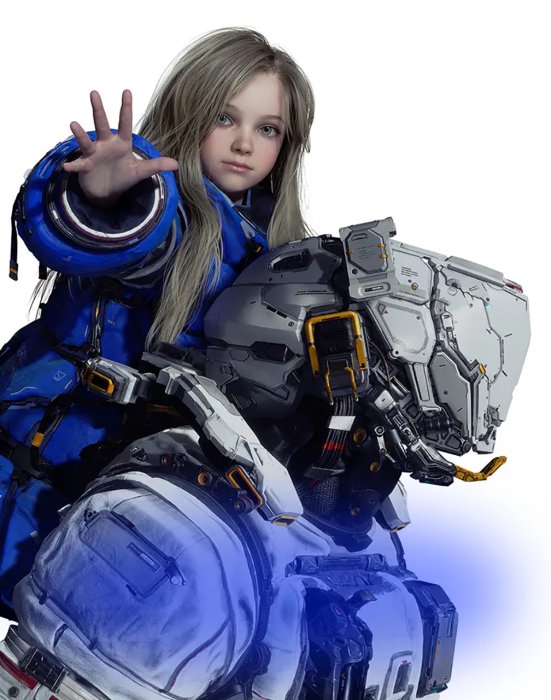
Pragmata has always been an ethereal, mysterious beast. From its initial reveal trailer, which was about as vague and opaque as you could get, to finally being able to go hands on and wondering if its unique hacking minigame that forms the foundation of its combat would be able to sustain a full-length AAA action game, the game has always had a lot of questions surrounding it as it has been delayed every year.
But after finally playing it from start to finish, it manages to use its hacking hook and a grab bag of other ideas from other franchises and genres to create a solid action game that feels like a wildcard, cult classic in the making.
However, despite its unique gameplay hook and stunning levels, Pragmata’s story and writing really drops off a cliff in the third act. On top of that, it doesn’t evolve its core combat and hacking in a substantial enough way to sustain that 10-12 hour story without it becoming a bit tedious to play at times.
A World More Fascinating Than Its Story
Set in the far-flung future, humanity has established a strong foothold in space, building an expansive lunar research station on the moon in an effort to obtain its resources. One of these resources is Lunafilament, a valuable resource that can replicate almost anything and recreate objects. Governing the space station is an advanced AI called IDUS, which suddenly turns hostile. Hugh and a team of other space engineers visit the lunar station to try and repair it, while also diagnosing what has happened.

IDUS has caused each sector of the lunar station to become malformed and disrupted, creating some impressive level design.
Things don’t go to plan and he is found by a mysterious android girl called D-I-0336-7, or as Hugh names her, Diana. She can hack into almost any system and robot on the space station, alongside overriding IDUS’ controls. Due to this, Hugh and Diana team up to face off against the hostile robotic threats across the space station and find a way to get back to Earth.
A lot has been said about Hugh and Diana as characters, including in my preview. But I still don’t find either of them boring or annoying. In my preview, I mentioned that one of the strongest aspects here is the moments when Hugh gets to divulge all the details about human life to Diana as she asks questions about why humans need to eat so much, or Hugh’s favorite places on Earth.

Pragmata utilizes its gorgeous levels to create some memorable scenes between Diana and Hugh.
The lore here is just utterly fantastic, and the game asks some poignant, timely questions about humans replacing real-life objects with manufactured AI merchandise…
That is still the case here and the moments where the game really focuses on the contrast between the two of them as a human and android are where it shines, with thoughtful and refreshing character moments. One particular highlight is when Hugh reveals he was adopted and he then gets to tell Diana about how a family is more than just who you are related to, and it’s who makes you feel welcome, etc. Hearing Diana slowly process how humans act and do things is memorable, and the writing is at its best here.
The world they set up here and the relationship between human-like androids and humans themselves, along with the background politics of this on Earth, are really quite fascinating and there is so much tucked away in notes and recordings as you play. The lore here is just utterly fantastic, and the game asks some poignant, timely questions about humans replacing real-life objects with manufactured AI merchandise and finding a purpose in the aftermath of that.

One small example of the commentary in the game.
But, when it comes to Diana and Hugh, which form the backbone of this story, I never really grew attached to either of them in the same way as I did with other adult-child pairings in countless other games, and I think that largely comes down to the eye-rolling, insincere writing when the game is focused on the growing relationship between the two of them. David Menkin and Grace Saif do their best, but the writing never really feels true to these characters, and I constantly got the impression that the game REALLY wanted to hammer home the point that “these people love each other like family now”.
It just got a bit excessive as the game entered the third act and I don’t love a lot of the story decisions related to the lunar station and the mysteries surrounding it, which feel tropey and like a letdown when the first half of the game does such a good job of building up mystery and suspense.
Hack ‘em, Shoot ‘em
While Pragmata has shown off a lot of sterile lunar station walls, the game has very distinct levels that feel and look dramatically different. From the huge Lunafilament recreation of New York to a sector that has been overrun by AI, Lunafilament holograms of nature - there is much more visual and gameplay variety than what we have seen so far. The game is constantly throwing in new enemies, weapons, and gear that give you more than enough to see and do throughout the dozen or so hours of main story content.
There is no other AAA action game that feels like this…

Pragmata constantly wows with its large levels and locations that go beyond what you would expect from a lunar station.
The Resident Evil-esque core of Pragmata with a dash of Metroidvania is strong with distinct sections, impactful weapons, slow-moving enemies, and even hidden secrets, figures, and notes to find as you play, alongside permanent upgrades that allow you to revisit some small side areas in previous sectors of the station.
The core hacking and shooting gameplay is still just as novel in the main game as it is in trailers and the previously released demos. There is no other AAA action game that feels like this, and the game really shines during its hectic, multi-enemy encounters and boss battles.

Hacking remains such an exciting idea for an action game that works best when the game is challenging you to deal with a large group of robots.
Larger groups of enemies require a lot from you, asking you to utilize hacking modules to expose their weak spots for longer, hack several enemies at once, or confuse enemies to cause them to fight each other.
You often have to manage ground enemies, larger mini-bosses, flying enemies, projectiles, and more. There are moments where you can even hack enemy missiles and cause them to attack the unit that fired them, which never gets old. The game’s bosses are just as great, but in a different way. They are huge spectacles, on the level of some Soulslike-style bosses that span a whole arena and force you to use every mechanic and weapon in your arsenal to stun the boss, deal damage to its weak points, and avoid its attacks.

Pragmata’s bosses are a huge highlight in terms of gameplay and visuals, often being the best part of any given level.
Despite these really cool combat moments, I was slightly let down by the fact that the main hacking grid and puzzle don’t really evolve or change in terms of what you are physically doing. You are still playing a minigame of Snake at hour 10, like you were at hour 1 in your playthrough. The mechanic never gets used in any kind of special way that makes it harder, more enjoyable, or just different, until the very end of the game. In fact, that moment is so good that it made me say out loud, “I wish there was more of this”.
It gets a little laborious at 8 or so hours in, and some more innovation beyond the core concept, whether it was in combat, puzzle solving, or explanation, would have been welcome.
So Much Replayability
One thing I can’t shame Pragmata for though, is its replayability. Much like the Resident Evil series, there is a lot to do and see already in the main campaign. You have dozens of mods you can equip that offer passive buffs that change gameplay or how you fight, alongside more weapons and items than you will know what to do with. These can be upgraded around a half-dozen times by the end of the game.
However, there is a whole bingo board minigame that you can complete by finding collectibles in the world, which grant you documents, collectibles, additional mods, and outfits for Diana and Hugh. There are around 30 training simulation missions that range from challenging combat challenges to fast-paced parkour races. Each of these has three objectives to go after and some get quite demanding.

While simple, Bingo is quite satisfying, especially when the rewards are some of the more powerful mods and items in the game.
There is so much here, especially for what is ostensibly a linear story-driven, action-adventure…
But once you beat the main game, a New Game Plus option opens up, allowing you to replay the game with all the weapons and mods you have unlocked in a souped-up state. Additionally, a post-game Unknown Signal mode becomes playable. This picks up right before the point of no return in the main story and adds around 2-4 hours of extra content (depending on how much optional stuff you have already completed), new weapons, mods, and costumes, as well as some extremely tough enhanced versions of the main story’s bosses. It also expands the game’s lore and story.
Finally, you also have Lunatic difficulty, which, by the game’s description, sounds frightening. This makes the game even tougher, changes up encounters so more enemies spawn, and allows tougher enemies to spawn from the very beginning of the game, if you want a really intense challenge.
There is so much here, especially for what is ostensibly a linear story-driven, action-adventure, and I think the potential for buildcrafting and speedruns on follow-up playthroughs could be really exciting, especially if the gameplay gets its hooks into you.
Pragmata is a really strong action-adventure. It’s refreshing, fascinating in its design decisions, and packed full of stuff to do, while not overstaying its welcome. It never quite reaches the upper echelon of Capcom’s library of titles, thanks to some cliche writing and story decisions, along with a lack of evolution in the hacking mechanic. However, the world is stunning, the lore is enticing, and the game’s combat is fun, satisfying, and intense, which all help to create a great action game unlike anything else from another AAA publisher.
A fresh take on action
Pragmata doesn’t feel like anything else in the AAA action game market. While it isn’t a home run, the majority of its parts are strong and memorable marking another excellent release from Capcom in 2026.
Gameplay:
Sound:
Graphics:
Story:
Value Rating:
Best offers compared for Pragmata
| Retailer | Product | Price | Action |
|---|---|---|---|

|
 PC
Steam Standard Edition
PC
Steam Standard Edition
|
Best price $49.17 $59.99 Save $10.82 18% | Buy at Fanatical |
|
|
 PC
Steam Digital Deluxe
PC
Steam Digital Deluxe
|
$57.37 $69.99 Save $12.62 18% | Buy at Fanatical |

Prices come from our retail partners. We may earn a commission when you buy through these links, which never changes the price you pay or the order offers appear in. How this works
How offers are ranked
Offers are ranked by price, not by the commission Gamer Guides receives.
Cheapest confirmed price first. Offers we can confirm are in stock come before offers whose availability is uncertain, and any offer without a current price sits at the bottom.
Prices exclude delivery unless a retailer states otherwise, so the cheapest listed price is not always the cheapest delivered price. Prices and availability change, and a price we cannot re-verify is hidden rather than shown as though it were current.
Retailers checked: Fanatical, Amazon, Green Man Gaming, Humble Bundle, ShopTo, Ubisoft Store. No applicable offer from Amazon, Green Man Gaming, Humble Bundle, ShopTo, Ubisoft Store.

No Comments