Geological Data
| Icon | Title | Details |
|---|---|---|
|
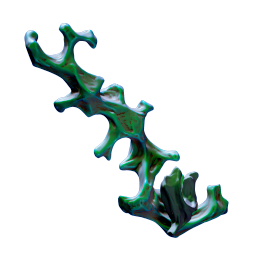
Conduit Crystal |
Kagome optical fibers derived from shock quartz. Naturally occuring wires for light. |
|
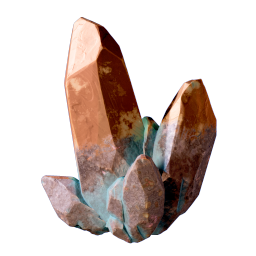
Copper |
A soft metal. Good conductor of heat and electricity. Important feedstock for the fabrication of basic batteries, wiring, and other low-draw electrical systems. Copper is critical to terrestrial biology. Elevated copper levels in this world’s ocean may cause anemia and liver damage. The distinctive blood-and-oranges taste of this world’s seawater is caused by the oxidized alcohol decanol (a citrus flavor) and amyl vinyl ketone, which is produced by the reaction of copper and iron with floating lipids. The same reaction occurs when copper or iron touches human skin, creating the distinctive ‘taste of metal’—or blood. |
|
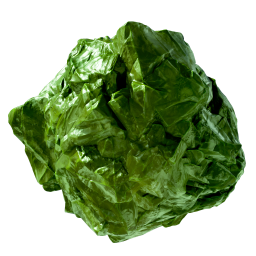
Mineralized Clinker |
Hardened industrial runoff. Contents vary based on local production during the waning days of the Axum. |
|
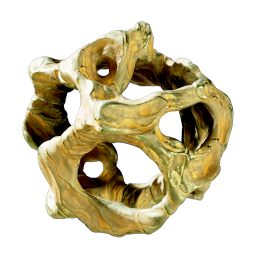
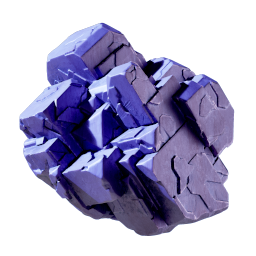
Gold |
Shares many properties with copper and silver. Highly conductive and ductile. Can form atom-thin wires. Critical for corrosion-resistant electronics, especially in humid environmnents. Also useful for shielding spacesuits and spacecraft against heat. Rare—tends to sink to the core of planets during formation. If you cannot access the core of the planet, search for surface deposits formed by bacterial accumulation. |
|
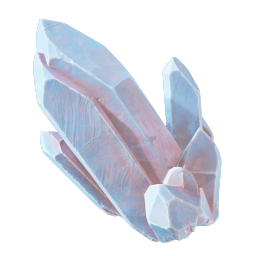
Lead |
A dense metal and the heaviest stable element. Found in many ores. Useful in construction alloys, ballast, radiation shielding, and some very large batteries. Due to this world’s high metallicity, lead plays an unknown but significant role in the biosphere. All indigenous organisms and water sources are tainted with lead. Lead can mimic other metals involved in human biology, replacing them in critical reactions. It is a devastating toxin. Long term exposure requires urgent chelation therapy. Take any possible steps to remove lead from your food and water supply. The presence of organolead compounds in the biosphere of Rakshasa played a major role in the breakdown of the expedition and the renewal of the Obraxis Principle. |
|
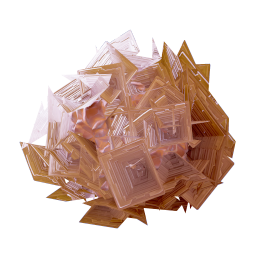
Quartz |
A silicate crystal named by the Polish. Quartz and feldspar make up most of Earth’s continental crust. Used in the creation of fabricator-aligned glass and ultra-long-term computer memory storage lasting billions of years. Typically found as phenocrysts formed from cooling lava — but some local deposits have a telltale bioplastic matrix. Hypothesis: a local coral gathers dissolved silica to grow quartz deposits. |
|
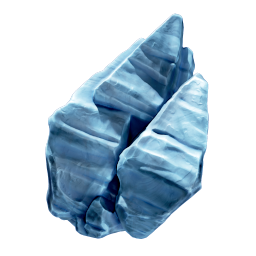
Salt |
Halite (NaCL), commonly known as salt. A critical nutrient and a favorite flavor in human foodstuffs. Nearly four percent of the alien seawater is dissolved salt—far higher than the concentration in human blood. Living things (even on this world) cannot survive this level of salt in their bodies. As a result, organisms spend a great deal of energy pumping salt out of their bodies. Some fish use a third of their metabolic energy to pump salt. A shortage of salt is equally dangerous. Hyponatremia causes hallucinations, seizure, coma and death (easily confused with other syndromes caused by exposure to this alien environment). Assessment: search for salt on sandy sea bottoms and around dead coral domes. Note: pools of salt-heavy brine may occur at the sea floor. Contact with this brine may cause seizures and death. Certain bacteria (halophiles) can thrive in these environments. |
|
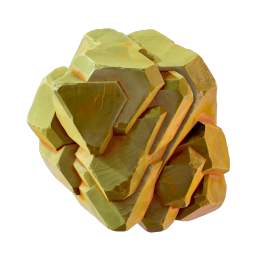
Silver |
The most conductive and reflective of all pure metals. Silver nanoparticles are vital in both medical technology and nanoprinted circuits. Also important in modern nuclear reactors and high-efficiency solar panels. Silver accumulation in the body (from exposure in seawater and diet) can cause long term health effects ranging from blue skin to death. This world’s dissolved silver levels are unsafe for human habitation. Consult your Noetic Advisor to research optimal search areas. |
|
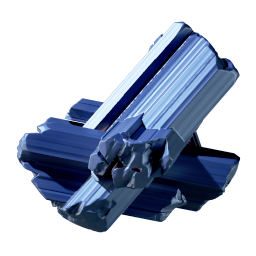
Sulfur |
Historically known as brimstone, with applications in medication and fertilizer. Some organisms use sulfur in their metabolism, even in the absence of oxygen. These sulfur-reducing organisms can form the base of a food web in deep sea habitats. Assessment: search for elemental sulfur deposits near thermal vents or volcanic activity. |
|
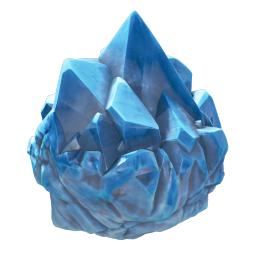
Titanium |
A light, strong, non-conductive, non-reactive metal. Perfect for underwater construction—won’t corrode. Binds with oxygen to form minerals like rutile and anatase, which are likely embedded in bedrock on the sea floor. Osseointegral metal—can be fused directly and safely to bone. Organisms on the bombardment world Thokcha and more recently encountered variants of the kharaa “onos” xenorhinoid both incorporate titanium into their biology. |
|
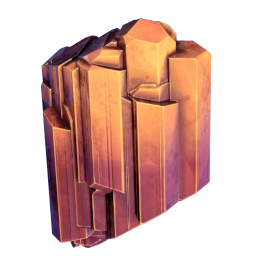
Celestine |
A crystalline mineral and useful source of strontium. Celestine dissolves quickly in seawater, but certain microorganisms synthesize it as a shell or ballast. Local deposits must be the skeletons left by dead colonies of these organisms. The colonies may have overgrown on an artificial strontium source, then died off when the source was removed.
Assessment: do not ingest. |
|
Lithium |
The softest and least dense of all metals. Often found dissolved in seawater or in pegmatite deposits, especially near thermal vents. Useful in lubricants, batteries, advanced glass, nano-welding, quantum physics, and anti-aging drugs. Also a budget air-cleaning element on spacecraft. Lithium’s role in this world’s biosphere is unknown. In humans it has historically been used as an antidepressant. Despite the advent of cognitive connectome therapy, lithium is still used as a folk remedy on some worlds, despite the risk of permanent side effects. |


