 First Impressions
Learning to Live With Your Choices


Pros
- Choices have a massive impact
- Excellent writing and lore
- Combat that packs a punch
- Lots of activities to get stuck into
Cons
- Time as a resource might not be for everyone
- Jury's out on if the open-world can remain interesting for the entire duration of the game
It’s hard to go anywhere these days without seeing the impact The Witcher 3: Wild Hunt had on the Western RPG scene. While the series was getting more popular with each entry, the fantastic third entry really propelled it into the limelight. It’s no surprise then that a lot of players got excited when one of the directors, Konrad Tomaszkiewicz, split off to create a new studio, Rebel Wolves, in 2022.
Taking with him many other veterans who worked on The Witcher 3, their debut title wouldn’t be announced until January 2025: The Blood of Dawnwalker. An intriguing take on 14th-century Europe, where you take control of Coen, a human-turned-vampire, as he hunts down those who have taken his family.
I was already sold on the pedigree of the key figures at the studio, so imagine my excitement when Gamer Guides were invited to an exclusive hands-on with the game.
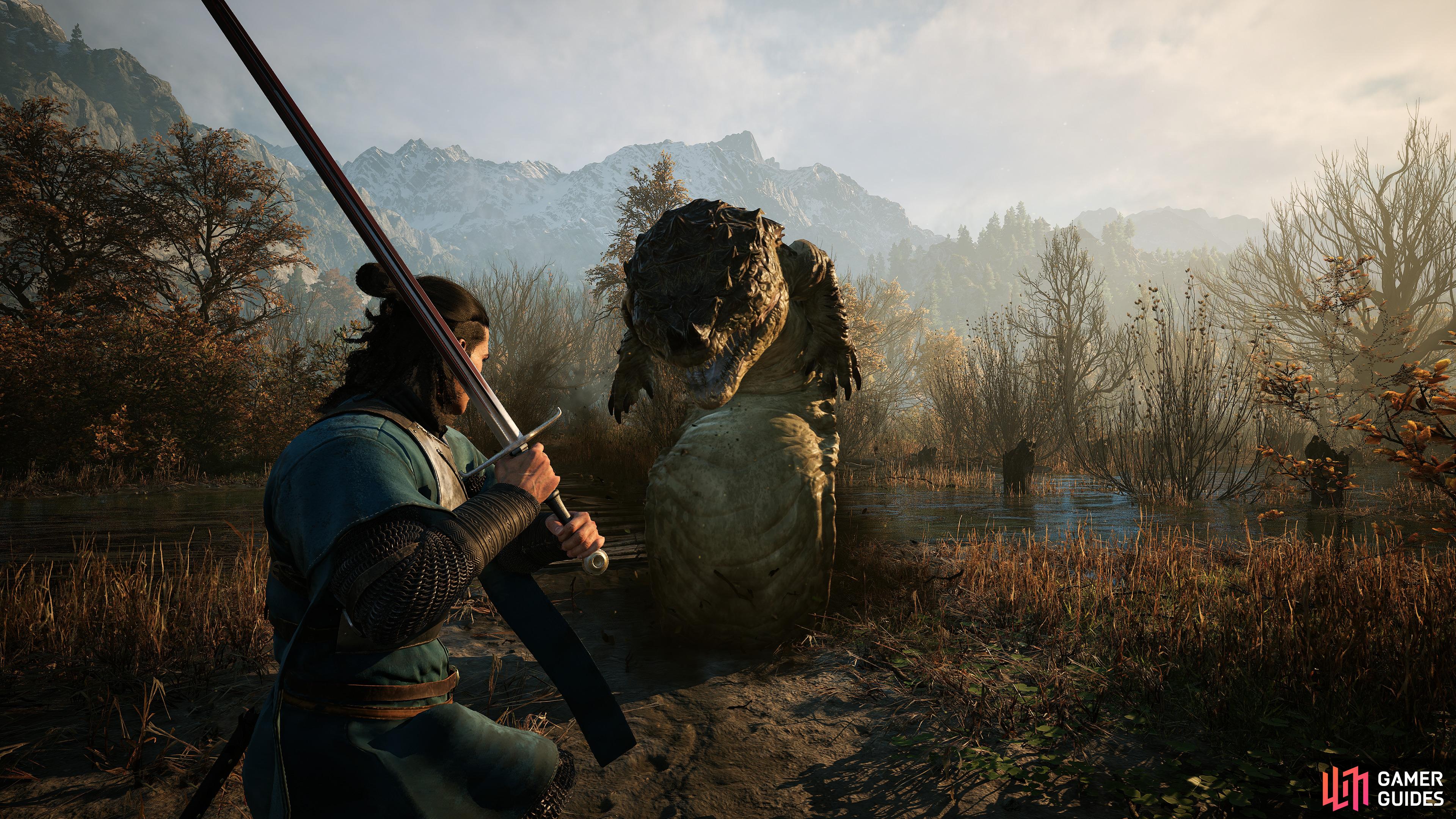
You’ll need to use all of the tools available to survive the threats of the valley.
A Sign of the Times
My hands-on covered the majority of the Dawnwalker’s prologue, setting the scene for what seems to be an epic tale, and getting to see firsthand just how important your choices are when it comes to fleshing out Coen’s story.
After an introductory scene, I found myself in a cryptic sequence with little context, but one where I got the ability to take some of the game’s systems for a test run. Soldiers attack while I get the chance to take the directional combat system for a spin (more on this later), a brief look at combat as a vampire, before taking off after Coen’s sister, Lunka, and utilizing the very cool Shadowstep feature. This allows Coen to instantly teleport to a nearby area, regardless of height, albeit only when he’s in his vampire form.
This sequence ends with what appears to have been a recurring nightmare that Coen keeps having, and you’ll soon find yourself back at home with your family as you prepare for Mass that is being held in the evening. I soon learned that in this valley, a vampire named Brencis rules over the area and demands a blood sacrifice in exchange for “protection”. The catch is, if you’re too sick or weak to perform it, odds are you won’t survive the ordeal, and poor Coen’s mother appears to be in an awful state.
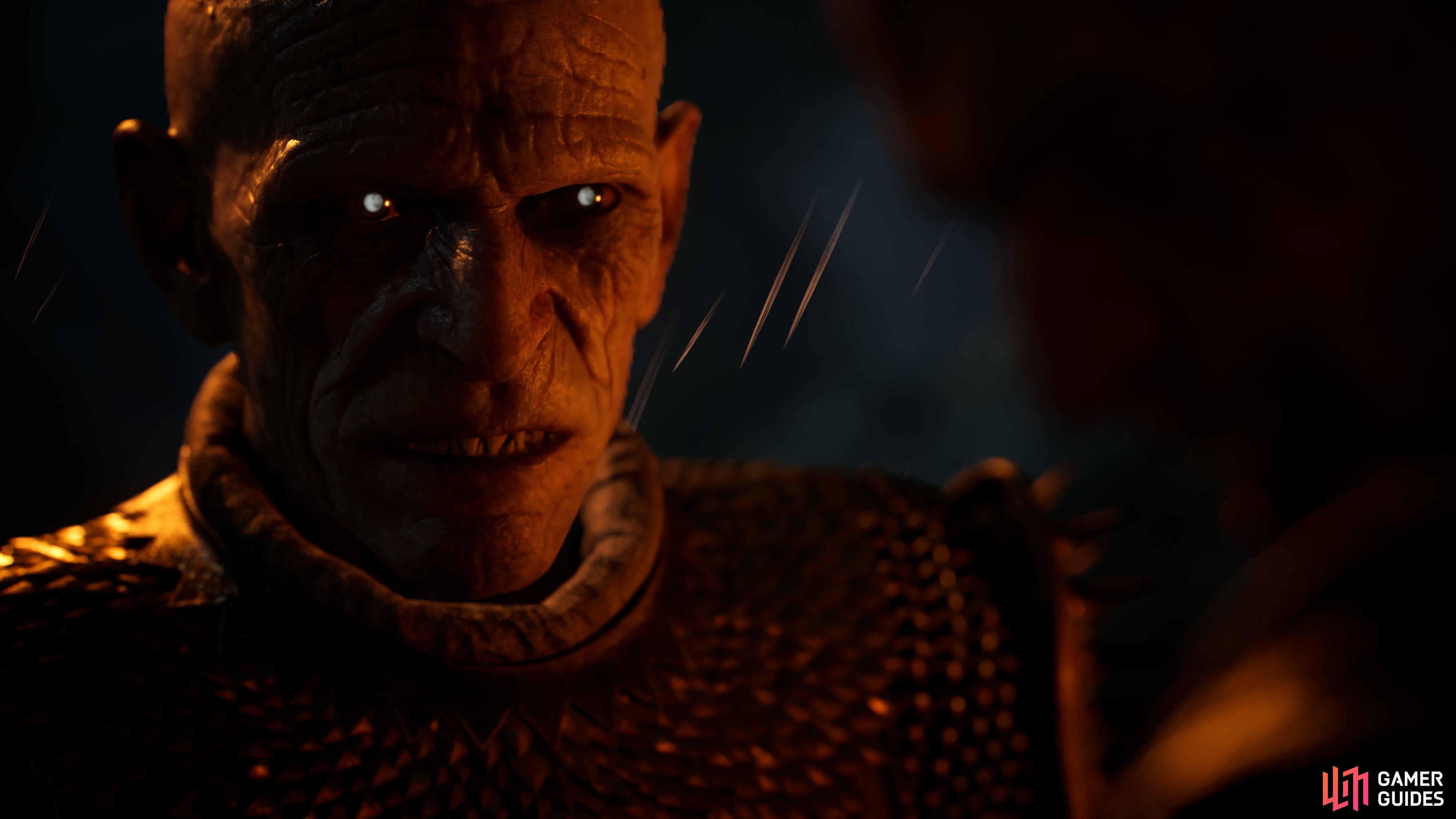
The vampire Brencis is the main antagonist of The Blood of Dawnwalker.
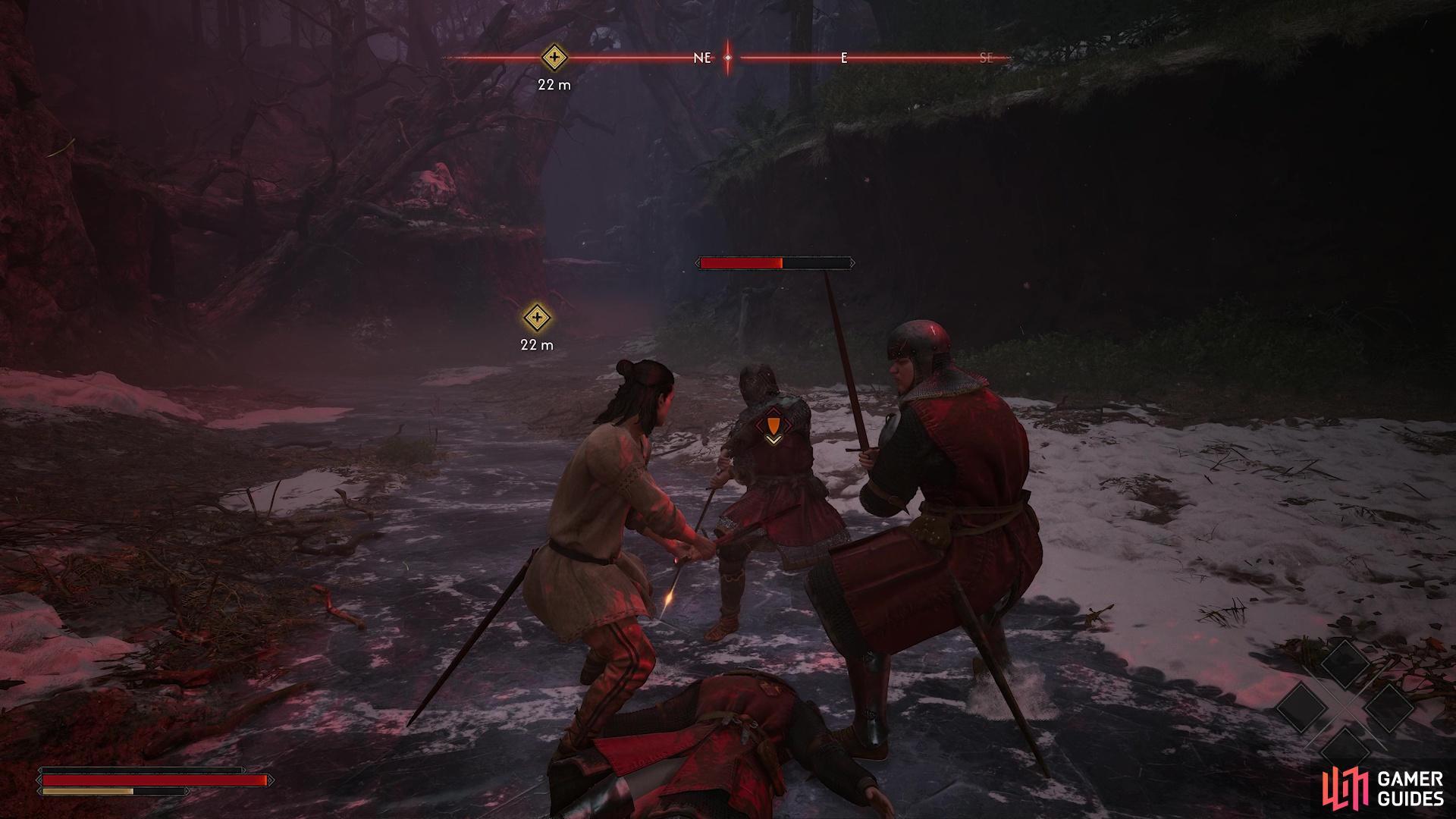
The intro will give you a chance to learn a lot of the basic mechanics.
It’s here that I’m introduced to Dawnwalker’s time mechanic, which acts as a resource when you undertake certain tasks. The goal: try to help your mother recover in time for Mass, and there are many ways to approach that.
This is just the framing for the prologue as you’re introduced to many systems, but the ultimate goal of Coen is to save his family within 30 days and nights before Brencis’ coronation at the castle, and how you do that is entirely up to you.
The Freedom of Choice
When speaking to Director Konrad Tomaszkiewicz, my immediate takeaway was that Rebel Wolves wanted to achieve, above all else, the freedom of choice for players to approach The Blood of Dawnwalker, and the prologue did a fantastic job of showcasing that.
This is the freedom about what kind of content you want to do in the game because we are not forcing you to do any content. You can go straight to the castle or try to find the open gate and exit from the valley to finish the game. - Konrad Tomaszkiewicz (Director)
While Coen’s main goal here is to go and fetch some medicinal herbs from a woman named Anca, you are free to go about and use up your segments for that day by helping various people around the village. The game does tell you when an action will use a segment of time with an icon of an hourglass, and most of the quests I undertook used up at least one for the entirety of the quest.
This is where your choices come into play, then. If you want to, you can completely ignore the task of going to visit Anca to get the herbs. This will most likely lead to you getting less context on a major character, and it could spell danger for his poor mother when it comes to Mass after your time is up. I later met an old woman, Gremla, who was begging for assistance after a banner she was ordered to make was stolen, meaning certain death awaits her come Mass for failing to carry out her orders.
I took the time to complete this quest, using Coen’s Focus Mode (think Witcher Sense from The Witcher 3) to investigate the surroundings and eventually find the perpetrator. Another choice awaited me when I found who had stolen it: whether I turned him in or to turn a blind eye. Eventually, I returned the banner to Gremla, and when it came time for Mass after all of my time was up, I noticed during the scene that Gremla’s banner was on proud display (for all the horrors it depicted) and some of the villagers discussed it.
I spoke to some other journalists at the event, however, and some of them never even met Gremla. This meant her banner remained missing and, once Mass began, she was found strung up in place of the banner as a warning to the rest of the villagers for not going through with an order. Outcomes like this were not a rarity; in fact, pretty much everything I did during the prologue had a similar outcome to this.
I posed the question to Konrad about the ultimate impact of your choices, and he mentioned that even a choice made during the prologue could have an impact on one of the epilogues you may reach. You have the choice once you finish the prologue to ignore everything else and go after the main villain, even if it will be very difficult. Or you can abandon it all and simply leave the valley, leaving it to its fate and ending your game there. The developers have seemingly thought of every permutation throughout, and it gets me extremely excited to think about how most players will have a different experience when it comes to playing Dawnwalker.
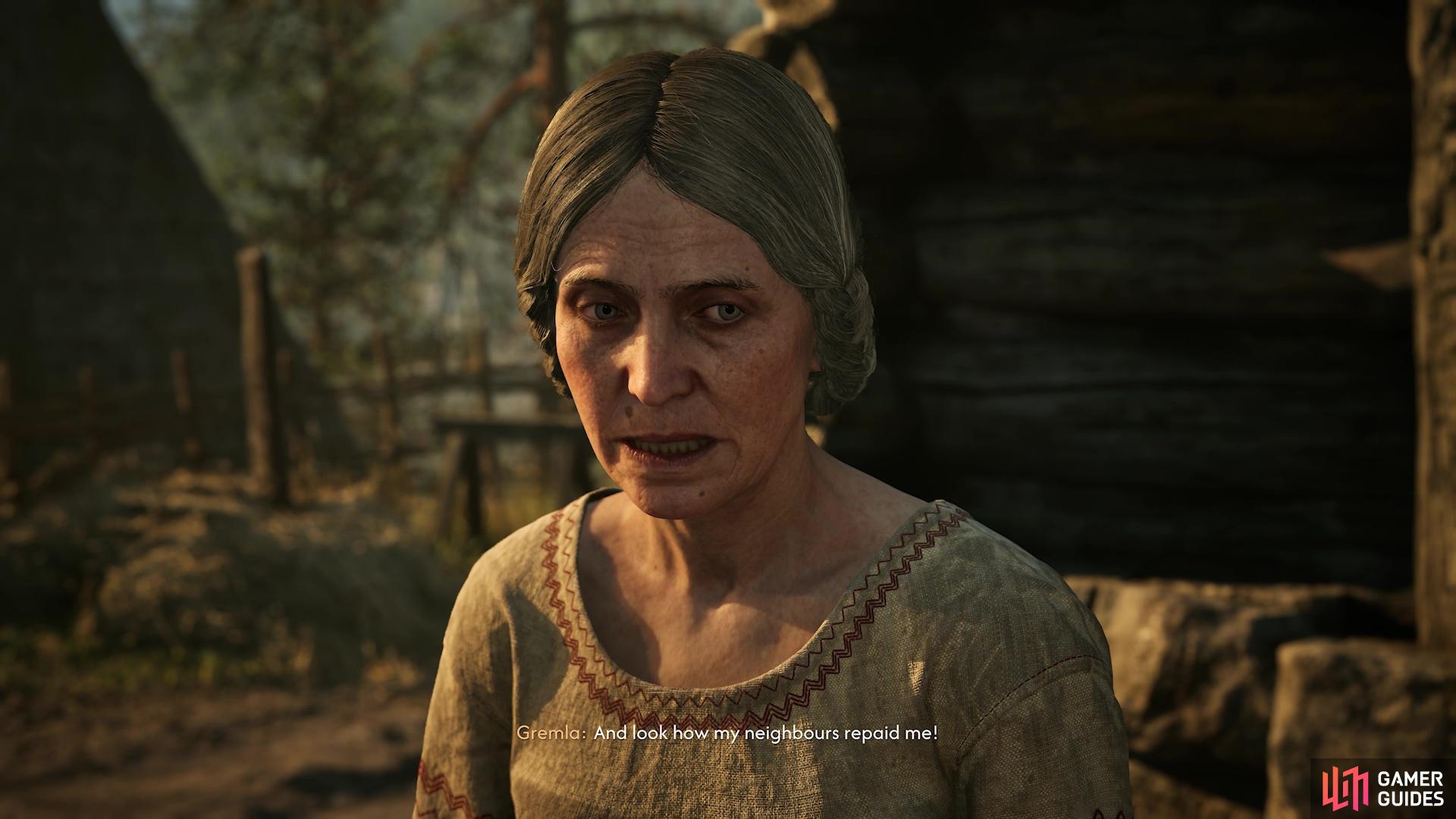
Gremla’s task is just one of the choices you’ll have to make (or not) during the prologue.
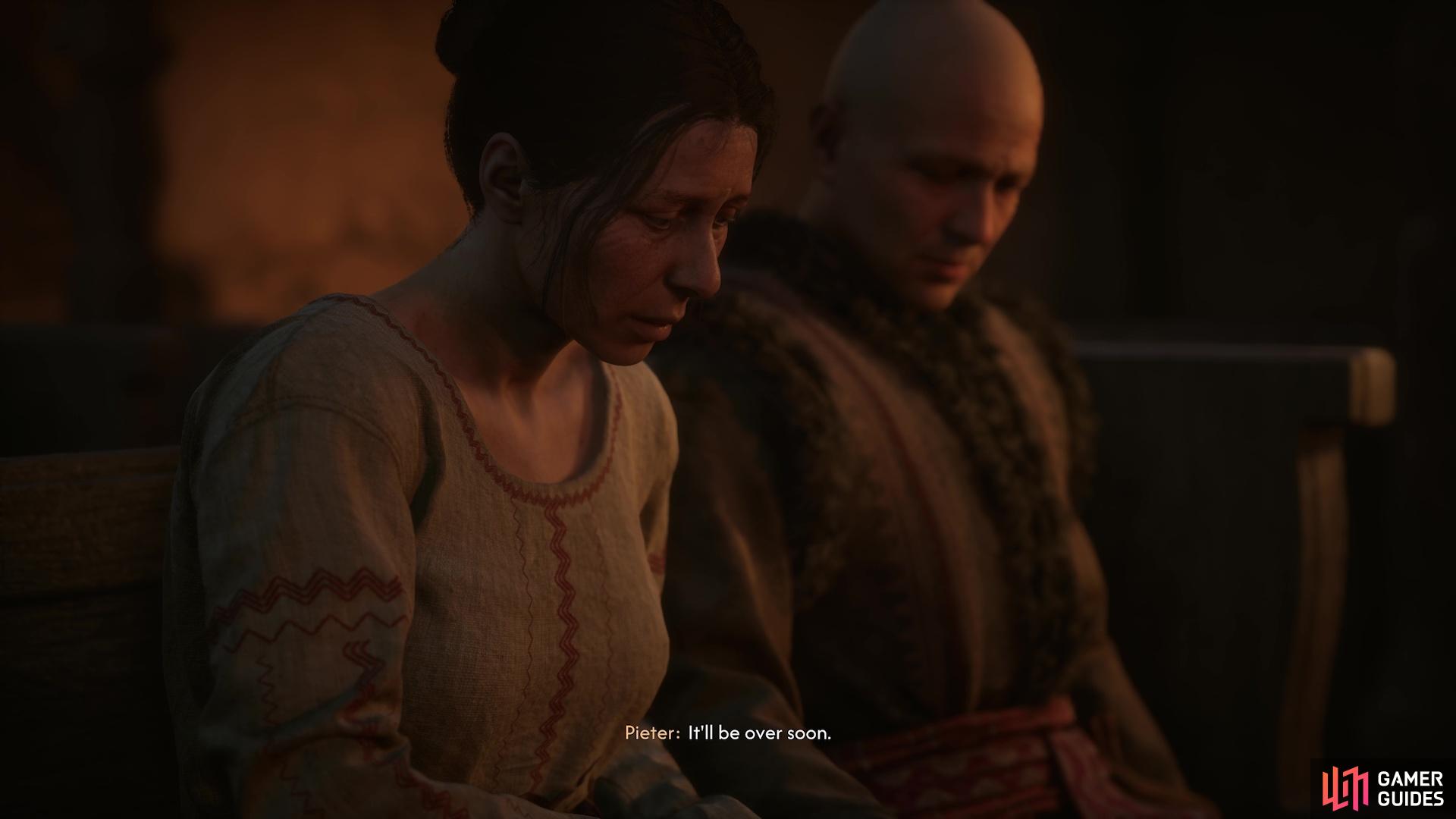
Most of which centers around trying to get Coen’s mother in shape for Mass.
Of Swords and Magic
When it comes to completing his objectives, Coen has many tools available to him, especially in combat. Shortly after you finish the prologue, you’ll have access to all three perk trees – Swordmastery, Vampirism, and Witchcraft, and all three give you a massively different approach to combat, while some skills will also impact Coen outside of combat too.
While traveling during the day, Coen will find himself in his human form, and your main form of combat here and many of the skills in the Swordmastery tree will be focused around it. Combat in The Blood of Dawnwalker is directionally focused; as an enemy attacks you, you’ll see a small shield with an arrow pointing where that attack is coming from. This is your cue to guard in that direction to avoid taking damage, and if you time it just right, you’ll score a perfect parry, which will not consume any stamina. Your attacks work in the same way; try to aim your attacks in different directions to make it harder for the enemy to block your strikes.
As you land strikes and blocks, you’ll build up Activation Charges, which are your resource to use skills, such as Broad Swing that will perform an area attack at the expense of two Charges. Combat can be akin to a dance, then, as you look to focus on blocking your foes’ attacks and retaliating with yours; it does take a little while to get used to, but once you get the hang of it, it flows perfectly.
We were afraid that people who don’t like directional combat would have problems. And we decided, after the focus test, that we would do a hybrid to connect those two types of combat (directional and traditional) and allow people to choose. - Konrad Tomaszkiewicz (Director)
Still, there may be some who don’t wish to use directional combat, and for that, you have omniattack and omniblock. Whenever you press the attack or block button without inputting a direction, you’ll hit a random one; this allows you to play this as a more traditional combat system, although you’ll lose the benefits of perfect parries. Rebel Wolves mentioned that The Blood of Dawnwalker was designed with directional combat in mind, but that they wanted to give players who maybe wanted it to be more traditional a way of engaging with the combat system.
Once night rolls around, however, Coen will find himself in his vampire form, where you’ll gain access to powerful claw and blood-based attacks. While Coen still has the option to use his swords in this form, many of the perks in the Vampirism tree are tailored around his claws and they pack a mean punch. Many of the abilities that you use here will also cost some of Coen’s blood to use, so it’s a tradeoff for the greater damage you’ll be able to output, especially as the only way for Coen to heal during his Vampire form is through blood. This can either be in the form of consumables obtained after defeating enemies or draining animals and enemies in battle.
The final form of combat comes in the style of Witchcraft, one that can be used in either form. This ranges from abilities such as conjuring flames to the Ravenous Flock ability, an area attack that will help you control the battlefield when overwhelmed. Beyond combat, all of these trees will allow you to learn Perks that help Coen in other ways too, such as being able to increase Coen’s weight limit in the Swordmastery tree or affecting the buying and selling prices at stores in the Witchcraft tree. You’ll also have useful exploration abilities such as communing with the dead or the ability to shapeshift into a wolf.
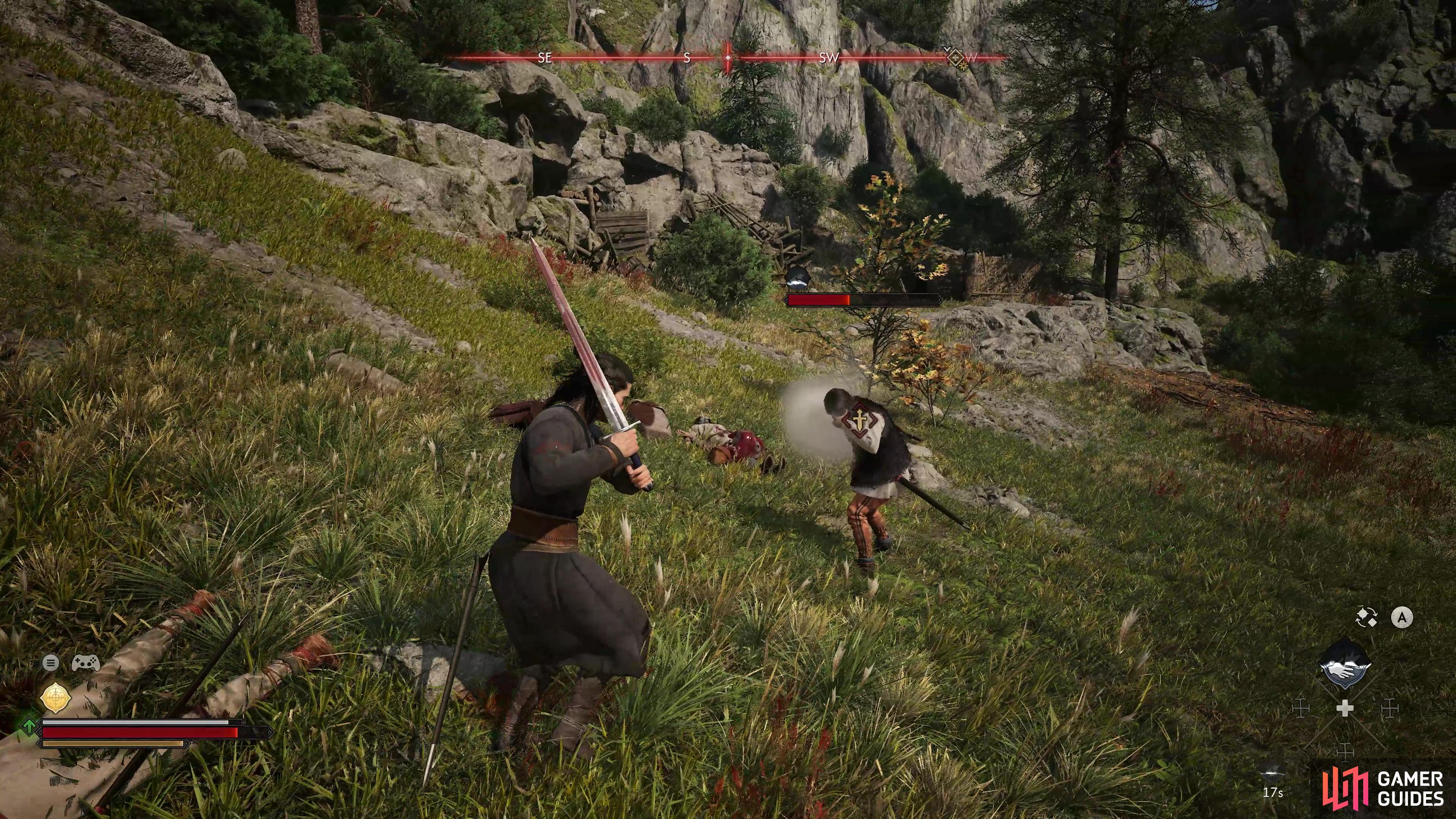
Coen will fight as a human during the day and make use of his Swordmastery abilities.
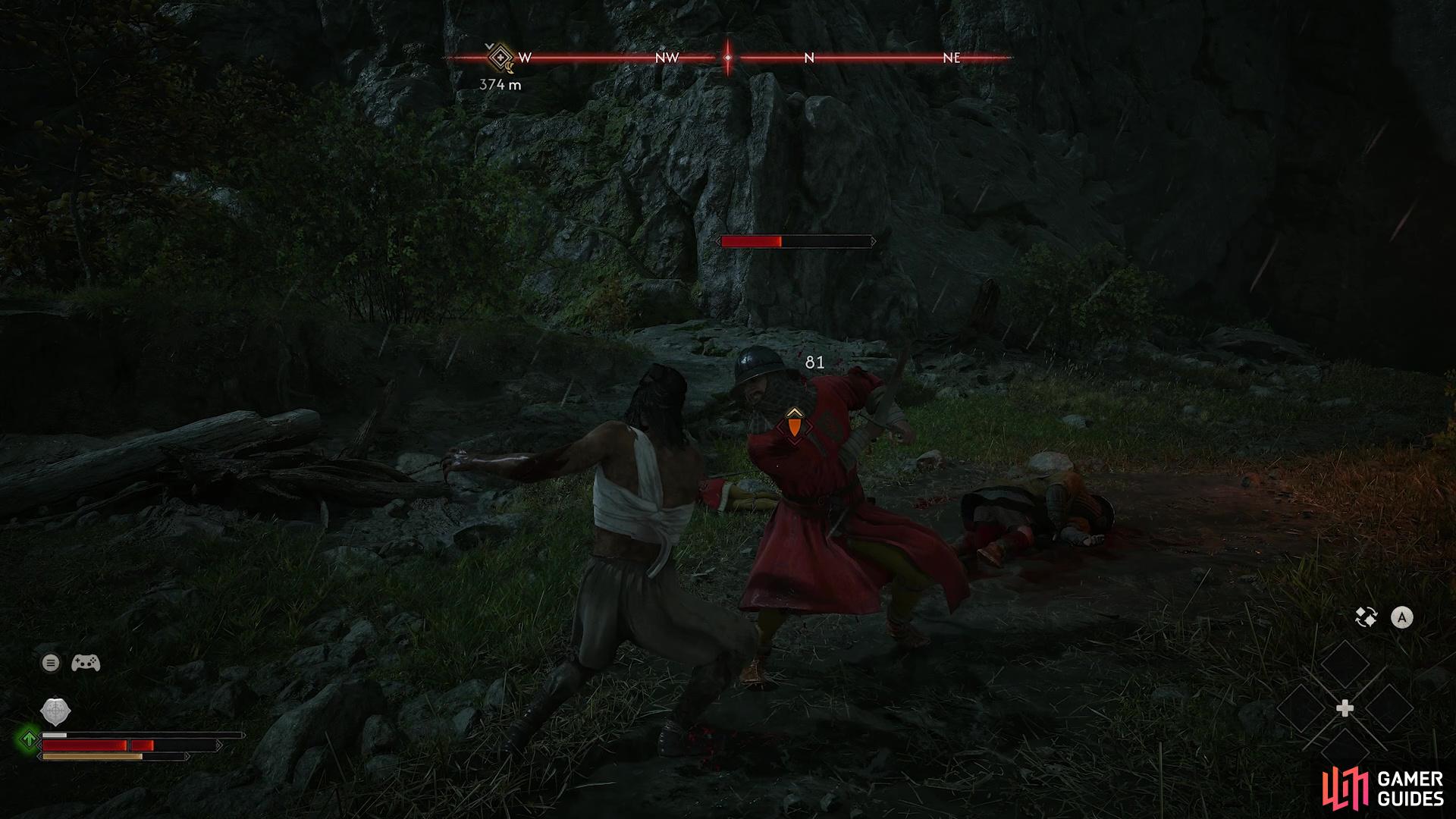
At night, you can use Coen’s deadly claws as a vampire.
More interestingly, for a lot of your Perks, a simple Skill Point is not enough to learn them beyond their initial level. Some will require manuals that can be found out in the world or as quest rewards, and many of them will require you to sacrifice some of your Time to learn them. This really places a lot more emphasis on the player to really be careful about what they learn and when. You’ll also only be able to spend these skill points when you visit a shrine (which can be found all over the valley).
Still, even playing on the Fair difficulty setting, at least early in the adventure once I gained access to the open world following the prologue, I did find myself struggling a little in combat against multiple enemies. Fortunately, after posing the question to Konrad about whether grinding was a possibility here, he informed me that that option is open to players.
Braving the Open World
After the prologue is over, I soon got the ability to freely explore the valley, an open world that is decently sized. Despite being limited in where I could go during my session, I could access the map, and it looks like there’s a good amount to explore. Nothing on the level of the recent mammoth-sized Assassin’s Creed games, and closer to what you may have expected from The Witcher 3.
While Coen has the task of rescuing his family within those 30 days, you’re completely free to go about it in any way you like. You’ll have a few clues to get started, but beyond that, it’s up to you to explore the world, take on quests, and find the answers yourself (or just brute force it, but that’s unlikely to go your way unless you’re very skilled!). If you take a look at your map, you’ll see that some of the activities (of which there are many) can only be undertaken during the day or at night.
It’s this degree of freedom that impressed me most during my time with Dawnwalker.
There’s good reason for this too. During the day, as a human, you’ll be more focused on being inquisitive, using Focus Mode to investigate, and making use of the various choices available to you to get into places you otherwise wouldn’t be able to get to. Alternatively, at night, you can be a lot more aggressive; people are less willing to talk to you, and you can make use of Coen’s new abilities to traverse walls (climbing up and down, running across), leaping over them, and more. A good example of this was a quest I was following up on at a nearby mill where I was searching for some leads on a friend’s rebel colleagues.
Once I got there (at night), there were some of Brencis’ soldiers lying in wait for me. Speaking with other journalists at the event, if I had come here during the day, I could’ve questioned them and stayed more incognito. Instead, I was here at night, and as you may have expected, battle broke out almost immediately. Once the men were dead, the owner of the mill came screeching out at all of the trouble I had caused her, saying that there would be retribution for my actions. After calming her down, I was able to learn a bit more about her and picked up a follow-up quest to rescue her husband. It’s this degree of freedom that impressed me most during my time with Dawnwalker.
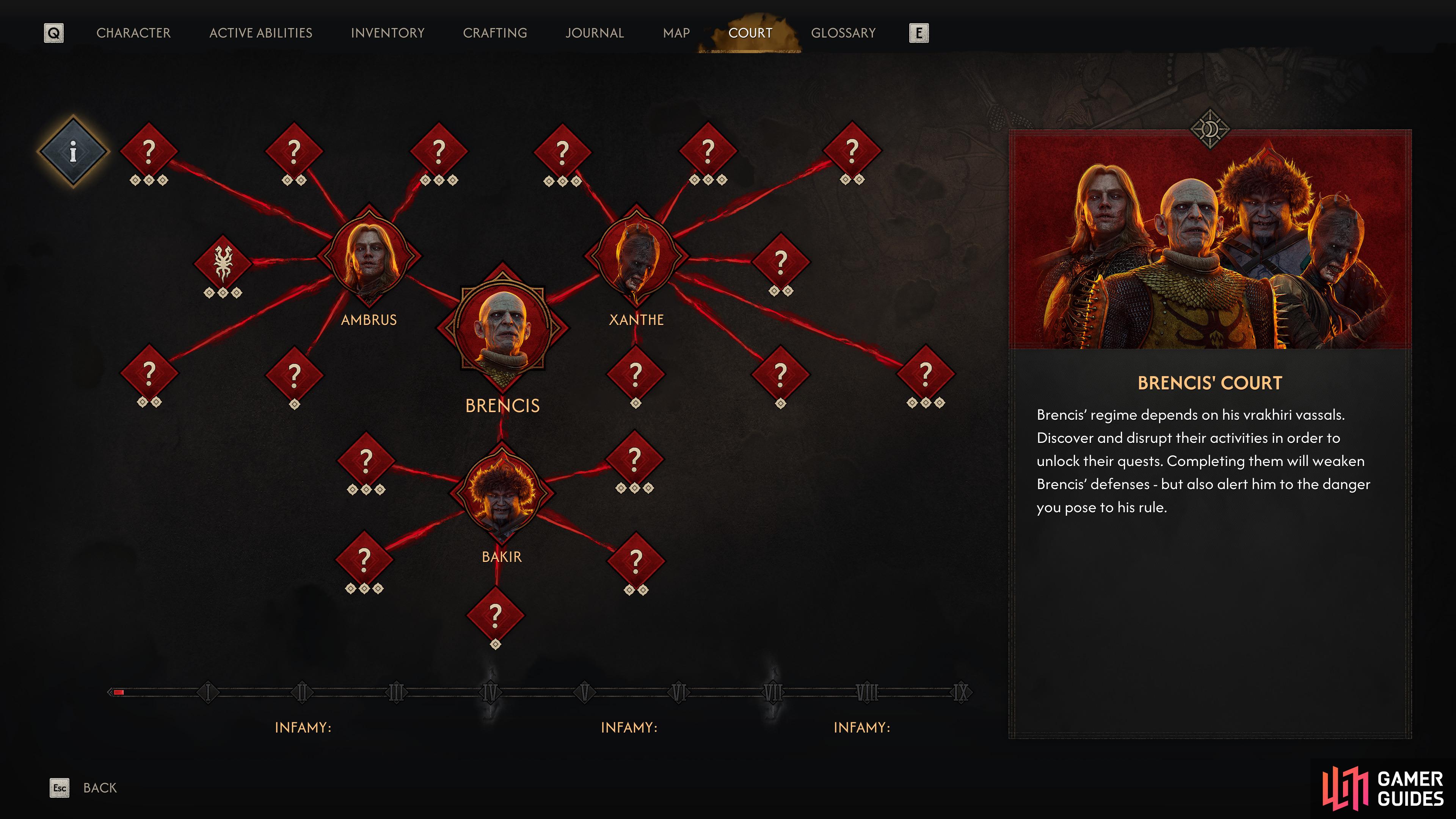
The Court system will show you your influence on Brencis’ vassals and his overall power.
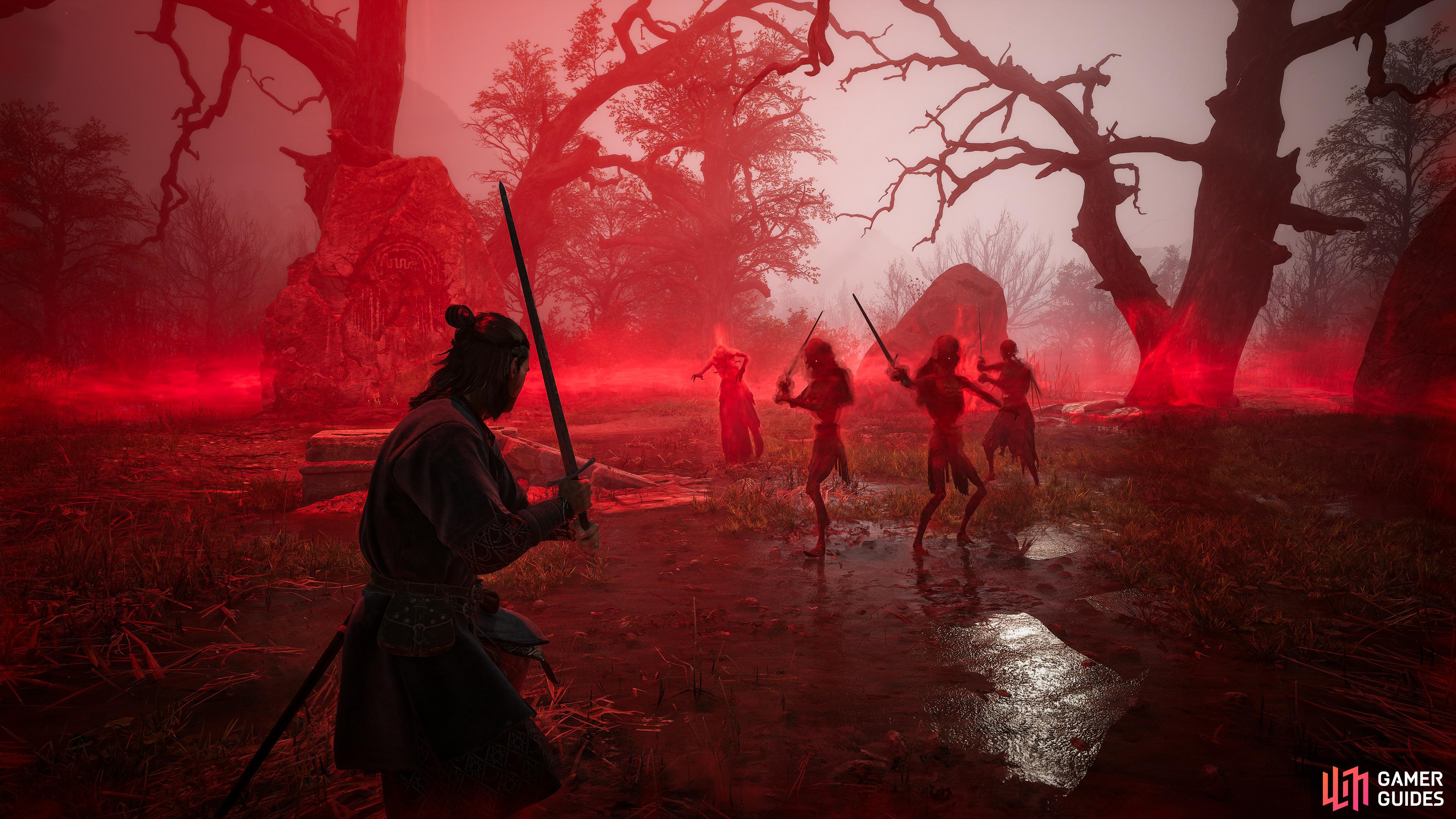
There are many different activities you can complete in the open world.
I also gained access to another interesting system at this point of the game, the Court system. The main antagonist, Brencis, has vassals that help him oversee the region, and you’ll be able to weaken him by taking them out (and their vassals too). At the bottom of the screen, you’ll see an Infamy gauge. This increases as Coen deals damage to Brencis’ forces or vassals, and Director Konrad Tomaszkiewicz mentioned that while you may get new options and choices available as a result of this, Brencis himself will start to pay more attention, sending deadlier enemies after you. In that case, this seems like a double-edged sword in terms of the benefits to Coen, and I’m curious to see how engaging in this content impacts the narrative and scenarios I’ll gain access to.
As a big fan of the development team’s previous works, I have to admit, I went into my session with high expectations. What I got out of it was a story that gripped me from the first moment (with plenty of lore to get your teeth stuck into), gameplay systems that all seemed to complement each other perfectly, and choices that truly matter. At a time when many games give you the illusion of choice, The Blood of the Dawnwalker seems to have nailed that aspect of the game, and I truly cannot wait to return to the valley as Coen and discover all of the ways I can go about achieving his goals.
Choosing Your Own Path
After four hours with The Blood of Dawnwalker, I’m already hooked on Coen’s quest to save his family. Choices that matter, systems that encourage experimentation, and a story that intrigues from the outset have me excited for the final release.
Gameplay:
Sound:
Graphics:
Story:

No Comments