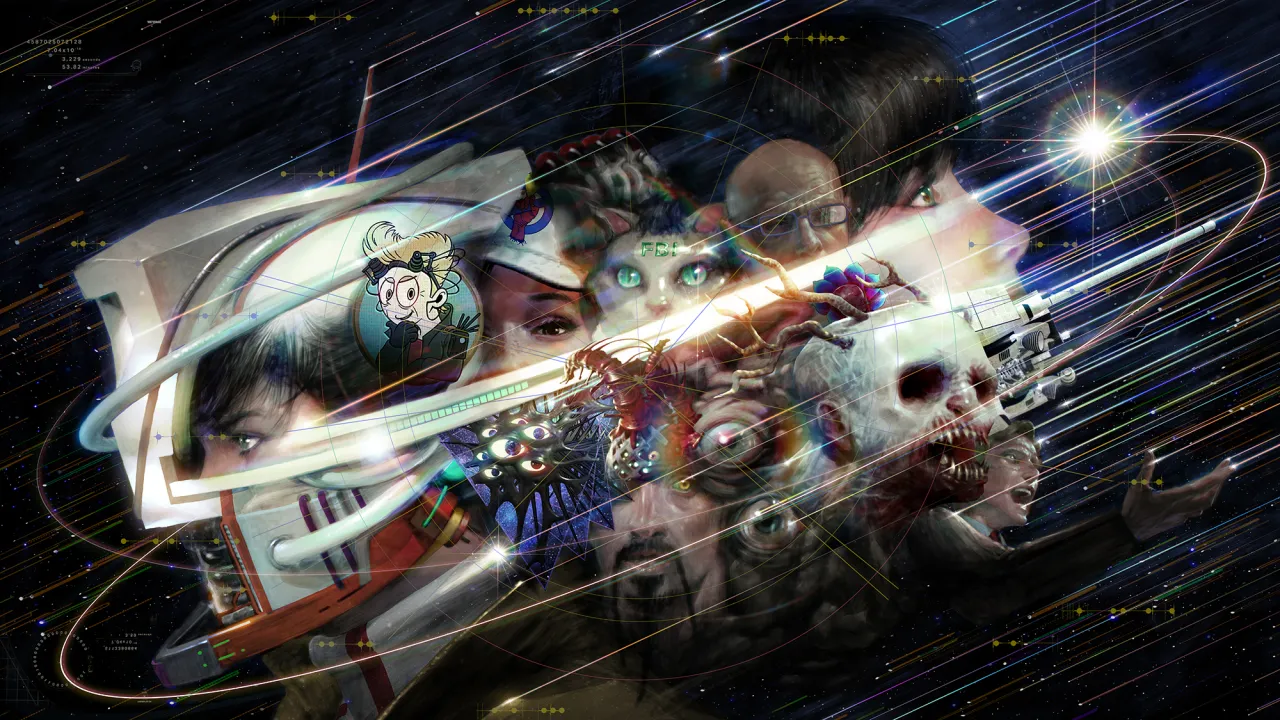
Romeo is a Dead Man is a Testament to Human Creativity, Messiness, and Being Weird
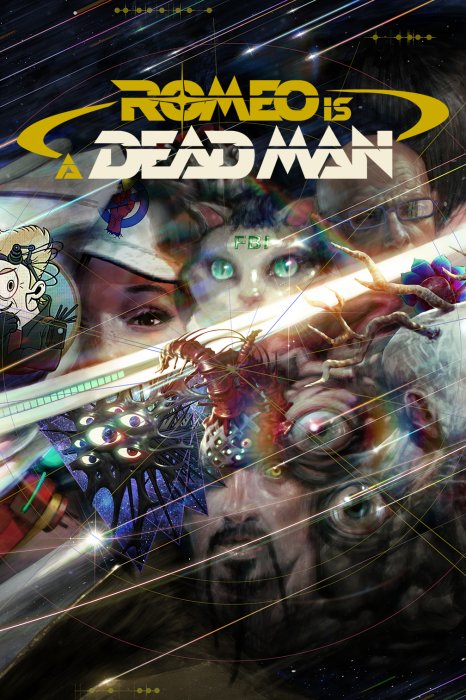


Pros
- Incredible style, tone, and vibe that oscillates between mediums
- Romeo and Juliet’s doomed love story feels thoughtful
- Classic action combat is refreshingly simple
- Gameplay loop is diverse and joyful
- The game is just damn cool
Cons
- Some levels feel too labyrinthine for their own good
- Performance on PC can be rough in places
“More than the sum of its parts” is an idea tossed around a bit in games criticism. There are a few games that really embody that phrase: the grand scale created by vast emptiness in The Shadow of the Colossus, the ode to the human experience through repetition in NieR: Automata, and the perfect simplicity of Tetris. Romeo is a Dead Man takes a different approach. It is the sum of all of its parts. And Romeo is a Dead Man has more parts than a watch has gears or a beach has grains of sand. It is full of disparate ideas, tones, art styles, inspirations, and mechanics. It is frankly overstuffed, lumpy in places, and rough in others. However, even if some of those parts don’t work, it’s so full of distinctly human creativity that it is impossible not to fall in love with the verve and spunk of what Grasshopper Manufacture has built.
There are games with a better and more coherent story than Romeo is a Dead Man. There are games with tighter gameplay. There are games that look and run much better than it does. But there is only Romeo is a Dead Man; it could have only been created by this team, and no matter how hard one might try, no algorithm or mere mimicry could ever come close to creating something as singular as this game. While it has its share of flaws, Romeo is a Dead Man is so busy bounding through genres and styles that you rarely have a moment to even recognize, let alone hone in on, those problems.

Romeo is a Dead Man is a testament to human creativity.
Space Time Police
Trying to explain Romeo is a Dead Man’s story is something of a fool’s errand. The game starts with a few lines of text on screen, giving some exposition, but after that, plot points and world-building will be thrown at you just as fast as they are tossed aside. Ultimately, all you need to know is that Juliet is a quiet, mysterious woman whom Deputy Romeo Stargazer found lying in the middle of the road one day. Romeo Stargazer is a naive young lawman turned into a living dead man, after a run-in with a “White Devil”. In 2019, a singularity appeared in Romeo’s hometown of Deadford. The result was reality was tossed about, shot apart, and time travel and dimension hopping were invented. Now you and your dead granddad (whose soul is trapped in the back of your gold jacket) work for the FBI’s (not that one) Space-Time Police, trying to prevent the few strings of reality keeping space-time from being ripped apart as you piece back together your universe. We see these events, or at least parts of them, several times through ever-shifting dreams and flashbacks that often conflict, adding to the game’s frenetic vibe.
This sounds like a lot… And it is. It also doesn’t come up too much. Romeo is a Dead Man is much more concerned about Romeo and Juliet’s somewhat expectedly doomed relationship. The game is, unsurprisingly, a tragedy of Shakespearean woe and misfortune, telling the tale of impossible love. Except instead of it being the Capulet and Montague family bonds and rivalries preventing true love, it is pseudo-government agencies, the impending death of the universe, corrupting demons, misguided asylum managers, gods, cults, a bad mayor, the destruction of Pompeii, and just a lot of other stuff.
These sections are broken up by light spacefaring, 16-bit narrative sequences, farming “Bastards”, cooking katsu with your mom, and playing an 8-bit maze game to level up.
You see, the end of everything is apparently being orchestrated by Juliet, and so Romeo, or should I say “DeadMan”, is tasked with tracking her and her four major accomplices down to different points in space-time and killing them. From there, the game is split into distinct action levels taking place in different eras of Deadford’s past that have scattered across the cosmos. These sections are broken up by light spacefaring, 16-bit narrative sequences, farming “Bastards”, cooking katsu with your mom, and playing an 8-bit maze game to level up. Y’know, normal stuff.

Romeo is a Dead Man will constantly shift between art styles and direction to tell its story.
WorstPink, BlueMountain, SilverFox
It is virtually impossible to explain “the narrative” of Romeo is a Dead Man without sounding like you are out of your mind. At times, it feels like reading Shakespeare for the first time in school without anyone explaining what all the Elizabethan English and oblique phrases mean. It is meant to be disjointed, and instead of trying to tell the most structurally sound tale, for the most part, it is designed to be a vehicle to introduce you to weird characters portrayed in a myriad of art styles that create countless memorable moments and distinct vibes. Romeo, his granddad, Professor Benjamin, and Juliet get the most development.
While Romeo can sometimes feel like a hopeless idiot, his incredible character design and puppy-dog-like optimism that this all has to be a misunderstanding are endearing. Professor Benjamin might err on the side of being too much like a certain animated TV granddad called Rick, but he ends up with some nice character moments and is funny more often than not. Juliet, on the other hand, gets the most character development. The quiet moments in flashbacks and Romeo’s idealized dreams (and nightmares) featuring her do a good job at building up their relationship, even if the dialogue can be purposefully obtuse and disconnected à la David Lynch surrealism.
Your crew is a weird, idiosyncratic group of misfits, and seeing them interact on the 16-bit deck of the ship is always a joy.
The cast of other characters, outside of the core three, mostly hang around aboard the FBI’s spaceship, The Last Night. They include folks like the Jamaican statistician BlueMountain (who is never short on coffee recommendations), Deputy Director Kimberly (who will constantly refer to you as “Romeo, or should I say DeadMan”), cat-person RedBrown, manic-pixie-medic WorstPink, the mysterious government suit SilverFox, and your sister Luna Stargazer. Your crew is a weird, idiosyncratic group of misfits, and seeing them interact on the 16-bit deck of the ship is always a joy.

The story will often be told through comic book sequences.

A variety of art styles are used here to great effect.
Once deployed to different eras of Deadford, you’ll encounter several secondary antagonists, all of whom are surprisingly deep. Two highlights include two boys subject to the machinations of an asylum overseer, and a cult leader who ostensibly acts as a walking monologue, hell-bent on taking his god to task for blessing him with the curse of divine leadership.
Cutscenes are about a 60:40 split of comic book panels and in-game cinematics, but it never feels cheap as different chapters take on different art styles. These comic panels jump between looking like a modern American comic book, a retro manga, a European folk story, an abstract horror graphic novel, and something created using a dot-matrix printer. In short, they are stunning and were clearly born from Grasshopper and its team of collaborators asking, “OK, who here is good at different kinds of art and how can we fit it in the game?” In fact, this ever-shifting artwork goes a long way to keeping the game feeling fresh during its 20-ish hour runtime.
New Oldschool
The thing you will find yourself doing most in Romeo is a Dead Man is murdering monsters, like, a lot of murdering of monsters. At first, the mashy hacking and slashing of Dead Man might appear somewhat slight compared to the depth of modern action games; however, after a while, if you can get on its wavelength, you’ll find that it’s a purposeful throwback to an era before every game had a parry mechanic.

You’ll enter the subspace areas by being teleported inside of CRT TVs.

Combat is a glorious, chaotic dance that feels so good to play.
The upgrade loop of Dead Man nicely balances rewarding the optional dungeons with improved weapon stats, along with the farming mini-game, where you collect seeds and cultivate “Bastards.” Bastards are basically special moves on a timer that take the form of zombie-looking monsters that you can fuse to improve their stats or form different types of Bastards. You can also level up Romeo’s own stats by using collected currency to travel further in an 8-bit maze arcade game aboard The Last Night, full of power-ups like extra health, more damage, and so on. None of these mini-games are especially deep on their own, but they are brief, funny, and rewarding enough that engaging with them feels worthwhile.
The resulting combat that flows from these upgrades is, yes, very mashy and chaotic, but it’s also just damn fun.
The resulting combat that flows from these upgrades is, yes, very mashy and chaotic, but it’s also just damn fun. Wailing on mobs to charge up a special attack, while sending out Bastards that will trap tougher enemies in slow-motion, is a blast. Sometimes the screen will be a mess of pixels, particle effects, and blood platelets, to the point that you’ll have no clue what’s going on, but who cares? It’s a hoot. In fact, in a game where your mind will constantly be trying to untangle just what the hell you just saw, combat being so straightforward probably helps. In an inverse to usual pacing principles, combat is the mental downtime allowing you to digest the mile-a-minute storytelling.
The levels of Dead Man are split up between action-focused “Realspace” sequences and more labyrinthine dungeons called “Subspace”, which Romeo accesses by being teleported inside of a CRT TV. Most chapters consist of exploring Realspace until you can find a TV, to jump into Subspace, where you can find one of several keys used to unlock a boss encounter. It’s a distinctively structured order of operations for the most part and has a PS2-era feeling of game design. While it’s far from innovative, and a few of the digital Subspaces can be hard to navigate as repeating textures blur together, it’s perfectly serviceable for the most part.
Made By Humans
One of the few, objective failings of Romeo is a Dead Man is the inconsistent performance. Even while running the game on a brand-new PC, the framerate is far from stable, even when capped at 60fps. As of pre-release, the PC preset graphics settings also do not seem to change anything, so you will likely need to tinker a bit more in menus than you might like. I will also advise that, as of right now, you turn off DLSS as soon as you can. While I couldn’t test other frame generation settings, DLSS seems to be totally borked, producing a near-unplayable, blurry image full of ghosting.

We advise users to turn off DLSS for now, until a patch arrives, due to the blurry image it can produce.
There will be plenty of people who will not like Romeo is a Dead Man. Its chaotic writing can feel disconnected, its throwback action combat can be mashy, and later missions jumping back and forth between Realspace and Subspace can feel repetitive.
However, even if those things do detract from the experience for you (they don’t for me), Romeo is a Dead Man feels distinctly human. In fact, every chapter ends with a condensed credits scene featuring all of Grasshopper’s employees, and thanks to the studio’s collaborators. In a world ruled by content upon decided algorithms and aggregation, Romeo is a Dead Man is defiantly unrefined and messy. It, like the people it depicts, is convoluted, unorganized, and maybe even dated, but it’s all those things and more that make it beautifully human.
Man Made Machine
Romeo is a Dead Man throws every idea at the wall, and while some won’t stick for certain people and some might bounce straight off, the game is full of so much human creativity and love, it’s hard not to fall in love with this weird, undefinable Shakespearean tragedy.
Gameplay:
Sound:
Graphics:
Story:
Value Rating:

No Comments