
An arcade racer with a lot to say
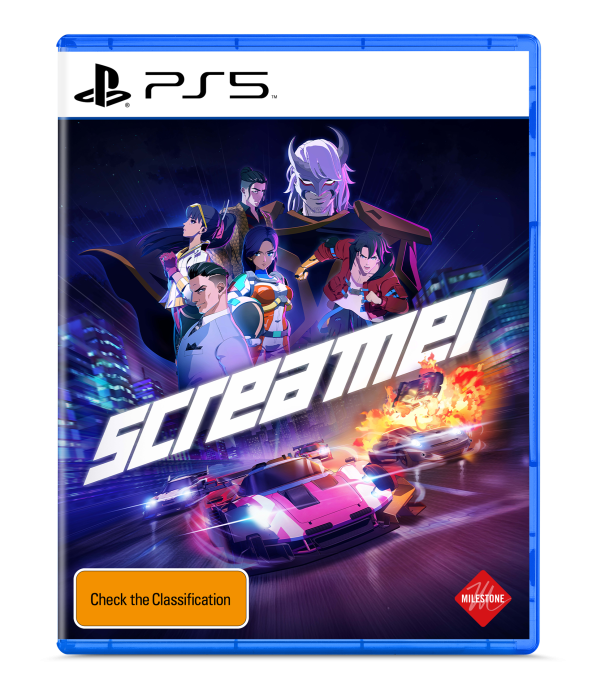


Pros
- + Story offers high-energy entertainment
- + Twin-stick controls work well
- + Deep and complex mechanics
- + Plenty of content
Cons
- - Narrative and gameplay don't always mesh
- - Very little connection to the original Screamer
- - Racing action lacks a sense of danger
- - Some tracks lack personality
Track-based arcade racers are long overdue a comeback. For a time in the ‘90s and early 2000s, they were the glittering jewels of the arcade scene, console launch system sellers, and the technological peak of the industry. That seminal early 3D blue skies era is enshrined in gaming history as a golden age for the genre in the hearts and minds of those who remember it.
Italian studio Milestone remembers it well. Better known these days for the Ride series and an extensive catalog of licensed sim racers, they once played a small but important part in that formative period with the Screamer series, delivering an experience previously reserved for petrolhead arcade-goers to PC gamers, with respectable facsimiles of the likes of Ridge Racer and Sega Rally. This new entry in the series is neither homage nor a simple throwback, however. In fact, it barely resembles its predecessors at all.

The arcade racer’s absence from the mainstream has been a long and painful one for genre fans.
There are flashes here and there that evoke the vibes and attitude of that era. A title screen voice-over announces itself like the iconic attract screens of arcade classics, but Screamer (2026) is more interested in looking at today’s cultural landscape, pulling inspiration from contemporary indie racers, fighting games, anime, and Japanese car culture. It uses genre tropes as a stylistic jacket, draped over the shoulders of something a little less retro. It doesn’t take long after hitting play for Screamer to show you that it has something new to say; it immediately begins talking.
A little less conversation
Screamer’s campaign mode features a substantial anime-inspired narrative that sits bumper to bumper with the racing, told through expensive-looking animated cutscenes and fully voiced visual novel-style talking head sequences. It’s not an original idea; the Initial D series has been going for over twenty-five years, but it’s a marked shift from the gameplay-first sensibilities of the arcade and is bound to be divisive.
Set in a vaguely cyberpunkian dystopia, Neo Ray, the story follows five rival teams competing in a high-stakes racing tournament. It opens with The Banshees, a team of ex-private military contractors seeking vengeance against a rival racer for the death of their leader. From there, the perspective shifts among the various teams from chapter to chapter, each with their own motivations, grudges, and secrets. The interconnected spiderweb of personal story threads is at the heart of the narrative, alongside uncovering the motives of the tournament’s enigmatic host, Mr. A (voiced by a slightly sleepy Troy Baker), and the origins of a mysterious new technology that revives both car and driver from deadly collisions in real time.
The narrative is ambitious, and retains an infectious energy right through to a surprisingly epic final act you won’t see coming.
The storytelling is dark and adult, but edgy melodrama can undercut its attempts at tackling weightier themes, and some hilariously potty-mouthed dialogue borders on self-parody at times. But the high-concept sci-fi plotting is enjoyably wild, and the on-track action makes for some great drama. The tournament’s duels are a highlight, where two teams go head-to-head in a climactic knockout round. At other times, racing is clumsily shoehorned into the narrative in ways that strain credibility, but it remains enjoyably silly.
The narrative is ambitious, and retains an infectious energy right through to a surprisingly epic final act you won’t see coming. But despite being largely entertaining, it does beg the question: who is this for? Adrenaline-pumping arcade racing and visual novel-style storytelling do not make natural bedfellows, and having an appetite for both of those things simultaneously is possibly a big ask from an already fairly niche audience. The balance is off in the opening hours, with tutorial-heavy snack-sized gameplay sequences that don’t completely satisfy, bookended by story sections that are perhaps a little too talky. It improves as the game progresses, and thankfully, the racing action itself quickly blossoms into something exciting.

Lengthy visual novel sequences bookend gameplay

f**in’ Róisin’s potty mouth is unstoppable
Two Sticks Are Better Than One
Fans of the brilliant Redout games, or the wonderful Inertial Drift, will be right at home with Screamer’s twin-stick control scheme. For anyone else, the fundamentals may take some mental adjustment. The left stick controls direction, but with a planet-sized turning circle. Nudging the right stick initiates drifts, swinging the back end of your car in the direction you push it. Getting around without slamming into every wall requires deft use of both. There’s a hump to get over, but it’s a tactile and expressive system, and once mastered, it allows a degree of fine control that more traditional controls can’t match. There’s meaningful variety in the handling of the cars, too. Some are fast and weighty and slide gracefully into long, sweeping drifts. Others lurch quickly and violently with a nudge of the right stick, trading raw speed for maneuverability.
Minor niggles hold it back. Compared to the bone-rattling physicality of the genre’s best, Screamer can feel tame in the hands. Collisions are soft, and there’s a distinct lack of momentum and weight transfer in the handling. It can feel more like throwing toys around than souped-up supercars. Ironically, Milestone’s own Hot Wheels games feel more weighty and more dangerous.
When all the mechanics come together, Screamer produces some killer moments.
A dense layer of additional mechanics is introduced over time. Two fighting game-style meters govern offensive and defensive options, the unhelpfully named Sync and Entropy. Filling the sync bar enables boosts, with a little QTE flourish granting extra speed, and shields to defend yourself from rival racers. There’s a nod to Gears of War’s Active Reload with Active Shift, where well-timed gear shifts grant a burst of speed and a chunk of Sync meter. Activating boosts and shields builds Entropy, which in turn powers your Strike - a deadly dash that destroys any vehicles in your path and rewards you with additional resources.
Later, each character gains a signature ability that expands tactical options and further individualizes their playstyles. Races evolve from simple affairs into layered duels of skill, timing, and resource management. And when it all comes together, Screamer produces some killer moments: a race-long duel culminating in a perfectly timed strike, exploding your rival into a cloud of shrapnel as you surge across the finish line in first place.
CPU opponents have access to the same arsenal and will use every trick in the book to get ahead. Being on the receiving end of these tactics can occasionally feel unfair, but the convincingly human behavior creates fun rivalries. Screamer isn’t afraid to challenge you in general, which won’t be a surprise to fans of Milestone’s other titles. Stretching to reach the skill ceiling is highly enjoyable, though, and Milestone has included a thoughtful selection of difficulty modifiers and accessibility features to level the playing field.

As seen in other games that have featured it, twin-stick controls are transformative.
The complex mechanics shine when given room to breathe, and Screamer is at its best on its wider, more forgiving tracks with simpler layouts, where you can really burn rubber and maintain speed. There are plenty of them among its thirty-two stages, but on its more technical courses, Screamer can be less enjoyable to play. And for all their UE5-powered fidelity, the environments lack a little individuality. A muted color palette and Unreal’s signature fog merge them into a hazy, singular mush in the memory. Thankfully, the visual design elsewhere has more personality, with cool sci-fi vehicle designs, bold characters, and some stylish UI work.
Tournament mode is the main attraction, but a generous arcade mode houses plenty of scope for long-term play, with multiple types of challenge, and integrated leaderboards. Score Challenge is the highlight, stringing together a series of races with a combined score at the end, giving each stage real stakes. There isn’t much in the way of structured challenge, and your Arcade mode mileage will depend on your enjoyment of the core mechanics and willingness to chase your own goals. But a vast quantity of unlockable vehicle cosmetics and gallery items offers near-endless carrot-chasing for those who enjoy a more tangible incentive to keep playing, and a robust suite of local and online multiplayer options rounds out the package.
Blue Sky Thinking
There’s room for improvement with Screamer, but what could have been an unruly soup of features ultimately coalesces into something unique and enjoyable. Its eccentricities feel novel, rather than throwaway. In a landscape where originality at this scale of development is increasingly rare, there’s real value in that. Screamer isn’t the golden age arcade racer comeback many fans would have wanted. But even in 2026, we still can’t render a bluer sky than Daytona, a purer sense of joy than an Outrun 2 drift, or a more immaculate vibe than Ridge Racer. Perhaps arcade racers haven’t seen a true revival because they were already perfect. And maybe Milestone are wise to try something a little different.
A Game of Two Halves
The anime-inspired storytelling will surprise some, delight others, and confuse everyone else. But this is a welcome return for a classic arcade racing series, and the twin-stick on-track action is fast, fun, and rewarding.
Gameplay:
Sound:
Graphics:
Story:
Value Rating:

No Comments