
The Legend of Heroes: Trails Beyond the Horizon Review
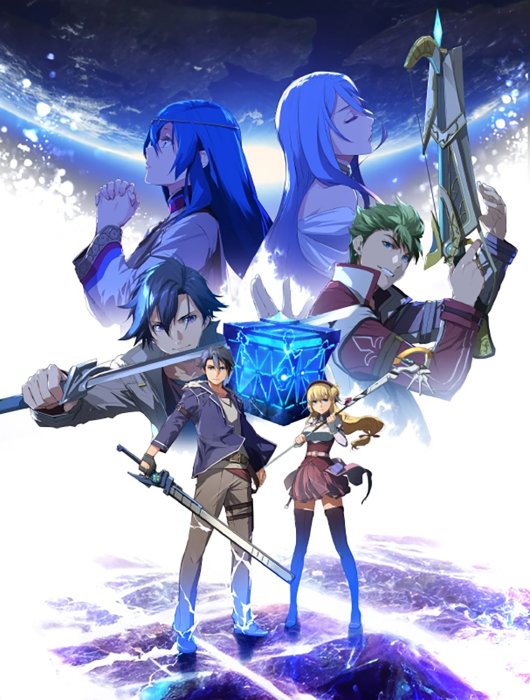


Pros
- + Finally moves the plot forward
- + Some longstanding questions answered
- + Action combat continues to improve
- + Never gets old spending time with Arkride Solutions
Cons
- - Very slow first Act
- - A lot of locations reused
- - Still not enough voice acting
- - Massive cliffhanger
The Trails series’ ongoing epic now spans 13 games (with the release of Trails Beyond the Horizon), and it’s safe to say it’s been a bit of a rollercoaster ride. Some entries push the core story forward a lot, while others, such as last year’s Daybreak II, barely move the needle in terms of the main plot.
At some point, you’d imagine there would have to be an endgame in mind, and Trails Beyond the Horizon begins to put things in motion toward that very goal. It might not finish off the Calvard arc that many were expecting, but there are a lot of answers here (along with many more questions).
The release of Trails Beyond the Horizon also brings the West up to date with Japan in terms of entries. Gone are the days of being multiple games (and even an arc) behind, as now all fans are awaiting where the series goes from this climactic finale.
Prepare your Xipha, pack a lunch, and set off on Arkride Solution’s most epic adventure yet.

Zemuria’s first manned spaceflight sets the scene for Trails Beyond the Horizon.
All Trails Lead Here
Before we get started, it should be made clear that despite the name change, this is very much Daybreak III and the continuation of Van’s story. While the story expects the player to know a lot of the major events that have taken place over the entire series (although the new Timely Terms feature helps out a little), and the addition of Rean Schwarzer (Trails of Cold Steel) and Kevin Graham (Trails in the Sky the 3rd) having their own routes changes things up a little, it’s Van and the gang that gets the majority of the spotlight here.
Following the shocking revelations at the end of Daybreak II that the President of Calvard, Roy Gramheart, plans to send a manned rocket into space, the republic is in both delirium and concern about what this could mean. After a brief excursion at security firm Marduk’s HQ, all three main characters split off to pursue their own leads.
Admittedly, the first Act is painstakingly slow, as you focus on Van’s route alone as he resumes his Spriggan work in the capital, Edith. Not only are you revisiting many of the same places you’ve been to in both of the Daybreak entries (with the addition of two new districts), but the plot doesn’t go anywhere beyond setting the scene for the people in Calvard and how they’re reacting to the news of Project Startaker and sending someone into space.
Fortunately, once you get through Act I, you’ll gain access to branching routes for the rest of the adventure, and it’s here where the story starts to go places. While Van and Arkride Solutions get the majority of the screentime still (double the routes as the other two characters), it’s in both Rean’s and Kevin’s routes where a lot of the most interesting story revelations happen, including answering some lingering questions fans have had for a long time.
While I was waiting for the story to get going in the first Act, I didn’t want it to end once it gets into its groove and finishes with a climactic finale that, while fantastic, leaves on a cliffhanger that makes Trails of Cold Steel III’s cliffhanger seem tame by comparison. Add to the fact that with the West having caught up now, too, it’s going to be a long wait for the conclusion of where this leaves matters. As things stand, it’s looking like 2027 may be when we get the follow-up to Beyond the Horizon, and what looks to be the final entry of the Calvard arc.

Kevin Graham finally makes another playable appearance in the Trails series.

Despite having multiple routes, this is still very much Daybreak III in all but name.
Despite enjoying Daybreak II, it’s safe to say that the main plot essentially went nowhere; for the most part, it felt like the game’s story could’ve never happened, and you wouldn’t miss much. Beyond the Horizon, then, does advance the main series plot a lot, and with all due respect, the events of Daybreak II’s story are worked well into the narrative here, which makes it a better game retrospectively.
Still, once the credits rolled, I was both excited for what comes next for the series, while also being a bit disappointed that we not only didn’t get a conclusion to the Calvard arc, but also left off on a cliffhanger that won’t be resolved for a while.
Back on the Clock
As mentioned above, while Beyond the Horizon drops the Daybreak name from the title, this is still very much a continuation of that series. You’ll still be undertaking 4SPGs as a Spriggan, solving the problems of the citizens of Calvard while revisiting familiar ground for a lot of it. Even once you take control of both Rean and Kevin’s routes, you will still be undertaking 4SPGs in the various places they visit as a “proxy Spriggan”.
If you’ve played the previous Daybreak entries, you’ll know how these work. You’ll visit the various bulletin boards in each area that you visit, pick up a 4SPG, and play out a short quest. At the end of it, you’ll get the option of how you want to resolve the matter, which will increase one of three values: Law, Grey, or Chaos. There’s less emphasis on maxing these out this time around, unless you’re going for all of the Trophies. Unlike the Daybreak games, there are no areas cut off due to this value, although the rewards for the rank-ups are useful.

You’ll once again be undertaking 4SPGs in all of the routes of Trails Beyond the Horizon.
The one new addition to 4SPGs is Topic Quests, which now have their own designation instead of being part of all other 4SPGs. While they still work in the same manner as Topic-based quests did in the previous entries, you’ll now find most of these quests by speaking to NPCs, instead of from Bulletin Boards. As such, they’re a little more involved, even if they play out the same way.
Perhaps one of my biggest disappointments about Trails Beyond the Horizon is the reuse of many of the locations from Daybreak I & II. While the series is known for this, it definitely brings down a few parts of the adventure where you’re in the same locations and the plot is not moving forward much, a point that is felt keenly during the lengthy Act I, where the plot is at its slowest. Still, the few new areas that are sprinkled in are great, including a town I enjoyed visiting in Act III. There was also one area I did like revisiting that was great to see following some of the events in the previous Calvard games.
ZOC it to Them
A large part of the Calvard arc’s combat identity is that of a mix of action and turn-based combat. When first introduced in Daybreak I, it was useful for taking out lesser enemies, but it was almost always more beneficial to go into turn-based mode once you had stunned an enemy. Daybreak II, then, added some more quality of life to the action mode, such as being able to use Quick Arts and Cross Strikes, which let your partner perform a follow-up when you perfect dodge, along with your teammates being more useful in general.
In my review for Daybreak II, I called it the best combat in the series, and I was pleased to see that Beyond the Horizon improves upon this even further, especially for action combat. Several new features have been implemented here to the point that, for the most part, I played out most of the encounters in the game in action mode instead of turn-based. Whether these changes on the hardest difficulty or not remains to be seen, but Falcom has made it so that if you wish to, you only need to really use turn-based mode for scripted battles.
The first addition is the ZOC feature, which allows you to slow down time once the ZOC gauge is full. This will mean you will be able to assault your enemies without them being able to reply. Fortunately, the ZOC gauge replenishes either through time or hits landed on the enemy, and it doesn’t take long to refill it, meaning for most groups of enemies, you’ll be able to use ZOC at the start. This new feature has its uses in turn-based mode too, as you can use a second gauge of your Boost to use ZOC, giving you an extra turn that round. Interestingly, some of the bosses later in the adventure will also make use of this feature, so you’ll need to be prepared for it.

ZOC will let you spend more time in action mode as you slow down time for your enemies.

Blitz will allow your reserves to chip in with attacks during turn-based combat.
The other major new addition is an Awakening feature, which you can trigger in action battles once you have at least three out of four of your boost gauges filled. This is only usable with specific characters (such as all of the protagonists), where they will use their “auras” to buff them, increasing the damage you deal and providing HP regen. Pairing this with ZOC will allow you to take out most enemies in action combat, even if late game it can be quicker (with Turbo mode on) to quickly go into turn-based once you stun the enemy and fire off an S-Craft.
Both of these new features help combat feel breezy in dungeons and continue that merging of bringing the Trails combat system closer to Ys, Falcom’s other flagship series. Fortunately, there are some fantastic turn-based encounters to be had still, including some of my favorite battles in the entire series, so fans of turn-based combat shouldn’t feel like the game is fully shifting to action.
As for turn-based mode in general, there are two new additions there, too. The first, Blitz, will allow your other party members not in your active roster to chip in with follow-up damage. This acts like a turn-bonus, much like many of the other bonuses you would see. Brave Orders from the Cold Steel arc also make a return here. Named Shard Commands, you can use your Boost Gauge in turn-based mode to utilize buffs such as increased damage, speed, and defense that can really turn the tide of battle. Much like ZOC, your enemies can use these commands too; however, you have the ability to overwrite them with your own Shard Commands (at the expense of an extra Boost Gauge). All of these additions really add a lot more flexibility to turn-based combat, too.
A Grim Undertaking
Daybreak II’s random dungeon, Märchen Garten, makes a return once more, and as one of my least favorite parts of Daybreak II due to the monotony, I was worried about how I would get on here. Now under the new name of The Grim Garten, it does still contain many of the parts of its predecessor that I didn’t enjoy, such as the rewards on the floors themselves being rather mediocre and traversing these bland dungeons not being particularly exciting.
While you’re only required to complete the first two or three floors (now known as Domains) as part of the story, you’ll want to see it through to the end for the story alone. Most of the Ouroboros storyline can be found here, and it’s a lot more interesting than anything found in Daybreak II’s version of the Garten, with a conclusion that will be a big payoff for longtime fans. Still, having to dip into clearing the latest domain during the story does hurt the pacing a bit, especially during the required parts of an already slow first Act.
There is a space you will unlock this time around where you can speak to the various characters of all three groups, providing some great character dialogue (much akin to Trails into Reverie’s version of this setup). You’ll also be able to play some minigames from the shop menu, such as Basketball, Fishing, Casino games, and even challenge battles. This, along with seeking out Memento Orbs in the dungeons themselves for some large Lore insights across the series, makes this version of the Garten feel a lot more rewarding.

You can find Memento Orbs in the Grim Garten that will provide important information from the past.
What’s more, for the first time in the series since they were introduced, you can now see all of the Connection Events in a single playthrough. You’ll still only get a limited number of points on each day to choose whose event you want to see, but when you go to the Garten, you can earn a currency that lets you view anything you may have missed. This is a change that is most welcome.
So, despite a few gripes with Trails Beyond the Horizon, I did get the familiar feeling of emptiness once the credits rolled that I get with the better entries in this series. It’s undoubtedly the strongest entry of the Calvard arc, and there is some great payoff for longtime fans. Besides, spending time with Arkride Solutions is always a great time. Despite some of my gripes, such as not being fully voiced still an ongoing issue, once I got past that opening Act, it was a wild ride from start to finish, and the cliffhanger leaves me with a desire to see just where the series goes from here.
A Great Step Toward the End
Trails Beyond the Horizon finally moves the series’ main plot forward in a satisfying way, despite leaving off with a massive cliffhanger. With fantastic combat refinements, not even a slow first Act can dull our excitement about where the series goes from here.
Gameplay:
Sound:
Graphics:
Story:
Value Rating:

No Comments