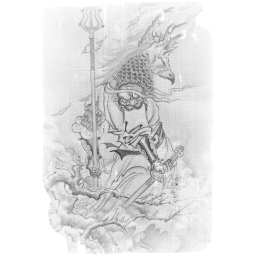
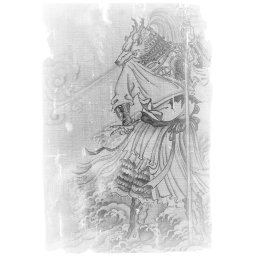
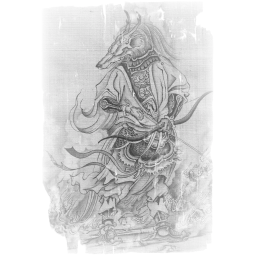
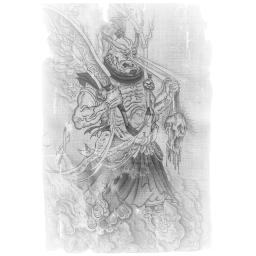
Among the wolf guais, there was a young one, ambitious and always seeking rapid progress on the path of Dao. However, his time spent practicing was short, and his skills remained shallow. He couldn’t yet grasp the deeper techniques of his clan, leaving him impatient.
One day, during his routine patrol, he carried a cask of fine wine. As he passed the mountain gate, he encountered the gatekeeper, Bullguard, who had a weakness for liquor. Eager to learn, the young wolf shared the wine with Bullguard and seized the opportunity to inquire about secret techniques. Partaken in the wine, feeling compelled, Bullguard taught him a few tricks. Rejoicing, the young wolf hurried home to practice.
Two months passed, and having found little benefit in those teachings, he contemplated giving up. Recalling his previous success in bartering wine for knowledge, he retrieved a small golden statue and approached the Snake Patroller. Persuaded by gold, the greedy creature shared some techniques with him. Back at home, the young wolf practiced as instructed. Another month passed, yet his gains remained minimal. Undeterred, he repeated his tactics with other guais, exchanging valuables for teachings.
Over time, he visited everyone in the mountain, amassing a repertoire of techniques. Yet, despite practicing one today and another the next, he made no progress. Eventually, a compassionate elder wolf offered guidance. Yet, the young wolf conversely started lecturing the kind old wolf with his strange mastery, leaving him speechless. From that point on, no one in the clan was willing to teach him.
Poetry
Immaculate skills, the wolf’s lone aim, No price too high, his heart aflame. Yet wayward efforts brought no gain, A futile vision-all in vain.
Several are encountered in the Black Wind Mountain region; you’ll find some near the Front Hills shrine in the Forest of Wolves area.
Description
A white-robed wolf guai, patrolling the hills, seized a sword from a traveler. Jewels studded its scabbard, its blade sharp and bright. Coveting it, he strapped the sword to his side, revelling in its splendor. Yet, when it was time to give tribute, he hid it away. The other guais chided, “Without offering such treasures to the king, how will you earn his favor, or do you fancy patrolling forever?” The wolf guai scoffed, “Such treasures we cherish, the king barely notices. You offer scrap metal and dream of favor? You are fools.”
They dismissed his words, seeing them as mere excuses to shirk his duty, while they toiled on. The wolf guai indulged in peaches and drank wherever he could lay hands on them, keeping the very best for himself. The others knew his punishment would come, and waited.
One day, the Black Wind King held a lecture on Buddhism in the mountains, speaking of enlightenment and revival. His guardians spread paper talismans, and all were commanded to consume them before the chanting and prayers. Hours later, the king inquired about their enlightenment. A pause fell; then, the white-robed wolf guai stood, and there emerged others, one by one.
The next day, a decree was issued to the guardians: the wolf guai was promoted to a minor captain. All the other guais, puzzled, whispered among themselves. How had the wolf guai not only escaped punishment but found himself rewarded?
Poetry
Meager of wit wrapped in white attire, In sludge they crawl, yet yearn for higher. Bent to power, king’s favor they seek, Where even lowly fowls may peak.
Rare was the revelry for the minor guais who patrolled the mountain paths, their delights not granted but taken in human guise, thieving sustenance from unsuspecting townsfolk. The charade proved fleeting, for the villagers grew wise to their deceit, and the guais, oft caught mid-bite, were met with the town’s rugged justice, deterring their mischief.
Among them was a wolf guai with a penchant for drink, who, on a day of indolence, lay beneath an ancient tree. Suddenly, an elder wolf, cloaked in feathers of a crane, appeared to him asking, “Why forsake your patrol for idleness?” The wolf guai sighed, “I long for drink, but the townsfolk see through me; I’m left to quench my thirst only in my dreams.” The elder chuckled as he whispered a secret, “Seek the shrine. Conceal yourself behind the curtains, and the sacred spirits’ liquor shall be yours to drink.” Then, with a shift of form, he vanished.
Wavering in doubt, the wolf guai transformed and hurried to the town’s shrine. There, veiled behind curtains, a sacred effigy stood, its origins unknown, the altar laden with delectable offerings and fine spirits. As advised, he nestled himself between the curtains, indulging in the liquor until his belches betrayed him to the gathering crowd in the shrine.
Trapped between the curtains, the wolf guai listened as a voice rang out, “The wine jar I offered is empty. Our tributes were received.” A chorus of prayers erupted, beseeching favor from the Immortals.
From that day forth, folks from miles around flocked to the shrine, affording the demon endless drink. But as days passed, the once delightful treat turned bitter; and those prayers, be them piteous or greedy, weighed heavily upon him with helplessness.
One day, unable to endure the bitterness any longer, the wolf guai burst from behind the curtains, hoisting the jar and smashing it on the altar amidst the screams of onlookers. With a deafening crash, he suddenly awoke beneath the tree: no shrine, no incense, no crowd around. With a tired sigh, he took up his axe and set off to patrol the mountains once more.
Poetry
Neither sky cares, nor earth will hold, By liquor’s laugh, bold spirits unfold. In drunken dreams, a cosmos wide, Wake with worries cast aside.
Several are encountered in the Black Wind Mountain region; you’ll find some near the Front Hills shrine in the Forest of Wolves area.
Description
Ever since the black bear guai returned from Guanyin and crowned himself king, he boasted of the arts he had learned. Tales of his newfound method of practice and power of revival allured many a guai to Black Wind Mountain. Seeking the king’s favor, these minions toiled with abandon.
Among them, a wolf guai worked with tireless zeal. He rose before dawn, patrolled the mountains, and continued well into the night. All of the treasures he found were first laid at the king’s feet. His life was one of labor, and yet, without a moment to make friends. Despite his dedication, his presence barely stirred a whisper among the others, and his name was seldom uttered.
His brother, seeing such unacknowledged dedication, spent his savings for a seat in the king’s lecture. The wolf guai sat there, heavy with regret for the silver he had squandered, both on the journey here and the seat at the lecture, that could have been used to buy himself a shield or blade. “Had I a new blade,” he mused, “glory could have been mine.”
As he pondered this, golden-clad guardians scattered paper talismans before him. Commanded to consume them, they then chanted in meditation for hours until the king sought signs of enlightenment. The white-robed wolf guai stood first, claiming a fervor within and clarity of mind.
The diligent wolf guai thought to himself, “Sweating fervently in a crowd is no marvel… Achieving clarity after chanting is no miracle.” Just as he was lost in thought, the blue ox guai rose next, followed by others. The diligent wolf guai stayed seated, unsure, until the king gestured for them all to sit down.
Later, treasures were doled out; the ox guai received a golden pill, the white-robed wolf guai a title. But the diligent one kept his old shield and dull blade, patrolling the mountain still. Only from then on, he did it all under the white-robed one’s whims, ever obedient.
Poetry
Sunswept hills they guard and tread, From glint of steel, their daily bread. Far-flung from their native land, At nights, for home, their souls shall stand.
Long ago, the Wolf Sentinels were the personal guards of old Lingxuzi. They were masters of the long-hafted axe, and their name was spoken in awe among the yaoguais.
When the Black Wind King returned from Guanyin and rebuilt the garrison in the mountain, he took in many wolf guais who had wandered here from Shituo Ridge. This angered the wolf guais native to Black Wind Mountain. To appease them, the Black Bear Guai pledged to revive old Lingxuzi. The wolf guais then had no choice but to endure in silence. Yet mere days after the awakening, the old wolf vanished, and no one had seen him since. Upon learning of this, the black bear did not look into the matter but allowed a senior grey wolf guai from the Kingdom of Shituo to take old Lingxuzi’s seat and even his name.
This roused the local wolf guais to fury and launched protest after protest. To their surprise, the Wolf Sentinels, at the Black Bear Guai’s behest, seized the lesser guais who led the unrest. The new Lingxuzi flew into a rage at these guais, threatening to devour them whole. They were spared this fate only by the timely arrival of Guangzhi, the Fireblade Wolf. Thereafter, under the new Lingxuzi’s command, the Wolf Sentinels led every patrol of lesser guais on the mountain. Never did anyone ever dare rise against Lingxuzi again.
Poetry
With his axe as both weapon and cane, His brows bushy, his hair white as snow, Who claims the twilight years are in vain? For learning late can still make one grow.
It is said that the crows gathering in temples, having listened to sutras and teachings every day, developed a spiritual nature and could predict fortune and misfortune. Thus, some fortune-tellers who called themselves “Crow Diviners” liked to set up stalls in front of temples, using crows to pick fortune sticks for divination. They always lit sandalwood incense, which symbolizes the temple, at their stalls and claimed that their crows were the spiritually enlightened ones from the temple.
One such Crow Diviner had a crow he had raised from a chick, which could communicate with him using specially made fortune sticks. Every day, he sent the crow to various parts of the city to observe people’s lives. When clients came to seek fortunes, he would use the fortune sticks to inquire about information from the crows. He mixed this information with his own understanding of human affairs, weaving prophecies that were half-true, which often managed to deceive.
One day, an official came seeking a fortune, offering a large sum of money. The Crow Diviner told him that his official career would be prosperous and that he would reach a high position. Unexpectedly, the official not only failed to get promoted that year but was demoted instead. Enraged, the official brought his household servants to demand an explanation. The Crow Diviner used the information gathered by the crows to explain that the official had not spent enough money on temple renovation, which magically convinced him. The official, deeply believing in his abilities, even introduced the Crow Diviner to his colleagues.
The Crow Diviner amassed a considerable fortune through this, but he knew too many secrets of the officials and feared for his life. He decided to change his career. One day, he attempted to drive all the crows away, but they refused to leave. The Crow Diviner tried various means to get rid of them, but the crows, unable to endure his mistreats any longer, attacked and pecked him to death.
Afterward, the crows transformed into human forms, donned the attire of fortune-tellers and continued to sell fortunes around the temple, deceiving people as the Crow Diviner had done.
Poetry
He knows the world’s fate through divination, Yet cannot secure his own salvation. In what he thought was a place of peace, Fate’s tangled threads never cease.
Several are encountered in the Black Wind Mountain region; you’ll find some near the Outside the Forest shrine in the Forest of Wolves area after defeating the Bullguard.
Description
The Black Wind King hosted a banquet in the temple to celebrate his birthday, and all the yaoguais attended. During the feast, the King hung a lucky ornament on a tree branch, declaring that anyone who could shoot it would receive a rare fortifying golden pill as the reward. The yaoguais were eager to try, but the fierce wind hampered all their attempts.
Among the guests was an old wolf known for his remarkable archery skills. He was cautious, unassuming, and kept to himself in a corner, nursing his drink. A few eager yaoguais asked him to try, and though he declined, they persisted with their teasing until he reluctantly agreed.
Slowly, the wizened old wolf stood up and moved to the position. Some youngsters laughed at him, deeming him incapable. Unperturbed, he calmly strung his bow, let loose an arrow, and struck the target dead center, causing a commotion among the crowd.
The old wolf received the reward, and admiration followed suit as others toasted him. Among them was a youngster, who commented on the bolus intoxicated. “How generous our King is,” he remarked, “Far better than that Lingxuzi, who was good at making pills but never shared them with his underlings. What a tightwad!” The youngster’s words cast a shadow across the old wolf’s face, and he silently took his leave. “He had roamed the mountain with Lingxuzi long before our King’s reign. Yet, you judged his deceased former master in front of him. Loyal as he is, you are in trouble now!” warned an elder guai. However, the young guai shrugged off his warning.
The next day, the old wolf returned the golden pill to the King, citing its value too high to possess by an archer. Hearing the news, the other yaoguais urged the young one to apologize and seek forgiveness, but he remained defiant. Within a few days, while venturing outside, the youngster was killed by several arrows, each piercing his heart. Many said that even the golden pill couldn’t save the youngster from his fate.
Poetry
A master archer, none can compare, Timid when danger fills the air. Never brave when faced with fear, Escape his choice, he stays clear.
In bygone days, there lived a youth in the town, the son of a martial arts master. His father’s fondness for drink led to a foolish act that landed the old man in jail, leaving only the youth and his mother struggling to survive. As their situation grew dire, the young man took on any work to make ends meet. The villagers praised him for caring for his mother, deeming him a dutiful son.
In an unlucky year of crop failure, the mother and son set out to seek refuge with relatives. Along the way, a gang of bandits emerged. Eyes fierce, faces scarred, they brandished their blades, demanding nothing but gold. The mother and son, destitute, resorted to begging for mercy. But the bandits showed no mercy and were intent on killing them. The young man, believing their death was imminent, seized a bandit’s knife; with a resolute heart, he ended his own mother’s life and pledged himself to the bandits. And so, he joined their ranks. News of the incident spread, and people condemned him as a coward, truly a cursed son.
Years passed. One day, the entire gang of bandits was wiped out, leaving no trace. Some said a hero had come to rid the land of evil and uphold justice. Others claimed a guai had emerged in the mountains, bringing a long-delayed reckoning. Debates raged on, but eventually, the topic faded from memory. One day, a man, covered in blood, stumbled down from the mountains, recounting an encounter with a towering bandit, neither human nor guai, wielding a massive blade to rob the roads. His face bore an uncanny resemblance to that cursed youth, yet he spoke of freeing humanity from its burdens.
Poetry
From humble start to seek revenge’s claim. Paths may differ, yet burn with the same flame.
In the Village of Shaded Heights, there lived a young man, orphaned and impoverished, constantly mistreated by his fellow villagers.
One day, hunters from the village discovered a strange cave in the mountains, emitting eerie sounds that sent shivers down their spines. Too afraid to enter themselves, villagers pushed the young man in to investigate. Lost in the darkness, he stumbled and fell from a cliff, crying out in agony. Believing the cave harbored a fearsome guai, the villagers abandoned him and fled in terror.
Sitting at the bottom, the young man wept bitterly. Amidst his tears, he heard the sound of bones snapping and the rustling of movement. Startled, he fell silent, only to hear footsteps approaching. Filled with fear, he yelled, “Stay away! I am an orphan and burdened with misery. My flesh is lean-feasting on me won’t do you any good.” Surprisingly, as soon as he spoke, the footsteps stopped.
Time passed, and within the darkness, hunger gnawed at the man’s senses. Despairingly, he pleaded, “There’s no one coming for me… Devour me quickly, so I may have a merciful death.” Then, the footsteps resumed, inching closer. Terrified, he assumed his end was imminent. Yet, to his astonishment, he felt a piece of cloth gently brushed against his face. Reaching out, he realized it was a sleeve, which he grasped firmly. The sleeve guided him to stand and led him through the darkness until they found the cave’s entrance.
As the daylight bathed them, the young man finally saw what had been guiding him-a skeletal serpent guai! Seeing the young man startled, the guai suddenly extended its neck and swept him out of the cave. Afterwards, the young man was saved by passing merchants and departed from the village with them. From then on, his life gradually improved and prospered.
As the saying goes: “Misfortune may be the harbinger of fortune, and fortune may conceal misfortune.” While not an absolute truth, when events reach their peak, change becomes inevitable. From change, opportunities arise, and the lowest valleys often reveal the clearest paths.
Poetry
A noble fate’s vengeful breath, Binds the bones of snakes in death. A soul mistreated, here to stay, Resentful will, blown astray.
Encountered in a cave near the Marsh of White Mist shrine in the Bamboo Grove area.
Description
Once upon a time, a young wolf followed a grey elder wolf to learn the art of hunting. Despite his cleverness and diligence, the young wolf struggled to catch any prey. One day, the pale elder commanded him to find food alone or face hunger. Then the young wolf, hiding in the shadows of the mountains, finally managed to catch a rabbit. However, instead of eating it alive, he gently licked the rabbit’s wounds, as if to heal them.
The rabbit took the chance and fled into a pond, struggling to swim to safety, but the young wolf in pursuit forced it back into the water. Just as the rabbit was about to drown, the young wolf rescued it, softly nudging its head and helping it breathe. The rabbit woke up conscious but bewildered. Suddenly, the distant howl of the grey elder startled both of them. In his panic, the young wolf accidentally crushed the rabbit under his paw.
Heartbroken, the young wolf wept bitterly. As the elder approached and inquired, it became clear: the young wolf couldn’t bring himself to kill the rabbit, so he repeatedly spared its life. Yet, he also feared his own hunger, and that’s why he refused to let go. Acknowledged, the grey elder then advised, “Your false kindness brought misery. Instead of hesitation, both of you would have been better off with a swift end.”
The grey elder’s words seemed to have dawned upon the young wolf. Later, it honed a lethal technique of hurling whirling blades from afar for stealth kills, believing this to be the ultimate form of mercy towards its adversaries.
Poetry
Hills and rivers, nature’s way, Kindness grows like grass and wood. Plants may fade, then bloom in May, All shall still stand where they stood.
It was written in ancient records that consuming ginseng could bestow longevity, leading many to develop a fervent passion for devouring this precious tuber-especially aged ones. However, some scholars dismissed this notion, viewing ginseng as both a tonic and a poison; its elevated status stemmed from its humanoid appearance, they said. Nonetheless, those who made their living by harvesting ginseng always found eager buyers.
Deep within the valley, the younglings of ginseng shoots trembled with fear at the unmistakable sound of footsteps. It was the dreaded rhythm of the ginseng harvesters’ mountain shoes, crushing the thick layers of decaying leaves and rocky earth. And with every eerie resonance, the siblings of the ginseng plants vanished, disappearing one by one. Only the tiniest survivors managed to evade this grim fate, their diminutive size providing a fleeting reprieve. Yet, even they bore the mark of fate-a crimson thread, marking them, and restraining them. Who knew when the harvesters would return, to dig them up once they grew into their full potential?
Time raced by, swift and unyielding. And on that day, the familiar footsteps resurfaced. With the years that had passed, it was likely the offspring of harvesters who were generations younger than those who came before; then a quickened pace, a sense of anticipation-the crimson threads had surely been spotted. But oh, what ill fortune! As the ginseng harvester reached for the thread, it led him to a grim sight-the entwined remains of a skeleton. A curse gathered on the tip of his tongue, but before he could spit it out, the ground behind him rumbled with the sound of scattered dirt. He turned his head; the shifting soil unleashed a monstrous creature, towering and menacing. Fear gripped the harvester, urging him to flee, his frantic screams piercing the air, shouting of man-devouring guais.
Poetry
Inherent gifts in these mystical sprouts reside, Walking forth from the earth, spirits untied. Roots serve as limbs, nourishing body and mind, Beware, excessive gathering brings hardships unkind.
Two frog guais practiced in the marshes. The smaller frog was often bullied, yet the bigger one always stood up for him, and soon they forged a strong friendship. One day, amid a contest held by Baw-Li-Guhh-Lang to appoint a sergeant among all the frogs, turmoil stirred and rippled through the ranks. Finally, the choice was narrowed down to the two, the brawny big frog and the quick-witted small frog. Though the other frogs were discontented, they dared not voice their dissent.
The two then were assigned to guard the dwelling of Baw-Li-Guhh-Lang. On their duty, a valuable amber glass was found broken. Unable to identify the culprit, all the frogs began clamoring for punishment against the two instead. The big frog attempted to reason with them but got antagonized by their words and soon escalated the argument into a brawl. The frogs interpreted this as his reaction out of embarrassment, hence evidence of his guilt. The small frog, meanwhile, remained silent beside them. Seeing this, the big frog chided him for not speaking up in his defense and even began to suspect his smaller companion.
Hesitated for a while, the small frog then admitted to breaking the glass. However, the other frogs dismissed his confession, arguing that one of them had committed premeditated vandalization while the other had neglected his duty, and both deserved punishment by death. The small frog grew anxious and could not help but engage in the argument. As their voice grew louder and louder, their bellies inflated larger and larger, until some of them finally burst, splattering blood and flesh all over the place, leaving none unsoiled.
Poetry
In pools they dwell, forms unrefined, Ugly and odd, voices entwined. Bellies swell with a raucous tune, In death, they burst-an angry boom.
The yakshas who sought refuge in the New West were mostly unwilling to sever their old grudges and thus served as lay disciples in the temple. Some yakshas, however, aspired to attain enlightenment and shaved their hair to become inner disciples. They had promised their master to sever a thousand heads to prove their resolve. Yellowbrow was pleased and bestowed upon them special blades, calling them “Blade Monks,” and allowed them to practice in the Pagoda Realm. If they truly managed to behead a thousand foes, they could become Arhats in the main hall.
Initially, the Blade Monks thought this task would be easy, as the Pagoda Realm was filled with newcomers on the path of enlightenment. However, the path grew more challenging as they found the remaining inhabitants of the Pagoda Realm to all be formidable adversaries: the agile and elusive Starved Abominations, whom they couldn’t catch; the long-limbed Lantern Wardens, whom they dared not provoke; the temperamental Enslaved Yakshas, whose cruel vengeance they feared; and even the weakest Yaksha Archers, who had become mad and terrifying after practicing the Closed-Eye Meditation technique.
Seeing that the Red-Haired Yakshas often sat quietly alone, appearing very docile, they decided to target them. Although the Red-Haired Yakshas believed all beings deserved to live, he harbored a deep hatred for those who beheaded others due to the war that destroyed their nation, and their own fate. Thus, he showed no mercy and promptly beheaded the Blade Monks who attempted to do so.
After this lesson, the Blade Monks became subdued but remained resentful. They often hid in corners, ambushing passers-by to add to their count of beheading through their treacherous means.
Poetry
A foolish monk hears a wise voice divine, Beheading seen as practice, an evil so refined. Crooked paths lead to ever twisted ways, The wicked blade awakens, yet the mind still strays.
Years ago, after Mount Huaguo was destroyed, the Macaque Chief led his followers away, seeking a new place to practice. They trekked to the Flaming Mountains, hoping to settle there. However, a plague soon broke out among the monkeys. The Macaque Chief ordered the sick monkeys to be thrown into a deep valley. This action instilled fear among the monkeys, causing them to abandon him and wander aimlessly.
They traveled through mortal cities, disguising themselves as circus monkeys to earn a living. However, after each performance, the audience would disperse, leaving them with meager earnings and empty bellies.
One day, a monkey had a sudden idea: why not use their performances to gather people together and then rob them? With that thought, they beat their drums and gongs, performing energetically to attract a crowd. Once the audience had gathered, they killed them, stripped them of their clothes and valuables, and fled to the next city.
It was in this manner that they eventually reached the New West, and upon hearing that the Macaque Chief was also practicing there, they decided to become monks. Feeling the weight of his guilt toward his kin, the Macaque Chief avoided them, which only fueled their resentment. Knowing they were no match for the Macaque Chief, they took on the role of welcoming guests, so that by striking a gong, they could summon other guais patrolling the area. They waited every day for the chance to see the Macaque Chief, planning to summon the local guais and give him a good beating when the time came!
Poetry
Through hoops they leap, and somersault, With drums and tricks, their skills exalt. The wicked stride with fearless ease, The kind are burdened, souls aggrieved.
The temple rules state: New monks entering the temple may receive a new kasaya.
One day, Master Non-Void joyfully welcomed a new disciple and personally led him to the storeroom to fetch a kasaya.
The young disciple found that the kasaya was made of a single layer of cloth, hardly adequate for the snowy mountains. He asked, “Master, this thin kasaya seems suitable for summer. Could I exchange it for a woolen one?”
Non-Void shook his own kasaya and said, “The one I wear is the same as the one in your hands, only more ornate. With the Buddha’s wisdom in your heart, you shall fear the cold no more.”
The young disciple, still doubtful, asked, “Master, I saw many seniors frozen to death by the roadside…”
Non-Void kindly replied, “Their understanding was shallow, and minds unsteady. Yet you are different. I can see that you have the potential to comprehend the Buddha’s wisdom.” The young disciple, feeling proud, happily followed his master back with the kasaya.
Not long after, another frozen corpse appeared outside the temple gate. As Non-Void led his new disciple past it, the young disciple asked, “Master, did these seniors all freeze to death?”
Non-Void continued walking slowly and said, “Fear not, my disciple. They lacked piety and wisdom, but you are different…”
Poetry
Wisdom’s lamp lights seasons’ span, Time flows like water through our hands. Snow and wind obscure the way, Achievements drift like bubbles, grand.
In the Kingdom of Yaksha, there were eight great generals, one of whom was named Mi Yan. He had once practiced under the Golden Summit Immortal at the Yuzhen Temple, located at the foot of Mount Lingshan. Having fought countless battles, he possessed the valor of a warrior who could face ten thousand enemies.
When a formidable enemy attacked, the Yaksha King appointed Mi Yan as the vanguard general. Mi Yan set up a large camp at the border and addressed his soldiers: “If any of you fear battle, walk away now, and I won’t hold it against you. But know that if we lose this foothold, the kingdom will fall. Our elders, children, and all our wealth will become the property of our enemies.” With these words, he and the entire army swore a blood oath to advance and never retreat.
The Yaksha army, isolated and outnumbered, faced an enemy surrounding them on all sides, their banners blotting out the sky. Wave after wave of enemy forces attacked relentlessly. Mi Yan and his troops fought fiercely, suffering heavy casualties. Ultimately, Mi Yan was surrounded by numerous Arhats and was beheaded.
The soldiers, countless among them having sacrificed their lives, retrieved their general’s head. Placing Mi Yan’s head in his coffin, they witnessed his body slowly sit up and lament, “If we lose our homeland, what difference does it make whether I have a head or not?”
With these words, he closed his eyes and fell back down, finally passing away as blood gushed from his neck, staining his hair red. Later, his subordinates, in a display of loyalty and bravery, poured the blood of their enemies over their heads, emulating Mi Yan. Despite their valor, the Kingdom of Yaksha was ultimately destroyed, but not a single soldier from Mi Yan’s army deserted.
Poetry
With sword in hand, the foe’s chest pierced, Blood-soaked hair, in battle fierce. Endless sorrow for a fallen land, East wind sighs, as west winds stand.
Several are encountered near the Snake Trail shrine in the Bamboo Grove area.
Description
In the kingdom of Hhami, a small city stood against the mountainside, its lush grasses and dense forests a haven for serpents, much to the townsfolk’s constant dismay.
There lived in this city a snake hunter, masterful in his craft, who had freed the people from many a serpent’s threat, earning a fair share of silver in the process. He boasted not of his wealth; instead, he often dispensed porridge to the needy and prayed for all. So revered was he that the magistrate awarded him a dwelling for all his family to live within the town walls.
One day, a ragged monk, seemingly delusional, came begging at his door. The snake hunter’s kind-hearted wife offered clothes and food, but the monk, unsatisfied, demanded liquor. The crowd scorned his impudence, their complaints growing loud until the snake hunter’s return. He silenced the clamor and instructed his wife to bring the monk a gourd of spirits.
Touched by the gesture, the monk warned, “A serpent guai lurks in your home. Ignore it not, or your family shall perish.” The snake hunter scoffed at such mad ramblings and dismissed him promptly. Yet, his wife heeded the monk’s words and urged her husband to search for the guai. He, however, brushed aside her concerns. In her persistence, the wife fetched the mad monk once more to banish the evil. Indeed, with raw meat and an iron hook, the monk drew from their home a massive serpent, taller than a man, clearly a creature of power. “Four limbs it sprouts, and venom deadly,” the monk declared. “A mere touch is death.” With those words, he slew the serpent guai for the woman.
Strangely thence, the town remained untouched by further snake scourges, as if by the mad monk’s hand, peace was restored.
Poetry
As seasons turn, from slumber it parts, Hidden in green, a hunter with arts. Small in shape, it devours the grand, Or strikes a pain no cure can stand.
There was a year when a young wolf followed a grey elder wolf to learn the art of hunting. The master taught him that a great hunter strikes swiftly and surely, sparing their prey from suffering. The young wolf pondered this long and hard. After years of training, he devised his own killing technique. He thought his master would be pleased with his progress, but instead, the elder wolf scolded him for disrupting the circle of karma and told him to repent. The young wolf’s mind swam with confusion at his master’s seeming contradiction.
And so, the young wolf left Black Wind Mountain and wandered the lands. On his travels, he heard folks whisper that wolves, though hardy and loyal to each other, were brutal, vicious, and treacherous. The wolf guai grew more perplexed. It seemed his years of training went against the ways of the world.
One day, as he passed through the New West, he heard tales of a dharma of ecstasy in that place that could free a troubled mind. He sought an audience with the abbot.
The abbot was a chubby monk in yellow robes who loved to change form. He heard out the wolf guai’s woes and counselled, ““Wolves are born to hunt, to slay. It is the way of your kind. Men are not the same; they are born to plough and plant, to reap and sow. Frail and feeble, such is their lot. They seek to leash you wolves with false pre-empts, for they hope to escape your fangs and claws. But heed me, wolf: each kind must follow the call of their blood, the song of their soul. Why should you bow to the mewling of men?””
These words lit up the wolf guai’s mind. At that moment, he knew his path lay within the halls of New Thunderclap Temple, where he would walk the road to ecstasy. The chubby monk laughed, “In my temple, we bow to none save our own hearts. Beware, for those who fear death have no place here.” The wolf guai gladly accepted and became the monk’s most loyal guardian. Armed with a scythe, he is now bound by no code save his own savage joy. Heed not a word from his tongue.
Poetry
The wolf’s heart was once kind and sound, Misled, however, consumed by desire. The path to return was once easily found, Yet fate was sealed by the words of a liar.
Buried in the ground near the Snake Trail shrine in the Bamboo Grove area. Follow the river to reach a large clearing, then stick to the left path. You’ll find several mushrooms, and should interact with them all to eventually find the Fungiling and start the fight.
Description
In the highland bounds, there lived a widow and her girl, left to fend against the harsh days alone. The mother sold pancakes in the nearby village; the girl gathered firewood, ground grain, and cooked meals, shouldering her share of the family’s responsibility.
Ceaseless rains had worn down the woodshed, long neglected without a man’s hand. The beams rotted, and the roof caved in. One day, the girl found atop the ruins a gleaming mushroom, vibrant and capped like a bowl, dew dancing on its surface, a spark of life too precious to pluck. She sheltered it with straw, letting it thrive in peace.
Laden with tasks, the girl had no time to play with other children. All her secrets and dreams, she whispered to the mushroom, as if it were a dear friend.
The toils of life led the widow into illness, urgently needing money for medicine. After discussing it, the widow and her daughter decided to sell their house. A wealthy neighbor, who had once been close to the widow’s late husband, expressed interest in buying the house. However, this neighbor was very stingy and tried to exploit the widow’s illness to lower the price. They spread various rumors to scare away other potential buyers, bullying the helpless widow and her daughter.
Worried and anxious, the girl often hid in the woodshed to cry. The mushrooms witnessed all her grievances.
The next day, something strange happened at the neighbors’ house. Overnight, mushrooms had sprouted all over their property. When the neighbors ordered their servants to clear them away, they discovered a large, eerie mushroom about a foot tall, neither green nor yellow, growing on the main beam.
When they tried to cut down the mushroom with long-handled sickles, it suddenly rose into the air, opened its cap like a fishing net, and floated above them. It shook itself and then fell onto the man of the house, crushing him to death. The air was filled with countless spores the creature released, knocking everyone to the ground.
Afterward, the mushrooms crawled out of the ground, transforming into many guais. They helped the widow and her daughter pack their belongings and leave the village, disappearing into the mountains.
Poetry
As mountain rains kiss the ground, Youthful green is all around. In her virtue’s quiet display, Even guais in the woods repay.
Several can be found near the Village Entrance shrine in the Sandgate Village area.
Description
In the days when the Kingdom of Flowing Sands warred against the Fuban, there was a company of warriors known as the Four-Feathered Army. Skilled archers they were, one and all, armed with repeating crossbows and great shafts fletched with four feathers, capable of piercing even the strongest iron. Great was the joy of these soldiers when the weapons were placed into their hands, for they believed that with their hard-earned skills and such mighty tools of war, victory would be swiftly theirs.
As darkness fell, the soldiers gathered to discuss the strategies they would employ. A veteran said, “Shoot its eyes to blind it, and the bug won’t be able to hit us.” A young one said, “Shoot its heart to stop its breath, and the creature will perish.” A brave one said, “Shoot its legs to cripple it, and let it wait for death.” Long they debated, each seeking to sway the others, but none could be swayed. At last, they resolved to each follow their own strategy and see which would prevail on the field.
The next day, the Four-Feathered Army lined up in neat rows. At the given signal, a storm of arrows was released. Yet each archer aimed as they judged best, and not a single shaft found its mark in the same place as another.
The hide of the Fuban was so thick that the rain of arrows served only to vex the creature. In the end, the valiant soldiers were scattered and put to flight.
Alas, minds divided need not always agree, yet the strength of one alone has its limits. In unity lies true strength, and only with a single purpose can the greatest deeds be accomplished. A fellowship divided against itself cannot endure, but is ever doomed to ruin.
Poetry
An army of bows carved with loong, The roars of shafts a frightening song. Warring on, their archery glows, And with tactics their glory flows.
Several are encountered in the Sandgate Village area.
Description
In Sandgate Village, a rat widow grieved; her husband, devoured by the Tiger Vanguard, had left nothing behind but his Sand Shield, a royal reward. Her sons, born after their father’s demise, were her last hope. Pointing to the shield, she decreed to her growing sons, “If you don’t slay that tiger, you’re no sons of mine.” And so they trained with the Second Prince, vowing to take vengeance on the Tiger Vanguard.
Among them, one boy, frail and ill-suited for combat, loved ink and paper over spear and shield. His mother’s scolding and punishments were frequent, forcing him to commit to the martial arts. He did try hard, yet his efforts only left him feeble and trembling. The same skill that took only a few days to acquire for his peers could take him weeks with no noticeable progress. Even the Prince urged him to explore a different path, therefore the boy’s enthusiasm for martial waned further.
As his brothers donned red armor and golden shields, he stood alone, enduring more beatings and scorn. Once, his mother went too far with her harsh words, “Better to be eaten by the tiger than remain useless at home,” which drove him to steal his father’s shield and spear to fulfill his mother’s wish. The Tiger Vanguard knocked him down in two moves, mouth opened for a gulp.
But stones were hurled, striking the tiger in his head. Startled, the Tiger Vanguard gazed around for the culprit. Some of the rats seized the moment, dragging away their kin from the tiger’s grip. The Vanguard turned to chase, but there stood the rat soldiers, those who had never ventured from the dunes, now spears pointed, shields hoisted-a line of defiance so fierce, they dared the tiger to challenge them. The tiger hesitated, and the rats left safely.
That boy did later forsake the warrior’s way, but he took up his bow alongside the rat archers. With a sharp mind and truer aim, he even saved his kin in turn.
Poetry
Helmets bright and halberds keen, Marching where the war-banners lean. To the border’s drum, they march in time, Behind their shields, their courage climbs.
One can be found near the Rock Clash Platform shrine in the Fright Cliff area. To reach it, follow the steps below.
When facing the shrine, turn around and follow the path through the village opposite it
The enemy will be waiting for you around halfway along the path.
Description
In same year that Kingdom of Sahālī was renamed as Kingdom of Flowing Sands, the “Rodent Reverence Edict” was proclaimed throughout the country. This edict declared rats as celestial beings protected by the king’s law, making it illegal to harm them. Whosoever breached this commandment would face the king’s judgment. Hence, rat guais from across the land flocked to the kingdom. Although strife ensued between commoners and guais, none dared defy the king’s decree. For the well-being of people, the scholars of the Royal Academy planned a petition to implore the segregation of rat guais to the southwest corner of the capital.
Among these scholars, there was an elder who was deeply skilled in divination. On the day of the petition, right before the scholars were to meet the king, the elder divined for his career, which came out as a grave omen. “Not an auspicious time for it,” he told his students the omen in secret, “I advise you to take sick leave with me today”. However, his students, faithful and young, heeded him not and went forth gallantly.
Just as the elder stepped outside the palace, the Royal Guards encircled the hall. Shouts of agony then filled the air, unfolding the bloodshed within. Hands covering his trembling ears, the elder slowly made his way home. After three kingless assemblies and a major court reshuffle, he was promoted to Grand Governor, a rank that bestowed him years of wealth and glory. But one day, as he peered into a bronze mirror, he noticed that his nose was elongated, and bristles had sprouted on both sides. Henceforth, he forsook mirrors, knowing he would always bear a rat’s visage like all those absented from that petition.
Poetry
Through omens, he sensed impending blight, Yet he turned away, veering from the light. Unaware, the days of plenty ceased to flow, The nation, infested with rodents, lost its glow.
One is encountered in the Sandgate Village area, among a large group of rat enemies in the courtyard.
Description
In the Kingdom of Zhuzi, a woman gave birth to a two-headed child, causing great horror throughout the cities.
People lamented the unfortunate fate of the woman and her child, predicting that the child would be difficult to raise. Contrary to their expectations, the child not only survived past infancy but also grew stronger and healthier than most others. The folks then again speculated that while the child might grow up, he would surely be a fool. However, as the child matured, he proved to be quite intelligent. His two heads gave him a unique perspective, allowing him to come up with ideas that others couldn’t.
Disappointed by their failed predictions, the folks declared the child to be an ill omen, foretelling future disasters. The constant rumors eventually drove the two-headed youth to leave his hometown.
Years later, a beetle with a stone-carved Buddha head attacked the border of the Kingdom of Sahālī. The king dispatched his army to defend the city, but they suffered repeated defeats. Morale plummeted, and as thoughts of retreat began to plague the soldiers’ hearts, a tall, two-headed man in the army stood out and volunteered to lead an elite squad in a raid against the yaoguai.
On the day of the battle, he arranged his elite soldiers in a line. When the yaoguai attacked, they threw coal dust on it and then sprayed strong liquor from their mouths to create pillars of fire that detonated the coal dust. Terrified by the fire, the yaoguai quickly withdrew into the desert.
Seeing that this tactic could temporarily repel the yaoguai, the King was greatly relieved and appointed the two-headed man as a captain. Learning that his children were also two-headed, the king decreed that the position of captain would be hereditary in his family, encouraging his children to join the army and strengthen the forces. One can only wonder what the folks from his hometown would say upon hearing such news.
Poetry
A visage strange with shoulders wide, Two heads upon them side by side, Before the royal grace be repaid, My steadfast heart will never fade.
One can be found near the Windrest Bridge shrine in the Yellow Wind Formation area. To reach it, follow the steps below.
When facing the shrine, turn around and go down the slope on your right
Cross the bridge, go up the stairs on your left, then down the stairs to the right a few steps later
Proceed forward to the large building; the rat imperial guard will attack you here.
Description
Since the Yellow Wind King had sequestered himself within the valley, his hoarded treasures were left to the care of his trusted minions. One day, when a purple-gold incensory vanished from the half-emptied storeroom, the rumor of theft, once a mere murmur, built into a raucous clamor, until the rat guai who guarded the storeroom was finally accused of pilfering from his own charge.
The tale reached the ears of the Rat Imperial Guards. Clad in crimson, they were the secret imperial enforcers. They went to interrogate the rat guard, hoping for a share of the spoils; but the humiliated guard was found lifeless, his neck wedged in a noose, dangling in his cell.
With his death, the gossipmongers painted the Imperial Guards as vilifiers of the innocent, coercing false confessions. With no means to defend themselves, the Imperial Guards launched a thorough inquiry, desperate to clear their names. Fortune struck when they unearthed the incensory within the nest of the rat guard’s apprentice. The crowd’s scorn shifted, branding the young apprentice a betrayer and avaricious soul.
Yet, in the face of the Imperial Guards’ iron grip, the apprentice unfurled a new thread of the story; the incensory had been pilfered by the Civet Sergeant, as a tribute to the Tiger Vanguard. It was the apprentice who, learning of his master’s unjust fate, dared to retrieve it in secret. Verified by the Imperial Guards, the tale swayed public sentiment once more, from jeers to praise. But whispers are like a fickle breeze. Soon, it was murmured that the thieving Chief acted not out of greed, but out of a son’s duty; to rescue his mother from the bowels of the Tiger Temple. The crowds murmured anew, their judgment as shifting as the sands.
Alas, what is a grain of truth in a desert of tales? Actions taken in the cloak of shadows are often proclaimed in light as something else entirely. Perhaps it is the angle from which we plead our cause that crafts a different truth. And when a truth finds the light, it is often because some prefer an audience blind to the rest of the story.
Poetry
Yin prevails, yang’s essence fades, Adorned in finery, blades parade. Once malice stirs within the heart, Words become weapons, tearing apart.
Several can be found wandering around the Valley of Despair shrine in the Sandgate Village area.
Description
Once upon a time, there lived a pretentious scholar who took great pride in a paperweight he collected. Whenever his guests commented that it was merely an ordinary stone with no notable features, the scholar would respond by sharing a peculiar tale.
During his adventurous youth, the scholar embarked on a treacherous journey. Exhausted and seeking respite, he leaned against a massive stone for a snooze. Suddenly, he felt the stone come alive. Skeletons emerged from its crevices, and the stone sprouted limbs, resembling a grotesque creature. Terrified, the scholar ran for his life until he stumbled upon a desolate valley, where he noticed a gaunt monk meditating atop a boulder. Struck by the peculiar sight, he contemplated fleeing once more. Yet, to his astonishment, he sensed the relentless pursuit of the stone creature from behind. Just as he stood on the verge of being crushed, the very boulder beneath the monk unexpectedly rose, revealing two mighty arms that pummelled and shattered the pursuing creature. Amidst this terrifying clash, the scholar barely managed to escape. And the paperweight, as he claimed, was a remnant of that cataclysmic fight.
The guests erupted into laughter upon hearing the tale, mocking the scholar for spicing up his wild dream to impress them. The scorned scholar, though indignant, began to doubt the truth of his tale himself and lost interest in the paperweight. Eventually, he banished it to a forgotten corner, never to be shown again.
Poetry
The mystic’s art breathes life into stone, A servant bestowed, but caution be shown. A nature fierce, beware its provocation, For crossing its path brings fatal devastation.
Several can be encountered near the Squall Hideout shrine in the Fright Cliff area.
Description
In a small kingdom west of the Black Wind Mountain, the ageing king lived in constant fear of his dwindling lifespan. Desperate to find the elixir of longevity, he embarked on a frantic search for a solution.
One day, an immortalist informed the king that consuming quartz could extend his life and bestow eternal youth. Upon hearing this, the king immediately issued a royal decree, commanding his subjects to scour the lands in search of quartz. Eager to claim their reward, stone miners ventured deep into the desolate Yellow Wind Ridge. There, they came across a stone being with an enormous head adorned with a brilliant white mineral-quartz.
News of the discovery reached the king, who promptly dispatched his crown prince with an army to collect the precious quartz. Little did they know that as they ventured into the ridge, they would be enveloped by swirling dust and relentless yellow winds. Cunning and treacherous, the stone beings lurked beneath the earth, lying in wait. Whenever someone approached, they would swarm out in a coordinated ambush, ensnaring their unsuspecting prey from both sides. The army suffered heavy casualties before obtaining even a trace of the coveted quartz. In a state of desperation, a messenger was dispatched to the capital, bearing a plea of withdrawal that detailed the perilous expedition and the dreadful calamities befalling the men. However, the aged king remained steadfast in his resolve, insistent on obtaining a substantial amount of quartz.
Eventually, the crown prince returned with the coveted quartz and an army halved, and requested to present the precious mineral to his father in the royal chamber. Seizing the opportunity, he initiated a coup, and plunged a knife into the king’s heart, leaving him to die holding his cherished quartz of longevity on his bed.
Poetry
Mighty and strong, its presence grand, With secret quartz, like shimmering sand. Chosen for the righteous, a sacred embrace, Nature’s justice reflected, in its grace.
The blue quartz had the unique ability to absorb the essence of the moon. Through ages of absorption, she attained enlightenment earlier than other stone guais and was honored as the mountain deity.
When the Buddha-head stone guai appeared, the other stone guais convened and decided to expel the guai from the mountain. They sought the help of the Mother of Stones. However, she refused, fearing the possibility of her blue quartz to be shattered in battle.
Yet on the day of battle, seeing that the stone guais were on the verge of defeat, she could no longer bear to stand by and decided to join the fight. Noticing the Palestones launching their quartz like a barrage of arrows to sneak attack the Buddha-head guai, she imitated their action despite her deep attachment to her precious quartz.
Despite their best efforts, they were still losing. When her blue quartz was shattered by a punch, the Mother of Stones fell to the ground in despair. Unexpectedly, a yellow-furred leading a group of yaoguais came to their aid. Seeing her grievance, the rat persuaded, “What is broken is destined not to return. If we let the guai escape, wouldn’t it be an even greater loss?”
Hearing this, the Mother of Stones regained her strength and rose up. Together, they subdued the Buddha-head stone guai. As compensation for her loss, the yellow-furred rat gifted her the Stone Essence.
With the essence bestowed, the Mother of Stones gained great powers. Yet as her form grew less mobile, she crafted Poisestones from blue quartz, reflections of her former self, to watch over the mountain’s happenings. Perhaps she did this to glimpse what she once was, what could never return.
Poetry
Agile and extraordinary, with strength untold, Delicate in form, light as a feather’s hold. Pure beauty, untouched by mortal’s trace, Proud as a frost-kissed maiden’s grace.
Encountered near the Valley of Despair shrine in the Sandgate Village area.
Description
In the land of Yellow Wind Ridge, where relentless winds raged day and night, the tomb mounds were often ravaged by the mighty gusts, revealing the exposed bones-a sight all too familiar.
One day, a hurried merchant found himself passing through Yellow Wind Ridge on an urgent matter. However, the villagers warned him of the terrible danger and refused to be his guide. After walking alone for hours, the merchant rested by the roadside, eating his rations. It was then that he noticed a set of skeletal remains in the withered grass. The bones were incomplete due to greedy vultures and wolves. “Were you slain by bandits, lying here in this desolate place? Or, like me, did you find no joy in life and chose to end it yourself?” Overwhelmed with sorrow, the merchant sighed as he looked upon the skull and wondered aloud. “You now lie uncovered in the wilderness, and I can only imagine the sorrow your family must feel.” Moved by compassion, he untied his bundle, weeping as he began to dig a grave to bury the remains.
Suddenly, the skeleton sat up, startling the merchant, who fell to the ground and scrambled backwards in fear. Using bony hands to support itself, the skeleton approached the merchant and pushed the bundle towards him. Astonished, the merchant cautiously accepted the bundle and resumed his journey. The skeleton followed him from a distance, and together they travelled peacefully for hours. Gradually, the merchant let his guard down, and removed his inner shirt to drape it over the skeleton’s frame.
From that moment on, whenever a strange noise arose, the skeleton would guide the merchant to take cover behind rocks. With furtive glances, the merchant would then witness guais passing by the path. For several days, they continued on this way until the merchant finally reached the main road again. That was the moment the skeleton ceased to move. Grateful for its companionship, the merchant offered to transport the skeleton’s remains back to its homeland. However, after a moment’s hesitation, the skeleton turned and walked back into the swirling sands of the ridge. Perhaps, it had already forgotten where it came from.
Poetry
On the road, bare bones on display, Flesh rotted, decayed, faded away. Long gone, forgotten in name, His homeland lost, in death’s claim.
One can be found near the Rockrest Flat shrine in the Fright Cliff area. To reach it, follow the steps below.
When facing the shrine, go right up the nearby stairs and proceed forward.
Follow the path forward, and you’ll find the enemy in a clearing near some more stairs.
Description
The priests of Windrest were proud warriors. Their shields were emblazoned with the tiger, and they danced with crescent-shaped spears, commanding a presence that frightened off guais. During funerals, they would lead the procession, striking their shields and proclaiming themselves as leading generals.
The priests held a high status in Windrest. Even the minor guais in the mountain would frequently offer them rare delicacies, hoping to ensure their peace and to avoid being banished.
One day, a settler noticed an increase in the mountain’s guai population and sought the advice of the sorcerers. Dismissive, the priests responded, “The guais and us, we inhabit the same mountains; an encounter would be inevitable. Since they present us with tributes, we might as well spare them.”
A few years later, strange winds began to sweep across the valley, stirring up chaos. The guais ran wild, causing trouble frequently. Dressed in their warrior attire, the priests raised their shields and ventured out of the settlement to confront the unruly guais. However, the guais didn’t fear them. The priests’ spears and shields, which were once their pride, could only repel a few minor ones before they were surrounded. The leader, a red-robed rat, sneered, “We had peace only because of the Bodhisattva meditating up in these mountains. You mortals surely didn’t think you could actually defeat us, did you?”
Seeing the priests unable to repel the guais and instead provoking their anger, the settlers locked the gate of Windiest, demanding that the guais be expelled before they could return.
The priests met their end on the mountains, remaining in their battle stances, serving as ominous omens to those who pass by.
Poetry
In a world where paths are never clear, Where directions are oft lost in fear. In the spear-tip a mighty and noble stand, Behind the shield, a pride so grand.
One can be found near the Valley of Despair shrine in the Sandgate Village area. To reach it, follow the steps below.
When facing the shrine, turn around and enter the cave on your left.
Proceed through the middle of the cave, climbing a stone ramp and squeezing through a gap
You’ll find the Swift Bat in the hidden room here.
Description
After the harvest, the rentman arrived in the village. The villagers cleaned a long-abandoned manor for his stay and treated him to a sumptuous feast. Full from food and drink, the village chief spoke directly, “The rent is a heavy burden on us. Is there any possibility to reduce it?” The rent collector replied, “The rent has been determined by your lord. I’m but a paid man tasked with taking what is due. I have no power to change it.”
The talk turned into an unending argument. As dusk approached, the villagers hastily left. An old widower lingered, offering a suggestion to the rentman, “Our village offers little amusement, but on that hill, there’s a pavilion fine for moon gazing. Should you grow weary, ’tis a place to ease your mind.” With these words, he too departed.
That night, the rentman, lantern in hand, pondered his ledgers and the days of disputes ahead. Seeking solace, he walked toward the pavilion. But as he stepped into the courtyard, a figure descended with wings of flesh, claws for hands, and a maw of pointed teeth. Terrified, he fled, only to be ambushed by a similar creature lurking in the trees. The bat guais squabbled over him for the first bite, chittering and chattering. Seeing them locked in a stalemate, the rentman drew a blade from his belt and beheaded one. The other sprang, fangs bared towards him, but he dodged it with a struggled roll. That night, the rentman and the bat dogfought, fangs and blade clashed until dawn.
Come morning, villagers come to the manor to prepare the rentman his morning meal, only to find him sitting by the door, a blade at his side, pinning two headless bat corpses to the earth. In the days that followed, they paid their full rent and hosted another rich feast, sending the rentman back to the town with due respect.
Poetry
In shadows deep, the bat guai lies, Far from clamor, under the skies. In moonlit hues, blood it sips, As through yellow wind, it slips.
Encountered near the Windrest Bridge shrine in the Yellow Wind Formation area.
Description
In the shadow of Yellow Wind Ridge, where gusts weave labyrinths of sand, trade seldom reached here save for a lone hamlet downhill-the only bazaar in the land. Among the market stands, an Everlife Shop stood as the sole purveyor of coffins.
On that fateful day, the shopkeeper idled inside when a man of lumbering gait entered, garbed like a beggar. As the shopkeeper rose to shoo him away, the man spoke, “Hold, sir. I’ve come not to beg but to buy coffins.” With quiet words, he told of his village laid to ruin by bandits and his need for four coffins to lay the dead to rest. Suspicious but intrigued, the shopkeeper agreed to a trade in their native herbs, Suoyang and Congrong.
The shopkeeper gathered his lads and followed the man, with four coffins on an oxcart. Laboring through sand and wind, they reached the village at dusk. Here, the man muttered, “‘All life ends and returns to earth.’ These winds can do harm, and if our bodies are not properly buried, our souls might be twisted. Please, sir, bury my family with these coffins. We had Suoyang and Congrong in our hearth. Take as much as you like.” And with that, he vanished.
Entering the village, the shopkeeper found all living things slaughtered, not a soul left alive. There, before a grand dwelling, lay the man and his kin-long dead. Hurriedly, they entombed the four corpses atop a scenic cliff, took nothing, and fled for their lives.
Poetry
In my lowly life, the end is here, Soul adrift, my body lingers there. Once suffered the wicked wind’s cruel sting, No peace shall wandering ever bring.
Encountered close to the Windseal Gate shrine in the Yellow Wind Formation area.
Description
Ever since the strange winds stirred again at Yellow Wind Ridge, life had grown harsh for the lesser guais. Tiger Vanguard and the King of Flowing Sands fought for dominance, troubling the weasel kin caught between the two powers.
One day, the Weasel Captain sat by the sandfield, brooding over years of humiliation. Thoughts of death took hold in him, and he found a withered tree. He hung his belt, stepped on a pile of stones, and slipped his head through the noose. Regret came as he kicked away the stones. In agony and dizziness, he struggled, but freedom eluded him. Just then, someone held his feet, and a gleaming sickle sliced through the air, cutting the noose. The Weasel Captain collapsed, gasping for air, and saw a gaunt crone with a medicine basket. “If you loathe to die, live well,” she said, and left, unbothered by his nature.
Transforming into a weasel, the Weasel Captain followed her home-a dwelling with crumbling walls and an empty barn. She lived alone after the death of her husband and son, foraging for herbs to trade in order to survive. The Captain, moved by their shared misfortunes, decided to stay and help.
Disguised as an old man fleeing famine, he claimed to be alone and found shelter with the crone. By day, he hunted in Yellow Wind Ridge; by night, he enlisted stone sprites to mend the house. Together, they thrived, much to the villagers’ envy.
One day, two villagers trailed the Captain, curious about his hunting prowess. Little did they know, as they watched him, that he would suddenly transform back into his original form-a clothed weasel guai, with a gleaming curved blade at his waist. Feeling threatened by a non-human, the villagers spread their tale, and a Daoist was summoned to slay the Weasel Captain. Not long after the weasel guai was killed, the crone passed away. The villagers, deeming the house cursed, divided the hides and herbs before setting the place ablaze.
Poetry
Wise in the guais’ wayward hearts, Yet shuns the lonely monkish arts. On the yellow ridge of desolation, Ends a tale by separation.
You’ll find the enemy after following the linear corridors of the cellar for a while.
Description
Once, there was a rich landlord who had built many houses. Among them, there was a court where none lived. It had a clear pond, an old elm, and a swing. The village children longed to play there.
The landlord, however, ordered his servants to guard the court and allow no one near. As days passed, the children grew bolder. They began throwing pebbles to draw the guards away, hoping to sneak in. The day soon came when one of the servants was struck in the eye by a pebble they threw. Enraged, the landlord decided to dismiss the guardians of the court and simply locked the gate, posting a notice that read: “Beware the civet guai within. Enter at your own risk!”
The young ones dismissed the warning as nothing but an empty threat. They scaled the walls, gathered the elm seeds, played on the swing, and caught fish in the clear waters of the pond. Their laughter echoed through the court.
All of a sudden, tiles from the roof came hurtling down, landing near the children. Startled, they cried out loud and drew their parents to the court. The adults arrived, shouting for the owner of the place and demanding recompense for the peril that had befallen their children.
After much shouting, a sharp voice rang out from the rear roof: “Be gone, mortals, lest you seek your doom!” At those words, two blades whirled out from nowhere, spinning in a deadly dance, and left wounds upon many. In terror, the crowd turned and fled.
Poetry
Neglecting work, indulging in ease, In quiet comfort, seeking to please. When children misbehave and play, They turn fierce like wolves in disarray.
Buried in the ground near the Village Entrance shrine in the Sandgate Village area. Go up the stairs opposite the shrine and follow the path until you spot a mushroom, then try to collect it to start the fight.
Description
In the highland bounds, a famed wine estate thrived, renowned for its medicinal brews. These beverages, with their enchanting aroma and exquisite flavor, were beloved by the people, and its business flourished. The master of the estate had two sons, coming of age, noble in their aspirations yet prideful in their hearts. Cared not for the art of brewing, they spent their time seeking the company of heroes, heedless of their father’s admonishments.
It was at this time that a bereaved family in the village uncovered a disturbing incident-the desecration of their loved one’s grave. The villagers gathered there, only to discover the shattered coffin lid and clusters of fungi where the corpse should have lain. Such sporadic incidents had occurred before, yet remained unresolved, prompting the brothers to uncover the truth. Day after day, they scoured the mountains. Until one fateful night, as the two stealthily returned home in the darkest hour, they caught a glimpse of a figure disappearing into their brewery cellar. They pursued the presumed thief, only to discover a monstrous creature capped with a blood-red lingzhi mushroom. Without hesitation, the brothers lunged forward, slaying the creature on the spot.
The sounds startled the master, who arrived only to find the lingzhi creature lying dead. Filled with a mix of anger and frustration, he revealed that the creature was in fact the brewer of the finest beverage of the estate. His sons, who had been intent on showcasing their conquest, were filled with shame and regret, and dared not utter another word.
Their business dwindled in the years that followed; a once grand manor in disarray. Unable to endure the situation any longer, the brothers resolved to leave home in search of a new life. Prior to their departure, the aged master hosted a grand feast, bidding farewell to them alongside relatives and friends. Curiously, after their departure, the business suddenly flourished once more. Only the master knew the reason behind it. Every midnight, two monstrous beings, bearing an uncanny resemblance to his sons, with lingzhi mushroom caps atop their heads, would toil to craft the finest brews for the brewery.
Poetry
Deep in the woods, beneath the trees, Where mountains green and waters please, It guards its friends with gentle ease, But gathers strength when threats it sees.
In the past, the craftsmen building the grand hall in the New West frequently encountered strange occurrences, leading many to quit. Curious, one craftsman sought out the abbot, reputed to be a high monk, for answers.
The abbot, without hesitation, led him to the Great Pagoda, where he revealed the Lantern Warden. The craftsmen were terrified, having heard tales of yaoguais in their youth but never having seen one. At that moment, a wondrous sound echoed through the Great Pagoda, and the Lantern Warden emitted a blinding light, causing the craftsmen to lose their sight. They cried out in despair.
The abbot smiled and said, “To see the truth, one must be willing to sacrifice even sight. You might as well stay here in this temple and practice the path to ultimate bliss with me. Perhaps you will have the chance to transcend and reach the Buddha’s realm.”
Realizing they were now blind and unable to find work, the craftsmen decided to abandon the secular life and join the temple. They asked the abbot how they should practice, and he replied, “Whatever you are skilled at, practice that.”
The craftsmen, known for their great strength, decided to pursue enlightenment through martial arts. Despite their blindness, they trained under the temple’s Overseeing Monks. They tied large stones to iron chains and attached them to their wrists, lifting them daily. This also conveniently prepared the stones needed for the temple’s construction. The abbot was pleased and appointed them as Supporter Monks, saving a considerable amount in labor costs.
Poetry
Strength unused, with no place due, Lifting stones, a task askew. Eyes so bright, yet lost in haze, An empty gaze, lost in self’s maze.
Encountered near the Precept Corridor shrine in the Bitter Lake area.
Description
Years ago, a merchant sought to cross the New West to conduct business. He should have taken the official road around the mountain, but due to a limited budget and dwindling supplies, he decided to take a shortcut over the mountain.
Not long after venturing upon the mountain, he lost his way. The path was blocked by snow, and the cold was biting. The merchant, both freezing and frightened, was at a loss, when he saw an ascetic monk, bare-chested and carrying a censer, passing by on a nearby slope. In a moment of desperation, the merchant hurriedly dragged his goods and followed the monk. The monk walked slowly, but the merchant, burdened by his goods, moved even slower and could never quite catch up.
In this manner, the two of them, one leading and one following, climbed to the mountain’s peak, where a grand temple stood. Overjoyed, the merchant planned to rest there and hire some monks to help carry his goods over the mountain, but as he approached the temple gate, he became wary. There were many monks standing like statues in the snow, completely motionless.
The merchant was alarmed and frantically searched for the monk who had led him. Suddenly, he heard footsteps and saw several monks carrying censers walking among the frozen bodies. They surrounded the merchant, and just as he was about to plead for his life, a cold mist rose from the censers, freezing him in place among the snow-covered corpses.
Poetry
Incense sticks break, the iron censer cold, Frost cuts, winds slash, thin are the monk’s robes. Bitter be the path of cultivation’s quest, Elusive bliss, hidden truths, the soul’s dreams oppressed.
Several are encountered in the New Thunderclap Temple area.
Description
In the temple, all monks could seek guidance from those more skilled.
Among them, the monks who were passionate about fist martial arts always followed the second senior disciple, Non-Able, to practice and train. Their temperament was also similar to Non-Able’s, as they were most inclined to fight for justice, earning them the title of “Overseeing Monks.”
Since the Non-Able was punished by the master and sent to the Towers of Karma to reflect on his mistakes, the Overseeing Monks lost their protector. As a result, they often suffered greatly when standing up for others.
Troubled, the Overseeing Monks went to ask the master the solution. The master smiled and said, “If you do not see, your mind will be free from obstacles. The greatest affliction of men is weakness. Close your eyes and focus on your own cultivation.”
Initially, the Overseeing Monks covered their eyes with cloth, but when they removed the cloth, they still couldn’t ignore what they saw and heard. Then, Yellowbrow suggested, “Why not try gouging out your eyes?”
From then on, the temple had a new skill named “Blind Zen”. Practitioners of this art nurtured their minds to be as serene as still waters, by turning a blind eye to the distractions of the world.
But can they truly attain stillness? Perhaps any slight sound would only further agitate their restless hearts.
Poetry
With closed eyes, he practices through mere fist, In silence, discerns the loyal from the twist. Cutting thoughts, he seeks the pure domain, Desires quelled, new bonds are slain.
Encountered in the Valley of Ecstasy area, near the Towers of Karma shrine.
Description
In days past, a monk wielding twin blades sought out New Thunderclap Temple, hoping to learn more advanced techniques there.
His blades were plain in appearance, thus, upon entering the New West and seeing the dazzling and peculiar weapons of the yakshas, he was filled with envy. In his childhood, he had once admired a pair of ornate blades, but his master had scolded him for his vanity: “Focusing on the beauty of your weapon will only lead you astray in martial arts.”
The monk had taken these words to heart, but now, seeing that others did not adhere to this principle, he began to waver.
He approached the yakshas, inquiring about the aesthetics of their swords. The yakshas were puzzled and replied, “The more beautiful the blades, the more I want to practice with them. How could that be a hindrance?”
Still uncertain, the monk sought advice from his senior, Non-Pure, who was skilled with a monk’s spade. Non-Pure replied, “Since you have already mastered your techniques, why cling to the past?”
Taking this to heart, the monk abandoned his old blades and, inspired by the yakshas’ ornate designs, forged himself a pair of new, elaborate blades, hoping to fulfill his childhood dream. However, despite their striking appearance, the new ones were not the familiar, plain ones he had used for years, and with these new weapons, new flaws were revealed in the techniques he had honed over so many years.
Alas, spring gives birth, summer nurtures, autumn harvests, and winter stores. All things have their seasons. Gaining something out of season, even if obtained, is still a loss. Understanding the right moment for all things is indeed a difficult lesson to learn!
Poetry
Clad in red attire, with twin blades in hand, His pristine edges dance and gleam, their spirit bold and grand. Within each blade resides, a hidden art concealed, Midlife brings true wisdom, the balanced path revealed.
Encountered on the critical path during Chapter 3.
Description
In the past, there was a butcher named Wang in Changuang Village. Orphaned at a young age, his mother couldn’t support him, so she sent him to apprentice with a butcher at the foot of the mountain, where he honed his skills.
One day, a wealthy family in town was celebrating a birthday and invited Wang to slaughter pigs and sheep. Pleased with his work, the host rewarded him with a leg of pork. Wang decided to bring the pork leg back to his mother and set off for the village that night. Halfway there, he saw a man by the roadside, holding a hunting spear and wearing an old cloth shirt. The man called out, “Brother, I’m a hunter from the village, trapping rabbits down this slope. I’m afraid of ghosts at night; may I walk with you?”
Wang nodded in agreement, and they continued on their way. After a while, the hunter started a conversation, “Brother, have you heard? There have been reports of yaoguais on this mountain path recently.” Wang laughed, “What’s there to fear about yaoguais? I have a butcher’s knife at my waist and a pork leg on my shoulder. If I encounter a yaoguai, I’ll swing the pork leg at it and chop it with my knife.” The hunter forced a smile.
After walking a bit further, the hunter said, “Brother, you must be very skilled if you’re not afraid of yaoguais.” Wang laughed again, “I’ve been slaughtering animals since I was a child. One strike can hit the vital spot, and one chop can break bones and tendons.” The hunter, annoyed, said, “How can you compare yaoguais to animals?” Wang replied seriously, “There are no yaoguais in this world. Those who uphold justice are heroes; those who bully the innocent are simply foul beasts.” The hunter, unsure how to respond, walked on in silence.
As the village came into view, the hunter hesitated and said, “Since you’re not afraid, why not turn around and look at me?” Wang had already suspected the hunter was a yaoguai. He swung the pork leg, knocking the hunter to the ground, and raised his knife to strike. The yaoguai, losing its composure, quickly spread its wings and flew into the air, spitting, “Today I met a tough one, bad luck, bad luck!” With that, it fled immediately.
Ah, they say the soft persimmons are easier to squeeze, hence it’s better to be strong. Stand firm, and even yaoguais will fear you a bit.
Poetry
Iron-forked spear in hand, Clothed in simple garb, humble did he stand. Deep woods, a world of white, A perfect hunting land in sight.
Several can be found near the Frost-Clad Path shrine in the Snowhill Path area. To reach them, follow the steps below.
When facing the shrine, go right to the top of a snowy hill
Keep following the slopes up - you’ll eventually reach and climb some stairs that curve to the right
Proceed left through a large gateway and up the narrow stairs directly left of it. You’ll find a fair few around this area, including one that provides the Mountain Patroller spirit.
Description
The yakshas who migrated from the west had a great fondness for meat. Fortunately, New Thunderclap Temple did not uphold a strict rule against eating meat, which delighted the yakshas who sought refuge there.
All the yakshas in the mountains aspired to become Patrollers, not only because of the uniquely designed large sword that looked particularly imposing and could fly back to its owner with great precision, but also because Patrollers guarded the outer mountains and always had access to fresh meat.
One day, the yakshas gathered together, drinking blood, eating meat, and reveling in their merriment. Their raucous behavior soon became known throughout the temple. The Overseeing Monks, who adhered to ascetic practices and only ate food not of flesh, were displeased. They carried a large pot to the yakshas. When the yakshas peered into the pot, they saw only radishes and greens, and their appetite waned.
One yaksha derided them, “Do you think eating this will help you gain a deeper understanding of Dharma? How shallow.” Another added, “Our master said that to achieve ultimate bliss, one should not restrain one’s desires.” Hearing this, the supervising monk replied, “My desire is to promote virtue. If I cannot persuade you, I too shall be unable to achieve ultimate bliss.” Thus, both sides argued heatedly, without reaching a conclusion.
Alas, eating what one likes and saying what one wants are not inherently wrong. However, one’s happiness should not disturb others, and one should never derive pleasure from judging those perceived to have transgressed. In this case, both sides were at fault.
Poetry
In the mountains high above, a fiend blocks the way, With a hideous visage, and a crooked blade in sway. As the wind howls wildly, souls seem to fade, For life’s last salvation, be swift and do evade.
Encountered near the Lower Pagoda shrine in the Pagoda Realm area. You’ll find a fair few of these enemies while progressing through Chapter 3.
Description
In the past, the Yaksha King was betrayed by the celestial beings, leading to the massacre of the royal family and the downfall of the Yaksha Kingdom. After the kingdom’s collapse, the yakshas were forced into exile. The ceremonial archers, who once guarded the royal entourage, clung to their former glory and refused to shed their ornate armor. Despite their exceptional archery skills, their slow shooting speed and lack of close combat prowess made their exile particularly harsh.
Due to their inadequate strength, they resorted to ambushes from the shadows. The abbot assigned them to the Pagoda Realm for rigorous training. They endured daily torment there, especially when the Mani Wheel played its beguiling chants, driving everyone mad. During these times, the Blade Monks would seize the opportunity to behead the archers with their large blades, leaving the yaksha archers desperate for a way to fight back.
They sought guidance from various sources and frequently challenged the Blade Monks, only to be defeated repeatedly. One day, some blind monks came to oversee the Pagoda Realm. They had blinded themselves to pursue the path to ultimate bliss, yet their martial arts were incredibly refined. The yaksha archers asked for their advice, and the monks replied, “Aim too carefully and you will lose the initiative. Learn from me; gouge out your eyes, and you will shoot from the heart, never missing your mark.”
With the only other option available to them being annihilation, the archers adopted this drastic measure, gouging out their eyes. After this, the Blade Monks rarely targeted them. When asked why, a Blade Monk replied, “Who would want to go up against a madman? It’s safer to just find another opponent.”
Poetry
The bow’s stark snap doth kindle fright, The arrow’s tip doth chaos incite. Blind eyes traded for an enlightened heart, Fate’s ear deaf to a beneficent start.
Encountered in the corridors of the Pagoda Realm area.
Description
In the past, at the foot of the New West, there was a village called Changuang. In this village lived a young man who had pledged his life to a childhood sweetheart, giving her a white jade pendant as a token of their love, and vowing to propose once he had become successful.
The young man was a peddler, making a living by trading grain in the surrounding areas. One day, a luxurious ferry sailed down the river near the village, more splendid than anything the villagers had ever seen. At the bow stood a plump monk in a yellow robe, radiating golden light. The villagers believed he must have been enlightened.
After the arrival of the ferry, the temple in the mountains grew larger and larger, and the young man’s grain trade flourished.
One day, the young man went to trade grain and did not return for over a month. The girl, worried, inquired about the temple’s location and went there to find him. When the young man finally returned to the village, they missed each other, and the girl disappeared.
The young man gathered some brave villagers to search for her in the mountains. They found no trace of her but came across a towering pagoda by the riverbank. The young man led them there to rest.
As they approached the pagoda, the door suddenly opened. Curious, someone peeked inside and screamed. Behind the door was a dungeon extending deep underground, seemingly holding many people. The villagers, filled with righteous anger, stormed into the pagoda. After a few steps, they heard a loud bang, and the door vanished. Strange-looking yaoguais with scythes and huge bellies emerged from the prison, laughing wickedly.
One of them threw a bag of silvers to the young man and then eagerly leapt forward, swinging his scythe and cutting the nearest villagers into pieces. Realizing they had been deceived by the young man, the villagers fled deeper into the prison. The young man watched them and murmured, “Having lost my love, I cannot afford to lose my wealth.”
Poetry
Abominations do roam the frosty, chilling path, With swollen rumbling bellies, necks adorned in wrath. They spread their malice freely, cunning and so sly, A fearsome presence to behold, loathsome to the eye.
The ancient temple on the mountain peak, weathered by the passage of time, had gradually fallen into disrepair. When the abbot returned after many years and saw the temple in such a state of ruin, he was filled with sorrow. Determined to restore the temple to its former glory, he spent a large amount of gold and silver to fund it reconstruction, hoping to showcase his path to the ultimate bliss.
The abbot selected a towering forest in the mountains, intending to use the ancient trees there as beams for the new temple. The craftsmen responsible for the timber set up their shelters at the edge of the forest and began felling trees according to the abbot’s instructions.
Everything proceeded smoothly, and within half a year, all the necessary timber was prepared. The craftsmen received their wages and packed up, ready to descend the mountain the next day.
That night, a craftsman on night watch was patrolling the area, carrying a lantern. Suddenly, rustling sounds from the forest set his nerves on edge. Terrified, he woke everyone up. With their lanterns lit, and axes in hand, all the craftsmen treaded into the forest to locate the source of the sound.
As they ventured deeper into the forest, someone let out a scream and was abruptly dragged into the darkness along with his lantern by an unknown force. Then, one by one, despite their attempts to hide and flee, all craftsmen were all dragged away. Only one clever craftsman quickly extinguished his lantern. Trembling with fear, he groped his way through the forest. Fortunately, a faint light appeared in the distance—the sun was about to rise.
With this faint light, he found his way back and hurried towards the shelters. As he reached the edge of the forest, the sunlight suddenly became blindingly bright, filling his eyes with a white glare. Enduring the pain, he looked closer and realized the light was not from the rising sun but from his companions’ lanterns. These lanterns were held up by vines that had replaced his companions’ heads, propping up their corpses.
A chubby boy with a pale face, dressed in a yellow robe, rode a tall four-legged beast whose head emitted strange sounds. Just as the craftsman was about to plead for mercy, he felt a chill on his back. Then, he felt himself being lifted higher and higher until he was level with the lanterns. The chubby child patted the beast’s head, the sounds ceased, the lanterns went out, and the night returned to its eerie stillness.
The chubby boy laughed and said, “Good materials should be used to their fullest.”
Poetry
Ancient temple trees reach high, In dungeon shadows, life’s threads lie. In darkness, light appears, Most vivid at the abyss near.
Several can be found around the Pagoda Realm area. To reach one that drops the Enslaved Yaksha spirit, follow the steps below.
When facing the shrine, turn around and enter the cave opposite
Hug the left wall for a while, then go down some stairs on the right to enter a large area
When you reach the bottom of the stairs, turn around and proceed forward
You’ll eventually find a doorway that takes you out of the cave; follow the narrow wooden beam here
Continue along the cliffside path for a while, then open a cell on your left. The enemy is inside.
Description
In the northwest borderlands of the Kingdom of Yuetuo, there was a small village where an elderly couple had been childless for many years. One day, the old man went into the mountains to chop wood and discovered a young child under an ancient tree. The child’s skin was dark and his appearance frightening, quite different from the village children. Seeing his frail limbs and body covered in scars, the old man assumed he was a refugee and brought him home.
The old woman also found the child unusual and initially wanted to send him away. However, after washing, dressing, and feeding him, she couldn’t help but feel some affection for him. After some discussion, the couple decided to keep him.
At first, the couple treated the child very well. But within half a year, due to his strange appearance, the villagers began to gossip and called him “Ugly Slave.” The old couple, feeling ashamed, also started to treat him less kindly and even called him the same way as the villagers did. Within two years, his skin turned a dark green, and the couple made him wear thick clothes to cover his entire body, forbidding him to take them off even in the scorching heat.
Three years later, the Ugly Slave grew more robust, and horns began to sprout from his head. The old man, increasingly fearful, confined him to the woodshed. Whenever he was angry, he would enter and whip the child, sometimes even using a hatchet to cut off his horns, leaving him covered in blood. The old woman, disgusted by the sight, blamed everything on the child. She would beat him when upset and even burn him with fire when she felt ashamed. The Ugly Slave endured this torment in the woodshed for another five years.
One day, a group of wandering yakshas passed by and heard curses in the yaksha tongue coming from the woodshed. They broke in and found their tormented kin. They gave the Ugly Slave a long halberd, and in his fury, he stormed into the house and repaid the old couple for all they had done to him.
Years later, the Ugly Slave’s resentment still simmers, and only by tormenting his prey can he find any semblance of joy.
Poetry
Oh, true kindness, how pure and bright! Yet karma binds in debts of blight. With halberd in hand, I fear their gaze, From humble roots, my sorrow stays.
One that drops the Falcon Hermit spirit can be found near the Snow-Veiled Trail shrine in the Pagoda Realm area. To reach it, follow the steps below.
When facing the shrine, turn around and climb the stairs on your right
Proceed forward, following the path littered with frozen corpses as it curves to the right
Run to the top of the snowy hill, past the Golden Lotus Guai to enter a clearing. You’ll find the enemy here.
Description
Feathered birds are masters of riding the wind. Among them, the gyrfalcons living on the snowy peaks are particularly skilled in crafting magical items that control frigid gales. They use their down feathers to create fans, which are highly prized by the Wind-Making Mother Deity and Cloud-Making Boy Deity.
According to their clan rules, every gyrfalcon must learn the art of crafting these vessels. Those who refuse are stripped of their titles and exiled from the clan. To encourage innovation, the clan holds an annual competition where the quality of vessels produced determines one’s status within the clan. One gyrfalcon, whose ancestors were all commoners, dreamt of creating a treasure fan to elevate his status to nobility.
He spared no feathers to enhance the power of his vessel. After much hardship, he finally crafted a fan and won the competition, becoming the clan leader. However, he had plucked all his feathers and could no longer fly, eventually resorting to wearing clothes to cover his baldness.
On the day of his succession, the Celestial Crane Immortal, head of the feathered tribe in the upper realm, came to bestow a Celestial Registry Tablet upon him. Proud of his fan, the new leader boasted to the Crane Immortal. The Crane Immortal then lent him the Plantain Fan, saying, “This is a failed creation of Lord Lao. Since you also make fans, I gift it to you.” After the Crane Immortal left, the clan leader tried the fan and was immediately disheartened by its immense power. He no longer wanted his clan members to use their feathers to make fans.
He led his followers away from the snowy peaks to search for plantain leaves. Eventually, they found some near the New West and, imitating the Crane Immortal’s method, created many replicas, and regained his ability to fly.
Poetry
The swan soars high, its plumage lush and grand, The sparrow flits low, with feathers light and bland. The noble cherish wings, not swayed by gain or loss, The wise foresee afar, their strength endures across.
One can be found among some ruins a short walk from The Longevity Road shrine in the Valley of Ecstasy area.
To reach the one that drops a spirit, start at the Valley Entrance shrine in the Furnace Valley area and follow the steps below.
When facing the shrine, follow the left path towards the lava
When you see a chest near the magma below, hop off the cliff path. The enemy will be nearby.
Description
Years ago, in Village of Chen, a villager went out one day and saw a peculiar man standing by the roadside, holding a rope tied to a white soft-shelled turtle. Passers-by came and went, but no one paid any attention to this strange sight.
The villager pretended not to notice and tried to hurry past, but the white turtle at his feet let out a pitiful cry. In his compassion, he argued with the peculiar man and eventually bought the white turtle, releasing it back into the water.
That night, the villager had a dream in which the white turtle vomited out a tiny person with blue-purple skin and an ugly face. The tiny person ran towards the villager, startling him awake.
After that, the villager began to change. His eyes could see occasional glimmers of light in the mountains and fields, and his appetite grew immensely, along with his strength. One day, he took a shovel and dug into the ground, discovering a coffin filled with valuable artifacts. This unexpected found bestowed hiss great wealth.
One night, the white turtle appeared in his dream again, letting out a cry. The villager felt his stomach churn and vomited out the tiny person with blue-purple skin. The tiny person fell to the ground and hurried towards the white turtle. Realizing something, the villager grabbed the tiny person and swallowed him back down. The white turtle called out a few more times, but the villager covered his mouth, refusing to let the tiny person out. After a tense stand-off, the villager woke up again.
Over time, the villager’s appearance became increasingly abnormal, forcing him to wear an iron mask to hide his face. Eventually, even his skin turned blue-purple, and he fled into the mountains, carrying specially made tools to search for more treasures.
Interestingly, on his treasure-hunting journey, he discovered that he was not the only one with such an experience, which brought him some comfort.
Poetry
The human heart swings good and ill, With wealth and treasure, freedom’s thrill. Riding a hammer to the sky, Tell me, is it strange or nigh?
Along with the fall of the Yaksha Kingdom, the Rakshasa Kingdom, due to their kinship with the yakshas, also met its end.
Thunder Rhino Masters was a descendant of the Rakshasas. Among his relatives, many followed Princess Rakshasi. After her eastward migration, Rakshasi had a new Daoist master in the Celestial Court. Practicing Daoism in Buddhism’s stead, Rakshasi marked a departure from her past. Thunder Rhino Masters, unwilling to accept this change, heard that a branch of the Yakshas was seeking Buddhist teachings in the New West and decided to come here.
Unlike the Yakshas’ free-spirited practice, Thunder Rhino Masters, though an outer disciple, held their master in high regard and strictly adhered to the temple’s rules. Reaching the ultimate bliss was not their ultimate goal; it was simply their nature to strive with all their efforts in everything they do. Even when guarding the temple, they were relentless. If anyone disturbed the temple’s peace, the lightning they summon would pursue and strike without mercy. Such individuals could sometimes inspire admiration, but they could also be quite troublesome.
Poetry
Green pines hold the lingering snow, Emerald flames guard the dim light’s glow. Wandering beyond that sacred hill, True nature lies in temperance’s will.
One can be found near the Longevity Road shrine in the Valley of Ecstasy.
Description
The grand hall was filled with pious devotees attending the ceremony. This was the fourth ceremony organized by Yellowbrow for his mortal believers.
A devotee had attended three times, witnessing numerous miracles on each occasion. However, it was the first time for his acquaintance from their hometown to attend such a ceremony, and the acquaintance harbored deep suspicions.
Before long, two blind monks carried in a statue of a Wrathful Vajra. The devotee introduced it to his acquaintance, saying, “This Vajra can discern a person’s goodness or evil.”
As he finished speaking, two men approached the statue, accusing each other over some grievances. In no time, they were reduced to ashes by the Vajra.
The acquaintance was shocked by the abruptness of it all. Just then, he heard heavy footsteps outside the hall. Looking out through the window, he saw a giant with blue skin, draped in a golden spiked robe, walking slowly towards them.
The devotee introduced again, “This guardian can judge a person’s sincerity.” After saying this, the monks led the crowd to present their offerings to the guardian one by one. He reminded, “Make sure to give away all your money.”
The acquaintance, deeply distrustful of the devotee’s words, said, “You’ve been deceived by them. These monks are all frauds.”
The devotee retorted angrily, “How can you speak so recklessly? Why would I deceive you, being from the same hometown?”
“Who knows if you’re in cahoots with them?”
Their argument grew louder and louder. The Vajra, seeing their quarrel, raised its steel fork and charged at them.
The acquaintance quickly fled, but the devotee shouted, “Don’t be afraid, I will prove my sincerity!” The Vajra showed no hesitance.
Just when the acquaintance thought his fellow townsman was doomed, the blue-skinned giant raised his hand to block the Vajra, saving the devotee’s life.
From then on, the acquiantance became a regular at the ceremonies, always making sure to give away all his money before leaving, just like his fellow townsman.
Poetry
Majestic stands the mountain’s frame, Its golden peak, an enlightening flame. Winds and clouds by will are swayed, Heart remains clear, night and day.
One that drops the Clay Vajra spirit can be found near the Temple Entrance shrine in the Valley of Ecstasy New Thunderclap Temple area. To reach it, follow the steps below.
Cut through the nearby temple and climb the stairs on the right behind it
Proceed through the middle of the courtyard and you’ll find this enemy standing in its center.
Description
The Buddhist scriptures describe the Vajra as a guardian warrior of the Buddha, tasked with upholding justice and eradicating sin.
Since the fat monk in yellow took back the New Thunderclap Temple, magnificent new pavilions and pagodas were built to hold gatherings of his devotees and attract more believers.
During one such gathering, two devotees met for the first time in the main hall. Upon seeing each other, they immediately felt a surge of suspicion and wariness. At that moment, the abbot had a statue of a Vajra carried in. The statue stood on four legs, wielding a steel trident, with a wrathful expression, but it had a peculiar hole in its chest.
The abbot introduced the statue, explaining that it was newly crafted and imbued with a particular spiritual power that could discern right from wrong. One of the devotees hurried to the Vajra and said, “May the Vajra eradicate all deceitful swindlers in the world and grant me justice.” This man was known for being gullible and often fell victim to ruses, yet he never dared to seek retribution.
The other devotee quickly followed, saying, “May the Vajra eradicate those who gain unfair advantages and then complain incessantly, granting me peace.” This man was a dishonest merchant who frequently sold substandard goods and was often persecuted and cursed by his customers.
Hearing each other’s wishes, the two began to argue fiercely in front of the statue. The Vajra’s eyes suddenly moved, and with a swift motion of its trident, it killed both men. Flames then erupted from its four legs, incinerating their bodies completely.
News of this event spread quickly, shocking the folks around the temple. Some accused the abbot of using sorcery to deceive people, while others praised his profound Buddhist wisdom and extraordinary powers. Regardless, no one dared to disrespect him.
Poetry
With an iron trident, a wrathful Vajra stands, Angry eyes blazing, a fiery fearsome brand. All beings bear their sins, for that is what they say, Burn them, guilty all, for peace to truly stay.
Several can be found around the Bitter Lake shrine in the Turtle Island area, and Warding Temple shrine in the Pagoda Realm area.
Description
Ancient texts state that whenever Bodhisattvas or Buddhas manifested their divine presence, golden lotuses bloomed from the earth, radiating brilliance.
As time passed, these golden lotuses grew increasingly discontent. They saw the rat of Mount Lingshan, who became a king by stealing lamp oil; the carp of the Southern Sea, who became a great lord by stealing Guanyin’s lotus flowers; and even the scorpion that stung the Buddha, gaining the power and became a powerful yaoguai. In contrast, despite their diligent service, the golden lotuses received nothing.
After careful consideration, they decided to entrust the burden of greatness to their descendants. They scattered their seeds across the mortal realm, hoping they would become yaoguais of power and eventually earn a title in the upper realm.
However, the golden lotuses did not anticipate the path to greatness to be that arduous in the mortal world. With many intelligent and brave mortal beings also seeking enlightenment, the competition was fierce and brutal. The golden lotuses then tried various methods: transforming into women to deceive men and steal their vital essence, only to be recognized and slain by Daoists; transforming into old men to use their wits to deceive and devour scholars, only to be seen through and mocked. Such attempts were numerous and often futile.
Trials and tribulations made the golden lotuses gradually realized that their original form, the auspicious flowers indicating the Buddhas’s presence, had a better chance of success. Hence, they went to the temples, using the auspiciousness to lure people into picking them, only to devour them afterward.
Alas, if one seeks to perceive the world solely in pursuit of quick success, how complex the world becomes! Cause and effect are intertwined, and fate is mysterious. Every step taken is predestined.
Poetry
Auspicious clouds above, unaware of worldly strife, Descendants scattered far, seeking out a better life.
Encountered at the start of Chapter 4 and added to the journal automatically.
Description
One spring, the Webbed Hollow hosted a grand banquet to mark the blossoming of the flowers. A young guai from Mount Wushan, having presented the gift, saw the ladies chatting and laughing at the feast and decided to join the other guais in the cave for drinks and merriment.
A few cups in, the guais began to jest with each other. A pig guai remarked, “I’d rather live in this rich cave of yours, with banquets for every season and festival. Back in our place, the Lady is too strict to allow any fun.”
A proud insect guai responded, “Our ladies in the cave often host banquets to keep the mistress company. We may not compare to the halls of the Celestial Court, but our second lady has some businesses in the mortal world, so we’re not short on silver. It’s tough, though; if she didn’t find ways to bring in money, we wouldn’t have made it this far.”
Another pig guai added, “Beautiful and elegant are all your ladies. I wonder which celestial mountain is fortunate enough to be where they might start their new families.”
The insect guai laughed, “Our ladies can’t leave this place. The businesses outside are managed by carefully chosen people. Since we only take bridegrooms who marry into the family, the talented ones don’t want to come, and the ladies don’t fancy those who do. Look over there, those four scorpions; their family is in decline, and their descendants are unworthy. Only one is somewhat acceptable, but not one of our ladies would marry him. Whoever gets unlucky will marry him on a fateful day, so they say.”
The guais laughed heartily, enjoying themselves, when suddenly there was a shout, “Oh no! The ladies are quarreling!”
A panting pig guai in charge ran over, shouting, “The mistress in the cave has lost her mind. She got into a fight with our Lady over a few words from a maid and even smashed the very gift that was brought.”
The guais were all startled. The clever ones quickly wrapped some food in lotus leaves and handed it to the pig guais as an apology, “Next time, we’ll make sure there’s no misunderstanding. Sorry for spoiling the fun.”
“All right, all right!” The pig guais took the food and hurriedly followed the steward out, asking, “What exactly happened?”
“Who knows? It’s all too odd. Every time we come, there’s a commotion. I’ve heard their mistress is always quite muddle-headed…”
Poetry
Gaping mouth, round belly, born incomplete, Bulky form, craving and chasing tasty treats. Greedy for flavors, it longs for delight, Wagging its tongue, it speaks in spite.
Several can be found in the Webbed Hollow area, but to find one that drops a spirit, start at The Verdure Bridge shrine and follow the steps below.
Cross the green bridge near the shrine, then hug the left wall as it takes you down a curving path lower into the cave
Follow the path past the cocoons, webs, and tiny spiders
When you reach a very orange area, attack a group of hanging cocoons on your left to find a hidden area. The enemy will attack you here.
Description
Long ago, a woodcutter lived deep in the hills. One day, he went down to the market fair and saw a puppet show. He loved it and yearned to see it again.
One day, as he cut wood, he heard shouts of glee in the mountains. He followed the sounds and saw a mob of yaoguais reveling together. Despite his fear, curiosity urged him to climb a rock to watch them from afar. The guais were gathered in a circle, watching an acrobat show. Too far to see well, the woodcutter could only discern a red-clad guai whirling twin blades in dazzling spins and flips.
Entranced, the woodcutter crept closer. He saw the acrobatic guai had legs tied behind its back, strings dangling from its feet. In a flash, he knew it was a puppetry trick. He climbed a large tree for a clearer view.
The guai had an ugly, comical face. To the woodcutter, this spectacle was even more amusing than the finest plays at the market fair. He watched, spellbound. A chill on his neck jolted him out of the reverie. Reaching up to check, he found his fingers coated in green spittle. Looking up in horror, he was greeted by a myriad of eyes staring down at him. There, in the treetop, dangled a violet spider, its legs threaded with silk, tugging the distant puppet guai to and fro.
The woodcutter yelped and fell from the tree. At that, the spider paused, and the gathering of yaoguais turned as one to glare at him. Stricken with terror, the woodcutter fled and, upon returning home, fell gravely ill. No remedy could ease his suffering. He wasted away and soon died.
Poetry
Bad nose, crooked mouth, sharp fangs, poisonous and thick. Check the ears, cut the forehead, and the face has eight eyes and ugly appearance.
Several can be found in the Webbed Hollow area, but to find one that drops a spirit, start at the Relief of the Fallen Loong shrine and follow the steps below.
When facing the shrine, head forward around the tree and up the hill
Upon reaching the top, enter the cave and hug the right wall
You’ll find this enemy in a small group of Puppet Ticks here.
Description
Tales told of Zhu’s Estate in Webbed Ridge, the ancestral home of the wealthy textile family in the Kingdom of Zhuzi. Rumors claimed the estate housed vast amounts of gold and jewels, but those riches were never found.
In the Kingdom of Zhuzi lived two thieves who called each other brothers. The elder, a broad and forthright soul; the younger, a handsome and clever spirit. Fleeing a warrant, they sought Zhu’s Estate in the mountains as their next target as well as a hideout. For days, they scoured the hills, their rations spent, and their hope lost. Weary and famished, they chanced upon a tea hut. The young thief called out, “Let’s rest there, brother!” The elder replied, “We’ve seen no one for days; how could there be a tea hut?” But driven by hunger, the young one hastened toward it.
The elder chased after him, pleading. They tussled until they entered the hut. Crude and dirty, it had rough log tables and stone stools. There were no patrons inside, only a hunchbacked old man with a cane brewing tea. The young thief asked, “How do you sell tea here with no one around, old man?” The old man pointed to a dim village behind the hut. “This humble one lives in the hilltop village. This hut serves but to eke out my living.” He then served two bowls of thick, strange-smelling brew. The young thief reached for one, but the elder stopped him and asked the old man, “Do you know of Zhu’s Estate?” The old man grinned, ““It lies within the village. Drink your tea, and I shall guide you there.”” The young thief beamed, but the elder grew warier. He snatched the bowl from the young one. “I shall try it first.” With that, he downed it in one gulp.
No sooner had the tea hit his belly than he collapsed, writhing in agony. The young thief turned to the old man, only to witness his true form revealed as a hunchbacked, cane-wielding creature, its body entangled in silk. Lifting his eyes, he saw a colossal spider perched in the rafters, tugging the strands to prompt the bug to tap its cane with a resonant “ting-ting.” At this signal, the stone stools shifted and unfurled their legs. They became little stone spiders. They spat silk at the elder thief to entangle him. At this sight, the younger thief turned and fled, as if he had not heard his brother’s pleas for help.
Poetry
Can you discern the outer guise? Who cares when hidden from our eyes? When hung up high, what use retains? A puppet’s dance, its fleeting gains.
Several spawn near the Estate of the Zhu shrine in the Village of Lanxi area after reaching the Upper Hollow Shrine.
To reach the one that drops the spirit, turn away from the Estate of Zhu shrine and hug the left wall to go through a gateway. The enemy will be standing in a courtyard here.
Description
The insect guais loathed patrolling after dusk, as their instinct to chase after light made the nighttime perilous for them. But luck favored them when a tribe of pale-faced yakshas from the west of the place, having traversed the world, chose to settle at the Webbed Ridge and volunteered for the night watch, a task the insect guais were only too happy to relinquish to these newcomers.
The yakshas are proud and fierce by nature. Turned into feral yaoguais, yet they still clung to their old ways in the days they were revered. They kept to their own, with lanterns lit from dusk to dawn, and rarely mingled with the insect guais. To the latter, they were a curious sight with their merriment and banter that paid no heed to hierarchy or status. Yet, what puzzled the insect guais most was the yakshas’ bond; close-knit in joy, yet they’d often erupt into disputes and hurl sharp words with no restraint.
One night, a quarrel broke out during an idle chatter among four yakshas on patrol, and their raucous noise woke the insect guais. “Why must you carry on as this?” the insect guais rushed to mediate, persuading them. “Arguing one moment, chummy the next. Why not treat each other with proper respect, like we do?”
In an instant, the quarrel ceased, and in unison, the yakshas retorted, “You are mistaken,” one spat. “Only through open discourse, we grow.” Another chimed in, “Exactly, when we air out our disagreements, it only makes our bond stronger.” A third added, “Indeed. By having each other’s backs, we’ve made it through a lot of tough times. Our harsh words don’t mean any harm.” The last concluded, “Unlike you insect guais, we hide no secret grievances under the guise of harmony.” With that, arm in arm, they departed, leaving the insect guais to dismiss the exchange with bemused eye rolls.
Poetry
When night falls deep, his light shines down, Summoned is the Yin, suppressed is the Yang. Like harvesters hastening before the dawn, He reaps with his blade, and souls are gone.
One is guaranteed to jump out of one of the cocoons near the Verdure Bridge shrine in the Webbed Hollow.
Description
During the reign of the greatest emperor of Han, there was a village called Bath. From within its mountains, a hot spring flowed, reputed to preserve youth and vitality. Nobles flocked to it from far and wide.
One day, the Marquis of Lecheng came to visit with his six-year-old son. The young lord caught a little grasshopper and wanted to keep it as a pet, so he tore off its wings and trapped it in a teacup.
That night, the Marquis was visited in his dreams by a man clad in green. “Your child has imprisoned mine,” he pleaded. “We are both fathers. I beseech you, help my little one.”
The next morning, the Marquis summoned his son and inquired about what happened. The boy, who feared his stern father, only provided vague replies. Thus, the full story remained elusive to both. That night, the green-clad man revisited the Marquis’ dreams, with twin swords at his waist. He warned, “If you don’t return my son, you’ll never see yours again.” The Marquis woke with a start and rushed to his son’s bed, only to find it empty. Servants scoured the village but found no trace.
Only the young lord’s page remembered the bug-catching. He rushed to the study, found the overturned teacup, and gently released the grasshopper onto the grass.
By noon, the young lord returned home safely, yet his hands were red and swollen, and he couldn’t stop weeping. When questioned about the events of the previous night, he sobbed, “I dreamt of a man in green, a great jumper. He carried me on his back and hopped a few times. Then, I didn’t know where I was. He scolded me for harming others and struck my palms with his swords twenty times.” When asked how he came back, he was unable to answer, overwhelmed by fear.
Alas, it is said that all beings love their young, a truth that spans the world. Even yaoguais, it seems, are no different.
In the late years of the Han, the hot spring in Bath suddenly dried up. Insect guais sprouted in the hills, so the villagers moved down the mountain. A decade or two later, the area came to be known as the Webbed Ridge.
Poetry
Slender legs, a verdant sheen, Each arm wields a sickle keen. Misty woods are his home so true, He cares for youth, like me and you.
Several can be found in the Webbed Hollow area, but to find one that drops a spirit, start at The Purifying Spring shrine and follow the steps below.
When facing the shrine, go up the stairs on your right and exit the cave
Proceed forward through the clearing, walking over a wooden platform and up some stairs to reach a high-up platform
The enemy will be buzzing about near some cocoons here.
Description
There was a dragonfly guai who loved archery. His mother saw his gift and used her connections for an opportunity to have him training under the Yaoguai King of the land.
To the King, the dragonfly guai seemed like a diligent and talented student. He drilled hard each day and served his master with great respect, always at his master’s beck and call. At times, he’d be practicing outside, but at a single command from his teacher, he’d appear at once. The King had doubts, but considering the dragonfly’s swift wings, the King dismissed his suspicions.
One day, the King taught him how to imbue his bolts with greater power. “Wait for the arrowhead to glow, then release.” The guai swore he’d remember, but when tested that afternoon, he couldn’t recall anything. The King assumed he just hadn’t grasped the lesson and explained it once more. But the next day, he’d had forgotten it again.
This pattern continued. The Yaoguai King flew into a rage and set to punish the guai. The guai fell to his knees and pleaded. “Mercy, master! I have brothers. Each of us knows only a portion of the lessons. That’s why I can’t answer.” At this, scores of identical dragonfly guais emerged, all kneeling and bowing non-stop. Offended yet tickled by this revelation, the King demoted them all to lowly patrol guards and taught them no more.
Alas, while petty schemes might seem perfect at first, earning praise and favor, they also sow the seeds of trouble. When the truth is revealed, one faces ridicule and brings ruin upon themselves.
Poetry
Fly through the flowers and willows to shoot hidden arrows, flap your wings and ride the crooked wind. It is difficult to achieve good deeds with small wisdom, and twos and threes block the way.
One can be encountered in the corner of The Second Sister’s boss arena, near the Estate of the Zhu shrine in the Village of Lanxi area. Another lurks near the Upper Hollow shrine, on some stairs near a group of cocoons.
Description
A young man once lived in the Webbed Hollow. You may wonder how he found himself living among the yaoguais. The tale begun in the Kingdom of Zhuzi, where he was born into a family of weavers, their craft passed down through generations. One day, his father left home in search of a jade shuttle but never returned. His mother searched for him, only to be told he had abandoned them to marry into the Zhu family. Consumed by grief and convinced that a yaoguai had ensnared her husband, she wept day after day. Thus, in his boyhood, the son vowed to slay the yaoguais and avenge his father.
Years later, he heard merchants speak of the Zhu’s Estate on the Webbed Ridge, home to women of unearthly beauty. He ventured there alone to exact vengeance. But as soon as he entered the mountains, lesser yaoguais captured him. Terrified he was, before a little girl in yellow rescued him by commanding the yaoguais to stop. The girl, barely ten, had a sweet, rosy face-hardly an evil yaoguai as he imagined. The young man was at a loss.
To his surprise, the young girl, lonely with few companions her age, brought him to the Webbed Hollow to play. He stayed, and she visited often to lift her spirits. Conflicted, he spent nights vowing by lamplight to slay the yaoguais and avenge his father come morning. One night, a small wasp flew in and heard his oath, but he paid it no mind.
The next day, the girl didn’t come. Instead, a woman in green, adorned with an elaborate bun and possessing a fierce yet beautiful face, arrived with an entourage of insect guards. Among them was a wasp yaoguai who, with practiced ease, deftly searched the young man’s trunk, pulling out his hidden stash of travel money and the dagger intended for murder hidden within his porcelain pillow, before relaying his nightly vow of vengeance to its mistress.
The green-clad woman addressed the young man, “No mortal shall reside in Webbed Hollow, yet we spared you to be a companion for my younger sister. But, in return, you plot to harm her, and you shall be punished for this. That being said, your quest for vengeance is understandable; which is why I shall leave your fate to the Bonevault.” At her command, the guards seized him, casting him into the abyss, his fate uncertain in the darkness below.
Poetry
When the victory comes, it flies low, and when the power is exhausted, it flees far away. Work hard and wash away the dye, and use the power to soar into the sky.
Several are found in the Webbed Hollow area. To find the one that drops a spirit, start at the Upper Hollow shrine and follow the steps below.
Climb the stairs behind the shrine, then take a left down the sloping path.
Continue forward, following the braziers through the cave - when the path splits, hug the left wall.
Keep pushing forward through a clearing filled with cocoons, and after climbing some stairs, go to the right through some webs.
The enemy will be in a clearing here.
Description
Unlike the bee, wasp, hornet, katydid, cockroach, grasshopper, and dragonfly-the adopted sons of the spider ladies, the beetle captain earned his rank through his own valor. Perhaps this was what made him stubborn, quick to anger over slights to his status. He often quarreled with the lesser guais over matters of words and etiquette. They called him arrogant and overbearing behind his back, disliking him all the more.
One day, a petty dispute drove him to brandish his twin sabers at the lesser guards. The beetle commander chanced by and pulled him aside, “You think your deeds and skills command their respect. But, know this, rank has no bearing on the actions of others. What would happen if you measured your worth by the regard of everyone? When stone spiders show you disrespect, you’d think that makes you their inferior.”
The captain retorted, “You’re a commander, thus none dare offend you. But I’m a minor officer. If I don’t assert myself, those lesser ones will scorn me even more.”
The commander shook his head, “If they treated you with greater deference than me, would that make you my superior in practice and skill? Nay, for I have observed that those who clamor most for respect often receive the least of it.”
What became of the beetle captain? Alas, he remained as he ever was, as one’s nature could not be easily altered. It was said that he continued to contend with all who crossed his path until at last, he was never to be seen again.
Poetry
Summer turns to winter, spring returns to autumn, my body is wasting time and gradually becoming old and ugly. I know that my white hair has been exchanged for fame, and my stubborn and arrogant character has burdened your life.
Several are encountered in Chapter 4’s Village of Lanxi area.
Description
In the olden days, a lesser beetle guai in the Webbed Hollow rose to the rank of captain through sheer prowess. But the promotion swelled his ego, and he lorded it over the others till they shunned him, much to his ire.
Upon a day of rest, the beetle captain found himself bereft of friends to squander the hours with and thus roamed the cave alone. He beheld a stone from which long and slender legs sprouted forth. As it turned out, the stone held a spider stirring from slumber.
These spiders, burdened with stones upon their backs, moved in a slow, clumsy manner. The captain, beset by a foul mood, kicked one over and laughed at its plight as it flailed and struggled to right itself. With each attempt it made to stand, he flicked it down again, guffawing.
After who knows how long, crisp raps echoed from the depths of the cave. Soon, hordes of stone spiders marched out of the dark. Seeing the threat, the captain drew his weapons and charged into their midst. The spiders showed no fear; they hurled stones, spat silk and venom, rammed and butted. They drove the captain into a rage, and he spun his twin blades in a killing frenzy amidst the spiders. As he cut them down with zeal, a flicker of lantern light neared, followed by a playful voice, “You fool, you think you can slay every spider in the Webbed Hollow alone? Come with me-I’ll take you to play under the peach blossoms.”
The beetle captain lifted his gaze to behold a maiden of unsurpassed beauty. His heart stirred, and he followed her at once. Henceforth, he was seen no more. One old guai mused, “To slay spiders within their lair is but to seek death itself.”
Poetry
Small and humble, a spider I be; Yet in stone I adorn, with comrades in peril beside me.
Several can be found inside of cocoons or guarding them near the Cliff of Oblivion shrine in the Webbed Hollow area.
Description
From the southern slopes of Mount Huai, one can gaze upon the radiant splendor of Mount Kunlun, its brilliance stretching for miles, exuding an awe-inspiring grandeur.
On Mount Kunlun, there exists a creature called the “Tuluo.” It resembles a sheep but has four horns and is known to devour humans. Another creature, known as the “Qinyuan,” looks like a bee but is as large as a mandarin duck. Its sting is lethal to birds and beasts, and it can wither trees with a mere touch of its venom.
King Mu of Zhou once had the fortune to visit Mount Kunlun. He toured its magnificent palaces, tasted various celestial herbs and delicacies, listened to sweet music performed by beautiful celestial maidens, and saw many wondrous mythical beasts.
When the celestial maidens presented gifts to King Mu, he refused but pointed to the mythical beasts in garden and asked, “May I take one of these extraordinary creatures back with me?” The celestial maidens replied, “The beings of Kunlun drink from the celestial moat and feed on celestial herbs. Even if you take them to the mortal realm, they would lose their form and abilities. It is better not to take them away, for if they transform, we cannot predict what calamities they might cause.”
Poetry
In foreign lands, it toils and spins, Weaving cocoons, its work begins. Unable to transform and soar, It falls into the net once more.
Several can be found when exploring the Webbed Hollow area.
Description
In the Kingdom of Zhuzi, a curious tale prevailed. No matter how many kings came and went, the Zhu family of the Royal Weaving Office never relocated. They wove a fabric known as Celestial Silk, gleaming as moonlight, light as clouds. Nobility and merchants alike clamored for it. The city’s weavers seethed with jealousy, but none could replicate it. Over time, whispers spread that the Zhus owed their skill to a jade shuttle, bestowed by the Red-clad Immortal.
One weaver was convinced that obtaining that shuttle would also secure his fortune. On a deep, dark night, he sneaked into the Zhu’s workshop outside the city walls during the second watch.
The Zhus were rich enough to have their workshop sprawled wide and vast. In the dead of night, not a soul was in sight. The weaver crept through the yards of draping silks when a pure white light fell upon the center of the drying racks. The moon dimmed, and darkness swallowed all but that single, shining pillar joining earth and sky.
The weaver stumbled toward it and discovered the pillar of light was made of countless strands of silk. Two monstrous silkworms were spinning these strands into cocoons and hanging them on the drying racks. The cocoons’ hooked feet grabbed the silk strands and passed a jade shuttle back and forth, weaving the exquisite fabric. Dazed, the weaver became fixated on the shuttle, convinced that owning it would endow him with the same power. But the cocoons impaled him with their sharp hooks in a blink of an eye. As he lay dying, he saw the worms crawling toward him. They carried him into the pillar of light and wrapped him a luminous cocoon.
Poetry
The world is full of hustle and bustle, how much money can you make from all the hustle and bustle? Will you be caught in the trap of heaven and earth, and be entangled by the thread of chance?
One can be found near The Verdure Bridge Shrine in the Webbed Hollow. Start by taking the left path over a root-covered bridge, then continue going left until you reach a few lanterns. Here, you’ll need to look out for a platform you can drop down onto, then follow the path it puts you on to reach a village where the enemy patrols.
Description
The four sons of the Scorpion House often secretly inquired about each other’s recent activities. This was not out of brotherly affection but rather due to a competitive spirit, fearing that one of them might be chosen by one of the sisters in the cave before the others.
Not only did they spy on each other’s whereabouts, but they also felt compelled to comment on them afterward. If they heard that a brother had achieved something recently, they would make sarcastic remarks and express jealousy. Conversely, if a brother had made a mistake, they would mock and ridicule him, taking pleasure in his misfortune.
Confused by such behavior, the lesser yaoguais in the cave approached Commander Beetle to seek an explanation.
Commander Beetle explained, “Their fear isn’t about failing to marry a lady; it’s that their brother’s promotion will cut into their own benefits.” Hearing this, the lesser yaoguais were even more perplexed.
Commander Beetle continued, “The Hundred-Eyed Daoist Master will not permit the Scorpion family to amass excessive power. Thus, if one of the four brothers ascends to the position of prince consort, the prospects for the others inevitably wane. This principle extends to the official roles within the cave. Take Scorpion Eldest, for instance; having gained the favor of the Second Madam, he faces the most exclusion from his brothers.”
“But the eldest one is indeed more capable, while the others are not as competent,” one lesser yaoguai chimed in.
“Exactly. Because he has some skills, his brothers only talk behind his back and don’t dare to confront him directly. Were it someone less skilled, it might not be the same…”
Poetry
Silent it hides, with venomous claws, Barbed hooks laced with deadly flaws. It arrives with a fierce, bold show, But in defeat, it tucks tail and goes.
Several are found in the Temple of Yellow Flowers area.
Description
Every ten years, the Temple of Yellow Flowers opens its doors to recruit disciples.
One day, a newly admitted young Daoist discovered that the disciples focused on innate practice were divided into three different groups based on their skills. One group used staffs, another used fly-whisks, and the third used swords.
The young Daoist observed them closely and noticed that the disciples who used staffs and fly-whisks were also responsible for various chores around the temple and had less favorable living conditions. In contrast, the disciples who used swords only needed to focus on their training and they were even privileged to receive daily guidance from the master. The young Daoist secretly consulted the senior disciples and found out that the sword disciples were also the quickest to achieve enlightenment and ascension.
However, becoming a disciple of the sword group was no easy task. It required passing a rigorous examination by the master, and only those deemed to have the highest potential were given the opportunity. The young Daoist visited each senior disciple, noting down the questions the master had asked them in the past, and made thorough preparations. Eventually, he succeeded in his endeavor, winning first place. The master personally tied his hair into a topknot and bestowed upon him a sword.
From the moment he joined the sword group, he woke up early every day to train under the supervision of the Commander Beetle. In the afternoons, he strengthened his Qi under the master’s guidance. Though the life was monotonous and arduous, he was very content.
After more than a decade of rigorous cultivation, the disciples of sword group finally earned the master’s approval.
The master informed them that their skills were now proficient enough for them to enter the mountains for secluded meditation. If they were fortunate enough, they could achieve their ascension.
Poetry
To seek the Dao, he journeys far, With steadfast heart, he finds the gate. In the depths of sword skills, He glimpses roots of ascension’s innate.
Several are encountered in the Temple of Yellow Flowers.
Description
In Petalfall Hamlet lived a Daoist. He had taken his vows last and was the youngest, and thus, the grandmaster doted on him. He, too, was glad to wait on the grandmaster at all times. If the grandmaster extended a hand, he served tea. If the grandmaster lifted a foot, he removed his shoe. He swatted flies, fanned the breeze, made the bed, and tidied the covers-quick and thorough in his duties. The grandmaster favored him greatly.
His fellow disciples burned with jealousy, but they couldn’t stoop to such fawning. They could only speak ill of him behind his back and bully him to vent their ire.
One day, the grandmaster held a test to assess his disciples’ learning. When it was the turn of the youngest, he decided to be lenient with him. He only asked him to recite a passage from the scripture of Dao De Jing. The young disciple put on a smug face and chanted in a loud, clear voice: “The Dao produced One One, produced Two Two, produced Three Three, produced all things…”
The other disciples had long awaited this moment, and their wish was finally granted. They roared with laughter and even stole glances at the grandmaster to see his reaction. The grandmaster, furious, stormed off in a huff. The other disciples then warned the young one, “You’ve committed a grave blunder and incited his anger today. Don’t dream of learning any solid skills from him now.”
After that incident, the grandmaster shunned the youngest disciple. But then he found he had no one to wait on him properly. Over time, he reminisced about the young disciple’s attentiveness. Before long, the disciple was summoned to serve him again. But when he saw the disciple’s disinterest in Daoist learning, his aversion returned. One day, the young disciple implored the grandmaster to teach him some skills, and the grandmaster took the fly-swatting, fan-waving motions the boy did each day and made them into a set of moves. Who knows if it was meant as sarcasm? In the end, he taught the boy those moves and wind-wielding techniques, and that was all the boy could hope for.
Poetry
The wide robe and crane cloak flutter in the breeze, Why compare the righteous with the unrighteous, please? Praising virtues and merits disturbs the sweet dream, Whisking dust and sweeping earth disrupts the serene theme.
Several are found in the Purple Cloud Mountain secret area, and a pair guard a gateway near the Court of Illumination shrine in the Temple of Yellow Flowers area.
Description
Long ago, a mountain village sat on a ridge teeming with insects. Strange things kept happening, so the villagers all moved out, leaving it a deserted village. In the village below lived a young man. His mother had died, and his father was a poor wastrel who paid him no mind. The villagers looked down on him and often abused him. He felt he couldn’t endure such disdain, so he fled to live in the abandoned village. Little did he know that the village was claimed by a swarm of insect guais.
As soon as the young man reached the ridge, the yaoguais seized him. He didn’t fight back, as a deep-rooted death wish, stemming from a life without attachments, had long infested his heart. Seeing his resignation, the insects didn’t harm him. Instead, they provided him shelter in a dilapidated shack.
That night, a middle-aged Daoist brought him food and clothing. “I heard you have nowhere to go, so I brought you some things for daily use. If you don’t mind, take me as your master and stay here. I can teach you practices for ascension.” The youth hadn’t been cared for in so long. He eagerly donned the Daoist robe and performed the rites to acknowledge his master. From then on, he lived and trained with the insect guais. They spent their days dining and walking together, and at night, they slept side by side.
One day, a scholar barged into the young man’s room. “I’ve just escaped from the yaoguais’ lair. They had trapped me in a cocoon sack, and I’m unsure of their intentions. I’m fleeing this place. You’re human, you should come with me.” The young man shook his head. “I’m content here. Why should I leave?” The scholar grew angry, “Because they’re yaoguais and you’re human! Even if they don’t harm you, staying with them long enough will turn you into a yaoguai as well!”
“You’re right,” the young man said as he grabbed his staff and knocked the scholar to the ground. “But even if I turn into a yaoguai, I’ll do so gladly.” The scholar deemed that the young man was past saving. Gritting his teeth against the pain, he crawled out the door and fled alone.
Poetry
Fairy mountains, clouds and waters are connected to the horizon, and home is nowhere to be seen. Holding a stick, I walk far into the dangerous nest and enjoy the white snow and yellow buds.
To find one that drops a spirit, start at the Petalfall Hamlet shrine in the Purple Cloud Mountain secret area and follow the steps below.
When facing the shrine, go through the large gateway on your left.
The enemy will be a few steps away in this general area.
Description
In the old days, there was a Daoist temple at the foot of Purple Cloud Mountain. An ascetic Daoist nun, worn from her long travels, sought shelter there one night. The temple nuns, moved by her devotion, offered her hot water and fresh clothes.
As she bathed, the nun heard a sound from the rafters. Without showing any sign of alarm, she put on her robe and nonchalantly picked up her fly-whisk. With a gentle flick, the whisk stretched and coiled with her motion, snaking up to the rafters and seizing a yaoguai.
Alerted by the commotion, the temple nuns rushed into the room to investigate. On the ground crouched a snake guai with green scales, unfazed by its capture. It seemed the nuns had been its prior victims, now taking turns to scold it. The snake guai looked at them with contempt and puffed out its cheeks to spew green venom in every direction. Anyone struck by even a drop collapsed at once, writhing in pain.
As the guai had no remorse, the nun took out a wispy golden needle, prepared to destroy it. Only then did the snake show fear. It pleaded at once: “I’m just a lesser herbalist guai from the mountain. In my basket outside is the antidote for them. Please, will you spare my life, immortal lady?”
Hearing its sincere plea, the nun granted it mercy. The guai rummaged in its basket and handed her some small white pellets. “These are the leaves of the pearl tree. They’re rare in the mortal world and can cure all venoms.” It fed one to each Daoist nun, and they recovered at once.
After that, the temple always had tree pearls on hand, and many afflicted by venom came here to seek aid. But the high cost of a tree pearl meant many, unable to afford it, had to face the toxin’s fatal outcome.
Poetry
Pine, bamboo, plum grant him a blue hue, Yet hearts of jackals, tigers, and leopards he possesses true. Collecting herbs from mountains and streams, No desire to aid the world, lost in selfish dreams.
Several can be found in the Temple of Yellow Flowers area. To reach one that drops a spirit, follow the steps below from the Temple Entrance shrine.
When facing the shrine, turn to the right and go through the gateway
Follow the stairs to the top of the hill, then go through the gateway on the right side of the courtyard
The enemy will be in front of you on a raised area here.
Description
In the mountains, there was a tiger with a strong desire for the Dao. He traveled across high mountains and great rivers, seeking a Daoist temple to practice. However, his Daoist affinity was thin, and he couldn’t find a master willing to accept him until he reached the Webbed Hollow, hoping to become a disciple under an accomplished immortal.
At first, the immortal master disdained him for being a mere tiger, unlike his other disciples, and refused to see him. The tiger knelt outside the mountain gate for several days without rising. The immortal master, sensing his sincerity, gave him a chance and accepted him as an outer disciple.
Unexpectedly, the tiger had no steadfastness. After the initial fervor, he didn’t put in the effort. The immortal master advised him, “One’s practice relies on oneself, not the master.” But the tiger couldn’t grasp this and was punished to guard the mountain at Forest of Ferocity. Feeling resentful, the tiger became even lazier, spending his days lying idly under a tree and cursing his master to pass the time.
One day, while half-asleep under the tree, complaining about his master, he suddenly heard a soft sigh and felt something slip into his mouth. Startled, he sat up, but there was no one around. He retched for a long time but couldn’t expel anything, thinking it was just a dream.
After some time, the tiger’s neck became long and thin, and he could no longer speak. He diligently patrolled Hollow Forest every day. People whispered among themselves, “He started his Daoist practice with enthusiasm but ended poorly. The master must have punished him, which is why he looks like this now. From now on, we’d best be careful.”
Poetry
A head so large, a tail so thin, seven feet long, A patterned form, electric eyes, fierce and strong. With tiger stripes, it boasts with pride, Yet beneath its head, a strange guise hides.
A short walk away from the Mountain Trail shrine in the Temple of the Yellow Flower area.
Description
The disciples who practiced swordsmanship in the temple had been training under their master for a long time. Since joining the group, they had all harbored the wish to attain ascension, diligently practicing their skills with great perseverance.
One day, the master finally informed his disciples that after years of rigorous training, their skills had become proficient. He told them that they could now follow him into the mountains for a secluded meditation. If they were fortunate, they might achieve ascension and become immortals. The disciples were overjoyed and eagerly packed their belongings to follow their master into the mountains.
The master led them using a teleportation technique to a breathtakingly beautiful mountain. The mountain was rustling golden leaves, presenting a scene of crisp, refreshing autumn weather.
At the mountain’s peak, there was a hamlet where they set down their belongings. The master then led them along a path behind the hamlet to the summit. There, they saw strands of silk hanging in the air, with one end suspended in the mountain mist and the other reaching high into the clouds, destination unknown. The master said, “This is the celestial ladder to the Immortal Kingdom. Hundreds of years ago, your senior brother ascended to immortality from this very spot.”
With that, he handed each of them a peculiar object of a violet color and said, “This is a pill to aid your ascension. Quickly, my disciples, consume it.”
The disciples, filled with excitement, immediately swallowed the larva-like objects. A few hesitated, only to see a terrifying and disgusting scene: the disciples taken the pills had transformed into flat-headed, fleshy worms. Horrified, they questioned their master, shaking. The master shook his head and sighed, “When the opportunity arises, your courage fails, which make you unfit to become immortals.”
Before his sigh had ended, the disciples who had transformed into worms lunged at them…
Poetry
Swallowing pills to hasten flight, In tainted streams, he shares the blight. Better to seek the straight and true, Than in the crooked paths pursue.
In the wilderness near the Valley of Blooms shrine in the secret Purple Cloud Mountain area.
Description
Once, a wealthy scion, seeking the path of the immortals, abandoned his family fortune and retreated to the mountains for solitary practice. Accustomed to being served, he struggled alone and often faltered in basic chores. One day, while washing clothes, his basin drifted away. He sat by the river and wailed aloud. Suddenly, from the rustling trees, a young and beautiful woman glided down to him.
She landed before him, inquired about his plight, and consoled him, saying, “Your devotion has moved a spirit of these cypresses such as me. You have my aid.” She would prepare his meals, launder his clothes, and always leave as silently as she came. Yet, the boy’s heart harbored other thoughts. He said to her, “Since you care for me so, why not join me in practice as Daoist partners and harmonize yin with yang?”
Enraged by his audacity, the woman sharply rebuked him. “Our practices take on different paths, and mine has been kept for a millennium. Why would I risk this practice because of you?” She left swiftly, but after many tearful pleas by the river, the boy was forgiven. However, within half a year, he broached her with the proposal again, persisting in his deluded fantasy.
The woman, after pondering, said, “How can you speak of the practice of yin and yang with me before you see my true form? Follow me, and you shall see.”
She led him deep into the woods and revealed a massive, gnarled cypress tree. She glided onto its canopy and disappeared. The cypress let out a mighty roar and rose from the ground. With a flick of power, it summoned the surrounding shrubs. Together, they encircled the boy, intending to teach him a lesson. Overcome with fear, he fled back to his home and abandoned his pursuit of Dao.
Poetry
Amidst the lush leaves’ embrace, Free from the dust of life’s race. Branches side by side they stand, Their pursuit as firm as land.
The stalwarts summoned from the underworld by the Keeper were the lowest-ranking soldiers back there. With their daily duties to maintain the flow of the underworld, being sent to the mortal realm was akin to the days of rest-a break from their relentless toil.
One day, as they patrolled Flaming Mountains, four stalwarts shared their stories. One pointed to Furnace Valley and remarked, “This lava here makes me think of my task back underground. Those who committed arson in life are sentenced to embrace searing-hot copper pillars naked in our Copper Depth. We had to fuel the fire and scrape off burnt flesh once and again. If we had a Firefall like it here, it would surely make things easier.”
Another added, “True. And those who broke families in life go to our Iron Depth. We plant an edge of the blade tree into their back and hang them on the tree. Our endless days are spent sharpening the blades and trimming the trees. Sometimes, the blade cuts through their flesh and they fall with wounds wide open. That’s when we stitch them up, carry them from the ground, and hang them on the blade again. A giant iron ball like the one ahead would make the job much simpler.”
The third one chimed in, “You have it easy. Those who torture animals go to our Bull Depth. There, they are trampled and gored by lavabulls. We must tend the bulls, fit them with iron hooves, and sharpen their horns. The crushed corpses must be dug out occasionally, lest they clog the path of the bulls. A flaming cart would be a much better solution.”
The last stalwart, gazing at the landscape of Flaming Mountains, exclaimed, “This place is better than any of our Depths. Don’t you see? This is the best Depth with state-of-the-art torturing tools. I am now living in my dream!” Hearing this, all his companions spat in disdain and left.
Poetry
Endless toil, no rest in view, Joy of nature, never ours to pursue. Serving others, in vain we strive, Lamenting years, centuries alive.
In the southern camp of the Kingdom of Yuetuo, near the western side of the Flaming Mountains, a cook in the army was tasked with delivering food to the soldiers each and every day. During his routine, he often noticed a shadowy figure trailing him. When his courage led him to confront it, he discovered it was a pottery figurine, armed with an arrowless bow-a truly peculiar sight.
It is known that only the guilty are haunted. The cook, assured of his clear conscience, demanded, “Why do you always follow me?” The figurine, faceless yet speaking from within, replied, “In a past life, we were from the same town and served together in the army. I was wounded by an enemy arrow and you abandoned me. I was left to succumb to infection and die. My resentment prevented me from reincarnation, and Yama, the King of the Underworld, made me a revenant. I have come now for your life.”
Puzzled, the cook asked, “Then why not kill me?” The figurine raised its bow, replying, “This bow shoots only arrows of punishment. You’ve been reasonably upright in this life, so I find no arrow to strike you. My only choice now is to linger aimlessly.” The cook asked if there was anything he could do to stop its wandering, but the figurine spat back, “It was your fault. You should atone, not ‘help’ me. Your debt will clear once you’ve recited Buddha’s name for me ten thousand times and kneeled to each. Then, I may find peace.”
Enraged by such entitlement, the cook argued, “Your fall in enemy hands wasn’t my arrow; your failure to evade wasn’t my push. Leaving you was a choice, not a crime. Why blame me?” With that, he smashed the pottery figurine with his meal lid. The figurine shattered and turned to dust in the wind.
Alas, even ghosts dread violence. Reflecting on one’s actions is essential, and kindness is a virtue. But beware of being exploited for your good heart, lest the accused becomes the accuser.
Poetry
He who brings tales of fault and blame, Is often caught in the very same game. Trust not the one who seems most fair, And in their ‘goodness’, be aware.
In the Kingdom of Pure Joy, there dwelled a high official from a lineage of glory. His father, a beacon of honor and privilege, has passed recently. Not long after, the official himself met a sudden death.
His soul, bewildered, found itself in the depths of the underworld, surrounded by terrifying sights. He came to a halt before a colossal stone gate, and peered inside. There, he saw charred corpses on their knees, twisted and shrunken from the relentless flames, their faces erased under chains and shackles. Among them, one scorched figure struggled to rise, shouting, “Zirong, my son, it’s me, your father!”
Better, the official’s childhood name, resonated with truth. He hastily asked, “Father, why are you here? I held so many rituals made for your passage.” The charred spirit replied, “They’re futile. Virtues in life bring fortune in the next, but wrongdoings must be paid now. My misdeeds caused many deaths, and Yama condemned me to the ceaseless depths, to burn eternally. My son, do not follow my path.”
Then, five more charred spirits emerged, his ancestors going back to his great-great-grandfather, all echoing the same warning. Suddenly, a chilling wind blew, and the stone gate slammed shut. The official awoke back among the living. For a time, he lived modestly, yet the hardships of simplicity soon wore him down. Convincing himself that it was nothing more than a dream, he slipped back into his lavish ways.
Poetry
High and mighty, in the finest attire, Yet a twist of fate, from life to mire. The underworld trials are no mere lore, They know it all when they see your core.
Several are encountered in the Woods of Ember area.
Description
In the Kingdom of Pure Joy, there dwelled a high official from a lineage of glory. His father, a beacon of honor and privilege, has passed recently. Not long after, the official himself met a sudden death.
His soul, bewildered, found itself in the depths of the underworld, surrounded by terrifying sights. He came to a halt before a colossal stone gate, and peered inside. There, he saw charred corpses on their knees, twisted and shrunken from the relentless flames, their faces erased under chains and shackles. Among them, one scorched figure struggled to rise, shouting, “Zirong, my son, it’s me, your father!”
Better, the official’s childhood name, resonated with truth. He hastily asked, “Father, why are you here? I held so many rituals made for your passage.” The charred spirit replied, “They’re futile. Virtues in life bring fortune in the next, but wrongdoings must be paid now. My misdeeds caused many deaths, and Yama condemned me to the ceaseless depths, to burn eternally. My son, do not follow my path.”
Then, five more charred spirits emerged, his ancestors going back to his great-great-grandfather, all echoing the same warning. Suddenly, a chilling wind blew, and the stone gate slammed shut. The official awoke back among the living. For a time, he lived modestly, yet the hardships of simplicity soon wore him down. Convincing himself that it was nothing more than a dream, he slipped back into his lavish ways.
Poetry
Seek not with greed what life can give, By harming others, how can one live? Evil deeds, their judgment due, In the netherworld, their fate they rue.
Several can be found throughout the Woods of Ember, but to find one that drops a spirit, start at the Height of Ember shrine and follow the steps below.
When facing the shrine, go left through a large gate at the edge of the courtyard
Proceed down the slopes into a cave, hugging the right wall
You’ll find the enemy nearby - it’s in a dark section of the cave next to a large statue head.
Description
The gates of the City of Injustice are guarded by the charfaces. Unlike soul reapers, they wield blades of karmic flames, burning lost souls to ash-hence their perpetually smoked visages.
One day, two charfaces at the gate caught a soul trying to sneak out. As one raised his flaming blade to strike, the desperate soul pleaded, “Spare me, kind sirs. Should I revive, I’ll burn ten houses of paper ingots in your honor.” The other charface restrained his companion and proposed, “Let’s have a wager then. If you win, you go free. But if you lose, blame your own luck.” The soul asked, “What would be the wager?” And he answered: “If half the souls entering the city today wish to return to life like you, you win.” With that, he handed over paper and ink and tasked the soul with recording the names and earthly obsessions of those newly deceased.
As the gate closed for the day, the soul hurried to the charfaces and declared, “I’ve won! I’ve won indeed!” The charfaces presented the list to the Gatemaster, who found that it matched perfectly in both numbers and names and even included details the deceased themselves hadn’t revealed. Satisfied, the Gatemaster held the soul in high regard, generously rewarded him, and said, “I know you seek to leave the city, but the gates are shut for today. Perhaps you should come again tomorrow.”
Months passed with the soul returning daily, and each day a similar bet was made. Over time, the soul ceased longing for a return to life and took up a role as a scribe under the Gatemaster.
Alas, it makes one wonder: should we look ahead and accept whatever future awaits us, or stay committed to steadfast goals? Perhaps there’s no right answer. What matters is the willingness to make your choice.
Poetry
Time gallops like a horse so fair, Here and there, seeming without care. Past flows like water in its course, Dreams buried deep, without remorse.
Flaming Mountains harbored numerous caves, yet most were filled with flowing lava, unfit for dwelling or practice. Finding a cool cavern was a prized rarity. However, as adept flyers in the mountains, the lesser bat guais often discovered comfortable caves on sheer cliffs. Unfortunately, the larger guais followed suit and claimed these caves for themselves. Angered by constant displacements, the bats were resolute in moving to Furnace Valley, a place of towering firefalls and rivers of molten rock. No other guais would dare to venture there, and all advised them to leave. The bats, undeterred, dismissed the warnings and retorted, “We can never secure a comfortable hideout when you are around. That’s why we’ve chosen the most dangerous and treacherous place. In our spiritual practice here, it’s a matter of life or death; we’re done being victims and pushed around!”
Fortune favored their resolve and rewarded their practice. Though the scorching lava burnt them time and again, it forged their fiery skins, and dodging the spewing magma honed their agility.
Alas, no path is set in life. While well-trodden roads may offer smoother travel, striking out anew invites trials and derision. Yet, the fruits of such a journey are uniquely gratifying.
Poetry
In flames that leap and kiss the sky, Down to the earth, their fiery flight. Forged in flames, they rise once more, Braving trials for powers pure.
Surrounding the Ashen Pass I shrine in the Woods of Ember area.
Description
Through the ages, those seeking rain from the Plantain Fan often presented gifts and tributes. As the chief guard in Rakshasi’s court, the Bull Sergeant was in charge of collecting these offerings.
The quality of the tributes greatly affected the well-being of the mountains’ yaoguais throughout the year. Thus, the Bull Sergeant always schemed to influence the tributes towards his own preferences. One day, leaning on the doorframe and sighing deeply, he noticed the smoke from his nose resembled his beloved chicken and devised a plan.
He told all the tribute bearers that the shape of the smoke rising from Flaming Mountains at dusk indicated what the Plantain Fan desired as offerings. Believing this to be a divine sign, the people, despite their hardships, started contributing exactly as the smoke suggested. The Bull Sergeant received many of his desired items and reveled in a contented life. However, over time, this led to growing discontent among the villagers toward Rakshasi and her rains.
One day, Lady Rakshasi had to leave for a lecture by Lord Lao in the Celestial Court and was unable to bring rain for the people. In panic, the Bull Sergeant confessed his wrongdoings and begged for her forgiveness. It turned out she never required any tributes; she naturally provided rain for the villagers through the seasons for planting and growing. The whole tribute scheme was a fabrication.
Lady Rakshasi didn’t punish the Bull Sergeant but ordered him to return the goods and tell the truth to the villagers. But they refused to take back their offerings; instead, they urged the Sergeant to convince the Plantain Fan for more rain. Caught between the villagers and the Lady, the Sergeant ended up berated by both sides: the bull scorned by all.
Poetry
Neath fiery peaks in robes so fine, Guarding jade doors with gold’s radiant shine. Tangled in those worldly gains, All splendor fades, like dust, it wanes.
Surrounding the Ashen Pass I shrine in the Woods of Ember area.
Description
Three centuries ago, when the Bull King still graced the Celestial Court and the Red Boy practiced under Guanyin, peace reigned over Flaming Mountains.
One day, Bishui Beast promoted a captain among the bull soldiers, and the captain moved into the night-duty chamber of the Rakshasa Palace to accommodate his increased responsibilities.
He occupied the adjoining room for rest and the main west chamber for hosting guests. One morning, he found the guest room had been tidily arranged overnight: dustless furniture, washed fruits on plates, and freshly brewed tea. Perplexed, he thought of the furry celestial maidens serving the Lady and the fox maidens attending the King’s daughter. Recalling how the other guards often teased him for being more handsome than the rest, now, as a new captain, he couldn’t help but feel elated-surely, there must be a secret admirer.
For over a month, this mysterious “kind-hearted maiden” visited nightly yet never revealed herself. Growing impatient, the captain resolved to wait outside the chamber one night. Around the fourth watch, he heard heavy steps, quite unlike the gentle maidens, furred or fox. Regardless, he lunged at the figure as soon as the door opened and secured a tight hold on it. The figure was muscular and sturdy, too large for his arms. Muffled grunts followed, and the voice of the Bull Sergeant emerged, “I like things tidy, and your room is always messy. That’s why I’d clean it up after my night duty. You don’t have to act so… grateful…”
Poetry
Strong of body, skilled in fight, Shield and spear, a valorous sight. Heart ablaze with fervent zeal, Love’s disdain, the pain he feels.
Encountered in a pool of lava near the Rakshasa Palace shrine in the Furnace Valley area.
Description
In a village beneath Flaming Mountains, the impoverished residents subsisted solely on rice cakes and wore nothing but coarse linen clothes. To appease the yaoguais in the mountains for rain, they had a grim custom: sending elders over sixty as offerings.
Old Xu, a Dao aspirant in his youth, only grew stronger with age, and his vitality hinted at a long life. Yet, on his sixtieth birthday, in the midst of a lavish celebration, the villagers placed him on a ceremonial altar and carried him to a stone temple in the mountains to be sacrificed.
Confined in the temple, Old Xu grew weak from hunger and thirst. At the brink of death, the temple doors swung open, and two enormous figures entered. “Another old one,” one of them said, and the other followed, “He’s still breathing. Go, let’s check on him.” He was then approached by two bull guais clad in armor, each wielding a pair of hammers. Frozen in fear, he remained voiceless.
However, the guais, instead of harming him, handed him a sack of water and shared their dried food. They then instructed him: “Leave the temple and follow the path marked by bamboo stakes to find the main road. From there, the west leads to the Kingdom of Sacrifice, and the east to the Kingdom of Women. Choose your way.”
Recovering his senses, Old Xu asked why they spared him. One of the guais replied, “You mortals underestimate us. If we were to feast on humans, we wouldn’t choose the elderly! Our Lady has often sent the old back, but everyone she sent back ended up murdered. Now we guide you old ones to seek life elsewhere. Eat quickly and be on your way.”
With that, the bull guais left Old Xu alone and resumed their patrol with their hammers swinging.
Poetry
In remote corners, evil shows its face, Yet the good seeks the divine’s embrace. Evil’s end is found in fire’s relentless glow, While the good is shielded, be it high or low.
Outside the walls of the Kingdom of Sacrifice, atop the mountains, stood the Fumefire Temple. Renowned for its ability to reform wayward youths from fallen households, the temple was spoken highly of for guiding lost souls toward righteous paths. This tale, as told by a landowner, is about one such disciple, Zhao San.
Zhao San was a vagabond. He beguiled guests of brothels into lavish spending, and one of his patrons turned out to be Landowner Wang’s son. He soon found himself pursued by the authorities and facing a trial against Wang. A Daoist from the Fumefire Temple happened upon him and offered sanctuary.
From that point forward, Zhao San immersed himself in the pursuit of wisdom, practiced diligently, and dutifully undertook tasks assigned by his master. One day, when he descended the mountain on an errand, he came across Meiniang, a concubine being mistreated by the wife of a household during their journey to the temple. Without hesitation, Zhao San intervened, rescued Meiniang, and brought her to the temple to shield her from the cruelty of that family.
With nowhere else to turn, Meiniang was welcomed into the temple by the master and became a disciple. Filled with gratitude for Zhao San saving her life, she tended to the temple’s chores. Over time, she repeatedly sought to become Zhao San’s spiritual partner, yet her advances were always rebuffed.
Years later, having made significant spiritual progress, Zhao San underwent an ascension ceremony organized by his master, with Meiniang invited as a witness. They were taken to a mountain peak with a river of fire flowing down. Zhao San received a talisman from his master and courageously leaped into the fire. Filled with a longing to practice alongside him, Meiniang followed suit amidst cheers and blessings.
As the smoke rose, they were reborn from the blazing flames as the eternal guardians of the river of lava. Thus, in the fiery embrace, they found immortality and everlasting life, forever part of the river’s endless flow.
Poetry
Eternal life, a simple dream, True ascent, a distant gleam. The world seeks shortcuts, lost in their quest, With countless sacrifices, they never rest.
Legend has it that during the reign of the Yellow Emperor, an official of pottery named Ningfengzi learned the art of fire with five-colored fumes from immortals, and tried to ascend by roasting himself over the flames. Some say he achieved ascension; others claim he burned himself to death; no one knows the truth. The tale we have here is recounted by a runaway disciple from the Fumefire Temple in the Kingdom of Sacrifice, a place rooted in the art of the five-colored fumefire.
The master of the disciple served as the abbot of the temple. One day, the disciple accompanied his master for some liquor in town, and they came across a fugitive being pursued by officers. As the temple was short on help, and the fugitive was a wealthy one, they offered him shelter. This man, Zhao San, was a mere wastrel who lured patrons of brothels into extravagant spending. The temple was already home to various robbers and bandits, and it proved to be a corrupting influence on Zhao San. In the company of fellow criminals every day, he soon became ten times more villainous than before.
One day, Zhao San set off to rob travelers to fund his own lavish lifestyle. He targeted a wealthy family returning from their monthly worship, and in an act driven by greed and lust, he abducted the family’s concubine, Meiniang.
Imprisoned within the temple walls, Meiniang endured daily chores and beatings. Despite her deep resentment towards Zhao San, she was powerless against his violence. She could only grit her teeth and bide her time, hoping for an escape.
Years later, a ceremony for ascension was announced in the temple. The disciple who tells this story was tasked with escorting Meiniang to the event, held atop a high cliff overlooking a river of lava. Zhao San had already prepared to leap into the fire for ascension with a talisman from his master. He insisted Meiniang accompany him. Amidst the frenzied cheers of the followers and the terrified cries of Meiniang, the disciple pushed the girl off the cliff as ordered.
Charred in the river of lava, their bodies swelled grotesquely as the lava, guided by the talisman, seeped into their skulls. Their distorted new forms staggered up, writhing in agony, and ran towards the depths of the black mountains. Witnessing this horrifying transformation, the disciple renounced his belief in the temple’s teachings, no matter how vehemently the master rationalized it as a transcendent metamorphosis.
Poetry
Ignorance ignites a fool’s fire, Daily anguish in a somber mire. Enduring a life of ceaseless pain, They yearn for death, not celestial gain.
Several are found around the Fallen Furnace Crater shrine in the Field of Fire.
Description
Ancient texts speak of Flame Ore, bearing a resemblance to cinnabar ore but being non-toxic and more potent for pill refinement. Its sought-after properties for enhancing both yin and yang energies attracted many pill crafters. Yet, this rare substance of the mountain spirits remains elusive and priceless.
Then there was Cheng Ming, a man obsessed with oddities, scorned by his family for his poverty. Learning that Flame Ores were formed within Flamlings, he set out to profit from it. Selling all he had, he plunged into the mountains, fixated on capturing a Flamling.
Days turned to weeks with no news, save that his makeshift shelter mysteriously burned down. Raging at his misfortune, he saw a large red worm emerge from the ground before him-half-buried, half-exposed, with the innocent face of a child, much like a disciple of Guanyin’s. Startled by Cheng Ming’s fury, it wept. Cheng Ming shouted to scare and silence it, but it only angered the Flamling, who swiftly burrowed away.
It was only then that Cheng Ming realized it was a Flamling. He leaped about, hoping to lure it out again. Finally, the guai, annoyed perhaps, burrowed out and struck him with a fireball. The clothes and skin of Cheng Ming caught on fire, and he rolled on the ground in pain and despair.
He broke down in tears, realizing that he couldn’t seize the Flame Ore by himself. Then, amused and curious, the Flamling drew near him. For this one time, Cheng Ming chose to be brutal and resolute; he smashed its head with a rock until it was completely shattered.
Cheng Ming continued this merciless act and harvested plenty of Flame Ores, but he kept his methods a secret. His growing sales of the ores eventually earned him fame as a renowned medicine gatherer far and wide.
Poetry
Amidst joy, a gentle spirit gleams, In anger, darkness sows its schemes. Beneath the earth, a silent foe, Flames within, slyly aglow.
Encountered near the Valley Entrance shrine in the Furnace Valley area.
Description
Centuries ago, the troops of the Court razed Mount Huaguo once more. Upon hearing of the Great Sage’s death, many monkeys left their home in sorrow and began searching for new sanctuaries for their practice. Given the Great Sage’s past association with the Bull King, many sought his protection at Flaming Mountains.
The Bull King hated monkeys as the Great Sage had betrayed him, yet he offered shelter to these distressed refugees. But life in Flaming Mountains was harsh, afflicted with scorching heat and frequent harassment from outer yaoguais. Fortunately, the Keeper of the land treated them kindly, providing food and support, and earned the trust of the monkeys.
Soon, however, a plague struck. The monkeys’ fur began to fall out, their skin festered with sores, and large black boils, horrifying and infectious, sprouted on their backs. The plague spread rapidly, leaving many in such agony that death seemed a preferable fate. The Macaque Chief, their leader, ordered the infected to be cast into the scorching Furnace Valley to fend for themselves there.
Abandoned and dying, these monkeys cursed their former kin. As death neared, the Keeper came and saved them with astounding cures. In weeks, their skin healed; in months, their boils burst, and revealed dark wings. The Keeper taught them to fly, accepted their loyalty, and enlisted them as his tenth-ranked minions, named the Tenners.
Their first task was to purge the camp of the Macaque Chief. Ruthlessly, they slaughtered their kin, sparing only the cunning Macaque Chief, who managed to escape to an unknown fate.
Poetry
Within the gloom, the monkeys roam, Far away from their lauded home. Ensnared in traps, as troubles brew, In revenge’s journey, what’s cause, what’s due?
To reach an earth rakshasa that drops a spirit, start at the Rakshasa Palace shrine in the Furnace Valley area and follow the steps below.
When facing the shrine, turn around and go through the door on your left
Go through the gate at the edge of the clearing and follow the path as it curves to the right
The enemy will be waiting for you further along the path, near a glowing red spot on the ground.
Description
The Land Rakshasas are descendants of the Sea Rakshasas, born during their exile. Due to the different Will of their new home, they did not grow to the enormous size of their ancestors. Despite this, their loyalty to the Rakshasa Lady remains as steadfast as that of their forebears. They strictly adhere to the precepts set by the Rakshasi, diligently practicing their arts and shedding many of their old vices.
There are many folk tales about Rakshasas being fond of eating human flesh, which is why villages near Flaming Mountains often send their elderly to the stone temple as offerings. In truth, the Rakshasas of Flaming Mountains do not eat humans. On the contrary, because their immense strength can easily harm mortals, the Rakshasi gives them specially crafted heavy shields and instructs them to focus more on defend than attack. However, if pushed to their limits, they will still unleash their fire-breathing abilities.
Even though the Land Rakshasas have made many changes, people still scream and flee in terror at the sight of their fearsome appearance. But from the perspective of the Land Rakshasas, aren’t those screaming mortals just as terrifying?
Poetry
Round eyes that gleam so bright, A body drenched in blood’s light. With a seven-treasure hat adorned, A sincere heart, though face is scorned.
Found near the Rakshasa Palace shrine in the Furnace Valley.
Description
Lore tells of the Great Kingdom of Rakshasa beyond the Western Seas, where the Sea Rakshasas call home. Renowned for their peculiar features, they differ starkly from those on land.
One year, sea yaoguais were reported troubling a temple by the sea. The princess of the Kingdom was tasked with the expulsion of yaoguais. A devout practitioner of Buddhism with formidable powers, she dismissed her entourage and resolved to confront the yaoguais alone.
As she recited scriptures loudly in the temple that night, she saw several towering figures kneel at the door, grotesque in form: lumpy heads, twisted mouths, three-holed noses, and eyes upon their foreheads. Startled by their hideousness, the princess fell to the ground in fright. The figures, too, pointed at her face, screaming in terror, and hastily fled. Intrigued by their unexpected reaction, she called out to them.
The fear that drove them to run was quenched only after the princess resumed her chanting. They cautiously returned and conversed with her, after which she learned that they were Sea Rakshasas seeking spiritual practice.
The princess welcomed them in. To avoid alarming the people, she fashioned golden, gem-studded masks for them. Soon, the Rakshasa King granted them massive shields and appointed them as the royal guards of the princess.
Hundreds of years later, after the Kingdom of Rakshasa fell, the Sea Rakshasas escorted the princess eastward to Flaming Mountains. Faced with hardships, they learned to consume fire to better protect their princess, which turned their blue skin crimson. Now, they reside in the river of lava, mastering the tides of flame in the mountains. The princess, long past her prime, finds solace in the unwavering loyalty of her guards, who value her heart over her faded beauty.
Poetry
My land is harsh and my look stern, Yet at their scorn, I never turn. True valor looks not on the skin, I should have known who is my kin.
Encountered near the Rakshasa Palace shrine in the Furnace Valley area.
Description
In the ancient Kingdom of Dvaravati, rhinoceroses were widely raised and adored. Once, during a rhino hunt, the king shot a pregnant female. As she lay dying, she birthed a calf. Amused, the king took the young rhino back to the royal gardens.
Haunted by its mother’s death, the rhino feared the palace folk. At the mere sight of them, it would flee in terror, prompting the courtiers to chase it for sport, whip in hand.
It wasn’t until its horn grew sharp enough that the rhino found its chance to avenge its mother: it gored a courtier during his chase. The king, enraged, called for a butcher to slay the beast. But the butcher, moved by pity, smeared dog blood on the rhino to feign its death and smuggled it out of the palace. Kept it hidden amongst his own rhinos, he nurtured it with prized wheat and lived with it for years.
One night, the butcher dreamt of the rhino speaking, “I was destined to transcend my form and become a yaoguai in this life. But your kindness calls for a reward, and I am willing to sacrifice this future to repay you. Tomorrow is when your life will end, and all my years left, I will give you. My horn will be left on your table. When you pass, have your wife burn it. If it burns completely, you shall live again.”
The next day, the butcher found the horn but no sign of the rhino. He told his wife what to do and soon breathed his last. Following his instructions, his wife burned the horn for forty-nine days and nights. Astonishingly, the butcher was resurrected, yet he was different: he had grown a long rhino horn, and his skin had turned blue. Years later, still youthful after his wife passed, he became a disciple of Princess Rakshasi and was revered as the Rhino Master.
Poetry
Towering horn, a crown so rare, In simple garb, a presence fair. To the kind man, it shows its thanks, Wishing him joy in life’s ranks.
Several can be found in the Bishui Cave secret area. To reach one that drops a spirit, head to the Cave Depths shrine and follow the steps below.
When facing the shrine, turn around and start following the path on the right
At the end of a long stretch filled with enemies, this big boy will be waiting for you.
Description
In bygone days, a young boy hid in a neighbor’s storeroom to play with fire. Accidentally, he ignited the items inside. Fearing punishment, he attempted to extinguish the flames himself, but they quickly grew out of control. The entire storeroom was consumed, and tragically, the boy perished in the blaze.
His death left behind a great calamity. The neighbors demanded compensation for the lost items from his parents, while his parents demanded compensation for their son’s life. The arguments raged on, and even on the seventh day after the boy’s death, the day that his soul should be fetched, no resolution was reached. With the ritual at the funeral disrupted, and the Bull-Head and Horse-Face, the soul fetchers, refused to escort his soul. Seeing his subordinates’ reluctance, the Bull Governor decided to escort the boy himself.
As they approached the boy’s home, they heard the sounds of his parents quarreling with the neighbors. Entering the courtyard, they saw the boy’s parents accusing, “Our son died in your storeroom. Who knows if he stumbled upon some illicit activity and was silenced?” The neighbors retorted, “Our storeroom held valuable items. Your son must have had thieving intentions, causing the fire. You must compensate us.”
Their heated dispute eventually became ended up violence. The Bull Governor asked the boy, “Did you ever foresee this outcome?” The boy, filled with regret, wept bitterly. The Bull Governor, in his compassion, said, “Enough. Such chaos on a soul-fetching day is disrespectful.” With that, flames erupted from his shoulder, and he struck an old tree in the courtyard with his halberd, setting it ablaze. The tree was charred black, and only then did the quarreling crowd remember it was the soul-fetching day. In a panic, they all fled the courtyard…
Poetry
The old bull’s halberd-tip gleams, Karmic flames scorch his shoulders’ seams. Guiding souls through life’s end, Toils endlessly in the mortal land.
Three men died on the same day, and their souls met in the underworld.
Kneeling before the judge, the judge pointed to one soul and said, “In life, you were a thief, robbing and injuring others, bullying the innocent. Now, I sentence you to the Mountain of Knives to atone for your sins.” The man wailed, “My kins burnt gold and silver paper ingots for me, and they could fill ten storerooms. If you show mercy, all that wealth is yours.” The judge remained unmoved, flicked his sleeve, and had the underworld soldiers take him away.
The judge then pointed to the second soul and said, “You shall be reborn as a human.” The soul protested, “I diligently practiced Buddhism, did many good deeds, and never harmed any living being. Why must I endure the suffering of reincarnation?” The judge replied, “A human may see a hundred springs, but the grass knows only one. Being reborn as a human is already a privilege. Do you wish to be reborn as a beast?” The soul was displeased and said, “Life as a human is arduous. I practiced Buddhism, and it should grant me escape.” The judge snorted coldly, “Today, Bodhisattva Kṣitigarbha is not here. Whether you escape or not is not up to you.” He flicked his sleeve, and the underworld soldiers took him away.
Finally, the judge pointed to the last soul and said, “In life, you stole mind cores, and made pills which harmed lives. Now, I sentence you to the Pool of Blood to cleanse your sins before you can reincarnate.” Just as he was about to have the underworld soldiers take him away, a celestial captain in golden armor flashed into the hall, threw a military order on the table, and said, “He has attained profound enlightenment. This is a summons from the Celestial Court. The Admiral has sent me to escort him to become a celestial soldier.” Hearing this, the soul was overjoyed and quickly followed the celestial general out.
Poetry
Immortals and mortals, all shrouded in haze, Trials they must pass through life’s winding maze. How many find wisdom, break free from the chain, Escaping the cycles of suffering and pain?
Encountered on the critical path during Chapter 6.
Description
The story continues with the soul that escaped the underworld, now ascending to the upper realm, filled with excitement. He followed the celestial captain through alleys and corridors, eventually arriving at the armory. The captain said, “These are the Chu-Bai armors, unmatched in the mortal world.” He then selected a set and handed it to the soul. They proceeded to the side hall, but instead of entering the main hall, they went to a side chamber where a minor official handed them a contract, instructing the soul to sign and seal it.
The minor official indifferently warned, “By signing this contract, you agree to serve in the Celestial Court forever, with no chance of reincarnation.” The soul, glancing around at the grandeur of the palace and the elegance of the celestial beings, signed and sealed the contract immediately.
The celestial captain then led the soul to the Tushita Palace. Again, they did not enter the main hall but turned through a corridor to a massive tower at the back. Thick black smoke billowed from the top, and many soldiers were waiting outside, holding armor, ready to enter.
As the soul stepped inside, he felt the scorching heat. Numerous furnaces blazed with fierce flames, and a giant cauldron hung above, melting copper and iron. A Daoist boy with a fan approached, smiling, “Celestial soldier, heed my plea. Your flesh is gone, your soul must be. Bound to armor, fierce and bold. In battles fought, be brave, yet hold. For if you falter, heed this call, your very soul shall perish, fall.”
With that, the boy pushed the soul into a mold, arranging the armor pieces. Still bewildered, the soul saw the giant cauldron tilt above him, pouring boiling molten metal. His piercing screams echoed through the tower.
Poetry
Bright helm with shining armor paired, Golden spear with carvings flared. With the universe’s mystic power grand, All is cleansed in the sacred land.
Encountered on the critical path during Chapter 6.
Description
The newly forged soul, having barely accustomed to his armors yet, heard that the Jade Emperor, in his fury, had dispatched a hundred thousand celestial soldiers to descend and subdue yaoguais. Fearing that he was not yet skilled with his weapon, the celestial captain gave him an iron bow and instructed him to stay at the rear and shoot arrows.
Descending to the mortal realm with the others, he saw banners flying and weapons gleaming. Eighteen celestial nets covered the mountains, and it seemed all celestial beings, be their constellation officers or admiral had come to surround the area tight. The battle raged with relentless fury, sand and stones whirling through the air. The sky and earth darkened as dust and debris filled the universe.
The newly recruited celestial soldier had barely fought when a powerful force stunned him. When he awoke, he found himself in front of a tower behind the Tushita Palace corridor. Two Daoist boys were carrying him inside. A Daoist boy greeted him with a smile, “Luckily, your armor isn’t ruined, or you couldn’t be healed.” As he spoke, the boy pushed him into a mold, arranged the armor pieces, and poured boiling metal over him again.
Emerging from the quenching pool, a lightning flash sent him back to the battlefield.
Dazed and still in pain, the new soldier stood on the battlefield, unsure of which celestial deity had struck him again with a golden wave, and he found himself once more in front of the Tushita Palace tower.
After that, he was burned, drowned, and shocked, but each time his armor remained whole. Hence, he was reforged and sent back to the battlefield again.
Unbearable! He grabbed a weapon from the ground, finally resolving that he could not suffer alone. Rebelling against the Celestial Court seemed the only way out.
Poetry
The mighty general, like thunderclouds, Descends with lightning to the mortal crowds. In battles fierce, both sides contend, Life was hard, and hardships transcend.
Encountered on the critical path during Chapter 6.
Description
Continuing from the previous story, the soul had been a celestial soldier for a thousand years and had risen through the ranks to become a captain of the court. Despite his promotion, he felt lost and uncertain. In life, he had not attained enlightenment, and as a celestial soldier, the highest rank he could achieve was that of a captain. Many former celestial captains, in an attempt to change their fate, had fled to the mortal realm, only to be hunted down and killed, their souls dissipating with no chance of reincarnation.
This time, upon hearing of upheaval at Mount Huaguo, the Celestial Court dispatched celestial soldiers to the mortal realm. Missing one headcount, the celestial captain received orders to select a soul from the underworld.
He approached the judge and saw three kneeling souls. He chose the one who had practiced Daoism and brought him out of the underworld. The soul, seeing the celestial captain’s gleaming armor, the cold edge of his blade, and the intricately carved shield of solid iron, was excited. The celestial captain paused and asked something he wasn’t supposed to: “If you come with me today, you will have no chance of reincarnation. As a deity, the highest rank you can achieve is my position. Are you still willing to go?”
The soul replied, “Yes, yes, I am willing. I don’t know if there will be any other opportunities in reincarnation. I might go through countless cycles of rebirth only to suffer even more.” Knowing that the soul would not change his mind, the celestial captain had to take him to the upper realm.
Poetry
Immortal rites bestow eternal life, A body forged in steel, free from strife. Though sorrow lingers, pain remains, In cycles of rebirth, truth regains.

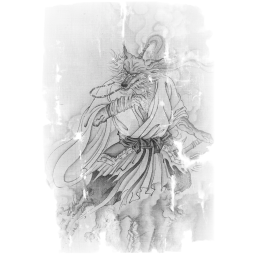



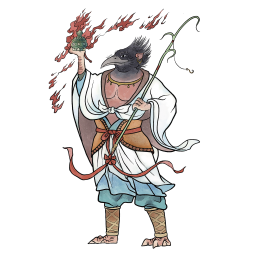






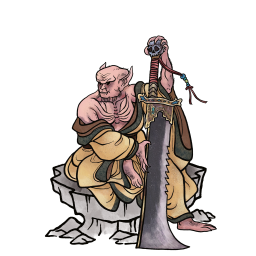
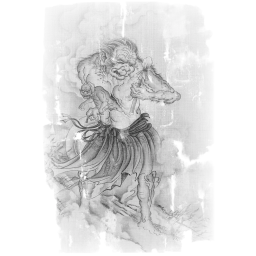
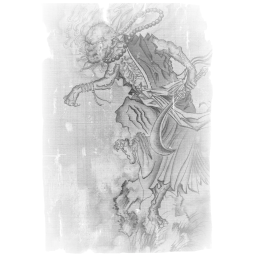
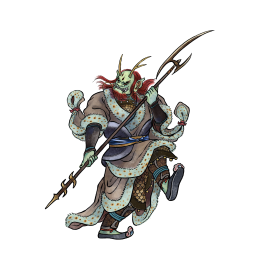


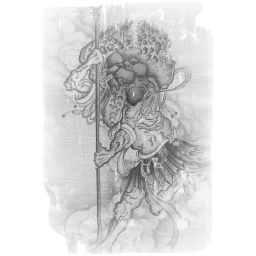
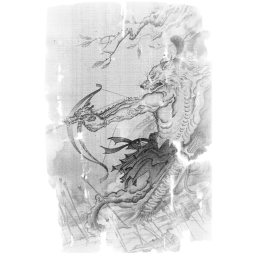
 Rat Archer
Spirits
Rat Archer
Spirits 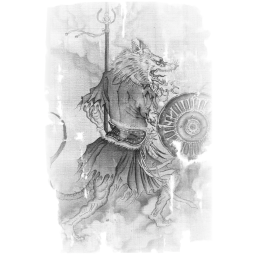
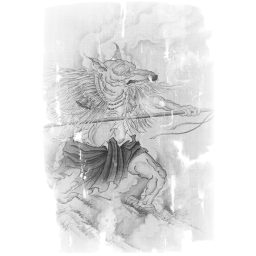
 Rat Governor
Spirits
Rat Governor
Spirits 

 Rat Imperial Guard
Spirits
Rat Imperial Guard
Spirits 


 Poisestone
Spirits
Poisestone
Spirits 

 Spearbone
Spirits
Spearbone
Spirits 
 Swift Bat
Spirits
Swift Bat
Spirits 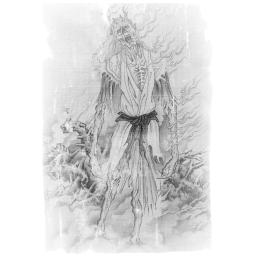


 Civet Sergeant
Spirits
Civet Sergeant
Spirits 


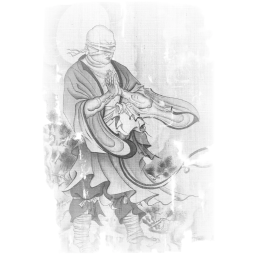

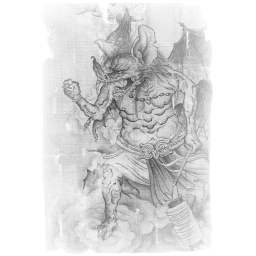

 Mountain Patroller
Spirits
Mountain Patroller
Spirits 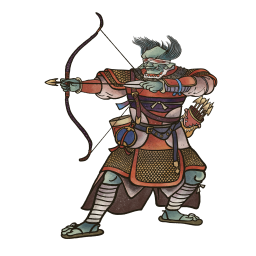

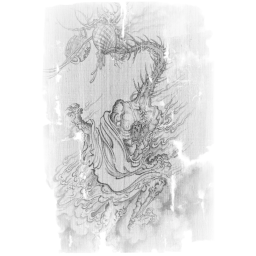

 Enslaved Yaksha
Spirits
Enslaved Yaksha
Spirits 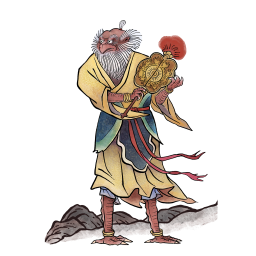
 Falcon Hermit
Spirits
Falcon Hermit
Spirits 
 Turtle Treasure
Spirits
Turtle Treasure
Spirits 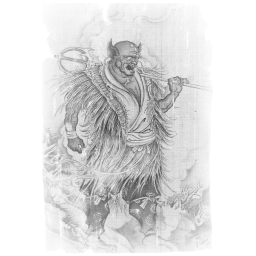
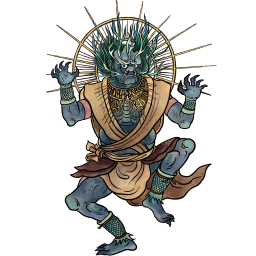
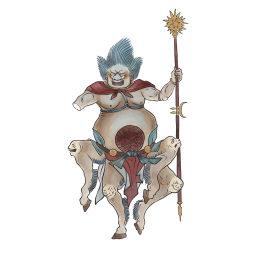
 Clay Vajra
Spirits
Clay Vajra
Spirits 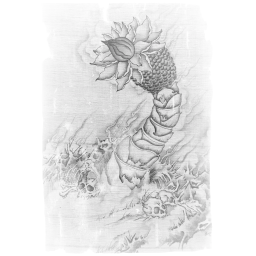


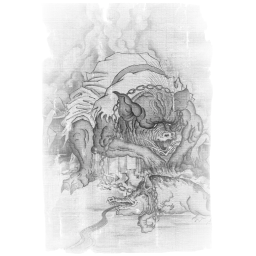
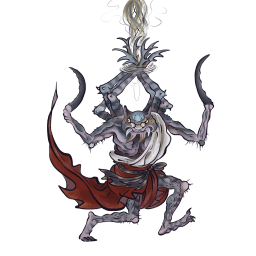
 Puppet Spider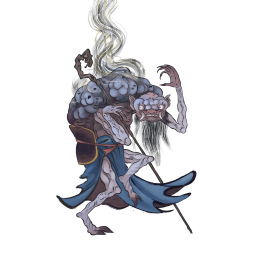

 Puppet Tick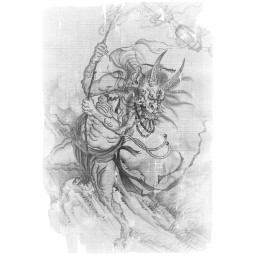
 Lantern Holder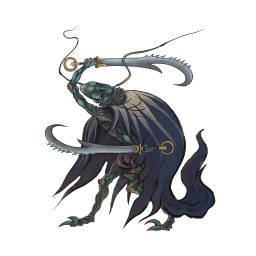
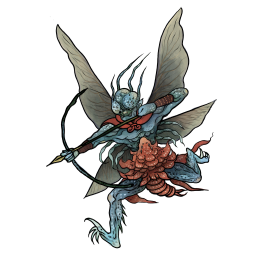
 Dragonfly Guai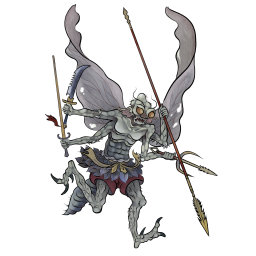

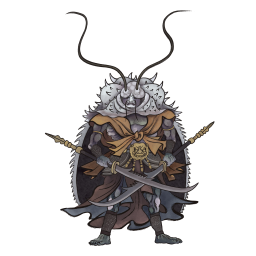
 Beetle Captain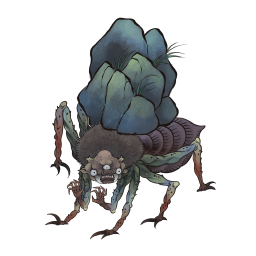
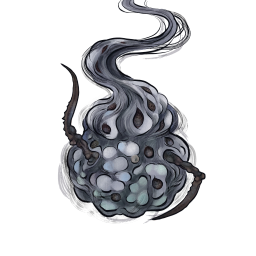




 Scorpion Prince


 Snake Herbalist
 Snake Sheriff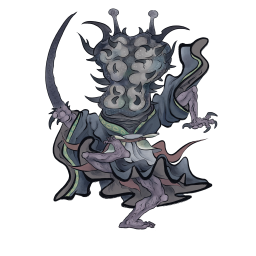

 Verdant Glow

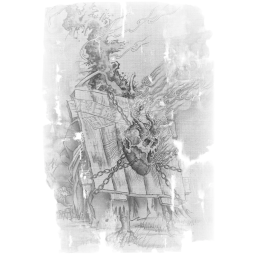
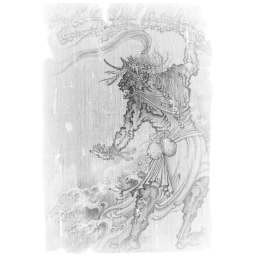
 Charface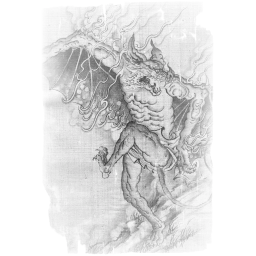








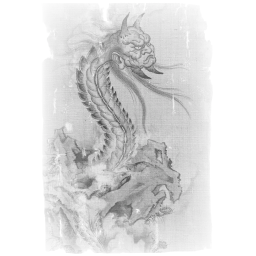


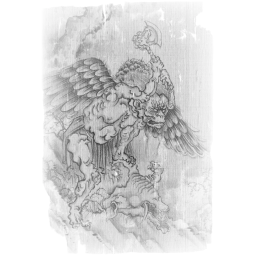

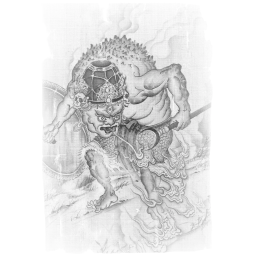

 Earth Rakshasa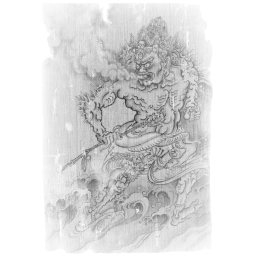
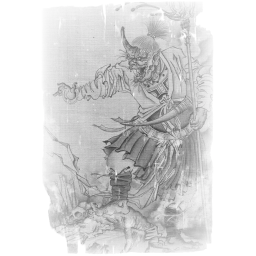
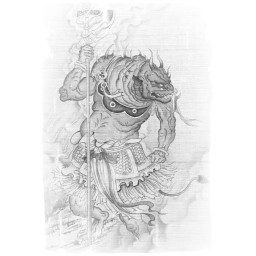

 Bull Governor