
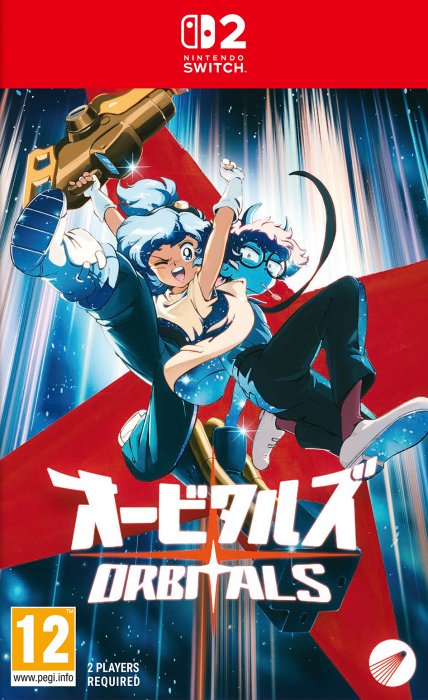
Orbitals is a riotous party that ends just a bit too soon


Pros
- + Excellent movement and moment-to-moment gameplay
- + One of the best-looking games of the last decade
- + Endearing characters
- + Breakneck pacing flings you from one style of gameplay to the next
Cons
- - A lot of the story and characterizations feel rushed
- - 3D spaceflight feels a bit off
- - Some of the best gameplay segments (2D platforming and flying) are the shortest
“Leave ‘em wanting more” is the kind of advice that I think is almost always true. Ninety-nine times out of a hundred, I’d rather have a game that is short and sweet, than grow bitter towards a drawn-out runtime. However, in the case of Orbitals, this anime-inspired co-op romp’s dedication to never letting any one activity overstay its welcome proves a double-edged sword.
Everything in Orbitals feels fresh and full of life; bebopping around from one mechanic to another and jumping between different sci-fi regions is a delight. The bubbly optimism and charming determination of protagonists Maki and Omura is instantly endearing. However, the world that developer Shapefarm has built is so rich that sometimes the backstory, personal arcs, plot points, and even whole characters feel like they are rushed past. Considering I am normally a “less is more” kind of person, it feels a bit harsh to say that playing through Orbitals is such a joy that by the time the credits roll after a single six-hour play session, it feels like discovering that your favorite show was cancelled mid-season and you only found out when there was no “Watch next episode” button to press.
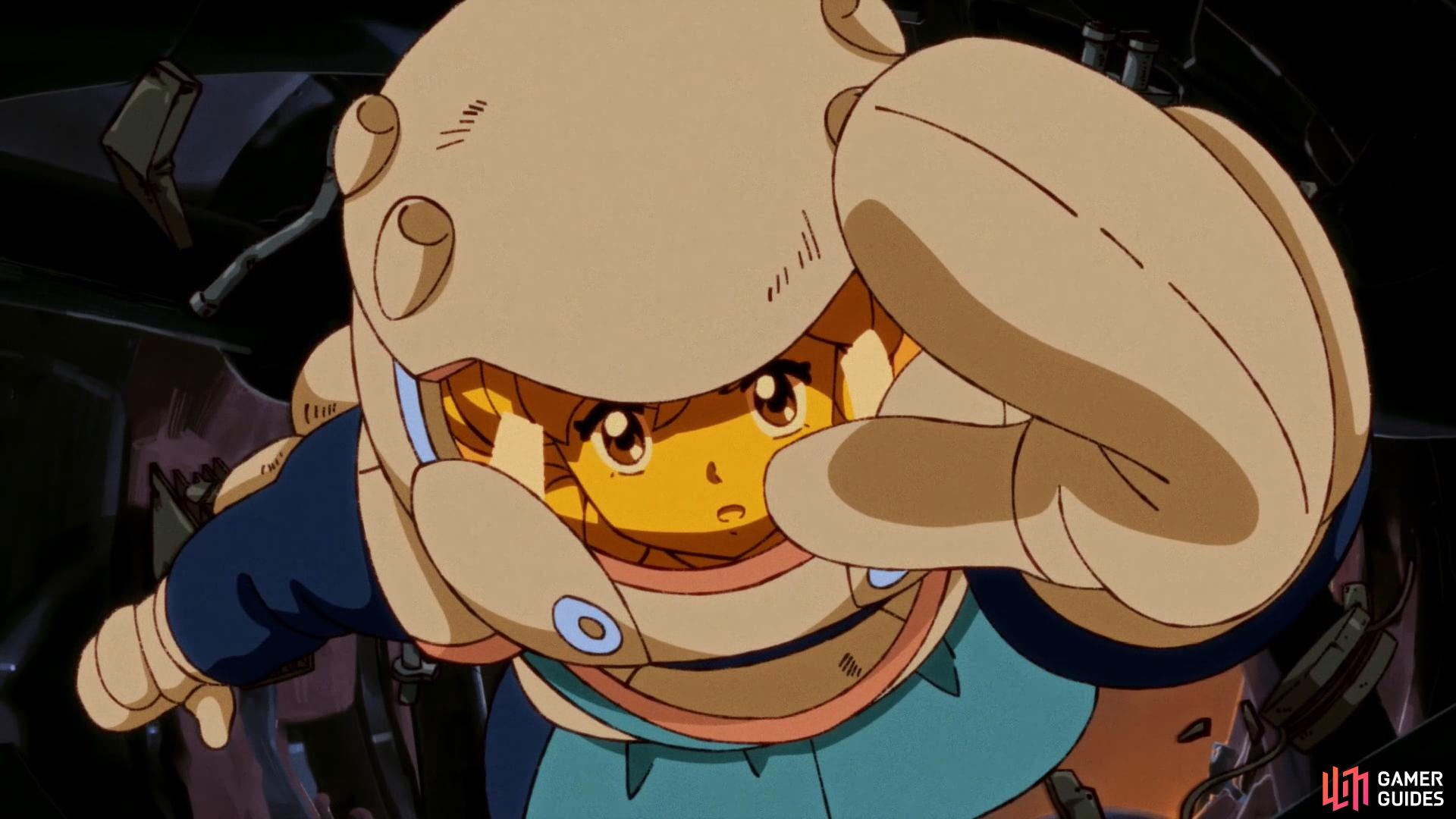
Orbitals features a gorgeous artstyle that is one of the best out there.
The power of friendship
Orbitals is, of course, exclusively played in co-op. The ideal way to do this is locally; however, each copy does come paired with a “Friend Pass”, a digital code that you can send to a friend so that they can run the game locally on their Switch 2 and play online. Players gifted the Friend Pass can download the whole game without shelling out for a copy. However, they cannot play beyond a demo section unless they have been invited to play by someone who has purchased the whole game.
Moreover, since this game is a Switch 2 exclusive, it also makes use of the much-flaunted and little-used GameChat feature. GameChat’s implementation is technically novel, but far from ideal for actual gameplay. While GameChat is most optimally just used for system voice chat, the owner of Orbitals can also play the game with a friend via GameShare. If your friend accepts an invite via GameShare, the game no longer runs locally on their Switch 2; instead, you stream them a video feed, and they play remotely. This video feed is obviously dependent on the quality of both players’ internet, and in the case of my partner and me being separated by the Atlantic Ocean, the experience quickly became unplayable.
Notably, using GameShare also severely degraded the gameplay experience for me as the host. However — internet connection permitting — this system actually allows you to play Orbitals with multiple friends if you are willing to replay the game. Even more bizarrely, if you are willing to make use of Virtual Game Card sharing on the Switch 2 and live in close proximity to those on a Nintendo Switch Online Family Plan, you could theoretically lend your host license to one friend, while your co-op partner could share their Friend Pass with a different friend, and allow them to play through the game themselves. It’s a bit Byzantine, but it suddenly makes a single purchase of Orbitals great value for folks with a larger friend group on Switch 2.
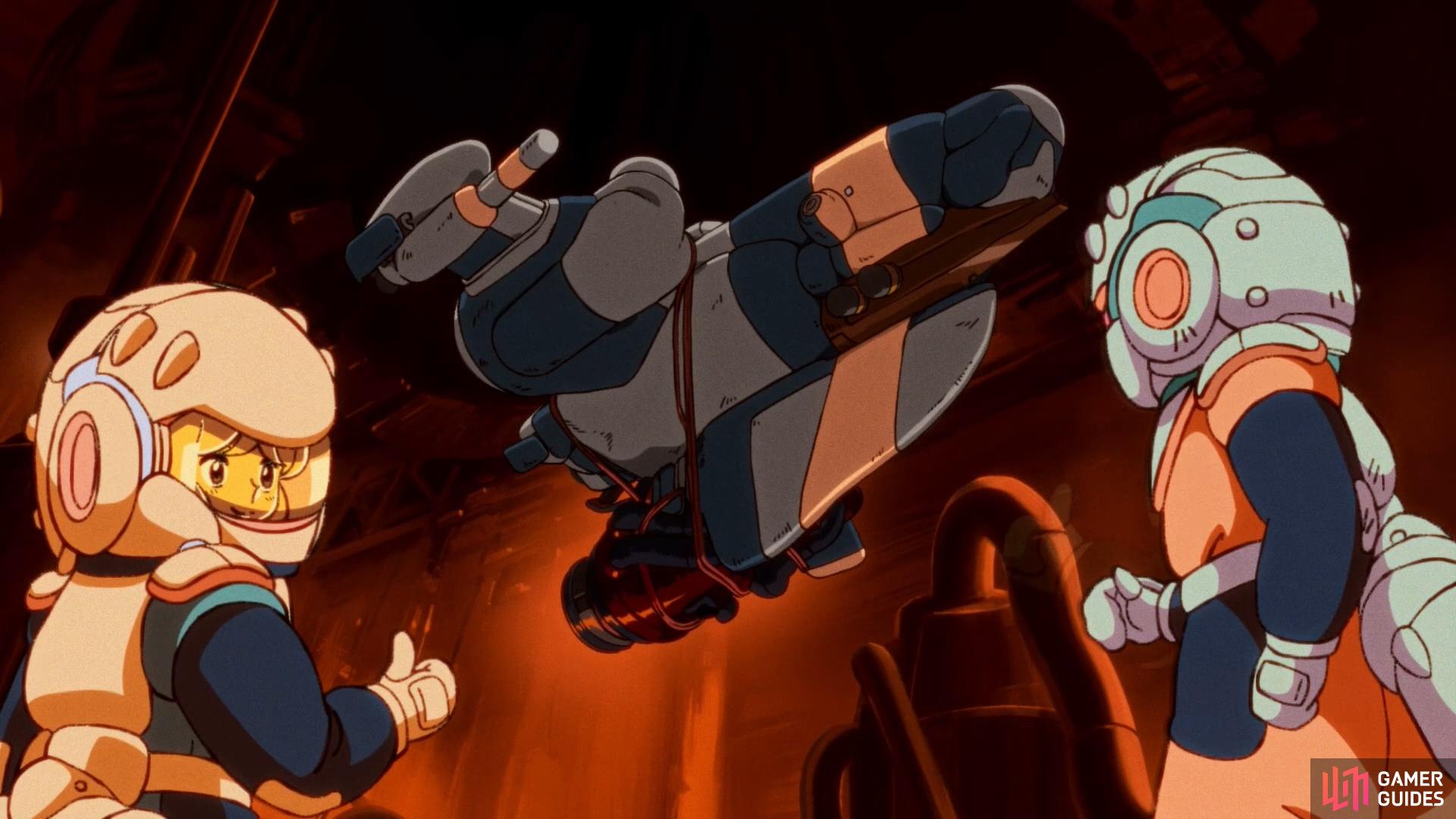
Playing through Orbitals with a friend is always a joy that ends too soon.
On the twos, on point
Once you actually get into the game itself (and past the first beautifully animated 2D intro cutscene), you will almost assuredly be taken aback by the transition from cutscene to gameplay. 3D games that try to look like cartoons or anime are nothing new — the Borderlands series has (arguably) been shaped by this art style that seeks to emulate a 2D look through thick, bold outlines and flat shading — however, never has a 3D game looked flatter (complementary) and more like 2D than Orbitals.
The act of existing in these stunning spaces proves to be an immense joy.
This was driven home for me when I first gained character control. Firstly, because it took my brain a second to register that I had control, and secondly, because for the first 10 or so minutes, having control of the camera and being able to rotate it in 3D space felt almost unnatural in a world that seemed like it was drawn frame-by-frame on celluloid. The effect is enhanced even more the further you explore, as some distant background elements, like skyboxes in large spaceship interiors, do in fact appear to be 2D assets, which does a great job mimicking anime and cartoons where static background elements look ever so slightly out of place.
The act of existing in these stunning spaces proves to be an immense joy. Tiny details from Maki throwing out her arm in delight as she tiptoes downstairs, to the killer juxtaposition of the 24fps character animation moving through the (mostly) 60fps game world are genuinely worth marveling at. Unreal Engine 5 has (rightly at times) gotten a bit of a bum rap this generation. However, between Orbitals and the recently released Denshattack!, smaller studios seem to be proving that limiting their use of GPU-heavy technologies like Lumen, MetaHumans, etc., and instead focusing on stylization over photorealism can result in truly stunning games.
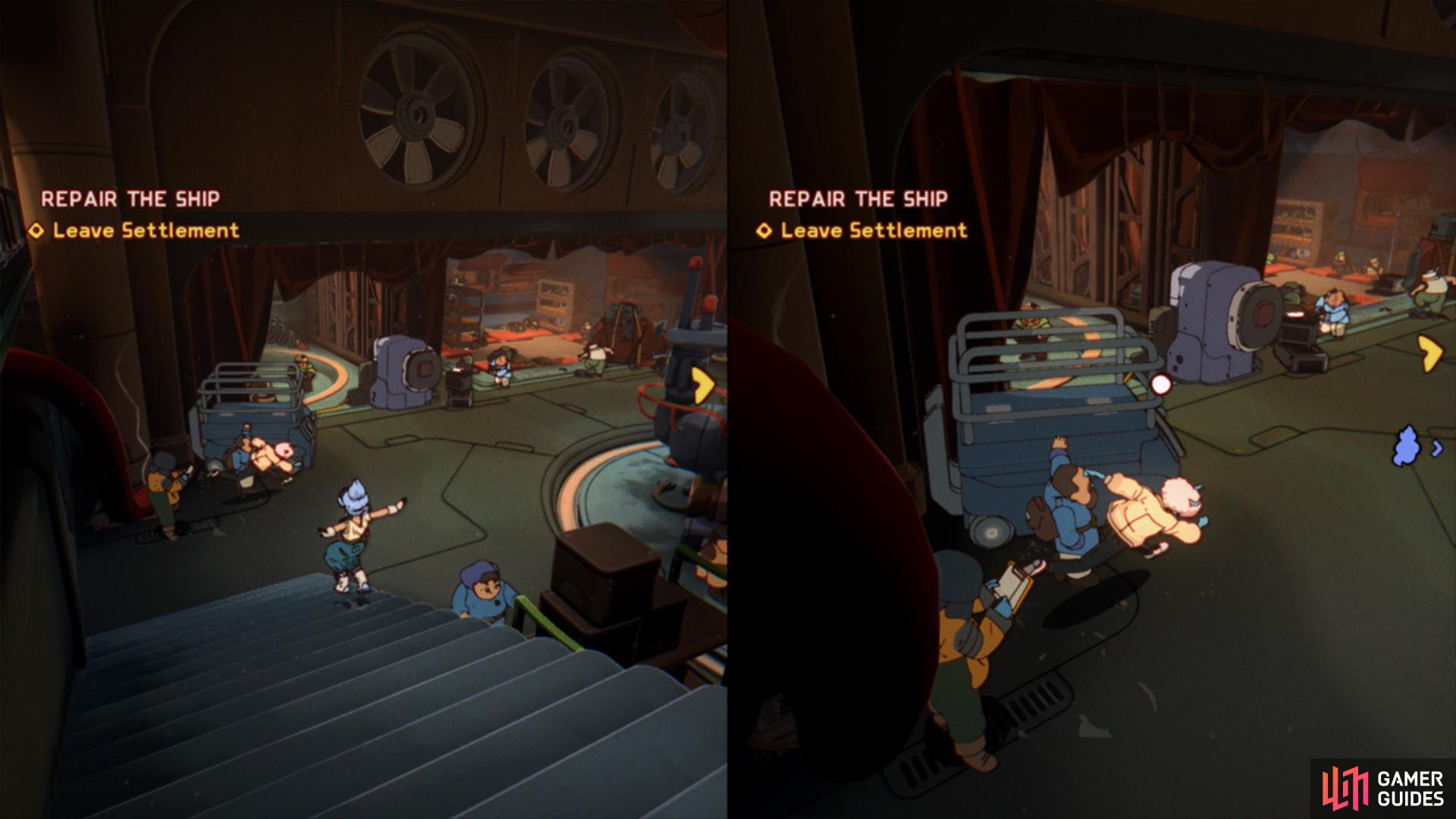
The animation on display here is nothing short of astounding.
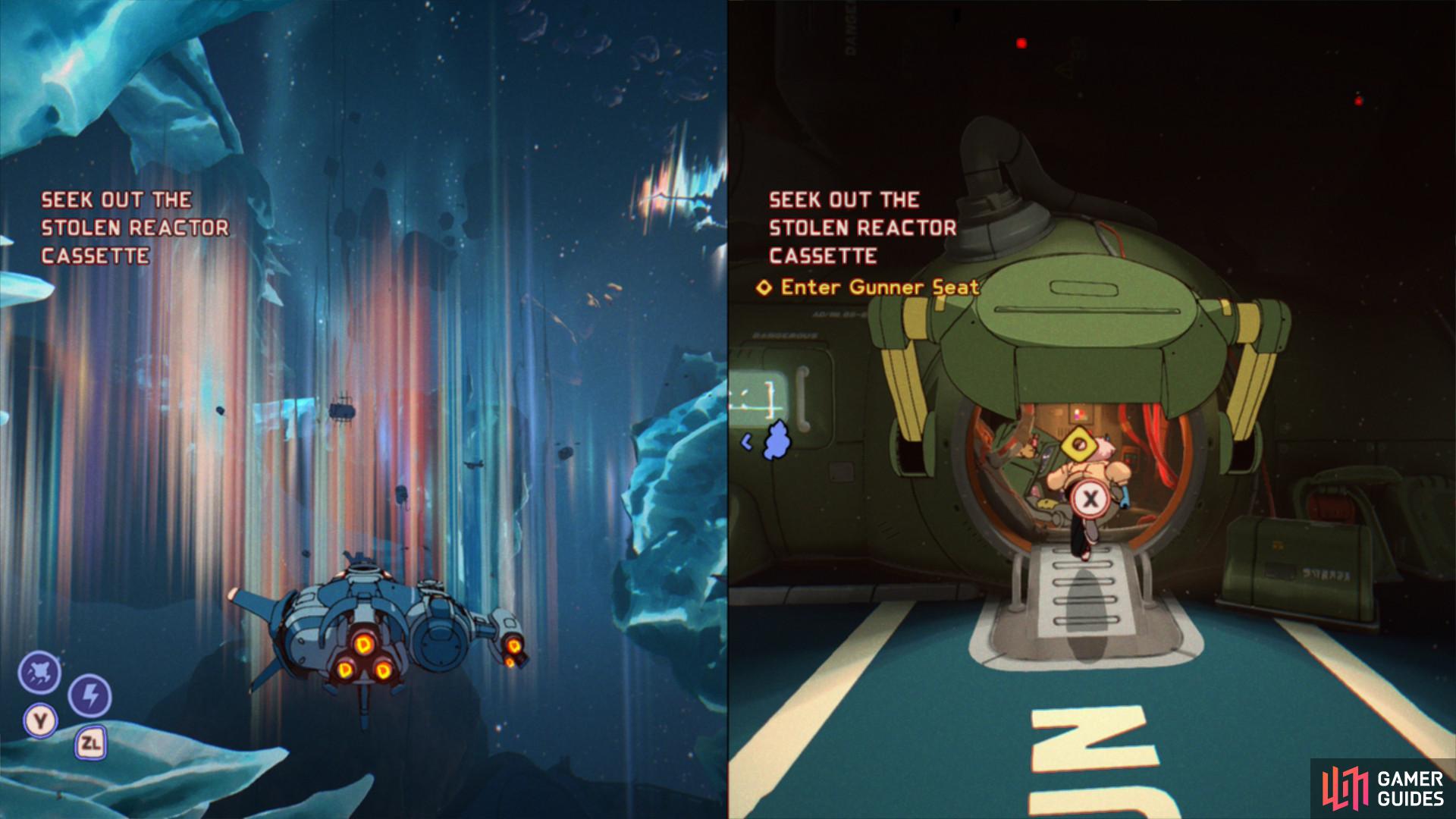
Flying can feel odd at times.
New season
A game can have all the nice environments and cool art in the universe, but those elements will only feel worthwhile if moving through the world feels good. And, goodness, does it feel good to play as Maki and Omura. Despite the low framerate of the characters’ animations, their movement refreshes at 60hz, making running, jumping, and dashing fast and fluid. This movement is boosted by satisfying physics that allows you to maintain momentum between rolls and dashes.
Along with this standard platforming moveset, Maki and Omura have access to different tools that one of them can wield at a time. These range from a water jet that pushes certain barriers and a sci-fi microwave that allows you to control certain alien objects, to a laser beam that can melt metal and then allow the other player to bend steel if they are carrying the hookshot tool. All these tools are used for light puzzle-solving moments, which are usually quite successful at forcing you and your partner to communicate as you juggle platforming and making use of your equipment.
Orbitals dishes out new ideas at such a breakneck rate that you’ll usually be moving onto a new thing before you have gotten frustrated with (or had enough of) any given objective.
It is notable, however, that only about half of the game takes place on foot; the rest is spent piloting Maki and Omura’s ramshackle spaceship that looks like its metal is constantly warping and ready to burst in a very endearing, overdesigned, ‘80s anime kind of way. These sections see one player pilot the ship while the other mans the turrets, and generally aren’t as engaging as the traditional platforming, but are still quite fun. Flying around looks great, but since all movement is tied to one analogue stick, you actually have no z-axis control (with up and down moving you forward and back on the y-axis). It’s an understandable compromise to keep the player on course and railroad them in the correct direction in what at first seem to be pretty open areas, but it feels odd at times.
Where the spacefaring really excels, though, is the handful of boss fights where the camera moves to side or top-down views emulating the gameplay styles of horizontal shooters like Rezogun and bullet hell games like Ikargua, respectively. Orbitals does all this while still splitting movement of the ship and shooting between the two players, and that can lead to some very fun challenges where one player has to call out where they are flying so that the gunner can clear the path of obstacles.
All this is to say that even if maybe not every twist on the gameplay works as brilliantly as others, Orbitals dishes out new ideas at such a breakneck rate that you’ll usually be moving onto a new thing before you have gotten frustrated with (or had enough of) any given objective. This obviously makes it easier to be more forgiving of sections that didn’t quite click for me and my partner. However, when we were done, one of the first things we both did was lament just how few of the really fun 2D platforming sections there are in the game.
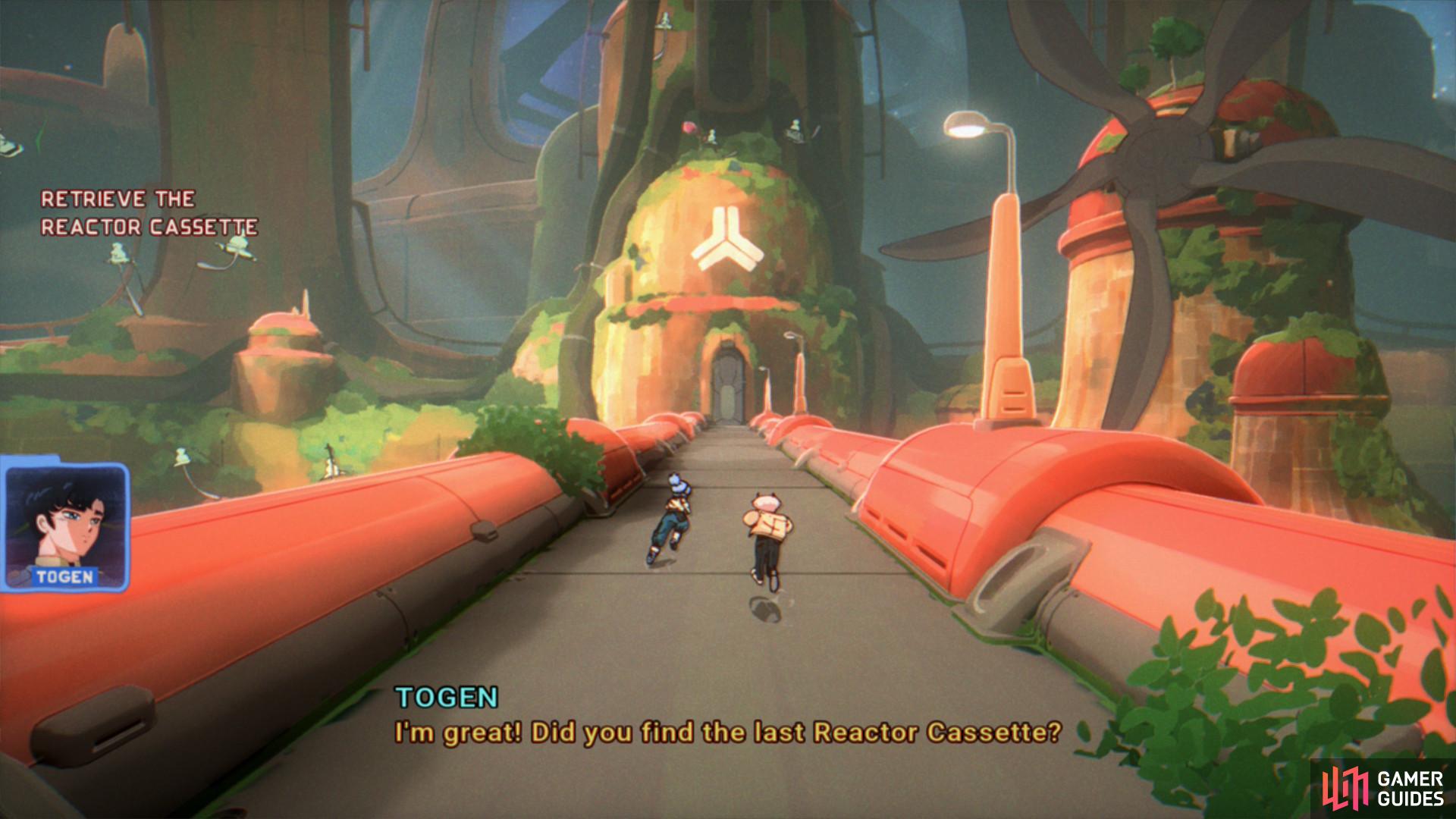
The environments you experience continue to amaze as you progress through the adventure.
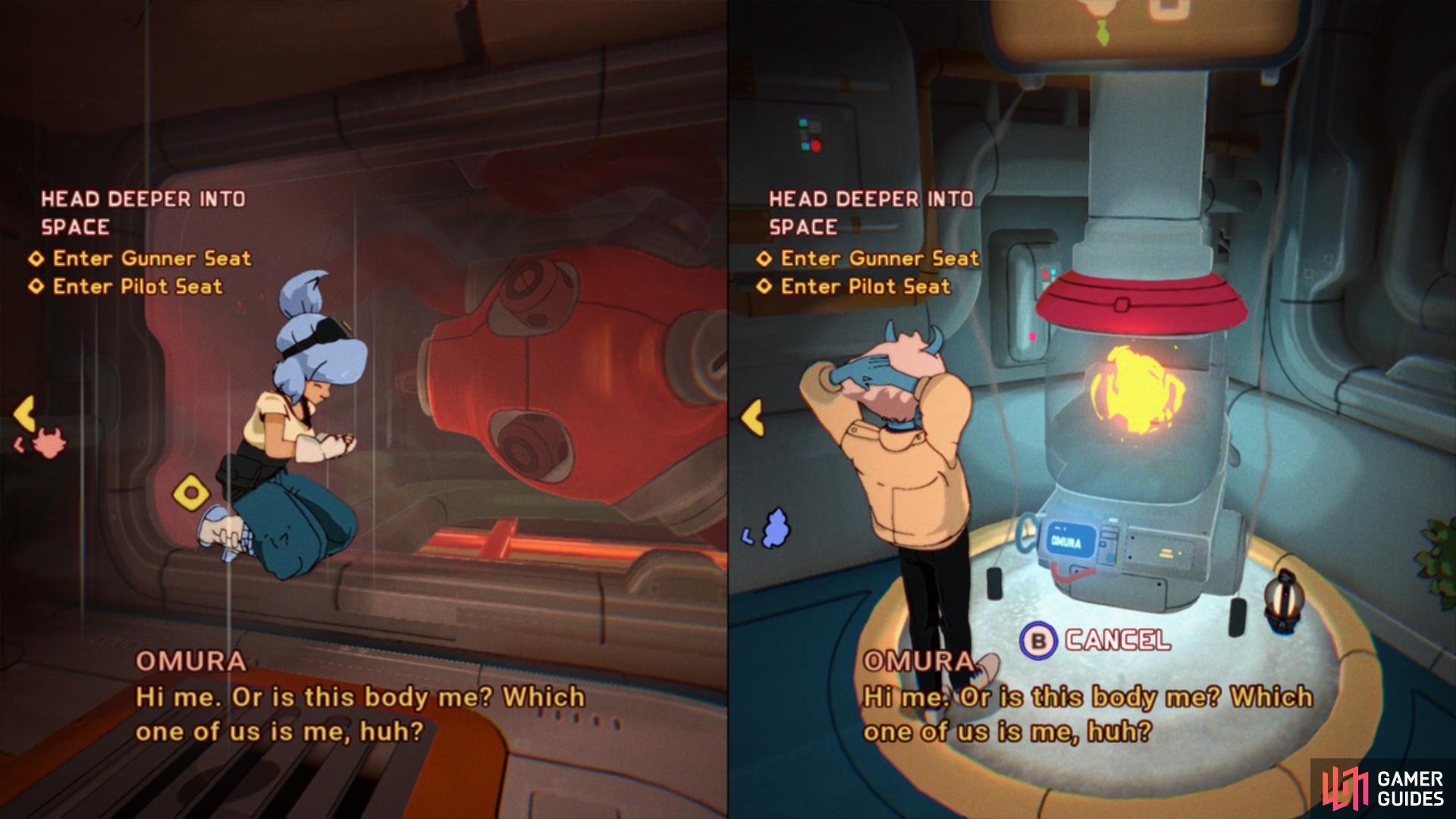
There are enough gameplay variations to keep things feeling fresh.
Season 2, Episode 12 (or maybe 13?)
Do you remember when you were younger, you’d turn on the TV on Saturday morning, and a random episode of a cartoon would be playing, and you’d just kinda go with it? This happened to me a lot in Ireland. I don’t know if our local broadcaster just didn’t have the rights to all the episodes of the ‘80s Teenage Mutant Ninja Turtles show, but I distinctly remember random “Part 2” episodes from different arcs airing, having never seen the first part. Orbitals can often feel like that.
That is not to say that the game doesn’t deliver its story coherently; I bet it does, but when playing any game online with a friend, you inevitably start talking, and that then leads to talking over the game. Before you know it, you are both sitting there going, “Hey, what’s going on with these mind-spirits in jars?”
…a lot of the history of this retro future feels like it’s rushed past.
This is hardly a fault solely with Orbitals; my dual-screen-trained, Gen Z, and (probably) undiagnosed ADHD brain bears plenty of the blame here. However, one of the true drawbacks of the “Leave em wanting more” ethos is that, by its nature, Orbitals can often feel short. Not just in runtime, but also when fleshing out ideas and plot points.
World-building gets the short end of the stick. Where side characters often make up for their brief appearances with larger-than-life performances (I would have loved to have seen much more of one exceedingly big red guy), a lot of the history of this retro future feels like it’s rushed past. This issue becomes a bigger problem towards the final act, when suddenly some of the background story details get pushed to the fore. While It Takes Two and Split Fiction might get some well-deserved guff for their lack of subtlety, sometimes a more direct approach — or even just a fair amount of repetition to co-op players who might be talking over plot points — could help.
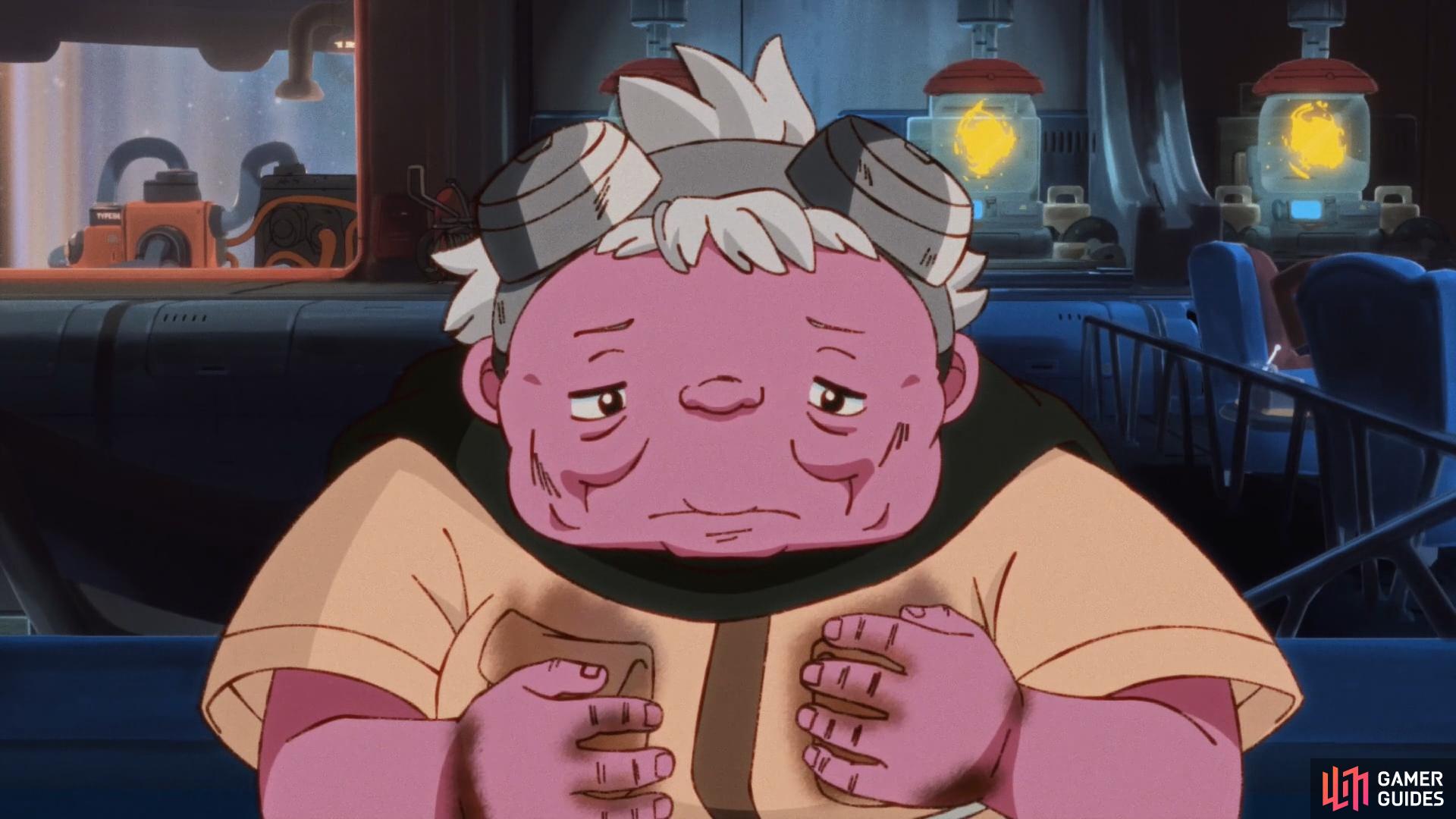
There’s not enough time for some of the side characters to breathe.
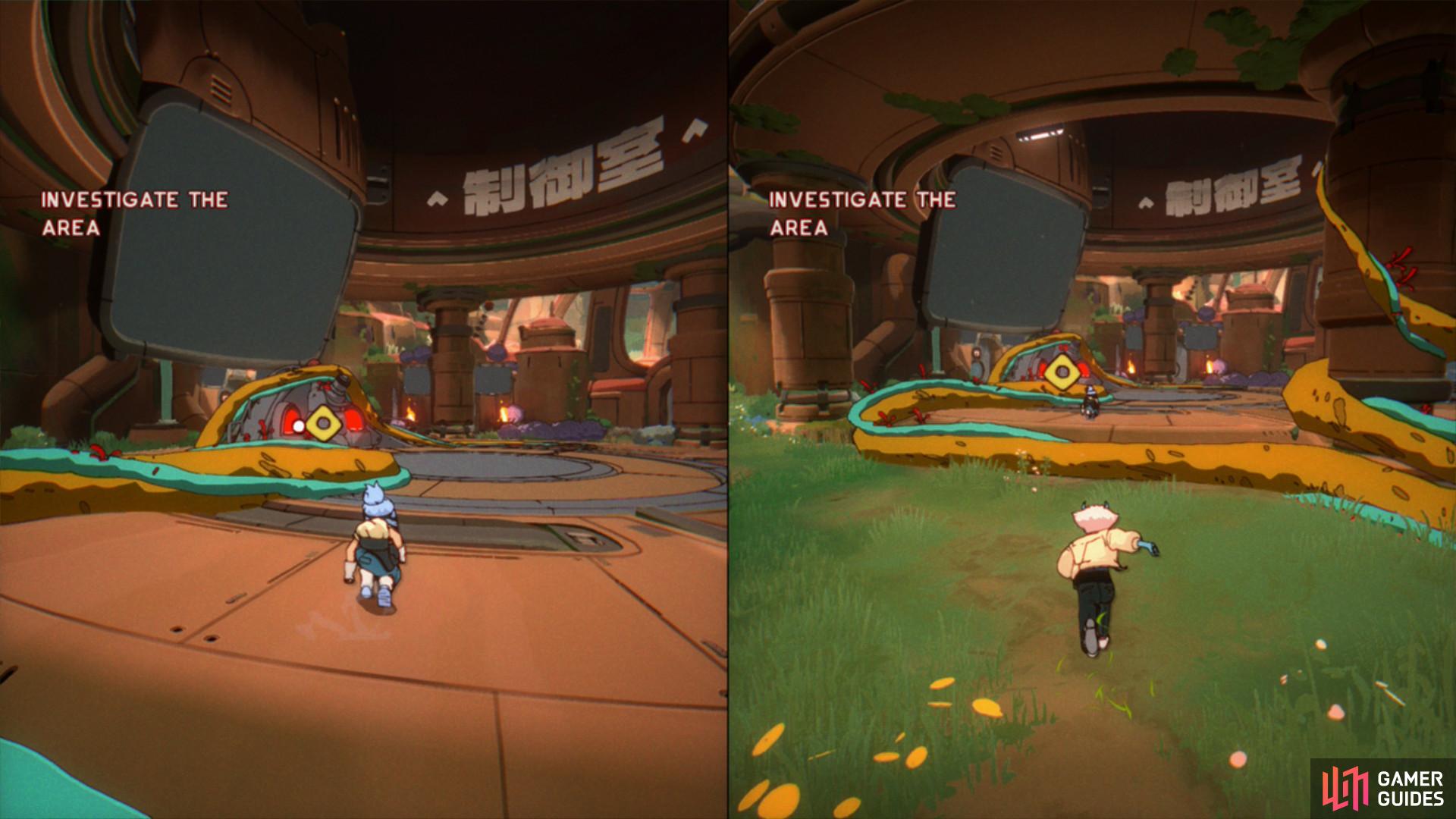
The game moves from area to area at a fast pace.
Better together
Ultimately, (almost) all criticism that can be leveled against Orbitals comes from it being too good at what it does. “Oh, you wished the game was longer because it’s so fun. Is your steak too juicy? Is your lobster too buttery?”
Taken on its own merits, Orbitals is an incredible co-op romp, full of charm, spectacle and thoughtful gameplay experiences. It is also a bizarrely strong showcase for the Switch 2’s myriad of gamesharing features, in a way that virtually none of Nintendo’s first-party offerings have managed yet. It is exactly the kind of game that people like to go online and say this industry should make more of: it values your time, it takes joy in delighting you, and it’s just a damn good time.
Dynamic Duo
Orbitals’ only suffering comes from its own success. It’s such a delight to play through and just exist in this world with Maki and Omura that I wish me and a friend could do it for much longer. However, what is here is a constant delight, extremely fun, and one of the Switch 2’s very best titles.
Gameplay:
Sound:
Graphics:
Story:
Value Rating:

No Comments