
Final Fantasy Resonance’s solid mechanics can’t make up for an unpolished, tropey, choresome tale


Pros
- + Visions allow you to build out characters in a lot of ways
- + The individual pixel art is very nice
- + Most of the party members get moments to endear themselves to you
Cons
- - The art style is far from cohesive
- - The narrative is toothless and tropey
- - The final fight is poorly balanced
- - The presentation on the whole is very unpolished
Turn-based strategy games, and by extension the contested genre of JRPG, are, if nothing else, a series of conventions, mechanics, and tropes layered on one another through decades of iteration, leading to one of the most “know it when I see it” genres in the art form. By their nature, they are retellings of the hero’s journey, with familiar archetypes, plot points, and fights with capital-G God at the end.
So, with that in mind, it might feel unnecessarily harsh to admonish Final Fantasy Resonance for simply being an extension of a 40-year-old cycle; however, as a game designed to celebrate the legacy of the illustrious franchise, it ends up finding itself trapped inside a crystallized formula with little new to add and even less that it excels at. While no one part of the game is disastrous, and I find Square’s repurposing of assets from the shuttered mobile game, Final Fantasy Brave Exvius, a noble endeavor in making do with the ingredients already in the fridge, the game itself is too unpolished, rote, and lacking in intent to be anything other than reheated leftovers.
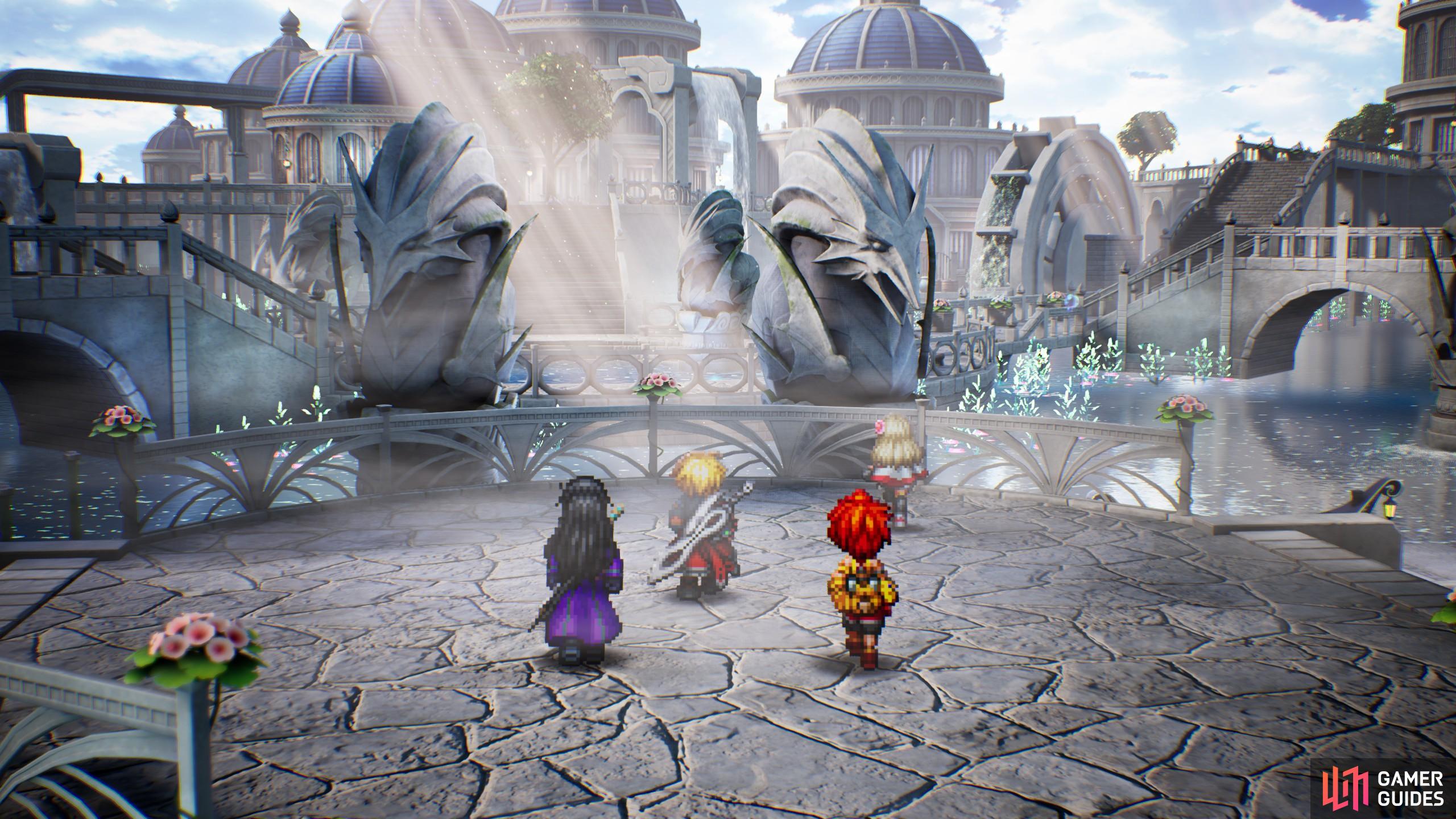
The cast in Final Fantasy Resonance get moments to endear themselves to you.
The best of times
My feelings toward Resonance are not wholly negative. The game fulfills its obligations to the genre pretty much throughout, and there is something quietly comforting about settling in on a brisk autumn evening to mulch through turn-based encounters. In fact, the combat system is probably Resonance’s strongest aspect (for the first two-thirds of the game). Rain and his cohort of best friend, female healer/love interest, spunky mechanic, vapid creep, extremely young-looking ancient god-lady, and dark witch start with very traditional Final Fantasy jobs and roles; however, those can be largely modified through visions.
The combat system is probably Resonance’s strongest aspect (for the first two-thirds of the game).
These visions are (mostly) the visages of characters from other games throughout the franchise (and a few original side characters from this game), and they allow each party member to make use of many of the skills these other characters had in their corresponding games. Find Cloud and you can use Braver, recruit Lightning and gain access to Zantetsuken. By leveling these Visions, you can inherit certain abilities on each party member even when they aren’t equipped, and while this slowly allows you to experiment or round out each character’s flaws, you’d be best served doubling down on their main proficiency in order to keep up with the late-game balance.
The Vision system is paired with a less-traditional combat system for Final Fantasy, which is, ironically, a much more traditional system compared to the rest of the JRPG genre. Resonance features no re-imagining of the ATB system of any kind, opting instead for a much more deliberate, set-order, turn-based combat. Much like Final Fantasy 10, Resonance has no time for real-time elements, instead slowing things back down to a you-go, I-go system. This isn’t at all a bad thing, especially considering it folds in many of the “Stagger” mechanics used in recent Octopath games to keep things flowing.
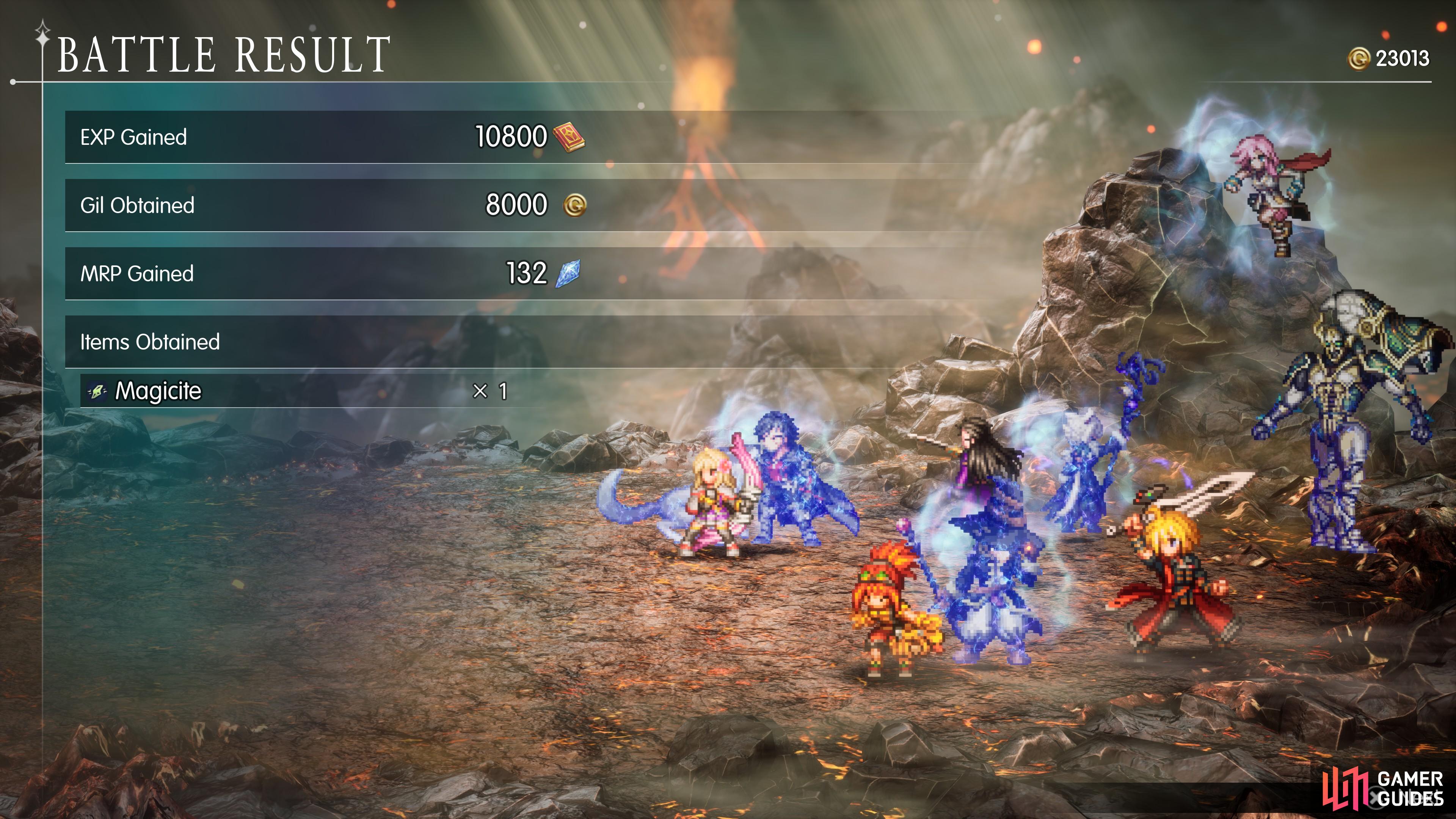
Visions allow you to build your characters in lots of ways.
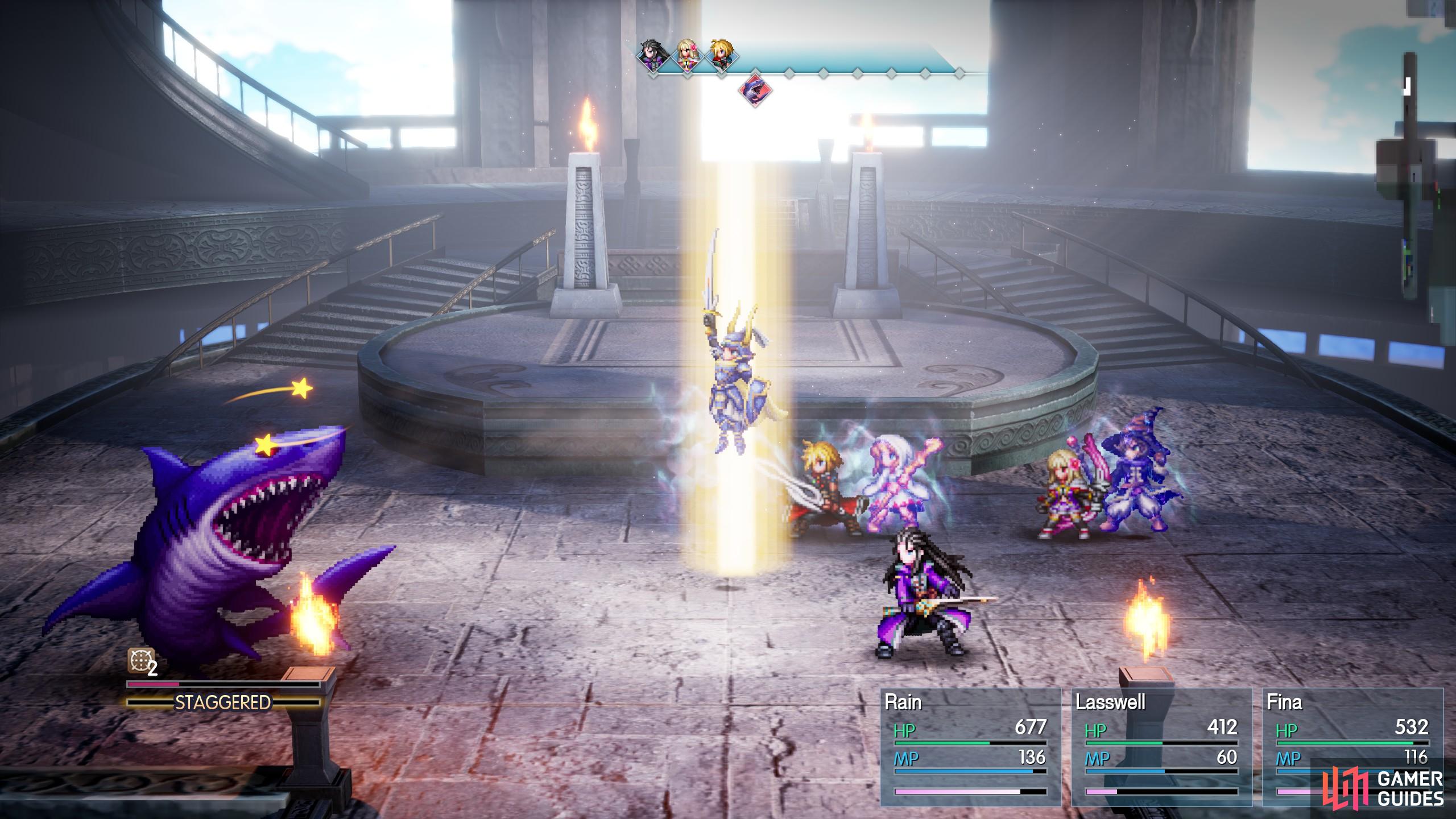
Each Vision also has a flashy Resonance attack which is at odds with the rest of the presentation.
Blurst of times
While the combat appears strong on the surface level, very early on it becomes apparent that Resonance is a game with major concessions in its core presentation. If you stun all enemies on the field, you trigger a “Sweeping Stagger.” On top of canceling enemies’ upcoming attacks, this allows all party members to act again within the turn, deal extra damage, and top it all off with a Vision finisher. These finishers, however — be it because of the nature of Resonance’s assets starting off in a mobile game, the ongoing struggle of compressing HD pre-rendered video into games, or likely because of both — end up being distractingly lower quality in motion than the rest of gameplay. The most egregious example of this can be seen in one of the first Visions you collect, The Warrior of Light’s finisher, which currently features garbled static noise that covers the screen before playing its clip.
…compared to last year’s Octopath Traveller 0, Resonance’s translation from mobile devices seems much less assured and well-rounded.
This issue plagues Resonance’s presentation whether you are playing on a 4K TV or a computer monitor. You will jump from pristine gameplay to brief video clips that look like they have the same bitrate as a YouTube anime AVI edit from 2009. This artifacting also extends to several jarring cutscenes, all lending an unpolished and gnarly feeling to the game that you’d rarely associate with a series that so often prides itself on pushing technical and graphical boundaries.
Frustratingly, the roughness of the presentation isn’t just limited to pre-rendered video; some of the characters’ 2D cutout art used during dialogue sequences seems like it was never meant to be seen at a 4K resolution, as while the art itself is gorgeous, it looks like someone just hasn’t properly lassoed all the edges of the artwork. This leaves little white edges and pixels visible at the edges of things like Lasswell’s hair. Again, these are not game-breaking bugs, but compared to last year’s Octopath Traveller 0, Resonance’s translation from mobile devices seems much less assured and well-rounded.
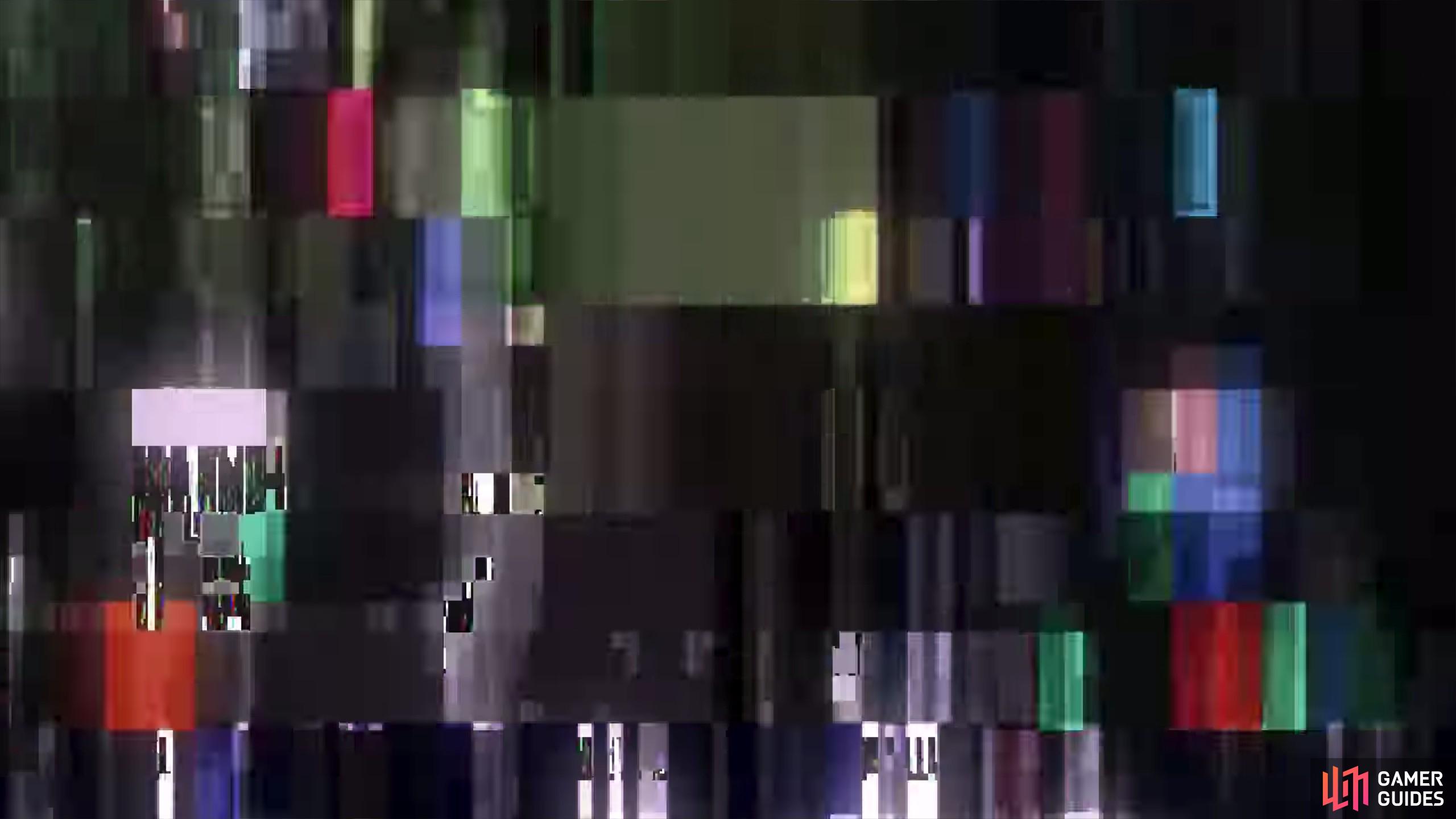
Unfortunately, there are moments where pre-rendered videos cause issues like the one found in Warrior of Light’s finisher.
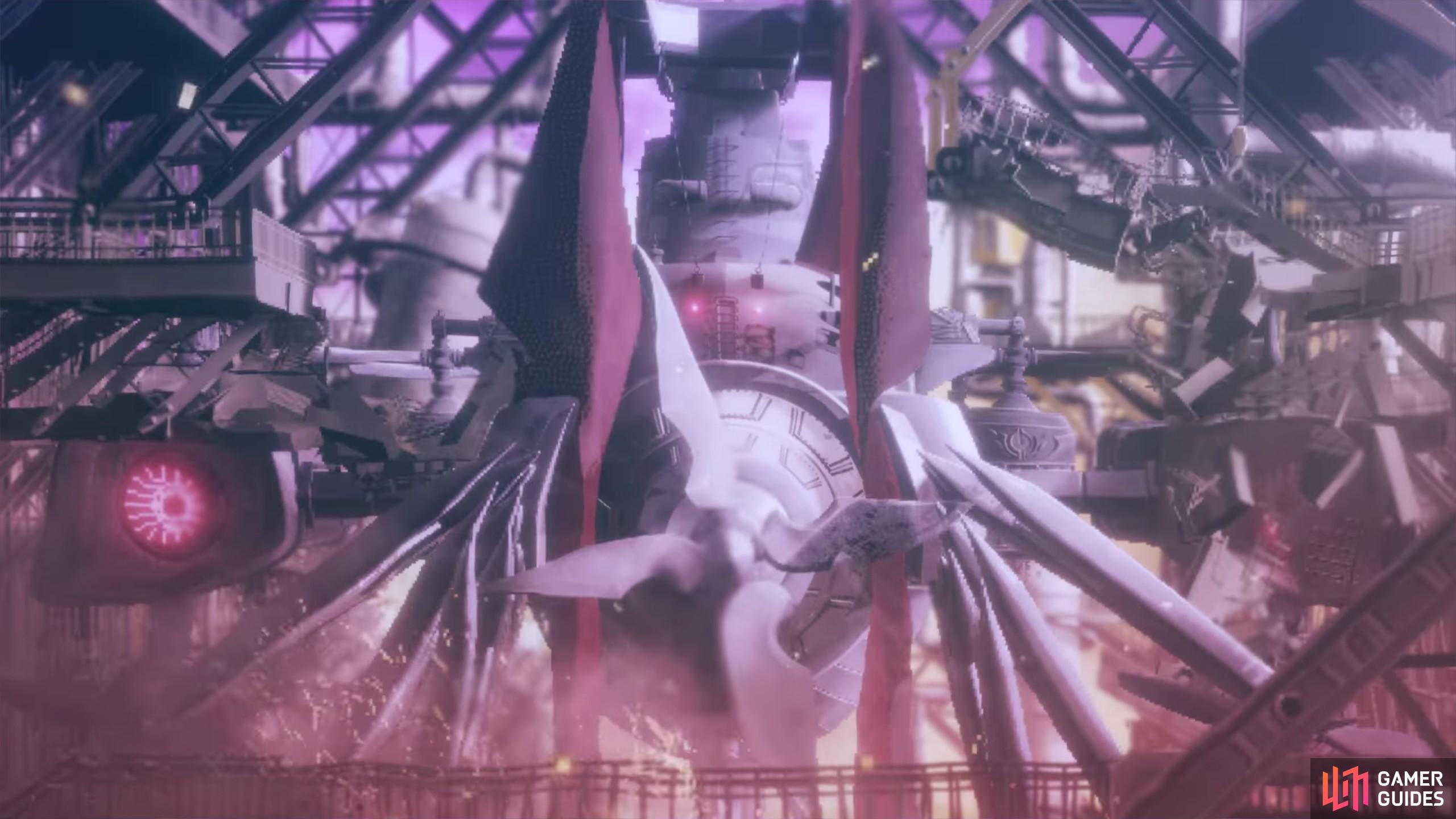
FF Resonance’s aesthetic frequently clashes with itself.
There has been a quietly growing level of animosity towards Square Enix’s HD-2D art style these last few years. Maybe similarity just breeds contempt, but I can’t help but feel like Resonance’s frequent mashing of 16-bit sprites, paired with sometimes low-detail environment art, hand-drawn character portraits, and occasional bosses which are also pixelated but animated with much more fluidity and with a higher pixel count, all leads to an aesthetic which frequently clashes with itself. There are times in the story where all four of these distinct art styles will be onscreen at once, and the result is a game that really does feel outside of the Final Fantasy family, not because it’s an unnumbered spin-off, but because of its lack of coherent direction.
Far from the Final Fantasy
Resonance’s story starts off quite well, with both some nice bits of localization and generally well-rounded characters. However, towards the back third, things take a turn. Much of the first half of the game has been spent building up six mysterious armored-clad villains, while intertwining with local politics and the plights of different regions; the game is far from a revolutionary manifesto à la Metaphor: ReFantazio, but it avoids tripping over itself on its regional detour. Revelations around The Sworn Six of Paladia made during one of the game’s few purely exploratory sequences might sound interesting on paper; however, Resonance has a nasty habit of often reading like a pastiche of not only RPG story beats, but heavily padded anime episodes with volleys of dialogue reserved for monologuing about the power level of adversaries, which for the most part doesn’t match the difficulty of the gameplay at all.
It is at this point (the penultimate act) that a lot of the writing — which up to this point had largely been charming — falls apart.
Just as the hyperbolic posturing of all-powerful enemies reaches its most comical in the penultimate act, Resonance pulls one of my least favorite moves, introducing a late-game threat in a way that undermines the narrative that had come before it. It is at this point that a lot of the writing — which up to this point had largely been charming — falls apart. This kind of third act is far from uncommon in the genre, but rarely has a script felt as half-hearted as Resonance’s word-salad soliloquies that, in places, feel like a college paper trying to hit a word count.
Most frustratingly, this final act sees less of an incline to the difficulty curve and more instantaneous teleportation to the top of the graph. Exceedingly long final bosses are part and parcel with games like Resonance, and while often this can create a feeling of epic finality, in the case of this game, which until this point has mostly had a laissez-faire attitude towards how much it demands the player to engage with the nitty-gritty of stats-maxxing and optimizing, it ends up overly punitive.
The real problem is that the second form of the second phase of the final boss starts casting numerous status effects on your party, and if you aren’t set up to mitigate your party members attacking one another, then you can find yourself fighting for thirty minutes only for all your crew to kill each other in a daze while you just watch, totally powerless. This issue is compounded by the fact that you cannot leave the last part of the final dungeon; you can only load a previous save. As a result, I ended up just farming for about two hours, over-leveling my party by running back and forth in the 100ft run up to the boss arena, waiting for random encounters to trigger.
As a final act of inconsequentialism, Resonance appears to be ready to end with the boldest narrative swing it has taken all game. However, this too is reneged on, opting only to fulfill the bare-minimum quota of tragic irony a standard RPG is meant to end with, choosing not to lean into the biggest opportunity it had to challenge those that might still be engaging with the narrative.
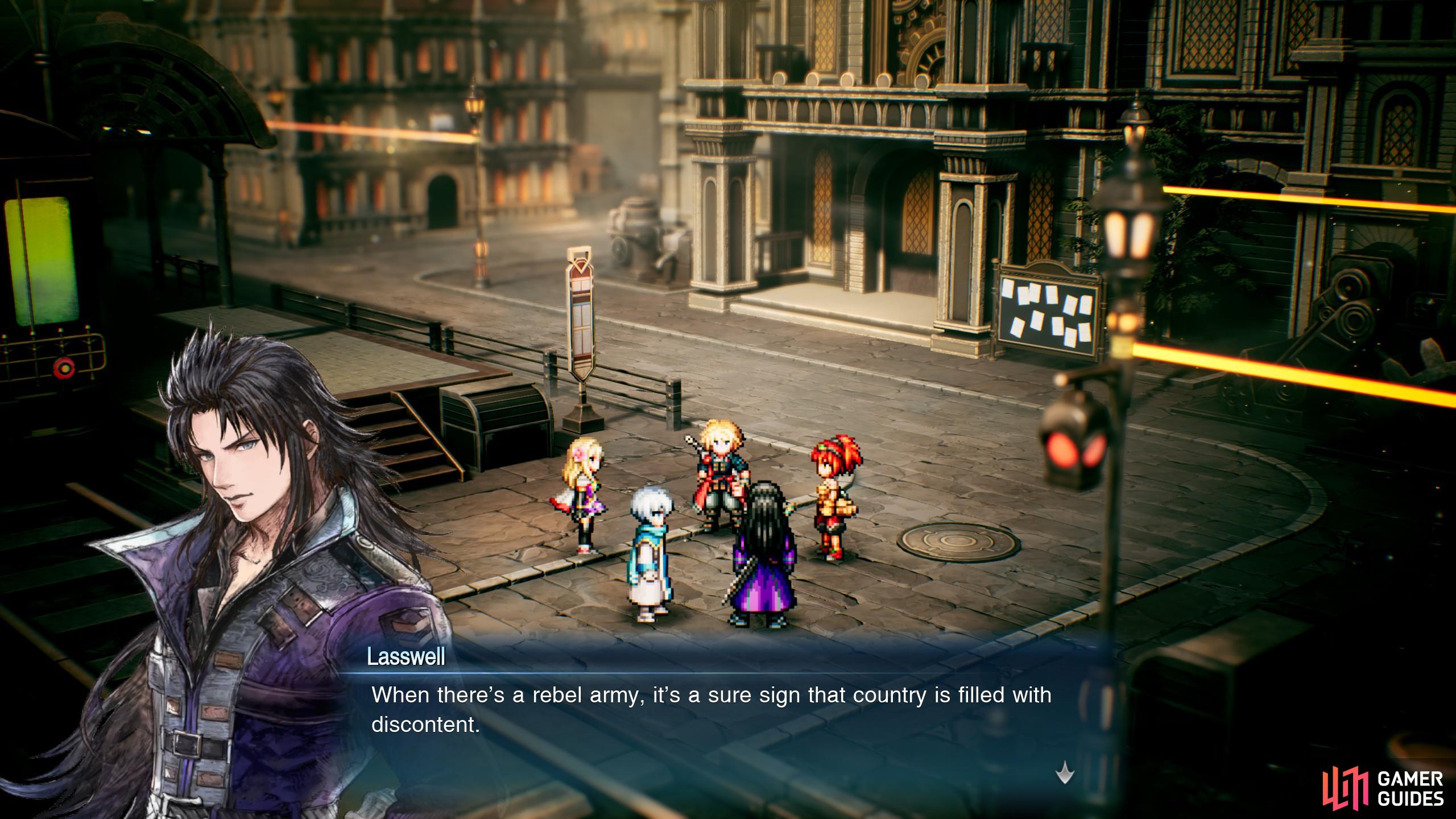
While using a lot of tropes, Resonance’s story and writing can be charming for the most part.
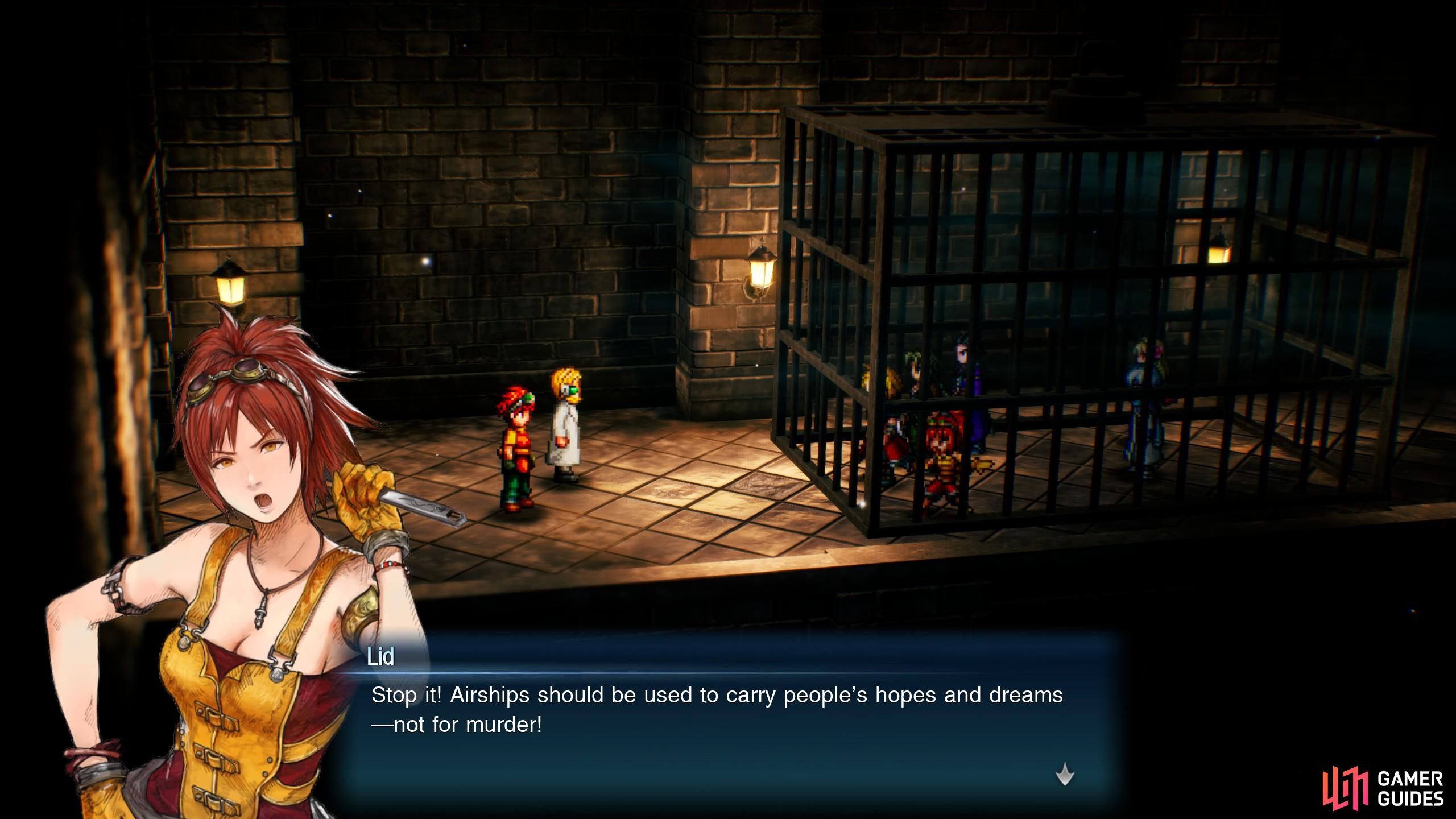
This isn’t true for the entire runtime, however, with the final third really suffering.
It would be disingenuous to say Final Fantasy Resonance is less than the sum of its parts, because in hindsight, the final product is rather reflective of its many components. It starts competent and workmanlike, but it becomes frustrating and ultimately just not interesting enough to sustain its near 80-hour runtime. Resonance is never offensively bad, but it never offers the player something truly engaging to chew on, particularly beautiful to look at, or exciting to play. It missed an opportunity to celebrate the franchise, instead feeling more like the series treading water as it awaits a new direction in the future.
Fleeting Fantasy
While avoiding being outright bad in any regard, Final Fantasy Resonance does little to captivate the player. The combat system is by far the best element, but largely seems like a reworking of an idea more successfully executed in the Octopath franchise. And while moments of characterisation are charming and well written, the actual narrative only pinballs between tropes until it winds up at a rote climax. Despite being positioned as a celebration of the series, it does little but half-heartedly play a couple of the hits and ask you if you remember the good old days.
Gameplay:
Sound:
Graphics:
Story:
Value Rating:

No Comments