
Survivor Horrormania


Pros
- + Amazing Atmosphere
- + Does survival horror well
- + Accessibility options
- + Cool map tagging system
- + Exploration is fully rewarded
Cons
- - Combat is not good
- - Lack of music
- - Cannot pause the game
- - Save system is an odd choice
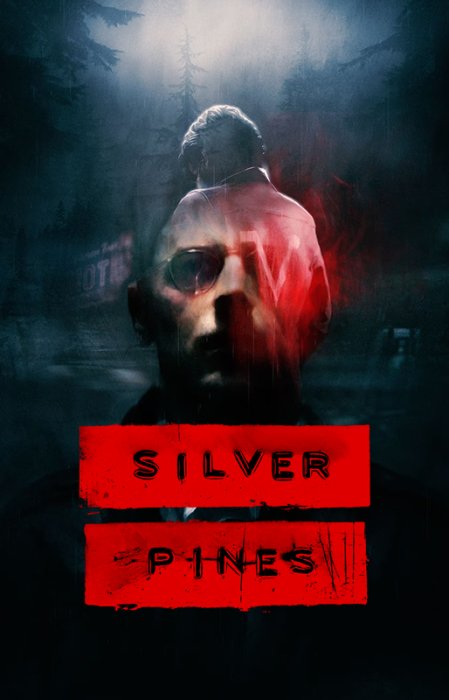
The Metroidvania genre is one that has had quite a number of games released recently, including the likes of Well Dweller and Fallen Tear‘s full release, and even some upcoming ones, like *Castlevania: Belmont’s Curse*. It’s definitely a genre that is loved by many, since it gives players a chance to explore a large, interconnected map. Since the games that started it all, we’ve had a lot of mishmash between genres. We’ve seen Metroidvanias include Soulslike elements, for instance, but we haven’t had many, or even one, that mixed in survival horror. That’s where Silver Pines comes into play.
You play as Red Walker, a private investigator who has been sent to a small, abandoned town of Silver Pines, in search of a musician named Eddie Velvet. However, not everything seems right in the town, as Walker begins his investigation and involves himself in something more than just tracking down a person. The game’s story is a bit odd. There is something there to sink your teeth into, but overall, it’s a bit too confusing. This isn’t like Dark Souls, where the game has narrative that can be difficult to follow, but hides a lot of lore in the descriptions of items. The story can just be a little hard to follow sometimes, especially with the elusive dialogue from some NPCs.
Amazing Atmosphere
Of course, one of the first things you will notice when you start playing the game is that Silver Pines nails the atmosphere extremely well. The town is desolate, apart from a few NPCs here and there, and you can see how run-down it is, as well. The game uses a side-scrolling view for its gameplay, so the shine is definitely going to be on its backgrounds, which holds true here. They’re beautifully and hauntingly done and showcase the abandoned town that is Silver Pines. There’s a lot of foliage and other clutter, so you’re not going to get too bored of your surroundings.
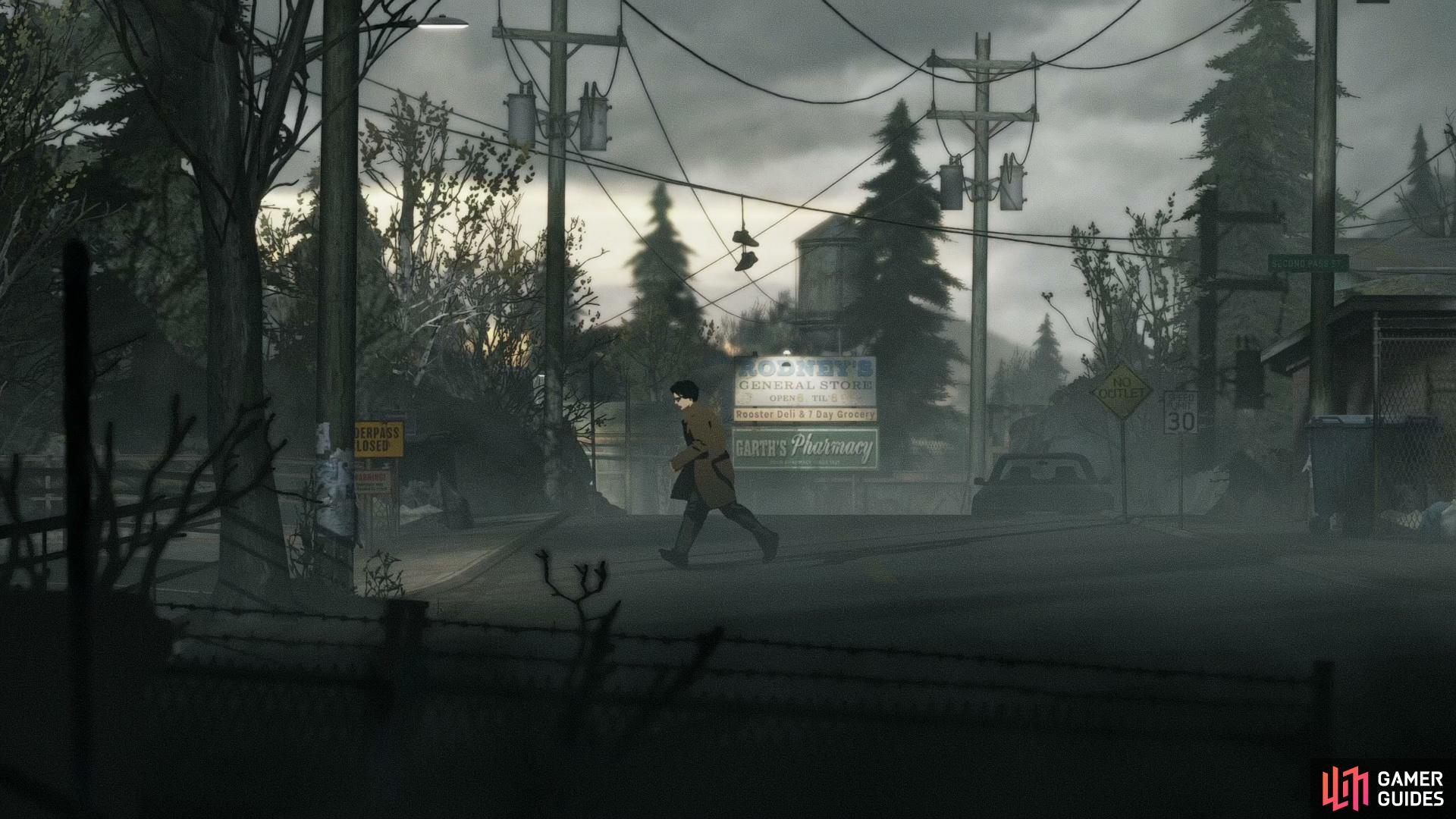
The world of Silver Pines is beautifully and hauntingly done.
Additionally, the character you’re controlling has a pretty distinct style to him, so he stands out, despite being fairly mundane in how he was designed. There’s almost a cel-shaded look to him, and he animates fairly well but not entirely smoothly. If there is anything to knock down on the graphical side of things, though, it would have to be the enemies. The majority of them are pretty much just black blobs, so they don’t really have much of an art style or presence to them. While their shapes are usually well-defined (there’s really only two that can be confusing), so you know which enemy is which, they are just boring to look at.
Silver Pines nails the atmosphere extremely well.
The sound effects in the game are usually well done, as the guns have impact, and you usually hear a sound before you see an enemy coming, if they are already present. Essentially, everything sounds pretty spot-on in terms of what you’re doing, such as walking in water, the squishing sounds of stomping on enemies, and the like. The music, on the other hand, isn’t really all that present, as it opts for more ambience than anything, so you never really notice it much at all. Though, a game opting for ambient music over something catchier is a common choice these days.
Side-Scrolling Resident Evil
Silver Pines is, at its essence, a survival horror game that plays like a Metroidvania. What this essentially means is that you’ll have limited resources as you work your way across the map but will encounter a lot of doors that are inaccessible until you get various upgrades. Those upgrades aren’t traditional ones, like a double jump, but rather come in the form of weapons. For example, you might encounter a door with wooden planks on it, leading to some treasure or a way to continue forward in an area. To break these down, you will either need something like a shotgun or a melee weapon that is a bit stronger than the initial boxcutter you find.
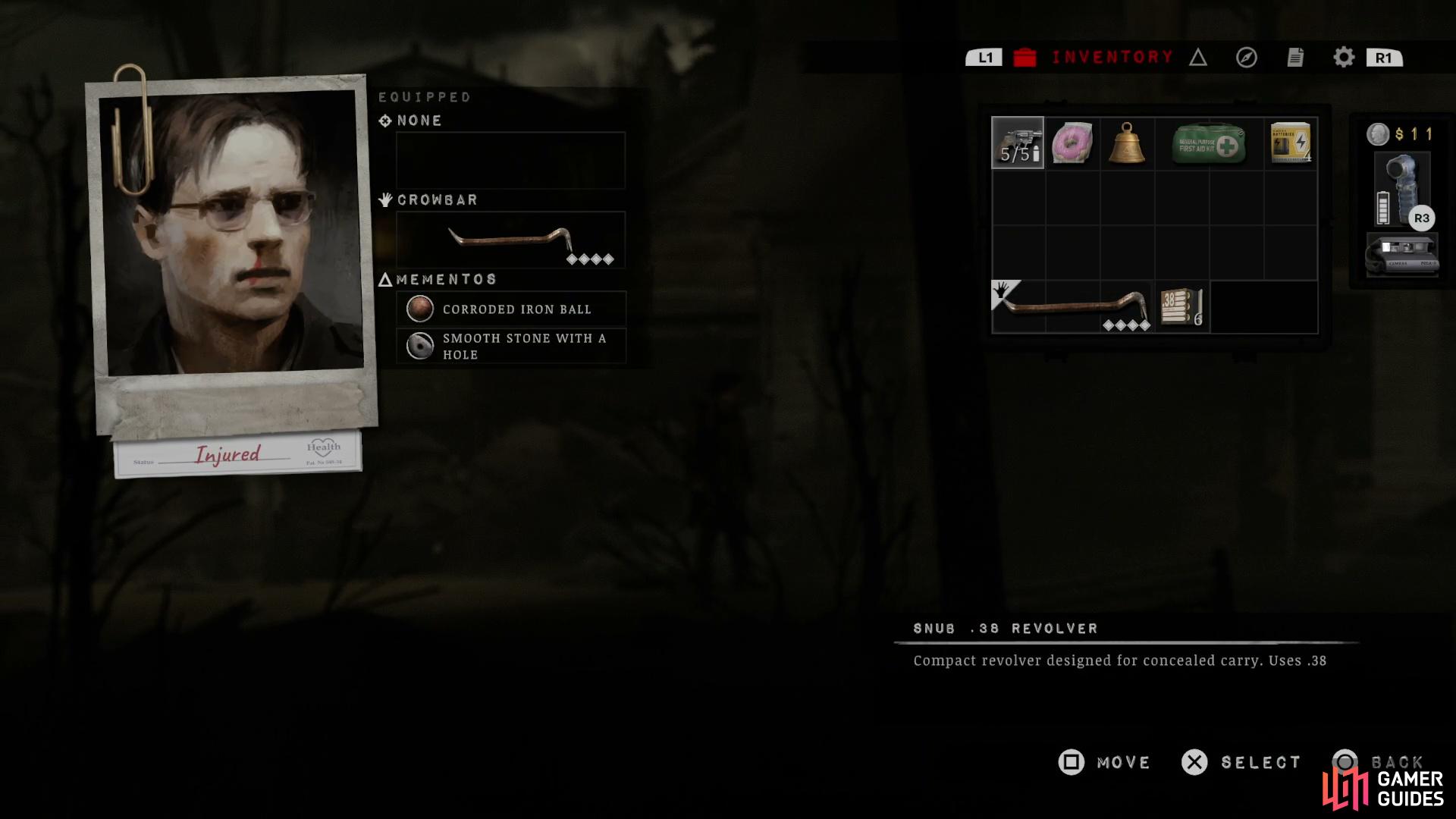
You’ll be fighting with your inventory system quite often as you explore the map.
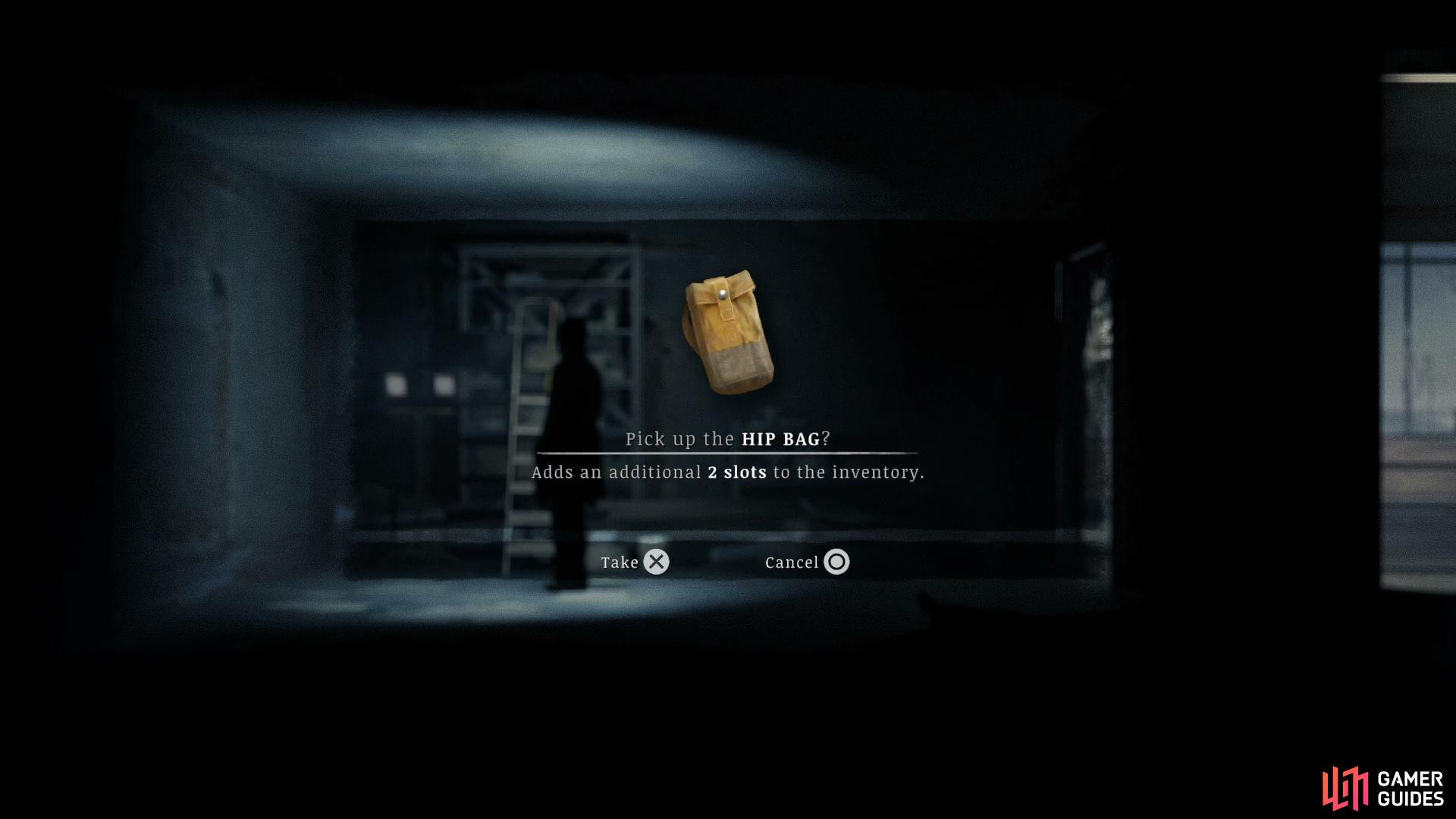
The game does use the Resident Evil inventory system, where you have a set number of spaces, with each item you find and pick up occupying a specific number of spots. For example, the first pistol you can find only takes up a single square, but something like the shotgun takes up more. You will almost always be juggling items, since your inventory is small at the beginning of the game, although you can increase its size by finding specific collectibles. Thankfully, you have a storage that is pretty large, despite also sharing a limited space (I never actually ran out of space there, though), and it is plentiful where you find them, as they are almost always located at a save room.
If there’s one thing to be mixed about with Silver Pines, it’s that it requires the in-game currency to save your game. You use pay phones to save, and you need to spend a dollar in order to do so. While money can be scarce sometimes, they seem to always have a backup plan of you being able to find a coin inside the return slot of every phone whenever you’re out of cash or have limited funds. This was the case with the Survival Horror difficulty, which is the second-highest one. It would have been nice to have unlimited saving without needing to spend money, but it doesn’t seem to actually force you to go without it.
As expected, there is a linear story to follow, but you will always be going back to unlock things that you could open earlier, due to not having one of those “upgrades” mentioned above. During these times, you might encounter more enemies than on the main path, meaning you might have to fight them. You have two options regarding enemies in this game: either fighting them or trying to avoid them. Unlike something like Resident Evil, where you have space to get past them, Silver Pines is 2D, so you usually have to avoid them by dodging past them. While you can somewhat do this, enemies can chase you, even onto other screens sometimes.
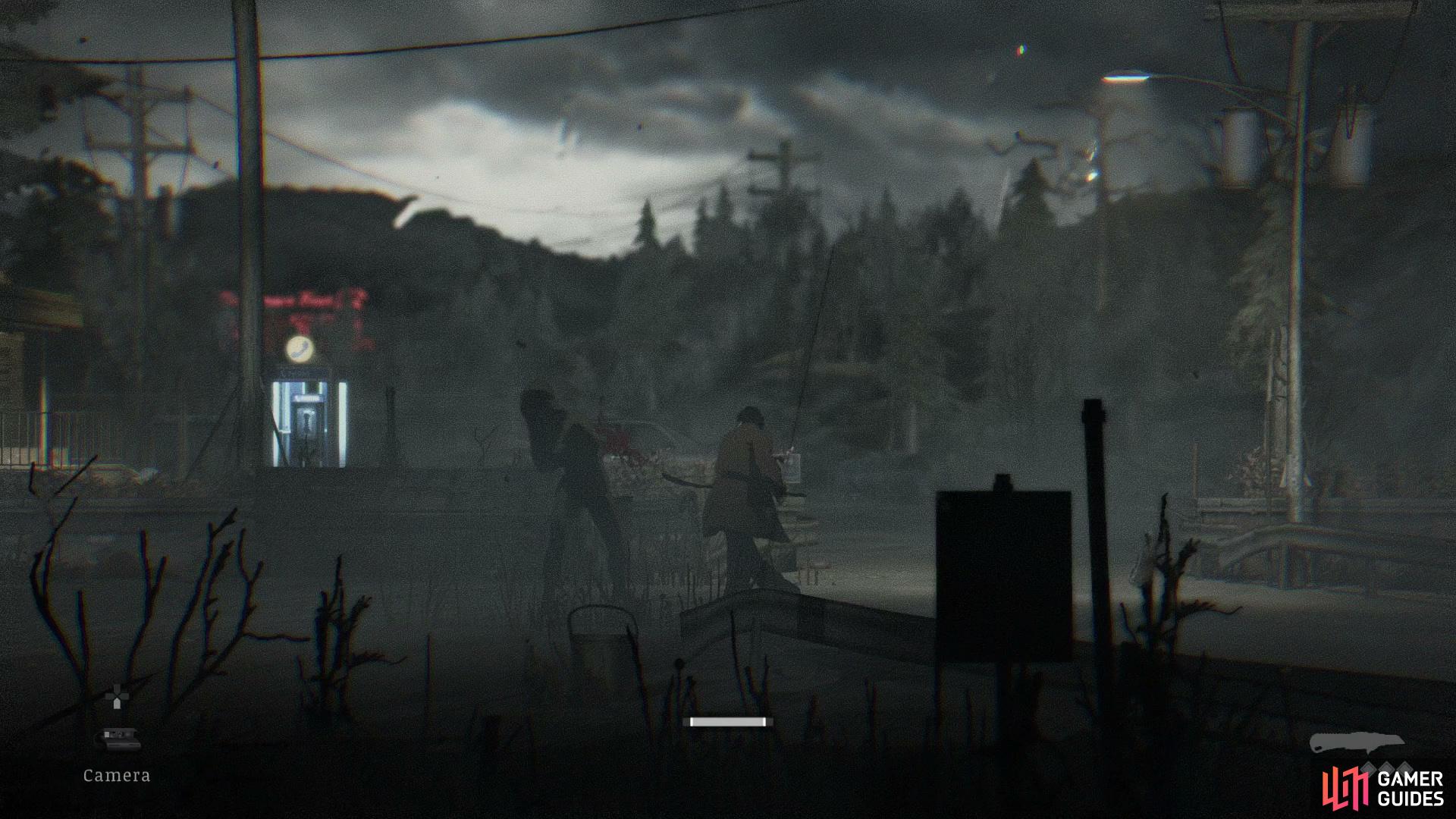
Melee combat can be quite painful at times, with enemies possibly hitting you even if you don’t want it happening.
Combat Fatigue
When you do have to face enemies head-on, which you will undoubtedly, as there are boss fights, you can either go with melee attacks or ranged ones. All of these have a price, since melee weapons all have durability, while ranged attacks obviously have ammunition attached to them. Unfortunately, if there’s one aspect of the game that fails considerably, it’s combat. Melee combat puts you at a major disadvantage, especially earlier on, when you have something like the boxcutter that takes a couple of hits and the durability can tank rather quickly. Add to that, your stamina (yes, there’s stamina for dodging and melee weapons) has to be taken into consideration, meaning you’re in for a world of hurt if you’re not adept at dodging.
Unfortunately, if there’s one aspect of the game that fails considerably, it’s combat.
To add to that, using your firearms, assuming you have ammo, is nothing short of troublesome, too. You have to aim, and you cannot move while doing so, leaving you vulnerable later on in the game, especially when you might have multiple enemies in an encounter. There’s a small minigame attached to reloading a gun, where a circle pops up, and you have to hit the button within a designated zone to complete it. If you don’t do this, then you won’t reload, and depending on the weapon involved, you have to do this multiple times in succession for each bullet.
This doesn’t just extend to firearms, as repairing melee weapons is done using the same minigame, as is one of the healing items. You might be thinking that you can just pause the game to do all of this, but the game keeps going while in your inventory or repairing/reloading/healing, no matter what. Of course, there is an accessibility setting to disable the minigame, if you want, which is nice, but due to the fact that it’s the default, I found it to be poor game design, even if it adds to the tension. Things can be very hectic in some battles, when you’re up against a boss or fighting multiple enemies.
Silver Pines does reward you quite well for fully exploring the map.
Apart from that, there are four different difficulties, which you can change at any time if one wishes to do so in the middle of a playthrough. The difficulties mainly change how tough enemies are, in terms of damage done and taken, plus the amount of resources you might find. For example, on Relaxed (the easiest), you will find more items throughout the map, some of which you won’t even find on the other difficulties. In addition to this, there are also multiple endings, so there are other things to strive for once you reach the end of the game. Finally, you’re able to unlock a few things that you can use on a New Game, allowing you some extra replayability there.
Overall, Silver Pines is a solid entry in the Metroidvania genre, even if it leans a little more heavily into the survival horror side. You can probably finish the game in around 12-15 hours for a first playthrough, and while there might be some replayability with the different difficulties, it’s more of a one-and-done type of game. Combat might be a heavy focus for the majority of the game, and while it’s certainly a big downside to Silver Pines, don’t let that deter you from actually enjoying it still.
Resident Evil in 2D!
Silver Pines is a decent Metroidvania game that plays like a solid survival horror title. However, its poor combat can detract from the overall experience, although fans of the genre should still have this on their radar.
Gameplay:
Sound:
Graphics:
Story:
Value Rating:

No Comments